By a Development Economist
Let me be direct: my support for Atiku Abubakar is not sentimental. It is not tribal, regional, or rooted in the transactional loyalties that have long poisoned Nigerian politics. It is the considered judgment of someone who has spent their professional life studying what makes economies grow and what makes them collapse.
Nigeria’s economic story over the past decade is, frankly, one of the most painful case studies in development economics. In 2015, Nigeria had a GDP of approximately $540 billion, making it the largest economy in Africa and a beacon of possibility on the continent. Today, after nearly a decade of APC-led governance, that figure had crashed to $188 billion before a statistical rebasing nudged it to around $240 billion in 2025. Let that sink in: Nigeria did not just stagnate. It shrank, dramatically, historically, and with devastating consequences for ordinary Nigerians who have watched the cost of living spiral beyond reach while their incomes evaporated.
This did not happen by accident. It happened because economic management matters. Leadership matters. Ideas matter. And for the better part of a decade, Nigeria has been governed by administrations that treated the economy as an afterthought, or worse, as a resource to be harvested rather than a system to be grown.
This is why the coming presidential election is not merely important. It is, potentially, the most consequential economic decision Nigerians will make in a generation.
A Track Record That Speaks for Itself
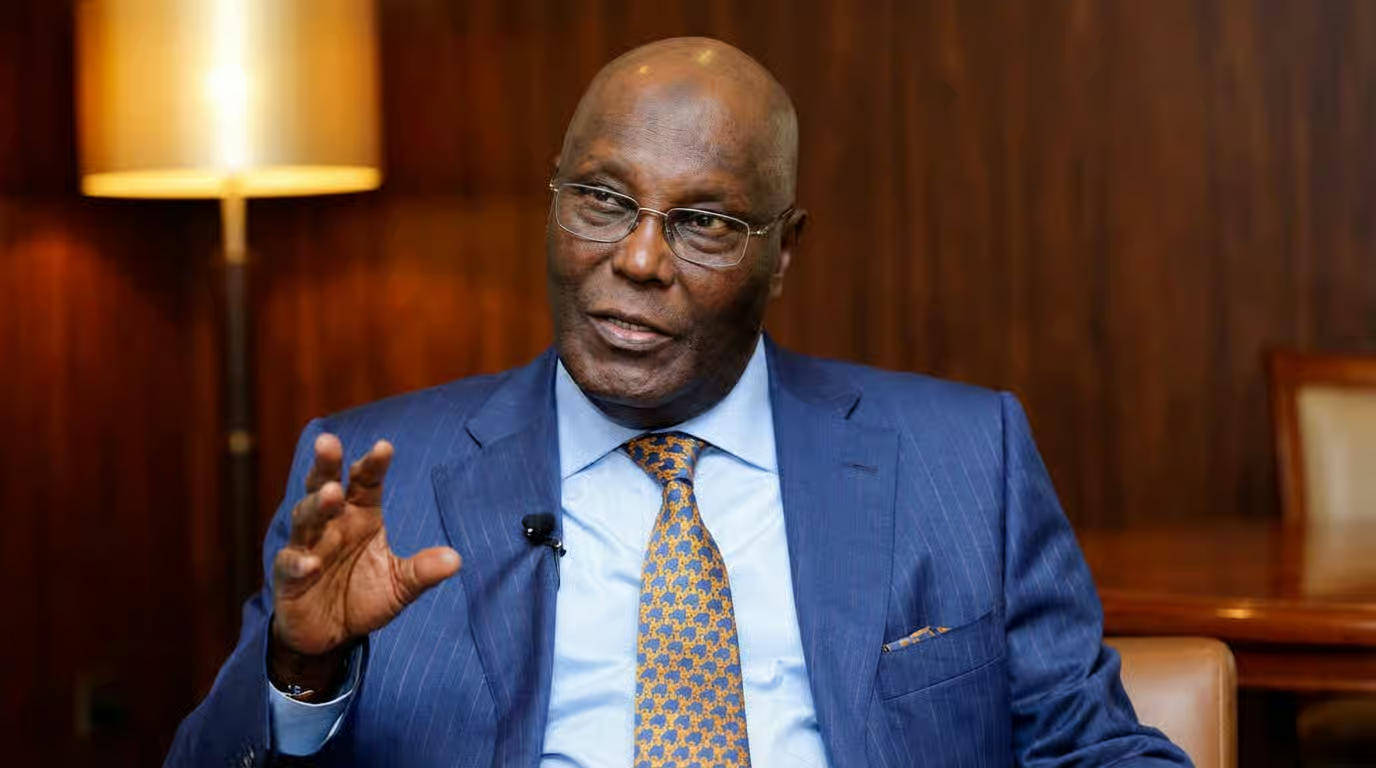
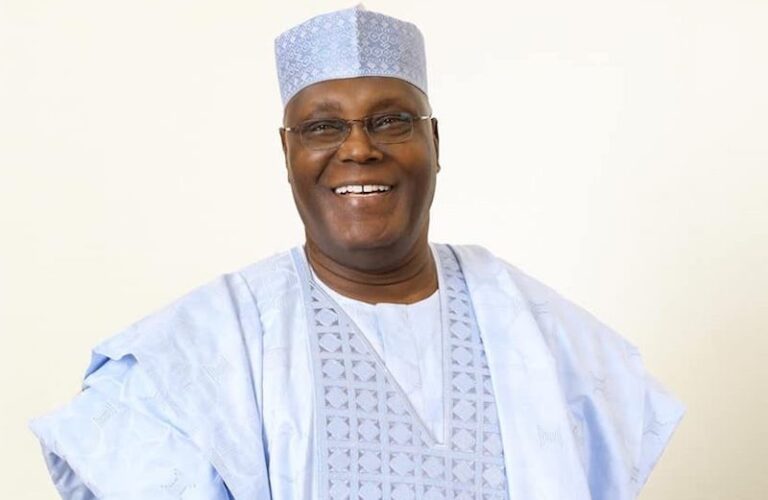
When we talk about Atiku Abubakar, we are not talking about a man asking Nigerians to take a leap of faith. We are talking about a man with a demonstrable, documented, and remarkable economic record.
As Vice President under President Olusegun Obasanjo, Atiku was put in direct charge of the Nigerian economy. What followed was extraordinary. Nigeria recorded its longest sustained period of rapid economic growth in its entire post-independence history. The country became the fastest-growing economy on the African continent. At its peak, Nigeria ranked as the second fastest-growing economy in the world. Debt relief was secured. Foreign reserves swelled. The foundations of modern economic reform, privatisation, anti-corruption institutions, pension reform were laid largely during that era.
These are not talking points. They are historical facts, verifiable in World Bank data, IMF reports, and the lived memories of Nigerians old enough to remember what genuine economic momentum feels like.
In development economics, we talk a great deal about the importance of credible commitment, the idea that economic actors, investors, and citizens need to believe that a leader will follow through on reform because they have done it before. Atiku has done it before. That is not a small thing. In a country where economic promises have become almost worthless currency, a candidate with a real track record is extraordinarily rare.
Understanding What Growth Actually Requires
One of the most frustrating dimensions of Nigeria’s economic decline is how avoidable it was. Nigeria is not a poor country in the sense of lacking resources. It has oil, yes, but it also has arable land, a young and growing population, proximity to large regional markets, and a diaspora that remitted over $20 billion annually even in difficult years. The ingredients for sustained growth are present.
What has been absent is a coherent economic strategy.
Nigeria has a realistic potential to grow at between 10 and 15 percent per annum. Countries that have unlocked similarly endowed economies, think of the East Asian tigers, or more recently, Rwanda and Ethiopia within our own continent, did so through a combination of macroeconomic stability, aggressive investment in infrastructure and human capital, a liberalised and competitive private sector, and a government that understood its role as an enabler rather than a monopolist.
Atiku understands this framework viscerally, not just intellectually. His economic blueprint has consistently centred on privatisation and deregulation, creating space for the private sector to drive job creation and innovation. It has prioritised infrastructure investment as the connective tissue of a functional economy. It has emphasised federalism, the devolution of economic power to states and localities, as a mechanism for unlocking the latent productive capacity that centralisation has suppressed for decades.
These are not populist positions. They are sometimes uncomfortable positions. But they are right. And the courage to advocate for them, even when politically inconvenient, is itself a mark of the kind of leadership Nigeria needs.
Enlightened Self-Interest
I want to address Nigerians directly: this is not about politics as we have come to understand it. This is about your future and the future of your children.
When the naira loses value, it is your savings that erode. When the economy contracts, it is your business that closes, your child’s school fees that become unaffordable, your elderly parent’s medical care that becomes out of reach. Macroeconomic mismanagement is not an abstraction; it is a material assault on the quality of everyday life.
The concept of enlightened self-interest holds that the rational thing to do is to support the outcome that genuinely serves your well-being, even if it requires looking past immediate loyalties or short-term incentives. Applied to this election: the rational, enlightened thing to do is to vote for the candidate most likely to restore and accelerate Nigerian economic growth.
Based on track record, based on demonstrated understanding, based on the quality of the economic agenda he has articulated, that candidate is Atiku.
Nigeria has, within living memory, been one of the fastest-growing economies on earth. That is not ancient history, it is evidence of what is possible when competent and committed leadership is in place. A return to that trajectory, and the ambition to surpass it, requires returning to the kind of economic stewardship that actually worked.
The numbers do not lie. The history does not lie. And Nigerians who have suffered long enough deserve a leader who can finally make the economy work for them.
The choice, ultimately, is ours to make.
________________________________________
Kunle Oshobi is a development economist and the Head of Strategy and Planning of The Narrative Force