Aare Amerijoye DOT.B
There is a question that Nigerian political commentary has circled for decades without ever landing cleanly. It is not the question of who should be president. It is the deeper, more inconvenient question that precedes it: what kind of country are we actually governing?
Nigeria is a federation. Not a federation in name only, scratched into the preamble of a document few have read and fewer still obey. A federation in structural reality, in cultural depth, in the sheer irreducible plurality of its peoples, its languages, its economic interests, its histories. A country in which thirty-six states, over two hundred million people, and at least two hundred and fifty distinct ethnic nationalities coexist under a constitutional arrangement that was always intended to distribute power, not concentrate it.
And yet we have spent the better part of three decades building political parties that function as the precise opposite of that constitutional promise.
Nigerian political parties are not parties in any serious democratic sense of the word. They are instruments of top-down command. They are vehicles for the ambitions of a handful of godfathers who determine outcomes before ballots are cast, who treat party structures as personal property, and who have systematically hollowed out every internal democratic mechanism that might inconvenience their grip. The result is what any honest observer must now confront: parties that are nationally registered but not nationally representative, that are symbolically federal but operationally unitary, and that have therefore become incapable of producing leadership adequate to the complexity of the country they claim to want to govern.
This is not an abstract diagnosis. It is the lived reality of Nigerian voters who have watched, election after election, as presidential candidates emerge not from rigorous internal democratic contests but from the calculations of a few powerful men in Abuja hotel rooms. It is the lived reality of the Nigerian state, which lurches from one administration to the next carrying the accumulated incompetence of leaders who were never tested by genuine democratic competition within their own structures.
The tragedy of Nigerian party politics is not that bad men sometimes win. Bad men sometimes win in every democracy. The tragedy is that the system has been deliberately engineered to prevent the best men from emerging at all.
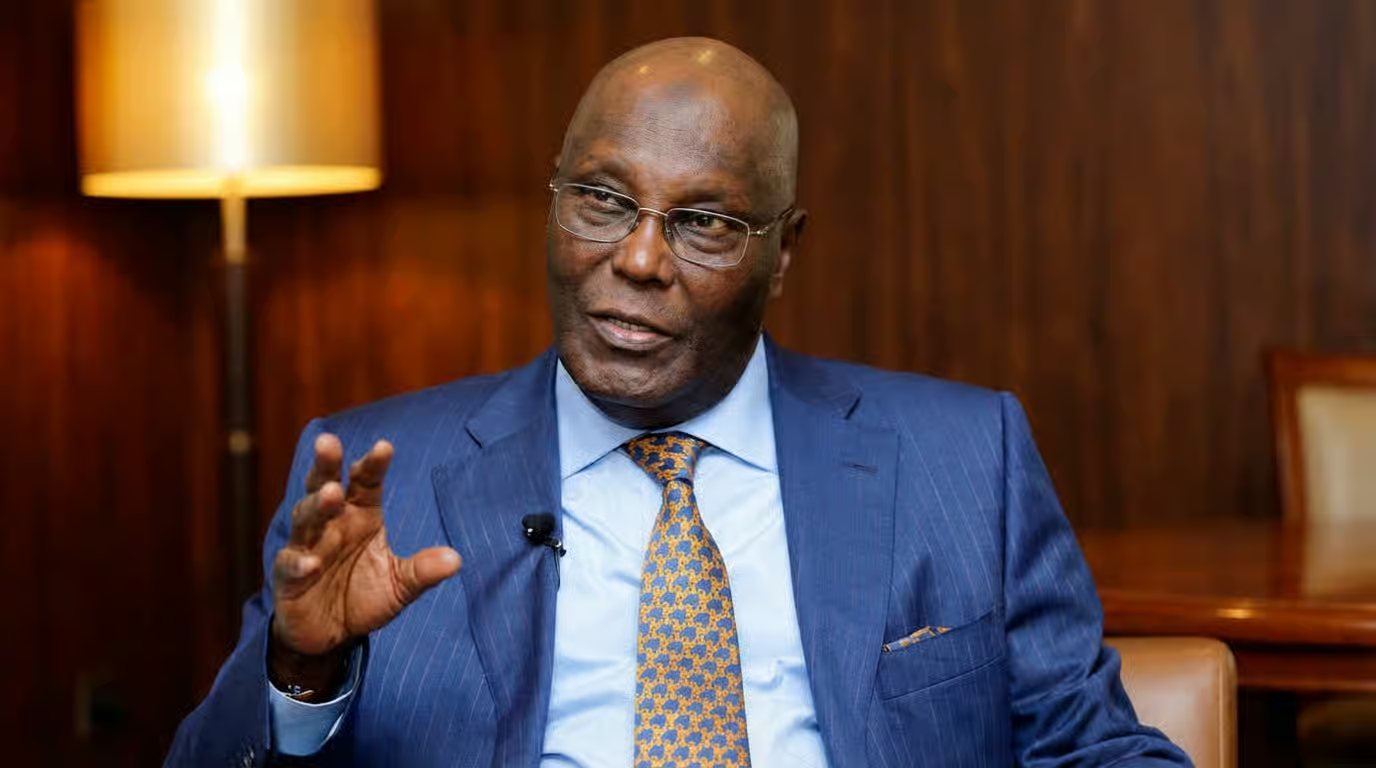
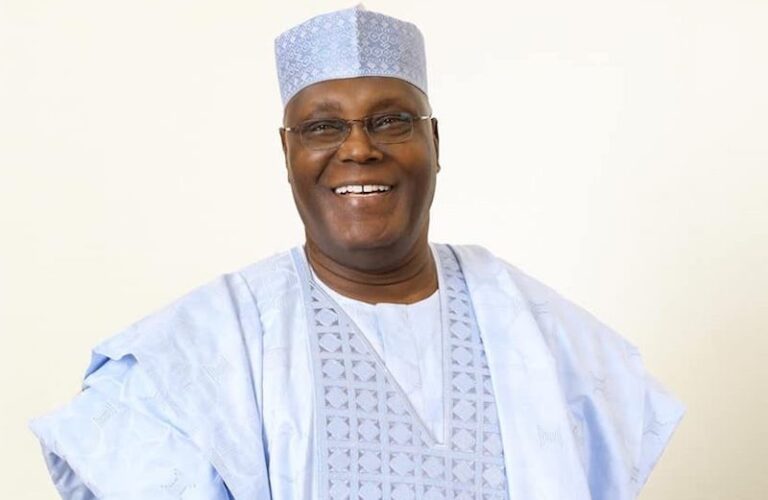
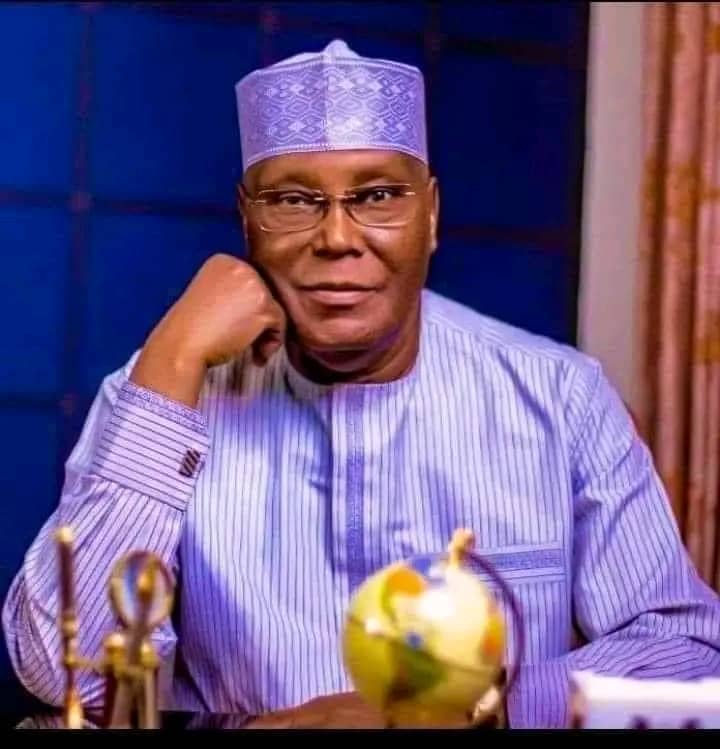
Into this landscape walks Atiku Abubakar.
Those who dismiss Atiku as simply another face in a familiar cast have not been paying attention. They have confused longevity with repetition. They have mistaken persistence for stubbornness. And they have fundamentally misread what this man represents at this precise and critical moment in Nigerian political history.
Atiku Abubakar is the only major presidential contender in this cycle who has built his entire political philosophy around the one structural reform Nigeria most desperately needs: genuine fiscal federalism. This is not a campaign talking point dressed up for electoral season. It is a position he has held, documented, and defended publicly for over two decades. His federalism blueprint, first formally articulated during his 2019 presidential campaign and subsequently deepened, calls for the devolution of significant fiscal powers to the states, the return of derivation principles that restore justice to resource-producing communities, the decentralisation of the VAT framework so that states retain what they generate rather than surrendering it to a federal pool that redistributes political dependency, and the dismantling of the exclusive legislative list items that have turned Abuja into a permanent chokepoint for every economic decision of consequence.
These are not slogans. They are structural propositions. They have been costed, argued, and submitted to public scrutiny. No other candidate in this field has produced their equivalent.
While others have spoken in generalities about restructuring, Atiku has produced specifics. While others have offered rhetoric, he has offered architecture. While others have run away from the federation question because it threatens the patronage networks that sustain their ambitions, Atiku has run toward it because he understands, with the clarity of a man who has studied governance closely for four decades, that you cannot fix Nigeria’s economic crisis without first fixing Nigeria’s structural crisis.
But Atiku does not ask Nigeria to trust a theory. He asks Nigeria to trust a record.
Between 1999 and 2007, Atiku Abubakar served as Vice President of the Federal Republic. During those eight years, Nigeria’s GDP expanded from approximately 58 billion dollars to 270 billion dollars. That is not a marginal improvement. That is a structural transformation of the productive capacity of an entire economy, achieved in less than a decade. The poverty reduction trajectory of those years, the debt relief secured from the Paris Club, the deregulation of the telecommunications sector that unlocked an industry now worth tens of billions and employs millions, the privatisation programme that transferred inefficient state assets into productive private hands — all of these bear the institutional fingerprints of a vice presidency that was not decorative but operational.
Critics of that era are entitled to their criticisms. But the honest critic must also account for what the alternative looked like. The alternative was the status quo ante of state monopolies, permanent subsidy dependency, and an economy structurally incapable of generating the growth its population demanded. Atiku chose reform. He chose the harder path. He chose it at personal and political cost. That is a character reference no campaign advertisement can manufacture and no opponent can erase.
A candidate who delivered a 365 percent GDP expansion in eight years is not asking Nigeria to gamble on an untested proposition. He is asking Nigeria to recall what competent, reform-minded governance actually produced when it was last given the opportunity to govern.
Consider what the absence of that vision has cost the country since.
Under the administration of Bola Ahmed Tinubu, the naira has collapsed to levels that would have been dismissed as apocalyptic fiction three years ago. Petrol, electricity, and food have become luxury items for ordinary Nigerians who once considered them baseline necessities. Nigeria’s debt servicing now consumes over ninety cents of every dollar of government revenue. The poverty headcount has not contracted; it has expanded. The World Bank’s own data places Nigeria as home to the largest concentration of extreme poverty on earth, a distinction this country did not earn through lack of resources but through the sustained mismanagement of them.
Tinubu’s economic experiment has one consistent characteristic: it transfers pain downward and privilege upward. The subsidy removal that was announced without a compensatory framework. The naira float that was executed without a stabilisation mechanism. The tax reform proposals that generated legislative chaos because they were conceived without federal consultation. These are not the errors of a reformer moving too fast. They are the consequences of a governance philosophy that treats the Nigerian state as a personal commercial enterprise rather than a public trust.
Nigeria cannot afford four more years of this experiment. The country is not declining. It is haemorrhaging.
And this is where the party question becomes inescapable again.
You cannot deliver genuine federalism from within a political party that is itself a miniature authoritarian state. You cannot devolve power to the states and the people if your own internal party culture is built on the suppression of dissent, the manipulation of congresses, and the subordination of every democratic process to the preferences of those at the apex. The character of the party reflects the character of the governance it will produce. A party that cannot democratise itself will not democratise the state.
The African Democratic Congress has been tested precisely on this point. Its legitimacy as a democratic institution was subjected to legal challenge, to attempted capture, and to the full weight of proxy litigation mounted by those who understood that a credible opposition vehicle capable of uniting the major figures of the resistance would be an existential threat to incumbency. The Federal High Court, applying the plain provisions of the Electoral Act 2022, has affirmed the status and authority of the ADC’s properly constituted National Working Committee. The party’s integrity as a platform for genuine democratic competition has been defended through due process rather than through power. It is within this structure, on this legally vindicated ground, that Atiku Abubakar is building his presidential campaign — alongside other reform-minded figures of national stature, including Peter Obi and Rotimi Amaechi, whose presence within the same primary field signals not fragmentation but the convergence of the resistance around a single credible platform.
The combination is historically significant. A candidate with a documented restructuring philosophy and a proven economic record. A party whose democratic credentials have been stress-tested and have held. A coalition assembling itself not through the old transactional logic of regional horse-trading but through a convergence of conviction around a shared and urgent diagnosis of what this country requires.
Nigeria has been here before. It has stood at the threshold of transformation and retreated into the familiar comfort of low expectations. It has watched candidates with genuine reform credentials be outmanoeuvred by incumbents with access to state resources and the institutional machinery of suppression. It has absorbed the disappointment and moved on, convincing itself that this is simply the nature of Nigerian politics, that the country is ungovernable, that the best one can hope for is a president who steals with some modicum of restraint.
That resignation is the most dangerous political force in Nigeria today. More dangerous than any opposition. More destructive than any economic policy. More corrosive than any act of overt corruption. It is the resignation that allows bad governance to perpetuate itself not through force alone but through the manufactured consent of a people who have stopped believing that anything better is possible.
Atiku Abubakar’s campaign is, at its most fundamental level, a direct challenge to that resignation.
It says: the federation is worth saving. It says: the economy can be rebuilt on structural foundations rather than subsidy politics and naira manipulation. It says: Nigeria has produced leaders capable of governing it properly, and the evidence for that claim is not theoretical but historical, not aspirational but documented, not promised but already delivered once and available to be delivered again.
The question before Nigeria in 2027 is not merely who should occupy Aso Rock. It is whether this country is serious about itself. Whether it is prepared to elect a president whose primary qualification is not the ability to deploy state resources in an election but the ability to govern a complex federation with the competence, the philosophy, and the proven record that the moment demands.
One candidate meets that standard.
His name is Atiku Abubakar.
Nigeria has paid an enormous price for getting this choice wrong before. The invoice for the current error is still arriving, monthly, in the form of exchange rates, food prices, and poverty statistics that shame a nation of this endowment and this potential.
The time for the right answer is not coming. It is here. It is now. And every Nigerian who has ever believed this country is worth the fight knows exactly what must be done.
Aare Amerijoye DOT.B, Director General,
The Narrative Force, thenarrativeforce.org