Aare Amerijoye DOT.B
In Nigeria, we have a peculiar national affliction. We do not interrogate issues from the standpoint of objective reality. We approach them through the distorting lenses of bias, sentiment, and perception, and we call the resulting fog “analysis.” It is this affliction, and nothing else, that explains why a question as straightforward as who is the most suitable candidate to dislodge Bola Ahmed Tinubu from Aso Rock in 2027 has somehow become a matter of heated, even bitter, debate.
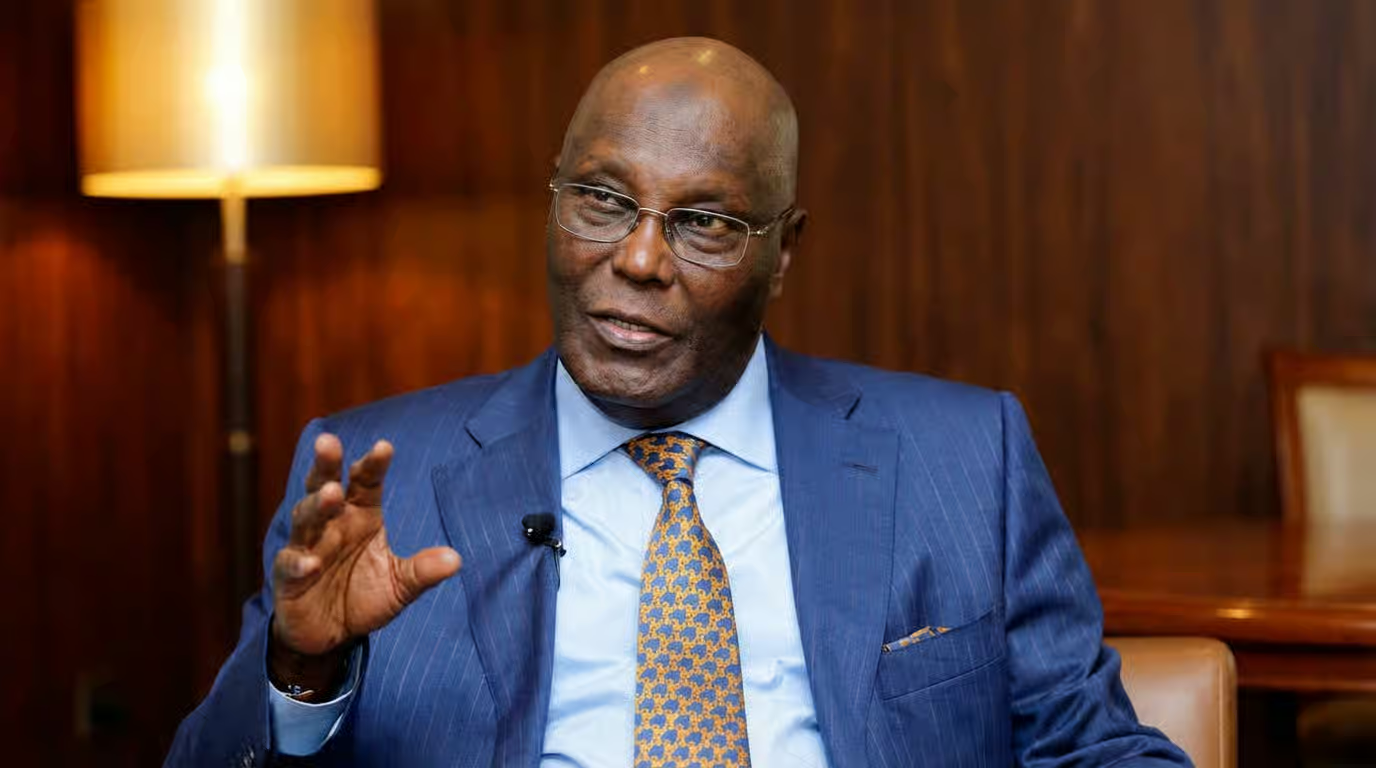
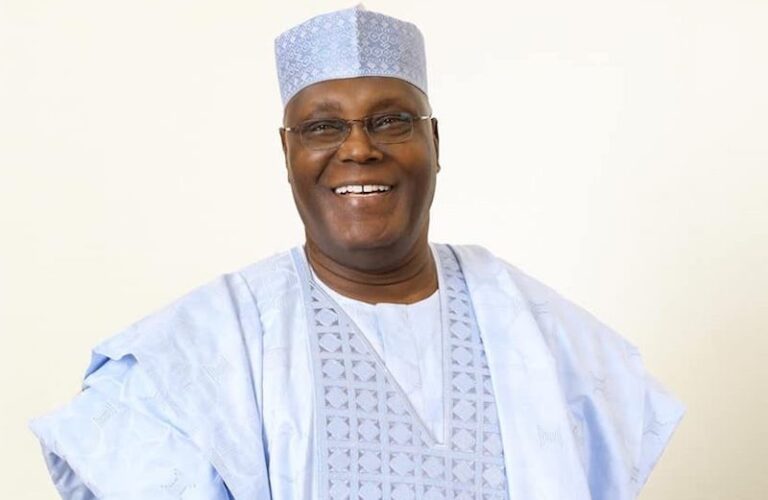
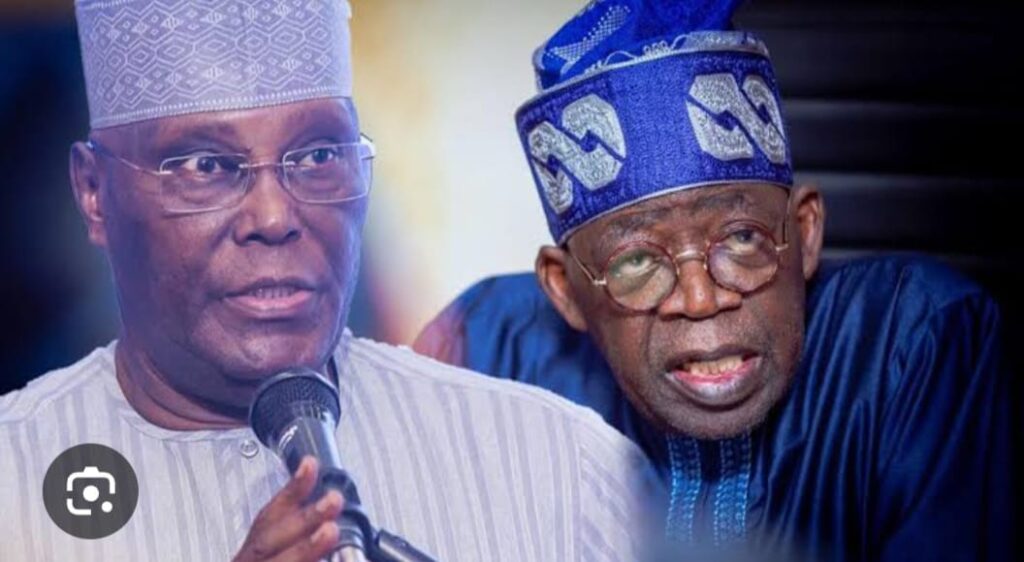
Let us speak plainly. At this material time, with the electoral arithmetic drawn from INEC’s own verified 2023 results and the structural realities of Nigerian presidential politics as they are, not as we wish them to be, the most formidable candidate available to the opposition to defeat Tinubu is Alhaji Atiku Abubakar. He is backed by a proven national spread, a formidable war chest, and a coalition pedigree that no other aspirant can match. This is not a sentiment. It is not a perception. It is the considered verdict of the facts on the ground.
The Theatre of Attacks and Its Futility
Since the African Democratic Congress emerged as the credible platform for the 2027 opposition project, certain aspirants have adopted a curious strategy: attack Atiku. Day after day, the airwaves and social media timelines are populated with missives and coordinated campaigns designed to diminish, delegitimise, or demoralise the Atiku camp but the Atiku camp has been deliberately calmed, measured and strategic. The underlying logic appears to be twofold: either that attacking Atiku will sway the party’s above three million registered members ahead of the primary, or that sustained pressure will cause Atiku to withdraw and leave the field.
Both calculations are exercises in self-delusion of the highest order.
The ADC primary, as prescribed by the Electoral Act 2026, shall proceed either by consensus or by direct primary. There is no third option. There is no “most-loudly-attacked-candidate-steps-aside” provision anywhere in Nigerian electoral law. If you cannot persuade above three million party members spread across 36 states and the FCT to choose you as their candidate, through your vision, your structure, your track record, and your demonstrated capacity, then what precisely do you believe attacking Atiku accomplishes? The primary will not be decided by the ferocity of your press statements. It will be decided by members.
The Consensus Question
If the genuine objective is to defeat Tinubu, and not personal ambition dressed in patriotic clothing, then the most rational path is a consensus candidacy for Atiku Abubakar. In 2023, with a fractured opposition, Atiku still secured 6,984,520 votes on the PDP platform, even as that platform was battered by defections and the emergence of a third major contender. That base does not vanish. It consolidates. It grows when the opposition is united.
If fellow aspirants possess the patriotic maturity to subordinate personal ambition to the larger cause, let them build a consensus. If they do not, let the party members decide. Either path leads to the same destination: Atiku Abubakar as the ADC presidential candidate. The fear of submitting to a direct primary, expressed through attacks rather than mobilisation, is itself a confession that the aspirant knows, in the quiet of his own counsel, that the members will not choose him.
The Zoning Argument: The North’s Deficit Must Be Balanced
Beyond electoral arithmetic lies a political, federal, and moral argument that no serious political actor in Nigeria can honestly dismiss: the principle of power rotation between the North and the South. It is an argument that does not merely favour Atiku Abubakar. It demands him. And when you lay the raw numbers on the table, it does more than demand him. It indicts every Southern aspirant who dares to step forward in 2027 as a violator of the federal compact.
Let us count, because the numbers do not lie and they do not negotiate.
Olusegun Obasanjo, a South-Westerner, held the presidency from May 1999 to May 2007: eight full years. Umaru Musa Yar’Adua, a Northerner, succeeded him in May 2007 but was consumed by illness and died in office in May 2010, giving the North two years and eleven months of presidential tenure. Goodluck Jonathan, a South-Southerner, formally assumed the presidency in May 2010, completed Yar’Adua’s term, and won re-election, holding office until May 2015: five full years. Muhammadu Buhari, a Northerner, served two full terms from May 2015 to May 2023: eight years. Bola Ahmed Tinubu, a South-Westerner, assumed office in May 2023 and will complete his first term in May 2027: four years.
The arithmetic is stark, incontrovertible, and damning. By the time Tinubu’s first term expires in May 2027, the South will have held the Nigerian presidency for seventeen years and one month. The North will have held it for nearly eleven years. The deficit stands at approximately six years and two months, a gap so wide, so structurally entrenched, and so morally untenable that no honest Nigerian federalist can look at it and argue with a straight face that 2027 should belong to the South again.
And should Tinubu be gifted a second term by any means, that deficit widens to a decade — ten full years in which the North watches from the outside while the South consolidates its grip on the apex of federal power. At that point, the rotation principle does not merely crack. It collapses entirely, and with it the foundational promise of equity that has sustained the Nigerian federal project through a quarter century of democratic practice.
Seventeen years and one month against nearly eleven years. That is not a slight variation. That is not an administrative anomaly. That is a systematic, compounding imbalance in the rotation of the nation’s highest office, an imbalance that strikes at the very foundation of the federal character principle that the Nigerian Constitution enshrines and that the political class has repeatedly pledged to honour. Every additional year that the South retains the presidency beyond 2027 widens that gap further and deepens the North’s legitimate grievance into something that no coalition, no dialogue, and no goodwill gesture can easily repair.
Those who argue that zoning is undemocratic make that argument, invariably and conveniently, from regions not being asked to wait. They make it after their regions have already accumulated seventeen years and one month at the apex of federal power. Democracy in Nigeria does not exist in a vacuum of pure electoral theory. It exists within the lived reality of a multi-ethnic, multi-religious federation of over 200 million people, where equity of representation is not an abstract ideal but the practical, load-bearing pillar of national cohesion. To dismantle zoning in 2027, after the South has banked seventeen years and one month, is not a call for democracy. It is a call for the permanent consolidation of Southern dominance of the Nigerian presidency dressed in the language of democratic merit.
Atiku Abubakar is from Adamawa State in the North-East geopolitical zone. His candidacy in 2027 is not simply a personal political ambition. It is the legitimate claim of a region that has been shortchanged by approximately six years and two months in the rotation of presidential power. It is the living embodiment of the zoning principle that the Nigerian political establishment has consecrated across a quarter century of democratic practice. To deny him in favour of yet another Southern aspirant is to tell the North, with unmistakable clarity, that the rules applying to others do not apply to them, that the patience they have shown across two and a half decades of democratic practice is not a virtue to be rewarded but a weakness to be exploited.
The political consequences of that message, in a country already straining under the weight of regional grievance, resource conflict, and a security crisis concentrated overwhelmingly in the North, would be grave, lasting, and entirely self-inflicted by those who chose ambition over equity. The North has been patient. The North has been consistent. In 2027, it does not ask for charity. It asks only for what is its due. The numbers demand it. The federal character principle anticipates it. Justice requires it. And Atiku Abubakar is the vessel through which that due is claimed, legitimately, democratically, and with a national coalition strong enough to deliver it.
The “Serial Candidate” Taunt and Why It Collapses
The charge of serial candidacy, that Atiku has run before and failed and is therefore disqualified, is seductive on the surface. History does not support it. Persistence in democratic politics is a mark of commitment and resilience, not weakness. Each previous contest was fought under different structural conditions, against different opponents, on different platforms, and within different national contexts. Tinubu’s presidency has since produced an economic catastrophe generating a reservoir of voter anger that did not exist in previous cycles. The opposition is converging rather than fracturing. To argue that Atiku’s previous campaigns disqualify him is to argue that a general who has refined his strategy across multiple engagements is less qualified than one who has never faced the battlefield or has faced it once without surpassing the performance of the general.
What It Actually Takes to Defeat Tinubu
Defeating Bola Tinubu in 2027 requires a convergence of forces that very few individuals in Nigeria can command. It requires a proven national footprint across all six geopolitical zones simultaneously. It requires a war chest capable of sustaining agents across 176,000 polling units, logistics, media, legal defence, and grassroots activation. It requires a track record of economic governance: Atiku’s record as Vice President, presiding over GDP growth from $58 billion to $270 billion, 15.3% peak growth, and the liberalisation of telecommunications, provides a credible counternarrative to Tinubu’s catastrophic economic failure.
It requires a coalition that bridges religion, ethnicity, and region, speaking convincingly to Muslim and Christian voters alike, across the Yoruba, Igbo, Hausa-Fulani, Ijaw, Tiv, Kanuri, and every major group in between. It requires international credibility that inspires confidence in investors and development partners. And it requires organisational depth to protect votes at the polling unit level and sustain legal challenges where necessary.
Which of the current aspirants in the ADC field can tick each of these boxes with the same credibility as Atiku Abubakar? That is not a rhetorical question. It demands a sober, honest answer.
The ADC Primary as a Mock Test and The Running Mate Imperative.
The ADC primary is a dress rehearsal, a mock examination of general election capacity. If you cannot mobilise your base and persuade party members in a controlled primary setting, what evidence exists that you can defeat a sitting president commanding the full apparatus of the federal government, INEC’s goodwill, security agencies, and the APC’s nationwide structure? Attacking Atiku is not a revision strategy. It does not add a single point to your score. It is noise. And the day of the primary will silence it.
Beyond the primary, the architecture of a winning general election ticket must be deliberately and wisely constructed. An acceptable Christian running mate drawn from the South-South or South-East completes the coalition argument, answers the question of inclusion that a significant section of the electorate will raise, and dramatically expands the ticket’s electoral ceiling. This is not a concession to sentiment. It is a strategic imperative of the first order. The groundwork is being laid. There is more in the sleeves.
A Word of Final Clarity
Nothing, no attack, no press release, no orchestrated campaign of delegitimisation, no elite pressure, no backroom conspiracy, will cause Atiku Abubakar to withdraw from this race. The die is cast. The commitment is total. The path is clear.
The real battle is not in the party secretariat. It is at the polling unit on general election day. The coalition that broke Nigeria under Tinubu can be broken at the polls. But only by a candidate equal to the weight of the moment.
That candidate is Atiku Abubakar.
Aare Amerijoye DOT.B, Director General, The Narrative Force, thenarrativeforce.org
April 20, 2026