Aare Amerijoye DOT.B
On Tuesday, 28 July 2026, in the cool marble of the Presidential Villa, an ancient scene was staged once more. The prophet stood before the throne. The Catholic Bishops’ Conference of Nigeria walked into Aso Rock and told the President of the Federal Republic what the men who eat at his table dare not whisper: that Nigeria is bleeding, that her citizens are suffering and crying, and that the sympathy a ruler expresses in fine speeches is not the same thing as relief delivered to a hungry household.
These were not imposters. These were the shepherds of the Nigerian Church themselves, led by the President of the Conference, Most Rev. Matthew Man-Oso Ndagoso, Archbishop of Kaduna. With him stood the Archbishop of Lagos, Most Rev. Alfred Adewale Martins; the Bishop of Abeokuta, Most Rev. Peter Odetoyinbo; the Bishops of Enugu, Nsukka, Aba and Calabar; and the venerable Cardinal John Onaiyekan, nineteen leaders of the Church in all.
They did not come to flatter. They reminded the President that he was once an opposition figure who risked much against military dictatorship, and told him that his greatest legacy would be to strengthen Nigeria’s democratic institutions rather than to erode them. They warned that a one party state is being quietly anticipated in the land. They demanded free, fair and credible elections in 2027, warning that anything less would invite an avoidable disaster. They told him the power sector has collapsed, the roads are decaying, the poor are crushed, and that bandits carry off their victims in broad daylight. And they said, plainly, that words are no longer enough.
The President’s answer, as Cardinal Onaiyekan later recounted, was blunt. He did not agree. The nation, he said, is not bleeding. The economy is doing fine.
When shepherds tell a king his kingdom is bleeding, the scandal is not that they spoke. The scandal is a throne too comfortable to feel the wound.
This is why the Bishops were right, and why every man and woman of God must now understand what hour has struck.
THE OFFICE OF THE PROPHET
A prophet is not the chaplain of the palace. He is the conscience the palace cannot purchase, called not to bless whatever the king does but to measure him against the justice of God and say so aloud, whatever it costs. Scripture is one long record of it: kings oppress, and heaven answers not with a memo but with a man. We are living inside that pattern.
WHEN HEAVEN SENDS A MAN, NOT A MEMO
When King David abused his high office, took another man’s wife and arranged the killing of her husband to cover the sin, God did not issue a statement. He sent Nathan. The prophet told the king a story about a rich man who owned many flocks yet stole the one little lamb a poor man loved, watched David burn with royal outrage and demand the thief’s head, then turned the whole judgment back upon the throne with four words that have echoed for three thousand years: “Thou art the man.”
When Ahab coveted Naboth’s vineyard, and Jezebel had the innocent man murdered so the crown could seize the land, Elijah met the king inside the stolen vineyard itself and asked what the whole kingdom feared to ask: “Hast thou killed, and also taken possession?” And when Herod took what was not lawfully his, John the Baptist would not dress it up for the court. “It is not lawful for thee,” he said, knowing it could cost him his head. It did. The prophet died, but his truth outlived the king who silenced him.
This is the office the Bishops were exercising at Aso Rock. To call it meddling is to misunderstand the entire Bible.
THE COURT PROPHETS AND THE LONELY VOICE
But Scripture also records a second kind of prophet, and he is the greater danger. When Ahab wished to go to war, he gathered four hundred prophets, and every one told him exactly what he wanted to hear. Only Micaiah refused to trade the truth for the king’s applause, and for it he was struck and imprisoned, yet he was right, and the king who believed the flatterers died on the battlefield exactly as the lonely voice had foretold.
The four hundred did not lie because they were fools. They lied because they were fed. On Mount Carmel, the prophets of Baal drew their bread from Jezebel’s kitchen, so their religion was bought before the contest began. The only question each generation must answer is whether its shepherds will be counted among the flatterers, or among the faithful.
THE COUNTERFEIT BISHOPS OF 2022
We do not need to travel back to Ahab’s court to find the prophets of Baal. We saw them, in our own country, four years ago.
Nigeria is a secular republic whose Christian and Muslim populations are widely reckoned to be nearly equal, and for a generation our politics balanced the two great faiths on a national ticket. In 2022 the ruling party tore that wisdom up. Its candidate looked over a country of near equal faiths and concluded that only a same faith Muslim Muslim ticket was fit to lead it. The Christian Association of Nigeria opposed it. The Pentecostal Fellowship of Nigeria opposed it too.
So a blessing that could not be earned was staged. At the unveiling of the running mate in Abuja on 20 July 2022, men appeared in bishops’ robes and priestly cassocks to suggest that the Church had blessed the ticket after all. The illusion collapsed within hours. The Catholic Secretariat declared that it had sent no representative and that the men in the photographs were not Catholic bishops. The Christian Association of Nigeria disowned them as unknown clerics and dared the party to publish their names and the churches they pastored. The campaign protested that the men were genuine, but the recognised leadership of the Church had already spoken: these were not our shepherds.
A throne that must rent its bishops has already confessed that the real ones would never bless what it is doing.
Now hold that beside 28 July 2026. In 2022 a counterfeit chorus was assembled to praise. In 2026 the authentic bishops walked into the same seat of power and warned. The false ones came to bless. The true ones came to confront. The nation must never again mistake the prophet of Baal for the prophet of God.
THE PULPIT THAT BROKE THE JACKBOOT
Let no one tell the Church that the altar has no business with the fate of the nation. In the darkest years of military rule, when newspapers were proscribed and a freely cast ballot was cancelled by decree, one microphone could not be seized by any soldier. It was the pulpit.
Archbishop Anthony Olubunmi Okogie of Lagos, a former president of the Christian Association of Nigeria, thundered against successive juntas and dared the men with guns to come for him, through the annulment of June 12 and the long night of Abacha. Bishop Emmanuel Bolanle Gbonigi of Akure earned the name the whole country remembered, the NADECO Bishop, for his stand on June 12, when the cause could cost a man his life. Father Matthew Hassan Kukah carried the case for justice into rooms that preferred silence, and later served on the panel that made the nation confront its own abuses. Archbishop Sunday Mbang, the Methodist Prelate, and Archbishop Alaba Job of Ibadan lent the Church’s voice as the repression deepened. And Pastor Tunde Bakare prophesied the very end of the Abacha regime when few dared speak the tyrant’s name.
An honest word is owed here. The leading resistance came from the Catholic and mainline Protestant fold, while much of the Pentecostal movement cast its role as spiritual warfare rather than open confrontation. That is why the giants of the harvest, Adeboye, Kumuyi and Oyedepo, are best understood as the mass conscience of the nation, shepherds of multitudes no government could ignore, whose weight must now be thrown without timidity onto the side of truth.
None of these men preached rebellion. They preached truth. And truth from a fearless altar is the one weapon no jackboot ever learned to confiscate. “Ye shall know the truth,” the Lord promised, “and the truth shall make you free.” That is not decoration for a wall. It is a living, dangerous instruction.
A LAND THAT GROANS
And what of the flock these shepherds are sworn to guard? Nigeria wears the face of Israel in Egypt, a people groaning under a burden that grows heavier with every promised deliverance, whose cry rises now as theirs once rose to God.
The World Bank’s own assessments place well over one hundred and thirty million Nigerians in poverty, a majority of the nation. Inflation feasts on the wage before the worker can carry it home. The Bishops laid the rest before the President’s face: a strain that has emptied the Renewed Hope Agenda of the very hope it advertised.
The prophets knew this cry. Habakkuk lifted it to heaven: “O Lord, how long shall I cry, and thou wilt not hear?” In besieged Samaria the famine grew so cruel that four lepers at the city gate finally asked the question that broke the deadlock: “Why sit we here until we die?” They rose, they moved, and found that God had already prepared an abundance that ended the siege overnight. That is the question this generation must ask. Why sit we here until we die?
THE MANDATE OF THE BALLOT
The instruction is plain. Evil leadership is the root of a society’s afflictions, and righteous leadership is its only cure. Proverbs states it exactly: when the righteous are in authority, the people rejoice, but when the wicked beareth rule, the people mourn. If the righteous refuse to lead, or refuse even to help choose who leads, the wicked will lead by default, and the silence of good men will have signed the warrant.
We are not bystanders. Every believer who holds a voter’s card is already a player, and to cast a vote is to exercise a sacred stewardship over the destiny of thirty six states and the generations sleeping within them. To pray fervently on Sunday and stay home on election day is not to keep clean of politics. It is to hand the field to those with no conscience at all. Scripture never treated governance as beneath the servant of God: Joseph governed Egypt, and Esther was placed in the palace for such a time as this.
RESIST THE SECOND COMING
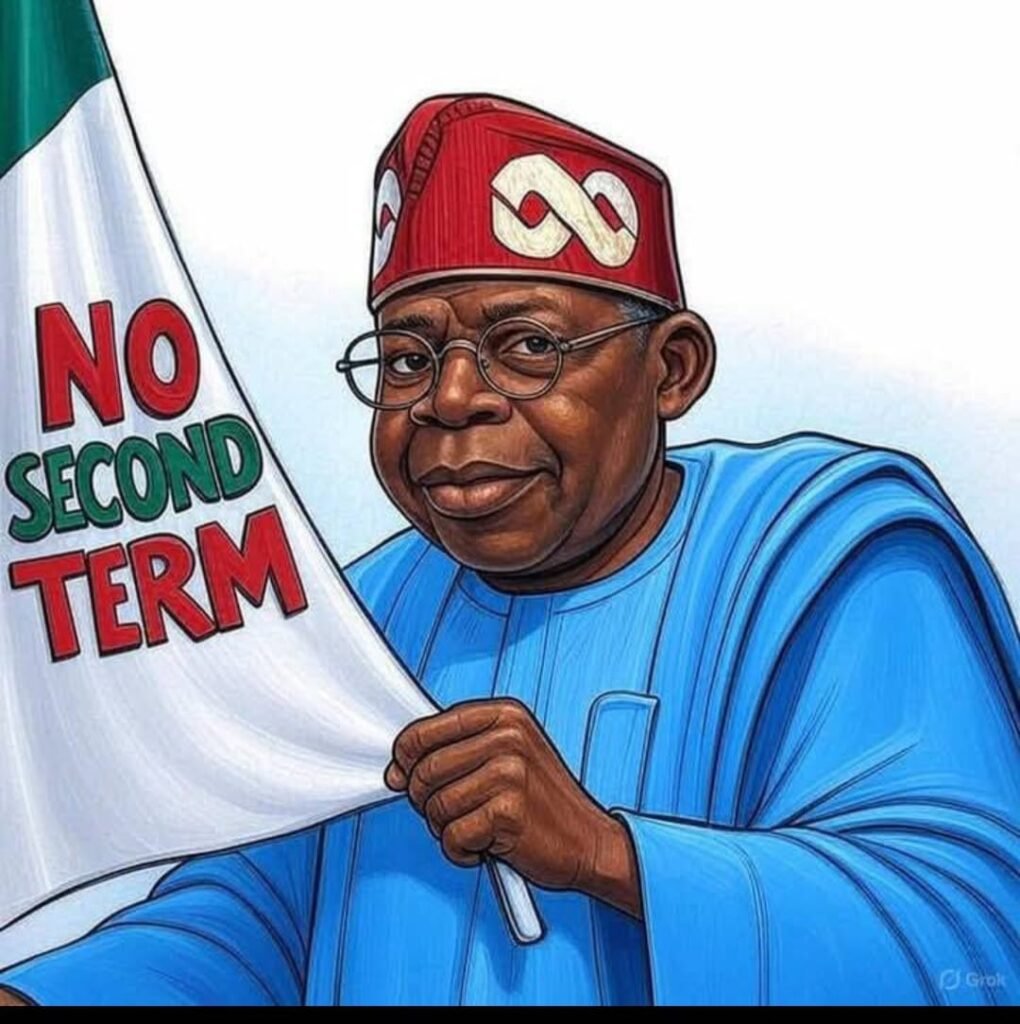
So let the men and women of God brace up. The second coming of this affliction must not be prayed into office by a flattered clergy, nor dressed up by a rented one, nor voted into a further term by a slumbering congregation. On 16 January 2027 the pulpit and the ballot must speak with a single voice. Let it be said plainly, so no mischief maker can twist it: this is not a call to the streets or to the sword. It is a call to the trumpet and to the thumbprint, to the prophetic word and the protected vote.
Ezekiel warned that when the watchman sees the sword coming and does not blow the trumpet, the blood of the fallen is required at his own hand. Our watchmen have seen the sword. The Bishops of 28 July have blown the trumpet. The rest must not wait until the funeral to find their voice. A government that insists the nation is not bleeding while the nation weeps has called darkness light, and it is the office of the Church to call it by its right name.
CAN THESE BONES LIVE
The prophet Ezekiel was set down in a valley of dry bones, and God asked him a single question: “Son of man, can these bones live?” Nigeria is that valley, scattered and battered, mocked by men who called her wounds imaginary. And the answer is still yes, if the breath of truth is preached over her by a Church that has remembered its calling. The bones came together, flesh returned, and an exceeding great army stood upon its feet, all because a prophet dared to prophesy over what everyone else had written off as dead.
Let Nathan find his voice again. Let Elijah light his fire on the mountain. Let the heirs of Okogie and Gbonigi, of Kukah, Mbang and Job, stand where their fathers stood, unbribed and unbowed. Let this generation of Adeboye, Kumuyi and Oyedepo turn their vast multitudes to the throne, as the Bishops have already turned, and say without a tremor the four words this season demands of every watchman in the land.
Thou art the man.
Aare Amerijoye DOT.B, Director General,
The Narrative Force, thenarrativeforce.org
3 August 2026