Aare Amerijoye DOT.B
Every presidential campaign in Nigeria spends its first anxious weeks hunting for a Director General. Names are floated, governors lobby, and godfathers send emissaries at midnight.
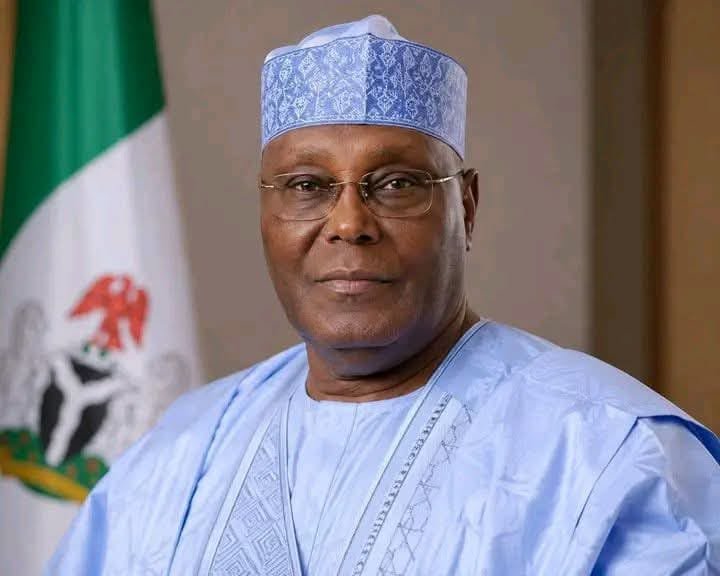
Atiku Abubakar has been spared that trouble. Bola Ahmed Tinubu appointed four Directors General for him at Eagle Square on 29 May 2023, and has kept them on full duty ever since.
They did not apply for the job. They hold no rally, print no poster and collect no envelope. Yet every morning, before the first call to prayer and before the first church bell, they have already visited every home in the Federation.
Their names are Hunger, Failed Promises, the Politics of Kakitocracy and the Cronyism of the Bourdillon Cabal.
On 16 January 2027, Tinubu will not be confronting Atiku alone. He will be confronting the four officers his own government commissioned. No propaganda can sack them, no inducement can buy them, and no court can restrain them.
Tinubu appointed them. Atiku will not even need to pay them.
THE FIRST DIRECTOR GENERAL: HUNGER
Hunger needs no campaign office. It canvasses in the kitchen, and it never misses a household.
Ask the Tiv yam farmer in Benue who can no longer reach his own farm, because the bush now belongs to men with guns. Ask the Hausa mother in Katsina who stretches one mudu of grain across a week that once took three. Ask the Igbo trader at Onitsha Main Market whose capital melted with the naira before he could restock.
Ask the Ebira teacher in Okene whose salary is finished before the second week of the month. Ask the Fulani herder who sold his last cows to feed his children. Ask the pensioner in Ado Ekiti who now chooses, every evening, between his drugs and his dinner.
The World Bank has counted them. By its figures, the share of Nigerians living in poverty rose from 56 per cent in 2023 to 63 per cent in 2025, roughly 140 million people. That is not a statistic. That is an electorate.
The 70,000 naira minimum wage this government celebrates is worth about 47 dollars. No family eats on 47 dollars a month. Every worker who earns it knows exactly whom to thank.
Hunger keeps its own voters’ register. It does not need a mobilisation budget, because it mobilises at breakfast, at lunch and at the dinner that never comes.
A hungry man does not need a manifesto read to him. His stomach has already read Tinubu’s.
THE SECOND DIRECTOR GENERAL: FAILED PROMISES
The second officer carries a file. Inside it is every word Tinubu spoke to win the 2023 election, and beside each word, what became of it.
Nigerians were told the subsidy money would build roads, equip hospitals and fund schools. On 30 July 2026, his own Finance Minister, Taiwo Oyedele, told Reuters the savings had been absorbed by debt servicing. The people paid at the pump, and the creditors collected.
Nigerians were told the float would unify and strengthen the naira. The naira traded at about 460 to the dollar in May 2023. Within his first two years it had crossed 1,500. Every family’s savings lost more than two thirds of its value against the dollar.
Nigerians were told the country would be secured. On 30 May 2026, Major General Rabe Abubakar was abducted. On 13 June 2026 he died in captivity. If a serving Major General cannot be protected, which farmer in Zamfara, which commuter on the Abuja to Kaduna road, can sleep in peace?
Nigerians were told of fiscal discipline. The 2026 budget deficit stands at 31.45 trillion naira, 6.4 per cent of GDP, more than double the 3 per cent ceiling set by the Fiscal Responsibility Act. The government that promised order breaks its own law in its own budget.
And the file holds one more page. In January 2012, as an opposition leader, Tinubu wrote against an abrupt, one-step removal of fuel subsidy. On 29 May 2023, as President, he did exactly that in three words, with no cushion, no framework and no account of the savings: subsidy is gone. He was not proposing. He was pronouncing.
A promise broken once is an error. A promise broken as policy is a programme.
THE THIRD DIRECTOR GENERAL: THE POLITICS OF KAKITOCRACY
Kakitocracy is government in which the few feast while the many fast, and power is held by purchase and pressure rather than by performance. It is the third officer, and it explains the first two.
Kakitocracy does not persuade. It acquires. Governors were gathered into the APC until the party boasted of 31 of 36 states, as if a governor’s signature were the people’s thumbprint. Governors were counted. Voters were not.
Kakitocracy does not answer critics. It detains them. Nasir El-Rufai, Deputy Chairman of Atiku’s Presidential Campaign Council, is held by this government while it lectures the nation on democracy.
Kakitocracy does not compete with opposition parties. It tries to erase them. The order to deregister the ADC did not survive the Court of Appeal, which voided it.
Kakitocracy does not hear the pulpit. On 28 July 2026, the Catholic Bishops of Nigeria stood in Aso Rock and warned of a bleeding nation and the danger of a one-party state. By Cardinal Onaiyekan’s account, they were told the nation was not bleeding. The bishops spoke of the bodies. The palace spoke of the books.
And kakitocracy does not fear the ledger. In August 2025, Tinubu told an audience in Brazil that his government had eliminated corruption. Transparency International’s 2025 index placed Nigeria at 26 out of 100, 142nd of 182 countries. The IMF’s 2026 review, reported by Reuters, pointed to 8.8 trillion naira in spending outside the budget, a finding the Finance Minister denied. A government confident of its books would publish them.
You can buy a governor. You cannot buy the woman queuing for kerosene.
THE FOURTH DIRECTOR GENERAL: CRONYISM, FAVOURING ONLY THE BOURDILLON CABAL
Bourdillon is a road in Ikoyi. Under this government it has become an address of power, the gate through which the commanding heights of the nation are reached.
Cronyism is the handing of a nation’s highest trusts to one circle of old friends. Every leader appoints people he trusts. The offence is when the trust never travels beyond one gate.
Look at who was handed the keys. The man first made Chief of Staff, Femi Gbajabiamila, rose through Tinubu’s Lagos political structure. The Finance Ministry went first to Wale Edun, his Commissioner for Finance in Lagos. The Central Bank went to Olayemi Cardoso, who served in his Lagos cabinet. The gate to the President, the treasury and the money supply were placed in the hands of one family of old Lagos loyalists.
Look at where the biggest contract went. The Lagos to Calabar Coastal Highway, among the costliest road projects in Nigeria’s history, went to Hitech Construction without open competitive bidding, critics charge. The government insists the process was lawful. Then let it publish the procurement file in full.
The Bourdillon cabal is not the Yoruba nation. The farmer in Ekiti, the weaver in Iseyin and the trader at Dugbe market in Ibadan are as hungry as the herder in Sokoto and the fisherman in Bayelsa. The favour stops at the gate of Bourdillon. Outside it, the South West suffers with the rest of Nigeria.
The North that gave Tinubu more votes than any other part of the country in 2023 has seen how it is repaid. The South East has seen how it is counted. The South South has seen how it is consulted. Every zone has learnt the same lesson: in this government, loyalty to Lagos outranks service to Nigeria.
Nigeria has 36 states and a capital. Under this government, power has one postcode.
WHY THE FOUR REPORT TO ATIKU
Four Directors General do not report to just anybody. They report to the one man whose record answers each of them.
To Hunger, Atiku answers as a man who has known it. He lost his father at eleven, fended for himself, and built his life with his own hands. He does not need a briefing on what an empty pot means. On 25 August 2026 he named his two priorities as welfare and security, and declared that Nigeria is rich enough to look after the welfare of its citizens.
To Failed Promises, Atiku answers with delivered ones. As Vice President he chaired the National Economic Council under the Constitution and the National Council on Privatisation under the Public Enterprises Act. In those years Nigeria’s GDP grew from 58 billion dollars in 1999 to 270 billion dollars in 2007. Foreign reserves rose from 3.7 billion dollars to about 45 billion. The 2005 Paris Club settlement wrote off 18 billion dollars, and Nigeria exited that debt in 2006. Fewer than 500,000 telephone lines existed in 1999; the 2001 GSM licences put a phone in the hand of the ordinary Nigerian. Inflation stood at 5.4 per cent in 2007.
To Kakitocracy, Atiku answers with restructuring: strong federating units, state police, a lean centre, and states empowered to compete and reach their full potential. Power returned to the people is the cure for power hoarded by a palace.
To Cronyism, Atiku answers with a career built across every zone. His political structures have always reached from Sokoto to Calabar and from Lagos to Maiduguri. Three times he stood down for the stronger position rather than ask a stronger man to yield to him. Government in his hands is a national table, not a private dining room.
These are not slogans. They are committed plans, set out in the Atiku Economic Recovery Plan and placed before Nigerians, in advance, to examine him and his intentions. With Rotimi Amaechi beside him, the ticket offers what this government cannot: a record to inspect and a plan to hold it to.
Tinubu offers explanations. Atiku offers evidence.
STIR, STEER AND ACTIVATE
Evidence alone does not win elections. Organisation does. All Atiku needs now is to stir, steer and activate the four Directors General alongside his Presidential Campaign Council.
To stir them is to name them. Every rally, every radio programme and every town hall must call Hunger, Failed Promises, Kakitocracy and Cronyism by their names, in Hausa, Yoruba, Igbo, Tiv, Ebira, Fulfulde and Pidgin, until no voter can describe his suffering without knowing its author.
To steer them is to give them direction. Anger without a destination fades by evening. Pointed at the ballot, it becomes a majority. The work of the Campaign Council is to point every grievance in the Federation to one place: the Atiku and Amaechi box on 16 January 2027.
To activate them is to organise them, ward by ward and polling unit by polling unit. That means PVCs in hand, agents at every unit, and every result guarded from the EC8A sheet to the IReV portal.
The four Directors General supply the case. The Campaign Council supplies the machine. Atiku supplies the remedy. When the three move together, no incumbency in Nigeria can stand in their way.
The case is made. Now the machine must move.
THE FINAL REPORT WILL BE READ AT THE POLLING UNIT
Tinubu can reshuffle ministers. He can recruit more governors. He can rebrand Renewed Hope a hundred times. What he cannot do is dismiss the four Directors General, because he appointed them by his own decisions and he renews their mandate every single day.
There are 106 days to 16 January 2027. On that morning, Hunger, Failed Promises, Kakitocracy and the Cronyism of the Bourdillon Cabal will file their final report, and it will be read aloud at every one of the 176,846 polling units in the Federation.
The suffering Nigerian’s part is simple: come out, cast your vote for Atiku and Amaechi, and stand by your result until it is announced. Peacefully, lawfully and in overwhelming numbers.
The four Directors General have done their work. The Campaign Council will do its own. On 16 January, the people will do theirs.
Tinubu built the case against himself. Nigerians will deliver the verdict.
#Atiku2027 #AtikuAmaechi2027 #16January2027 #TheNarrativeForce
Aare Amerijoye DOT.B
Director General,
The Narrative Force
thenarrativeforce.org
3 October 2026