PART 4 OF 4: THE DAY HE CHOSE TRUTH OVER HIS CAREER
Aare Amerijoye DOT.B
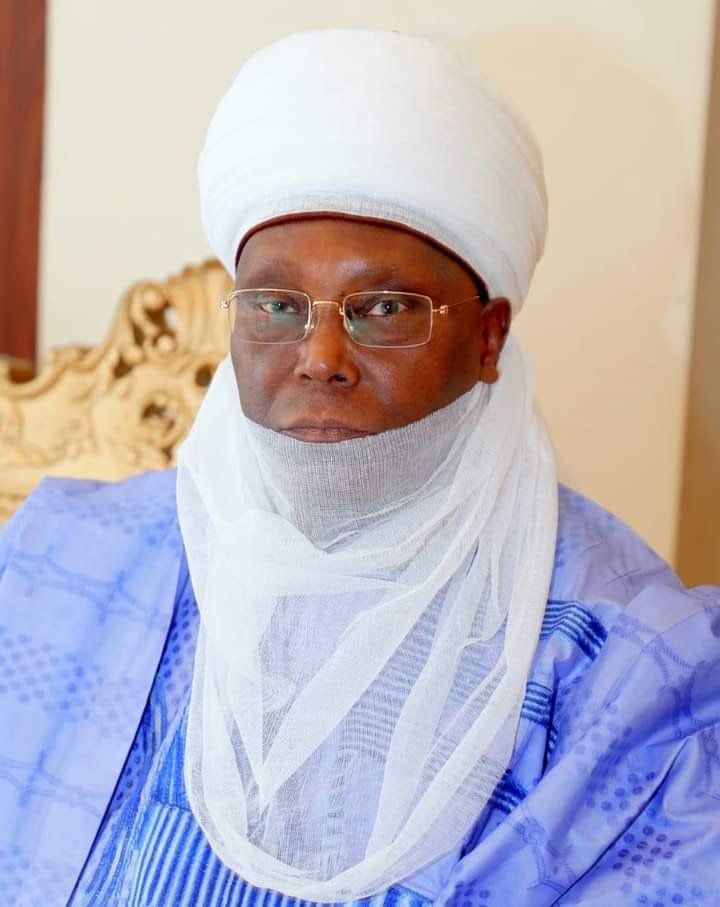
In Part 3, we watched power arrive. At 30, Atiku became the youngest commander of the Northeast, formalised a trade older than Nigeria, and trained his officers into professionals. Obasanjo gave his command 8 Land Cruisers. The Lamido of Adamawa made him Turaki, a title meant for princes. He fed Gongola as its largest maize farmer, in a state so vast that it is today Adamawa and Taraba, read the oil future before others, sent his children to a Catholic school, and mentored a whole family into careers.
Now comes the hardest test of all. The soldiers were armed. The suitcases numbered 53. The man who sent for them was the aide-de-camp to the Head of State. Every instinct of survival told the Customs boss at Lagos airport to look away, sign nothing and say nothing.
Atiku Abubakar did the opposite.
THE 53 SUITCASES
In April 1984, under the military government of Major General Muhammadu Buhari, Atiku was the Customs boss at Murtala Muhammed Airport, Lagos. A returning ambassador and the Emir of Gwandu, Alhaji Haruna, arrived from Jeddah. Their 53 suitcases were off-loaded on the tarmac against a federal directive. The Emir’s son, Major Mustapha Jokolo, aide-de-camp to the Head of State, then drove in with armed soldiers, who threatened the Customs officers on duty and took the luggage away without screening.
Atiku did what the law required. He sent a written report up the chain of command. When The Guardian ran the story and asked him to confirm it, he said it was true. When the government came under embarrassment and pressure mounted on him to deny it, he refused to lie. He said he was ready to give up his uniform rather than betray the officers who had put themselves in the line of fire. He stood firm and waited to be sacked rather than change his account. The official claim that the bags were searched elsewhere was full of holes, and the press kept pressing.
He was ready to lose his uniform rather than betray the men who stood in the line of fire.
He was saved by his record. The Finance Minister, Dr Onaolapo Soleye, who did not even know him personally, persuaded those who wanted him punished to back off, because it would be unfair to punish an officer for doing his job and standing by his men. Soleye was swayed by Atiku’s impeccable service file: no queries, no sanctions, and a string of commendations for meeting and exceeding revenue targets at every post he had headed. Years later, Atiku chaired the wedding reception of Soleye’s son in Abeokuta and publicly thanked him for saving his job. A man who remembers a kindness 20 years later, in public, before a Yoruba family in Abeokuta, is a man who understands that a nation is held together by gratitude and not by grievance.
GENERAL OF THE WAR ON DRUGS
Atiku attended a month-long drug law enforcement course in Cairo, sponsored by the United States Drug Enforcement Administration. At Murtala Muhammed Airport he and his team developed a drug interdiction policy that led to the regular arrest of hundreds of traffickers and the seizure of large quantities of cocaine, heroin and marijuana.
A United States drug enforcement officer in Lagos was so impressed that he arranged for Atiku to attend a 2-month executive programme in the United States in 1985. Atiku visited Chicago’s O’Hare Airport and the Texas and California borders with Mexico, and joined American officers on interdiction missions. When Customs created its Enforcement and Drugs Unit in 1987, Atiku, among the first officers trained in the field at home and abroad, was the natural choice to head it as Deputy Director. He coordinated anti-drug operations across every land border, airport and seaport in Nigeria.
HOW SERIOUSLY AMERICA TREATS DRUG MONEY
To understand what that work meant, you must understand how America deals with drugs.
In the United States, drug trafficking is a federal crime punished with a severity Nigerians rarely appreciate. Under its Anti-Drug Abuse laws, quantities that would be shrugged at elsewhere carry mandatory minimum sentences of 5, 10 and 20 years, and the largest cases carry life imprisonment without parole. Foreign nationals, Nigerians among them, have spent decades in American prisons for a single courier run. The DEA pursues networks far beyond America’s borders, and in the 1990s Washington went as far as decertifying Nigeria as a country that was not cooperating fully in the fight against drugs, a humiliation that cost the nation aid and standing.
America also goes after the money. Under its forfeiture laws, the government can move against funds it says are the proceeds of trafficking, and the case is brought against the money itself. That is why such matters can end in the surrender of accounts even where no person is charged with a crime. In American eyes, drug money is guilty money, and the state takes it.
That is the world Atiku was trained in, and the standard his unit worked to.
And the world has hardened since then. Under President Donald Trump, America no longer treats drug networks as a criminal nuisance to be fined. It has designated the cartels as foreign terrorist organisations and made their destruction the highest priority of its counterterrorism strategy. It has struck suspected drug vessels at sea, killing scores of people, seized assets, sanctioned financiers and pressed other governments to send their own militaries against traffickers. Whole governments in the Western Hemisphere have been toppled or threatened over narcotics.
Read that carefully. In the world Nigeria must now navigate, a leader whose name has ever been connected to drug money is not merely an embarrassment. He is a liability in every foreign capital that matters. The days when such a matter ended quietly in forfeiture are gone. Today the response is sanctions, terrorist designations and force.
Nigeria is about to choose a President who must sit across the table from that America. One of the men in this contest once hunted traffickers with American training and American agents at his side. Now set that record beside another. In 1993, only 4 years after Atiku left the Enforcement and Drugs Unit, a United States District Court in Chicago ordered the forfeiture of $460,000 from bank accounts in the name of Bola Ahmed Tinubu, now President of Nigeria. American prosecutors alleged the money was linked to the proceeds of narcotics trafficking. He was never criminally charged, and he agreed to the forfeiture rather than contest the allegation at trial.
One record was written in arrests, seizures and American training programmes that honoured a Nigerian officer. The other ended in a forfeiture order that sent money to the American government. Nigerians do not need anyone to tell them which of those two men should lead a nation at war with drug cartels. They only need to read both records.
One record was written in arrests and seizures. The other ended in a forfeiture order.
3 PROMOTIONS IN ONE DAY
Atiku had lobbied two ministers to help his friend Abubakar Musa become Director of Customs. Yet Musa, influenced by those around him, kept Atiku on one rank for 8 years. Atiku endured it without bitterness. When Musa retired, the supervising Minister, John Shagaya, promoted Atiku three times in a single day: from Assistant Comptroller to Deputy Comptroller, to Comptroller, to Deputy Director.
“ONE DECENT OFFICER”
Retired General Shehu Musa Yar’Adua, former Chief of Staff, Supreme Headquarters and deputy to Obasanjo, came to Atiku’s office seeking help with an import licence for beans from Niger. Atiku showed him how to apply properly to the President. Yar’Adua succeeded, made good money, and came back to offer a token of appreciation. Atiku declined. He said he was only doing his job.
That single act of honest help changed Nigerian history. The retired general Atiku assisted became the political leader who drew him into the struggle to end military rule, and the movement they built together became a foundation of the party that would govern Nigeria for 16 years. Atiku helped a man with a licence application. What grew from it was a democracy.
Yar’Adua was deeply impressed to find a decent officer in an agency known for corruption. A lasting friendship followed, built on shared interests in farming and maritime business and on a common desire to end military rule and build an enduring democracy. Yar’Adua told Atiku that Nigeria needed a new generation of leaders like him.
Atiku wanted a quick end to military rule. He rejected the old politics of ethnicity and religion, and agreed that only a strong, truly national party could keep the army in check. He had followed politics closely since his student days in Kano and Zaria, and by the early 1980s he was already assisting several politicians. From 1983 he worked for the election of Alhaji Bamanga Tukur as Governor of Gongola State, and he was deeply involved in his home communities of Jada, Ganye, Toungo and Mayo Belwa. He said he had spent all he had helping people with jobs and needs, and it was still not enough. That is when he began to see political power as a way to help people on a far larger scale.
TOO CAPABLE FOR THE ESTABLISHMENT
After nearly two decades of unblemished service, Atiku was in line to become Director of Customs. Minister Shagaya recommended him to President Ibrahim Babangida, and the Lamido of Adamawa put in a word. Atiku himself had never asked Babangida for a single favour, despite a friendship dating back to 1974.
But a group of prominent Gongola State figures pleaded with Babangida to drop him. Some saw him as too powerful and too independent, a self-made man rising from outside their circle. Babangida gave the job to an outsider, Dr Bello Haliru Mohammed.
Atiku did not nurse a grudge. He trusted that if he was destined to lead Customs, it would come in God’s time. He even went to see retired Admiral Murtala Nyako, one of those who had opposed him, to settle the matter face to face. Nyako reportedly apologised.
Weigh that against the politics Nigerians know. Men who are blocked once spend the rest of their lives taking revenge. Atiku walked into the house of the man who blocked him and made peace. A president will be crossed a hundred times. Nigeria needs one who answers with reconciliation rather than reprisal.
THE EXIT OF A MAN WHO KNEW HIS WORTH
The new Director saw Atiku as a rival and tried three times to remove him. Each time, Minister Shagaya refused. Rather than wait to be pushed, Atiku chose to leave on his own terms. Shagaya begged him to stay, believing he still had about 10 years of service ahead and could yet head the agency.
But Atiku had planned his life from the start. When he joined Customs 20 years earlier, he drew a graph of his expected career and resolved that if he was not heading the organisation by a set age, he would leave. He took leave for the lesser hajj in Mecca and left a sealed resignation letter, dated 28 April 1989, with his friend Adamu Yaro to deliver. His retirement took effect on 30 April 1989, as Deputy Director of Customs, the second highest rank in the service.
He left as cleanly as he had served. He paid 3 months’ salary into the government treasury in lieu of notice, pledged to return all government property, and directed that his gratuity be used to clear the balance of his housing loan. He thanked the government for 20 years of service and promised to be available whenever called upon to serve the nation. Free of the service, he gave himself fully to business, including Nigeria Container Services (NICOTES), the oil and gas logistics company he built with his Italian partner, Gabriel Volpi, and he moved into a house in Ikoyi.
He paid the government to leave, cleared his own loan with his gratuity, and promised to answer whenever Nigeria called.
A PROPHECY FULFILLED
Otunba Fashawe urged him to stay until he became Director. But Fashawe’s mother, Mrs Lydia Olayemi, a respected matriarch in Owo, told him to leave and follow the path God had set for him. Five years earlier she had visited his office and predicted that he would be presiding over the affairs of Nigeria by the age of 52 to 55. In 1999, at 52, Atiku Abubakar became Vice President of the Federal Republic of Nigeria.
EDUCATION AS NATION BUILDING
In his own words, no nation can rise above the level of its educated population. Education is mentoring on the scale of a nation, and here his lifelong instinct found its largest expression. In 1992 the family founded ABTI Nursery and Primary School in Yola with 17 pupils, when the town had only 2 private schools, then added ABTI Academy, a British-style boarding school. As strikes battered Nigerian universities, Atiku built the answer at home: the ABTI American University, founded in partnership with the American University in Washington DC, opened in September 2005 with about 200 students as the first American university in sub-Saharan Africa. Today it is the American University of Nigeria. Its graduates now work across Africa and beyond, and when insurgency tore through the Northeast the university stayed open and helped feed displaced people in their hundreds of thousands, at a time when others were fleeing Yola. That is what 17 pupils in a small school became.
The helper at the Idi Iroko border post never stopped helping. The schoolgirl whose duty he paid, the returning refugee who became a hotelier, the agent he guided to a lawful licence who later carried help to Obasanjo’s family, the cousins he put through school, the officers he trained, the wives he sent back to the classroom, the students of a university he built: one man’s habit of lifting others, repeated for 50 years. Till today, that is still what flows in Atiku’s veins: assisting people, mentoring people, and building the institutions that go on assisting long after him.
THE LEADER I HAVE STUDIED
I have laid the record out across 4 parts, and I have left nothing out. The boy who defied division. The officer who could not be bought. The commander who reformed. The mentor who built people. The man who chose truth over his career.
Now weigh it. Who else seeking to lead Nigeria spent 20 years at its borders, ports and airports, knows its revenue system from the inside, fought its drug traffickers with American training, built farms, businesses and a university with his own hands, and then served 8 years as Vice President, chairing the National Economic Council and the National Council on Privatisation, where the reforms of that era opened up an economy that had been closed for decades? This is not a man who arrived in politics looking for a career. He arrived with a service file without a query or a sanction, and a vision tested at borders, ports, airports and farms. Leadership, vision, determination and experience are not campaign words when you speak of Atiku Abubakar. They are the chapters of his life.
I studied him before I followed him. Every Nigerian who studies him the same way will reach the same verdict. On 16 January 2027, the nation has the opportunity to place that record where it belongs.
AtikuTheRecord #Atiku2027 #ADC #InformedInspiredInvolved
Aare Amerijoye DOT.B
Director General,
The Narrative Force
thenarrativeforce.org
22 September 2026
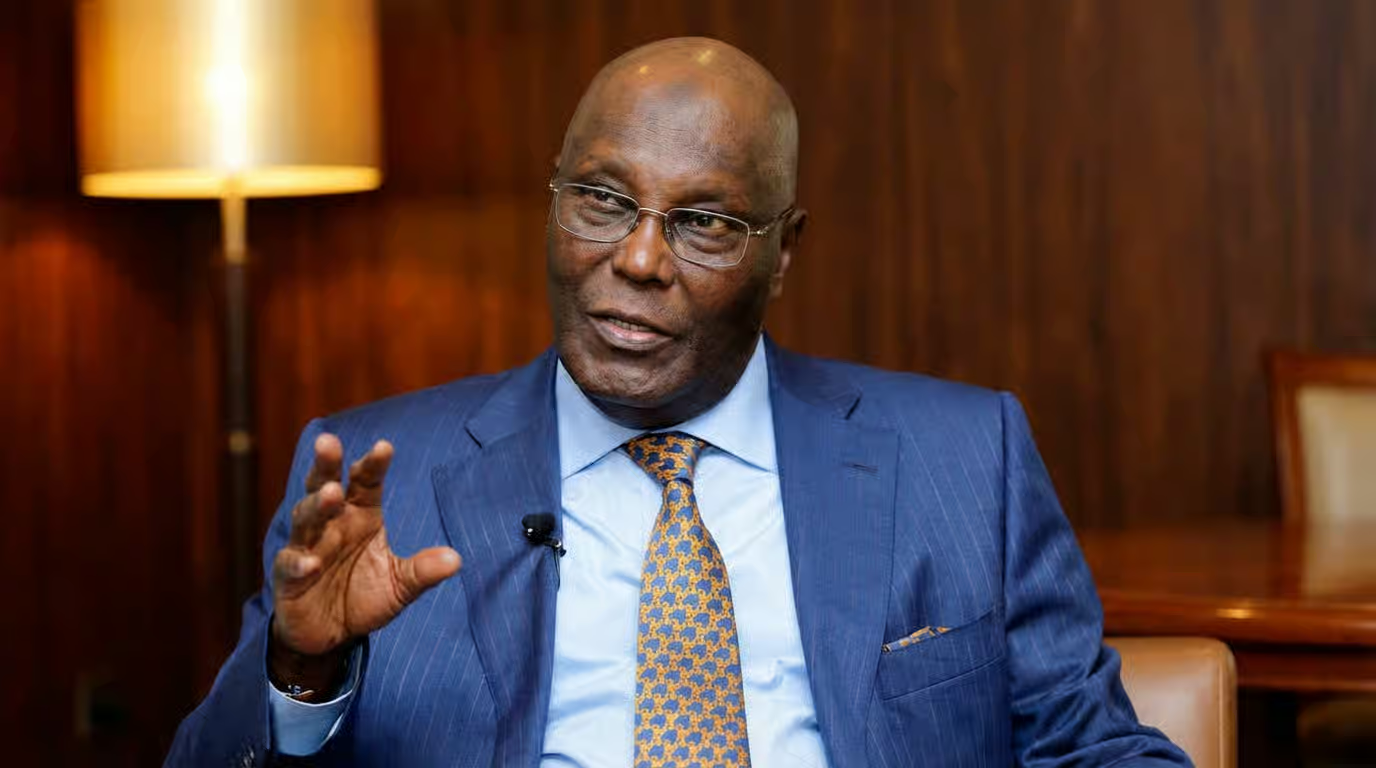
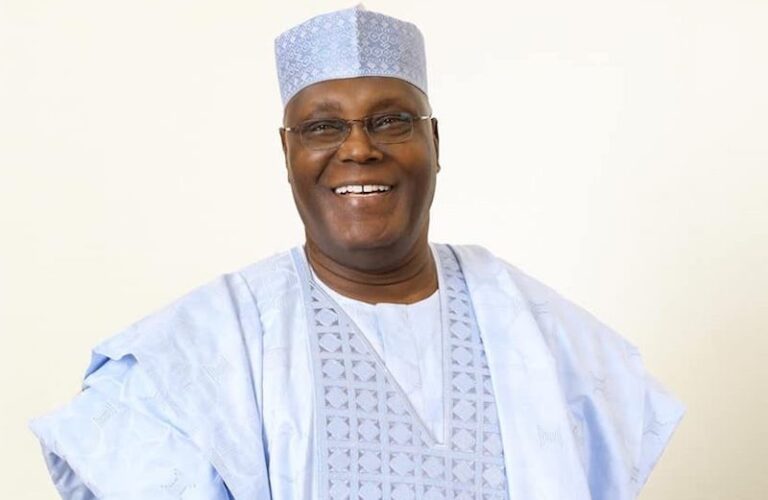
The Man Nigerians are waiting for Alhaji Atiku Abubakar GCFR
Thank you, Hon Emmanuel. The waiting ends at the ballot. Please share this with at least ten people in your ward so no one reaches the queue uninformed.