Aare Amerijoye DOT.B
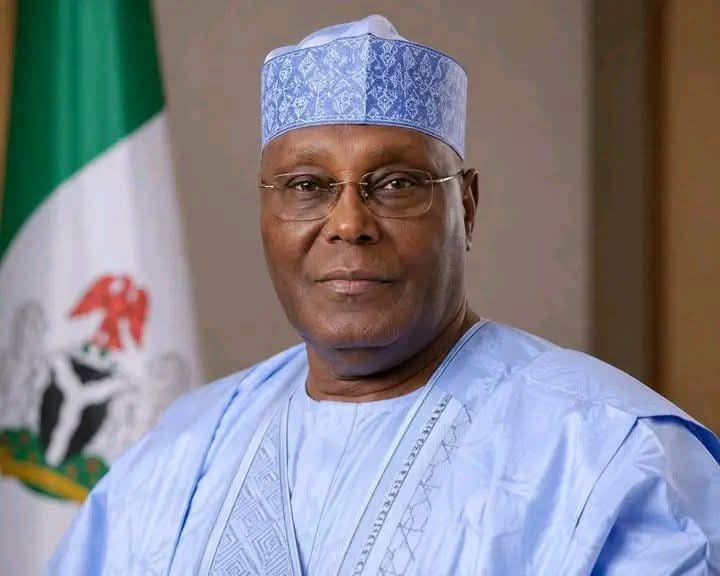
Now, if the crooked APC propagandists and their ignoramus regurgitators ask you how Atiku Abubakar made his money, do not stammer and do not apologise. Tell them plainly. It was not the proceeds of drugs. It was not the fruit of any shady deal that ends in a foreign courtroom with a man surrendering money he will not defend in front of a judge. It was hard work, foresight, discipline and patience, year after year, receipt after receipt, from a boy with nothing to a man who could employ thousands.
And here is the difference that should end every argument. Atiku’s wealth can be traced. Every naira of it has an origin, a date and an address. Let us walk through it together, from the very beginning, and let anyone who disputes a single line bring a document.
Now hold that against the men who abuse him. Their principal, Bola Ahmed Tinubu, told Nigerians he earned a fortune in salaries and bonuses in America before coming home to politics, claiming $1.8 million in deposits and a bonus of $850,000. When the journalist David Hundeyin subpoenaed Deloitte in the United States for those employment and payment records, the firm’s answer was that it had no record of him. The boast and the paperwork have never met.
But one American document in that story is beyond dispute. In 1993 a United States court ordered the forfeiture of $460,000 from accounts in his name, money American prosecutors said was linked to the proceeds of narcotics trafficking, and he surrendered it rather than defend it before a judge. Nigerians are not children. Ask yourself what line of business produces a file like that, and then ask which of the two men in this contest has ever had to explain such a thing.
AT 15, A SCHOOLBOY BUYS HIS MOTHER A HOUSE
Start here, because everything else grows from this soil.
Atiku lost his father at the age of 11. He grew up an only child, raised by a mother with little. Yet at 15, while still a student, he bought his mother a house. Not with an allowance from a rich father. Not with an inheritance. A teenage boy in the old Adamawa found a way to put a roof over his mother’s head.
At 15 he was already a provider. Some men reach 60 and have still never carried anyone.
That single act tells you everything about the engine inside the man. Decades later, when he had money, he would return to that same mud house, rebuild it, and then build her a new one entirely. The boy did not change. Only his capacity grew.
AT 22, THE SALARY THAT WAS MADE TO WORK
On 30 June 1969, at 22, Atiku joined the Department of Customs and Excise as a Cadet Assistant Preventive Superintendent, Service Number 7370. Some of his Zaria schoolmates had turned down the same offer because the starting rank looked beneath graduates. Atiku took it and went to work.
His salary was modest. What he did with it was not. He gave his bank a standing instruction to invest up to 1 Pound every month in the shares of well-performing companies. Read that again. A junior officer, in his early twenties, buying equities, month after month, out of a small pay packet.
His banker friend, Idris Yusuf, watched it happen and called him a shrewd investor who always wanted his money to work for him. When Atiku later became wealthy, Yusuf said it came as no surprise to him at all. The same Yusuf described him as belonging to the honest and truthful kind of people.
And here is what he did not do. He did not take bribes. Officers were afraid of him precisely because he would not collect money. Many people tried to induce him and he refused every time. He never asked his officers to bring him returns. He never connived with smugglers. Years later, when a retired General offered him a token of appreciation for honest help, he declined it and said he was only doing his job.
He refused envelopes for 20 years, then built a fortune in the open. That is not luck. That is character.
AT 27, A GOVERNMENT LOAN AND A BUNGALOW IN YOLA
In 1974, at 27, Atiku took a Federal Staff Housing Loan of 31,000 naira, roughly 5 years of his salary, the same facility open to other federal officers. He bought a plot in Yola GRA and built a bungalow, supervising the work closely himself.
Then came the part that separates the wealthy from the salaried. He rented the house out and did not spend the rent. He ploughed it into another building, and then another. Within a few years he owned 8 houses in choice areas of Yola.
When he was posted to Kaduna in 1980, he did the same thing again, buying 6 more plots and building rental houses on them.
Count it: one loan, one bungalow, then 14 properties built by patient reinvestment while other officers were drinking their allowances. No contract. No kickback. No padded budget. Rent, reinvested, again and again.
AT 34, THE LARGEST MAIZE FARMER IN GONGOLA
In 1981, at 34, Atiku started the Gesse Derdirabe Farm on 2,500 hectares off the Yola to Numan road, financed with a bank loan. He grew maize and cotton, and within a short time he was producing over 10,000 bags of maize a year and had become the largest maize farmer in the whole of Gongola State.
Understand the scale. Gongola was later split into 2 states, Adamawa and Taraba, and was itself carved out of a North Eastern State that has since become 6. To lead in maize across Gongola was to out-produce every farmer in a territory larger than several African countries.
Note also what farming meant under the law. Farming was the one private enterprise a public officer could lawfully undertake, and it is the one Atiku chose. In 1986 he acquired more large farms and leased out part of the land to other farmers, and he brought agricultural equipment and inputs into the country so that farmers without capital could work with machines they could never have bought. His success became other men’s ladder.
Alongside the farms he traded in rice, sugar and flour. He made good money from it, and he invested it wisely rather than displaying it. Those who know him say he has a Midas touch. The plainer truth is that he buys well, holds his nerve and reinvests.
THE FORESIGHT THAT OTHERS LACKED
In the early 1980s, while the political class behaved as though the oil boom would last forever, Atiku read the market and saw the crash coming. He understood that an import-dependent Nigeria would be strangled when oil prices fell, and he concluded that the country’s future lay in oil and gas services.
That conviction later became a business. After retiring from the service, he gave himself fully to enterprise, including the oil and gas logistics company Nigeria Container Services, built with his Italian partner Gabriel Volpi. Nigerians who now shout about his wealth should ask themselves a simple question: which of his accusers saw the 1980s collapse coming and built for the decade after it?
He did not stumble into money. He forecast the economy and positioned himself years ahead of it.
AT 42, HE PAID THE GOVERNMENT TO LEAVE
Here is the proof that settles the matter.
When Atiku retired on 30 April 1989 as Deputy Director of Customs, the second highest rank in the service, he did not leave with his hands full. He paid 3 months’ salary into the government treasury in lieu of notice. He pledged to return every item of government property. And he directed that his gratuity, the money a retiring officer lives on, be used to clear the outstanding balance of his housing loan.
Think about that. A man with something to hide does not hand money back to the state on his way out. A man who had been looting would not need his gratuity to finish paying for a house he built 15 years earlier.
FROM 45, HE BUILT INSTITUTIONS INSTEAD OF MANSIONS
In 1992 the family founded ABTI Nursery and Primary School in Yola with 17 pupils, at a time when the town had only 2 private schools. They added ABTI Academy, a boarding school built on the British model. Then, as strikes and underfunding wrecked Nigerian universities and parents were forced to send their children abroad, Atiku built the answer at home, establishing in partnership with the American University in Washington DC the institution that opened in September 2005 as the first American university in sub-Saharan Africa, today the American University of Nigeria.
That university now employs hundreds, teaches students from across Africa, and when insurgency tore through the Northeast it stayed open and helped feed displaced people in their hundreds of thousands.
This is what Atiku does with money. Others buy fleets. He builds farms, ports services, schools and a university, and then employs other people’s children in them.
ONLY LAZY MINDS THINK WEALTH MUST BE STOLEN
There is a peculiar disease in our politics. A man builds a business and becomes rich, and nobody asks him a question. Let the same man declare for office, and suddenly his money must have been stolen.
Look around you. Aliko Dangote built an empire from trading into cement, sugar and the largest refinery on the African continent. Mike Adenuga built Globacom and an oil company. Abdul Samad Rabiu built BUA. Femi Otedola, Tony Elumelu, Jim Ovia, Folorunsho Alakija, Mohammed Indimi: all of them built fortunes through enterprise, risk and foresight, and no Nigerian stands in the market shouting that their money cannot be explained.
Look abroad. Bill Gates, Warren Buffett, Jeff Bezos and Elon Musk are celebrated, not interrogated. And note this carefully, because it destroys the argument completely: business and public office are not enemies. Donald Trump was a billionaire businessman before he became President of the United States. Michael Bloomberg built a global company and governed New York. Silvio Berlusconi built a media empire and led Italy. Sebastian Pinera built a fortune and led Chile. Nobody in those countries argues that a man who can build a company is therefore unfit to serve a nation. They argue the opposite, that a man who has met a payroll understands an economy.
So why must Atiku alone be an exception? Why must a Nigerian politician be a man who has never created anything, never employed anybody, never taken a risk with his own money? That thinking is not patriotism. It is laziness, and it is the reason we keep electing men whose only enterprise was politics itself, men who owned nothing before office and everything after it.
Ask a simple question. Who was rich before power, and who became rich only after it?
Atiku’s farms, his houses, his trading, his logistics business and his schools were all built before he ever held elective office. He came to politics already made, and he came saying that he wanted power in order to expand for the nation what he had already done for himself and for everyone around him. That is the record of a builder, not a beneficiary.
BEFORE YOU TYPE, COUNT YOUR OWN YEARS
And to the hirelings who spend their days as urchins on the internet, abusing a man they have never met, let me offer a simple exercise. Put down the phone and measure your own life against his, year for year.
At 15, when Atiku bought his mother a house, what had you bought for yours? At 22, when he was instructing a bank to buy him shares out of a junior officer’s salary, what were you saving? At 27, when he was supervising the building of his first house in Yola, what were you building? At 30, when he commanded Customs across 6 of today’s states, what were you commanding? At 34, when he was the largest maize farmer in all of Gongola, what were you growing? At 42, when he walked away from the second highest rank in the Customs service with a clean file, what had you earned that nobody gave you?
A man who has never planted a seed, never met a payroll, never employed a single soul and never carried anybody but himself has no standing to lecture Nigeria about how wealth is made. While you were perfecting the art of the insult, Atiku was perfecting the art of building a life, and then building lives for other people.
He spent those years making something. Some spent theirs making noise.
Abuse is free and it is worth exactly what it costs. Ask them for a document and watch the keyboard go quiet.
THE ANSWER TO GIVE THEM
So when the propagandists come with their noise, give them the chronology and watch them fall silent. A house bought for his mother at 15. Shares bought out of a junior officer’s salary at 22. A housing loan at 27 turned into 8 houses in Yola and 6 plots in Kaduna. The largest maize farm in Gongola at 34. Trading in rice, sugar and flour. A correct reading of the oil crash before the crash. A clean exit at 42 in which he paid the government rather than milked it. Schools from 1992 and a university from 2005.
Not one drug file. Not one forfeiture order. Not one court anywhere on earth ordering him to surrender money he could not explain. Nearly two decades in the Customs service with a file that carried no query and no sanction, only commendations for exceeding revenue targets.
Till today, the same instinct that made him buy his mother a house at 15 is what still flows in Atiku’s veins: working hard, thinking ahead, and lifting everyone within reach. Nigeria has been ruled by men who became rich only after they took power. Here is a man who was already successful before power, and who wants power in order to do for 200 million Nigerians what he has spent 60 years doing for everyone around him.
That is how Atiku Abubakar made his money. Let them bring their own chronology.
AtikuTheRecord #Atiku2027 #ADC #InformedInspiredInvolved
Aare Amerijoye DOT.B
Director General,
The Narrative Force
thenarrativeforce.org
23 September 2026