Aare Amerijoye DOT.B.
Every failing government eventually retreats into a single consoling myth, and the myth consoling the Tinubu presidency in the small hours is the myth of the fortress. The strategy, whispered in Aso Rock and shouted in the beer parlours of its propagandists, is disarmingly simple. Concede the North, they say. Absorb the avalanche. Then summon seven million votes from the South West, the ancestral homeland, the impregnable citadel, and let the fortress redeem what the federation has rejected. It is a strategy with the elegance of desperation, and in this second instalment of our electoral analysis, we shall take it apart stone by stone, until the reader sees what the strategists already fear. The fortress leaks. The fortress has always leaked. And on 16 January 2027, the fortress will fall in on its own garrison.
Begin, as all honest analysis must, with the historical record rather than the campaign brochure. The seven million figure is not a projection. It is an incantation. At no election in the Fourth Republic has any presidential candidate harvested anything approaching seven million votes from the six states of the South West, and the candidate now demanding that miracle achieved his 2023 zonal performance under conditions he will never enjoy again. In 2023 he ran as the son of the soil proclaiming emi lokan, riding the emotional currents of a South West reclaiming the presidency after sixteen years, with the federal machine still ambiguous, the opposition divided against itself, and the economic catastrophe of his own authorship still a thing of the future.
Even then, with every wind favourable, the zone did not deliver a fraction of what his strategists now pencil into their spreadsheets. The question that ends the argument is a short one. If seven million was beyond reach when the region was courting him, by what alchemy does it materialise now that the region is burying its dead businesses because of him?
And let no analyst pretend that 2027 is 2023 replayed, because every index, every dynamic, and the entire political temperature of that season has been inverted. The indices of 2023 were the indices of promise: a candidate campaigning on an unexamined record, an economy whose wounds were still blamed on his predecessor, and a hopeful electorate extending credit. The indices of 2027 are the indices of receipts: petrol at multiples of its 2023 price, a naira devalued beyond recognition, food inflation at generational highs, and an IMF paper trail of trillions in off budget spending.
The dynamics have inverted just as completely. The dynamics of 2023 were the dynamics of a fragmented opposition, three major candidates splitting the anti establishment vote into impotence; the dynamics of 2027 present a consolidated ADC coalition with a single Northern standard bearer and structure in every senatorial district. And note well the elegance of the reversal, for it answers the objection before it is raised: the consolidation of 2027 has occurred where consolidation decides elections, in the North, behind one candidate, while the fragmentation of 2027 now occurs inside the incumbent’s own home zone, where it wounds only him. The political temperature of 2023, warm with the sentiment of emi lokan and the indulgence of the benefit of the doubt, has meanwhile cooled into the cold fury of a hungry electorate that has seen the books. The strategists projecting seven million votes are, in effect, forecasting 2027’s weather with 2023’s thermometer, and no forecast built on a dead season has ever survived contact with a live electorate.
The answer of the propagandists is loyalty, and it is here that they misread their own people most profoundly. The Yoruba political tradition is not a tradition of dynastic obedience. It is the most ruthlessly transactional and ideologically alert voting culture in the federation, the tradition of Awolowo’s welfarism, of free education as a covenant, of governments judged by the school fee, the market stall, and the price of gari. That tradition has made the South West the graveyard of every political establishment that mistook ethnicity for immunity, a zone whose electoral history, from the Second Republic to 2015, is a ledger of verdicts rendered strictly on performance, with no party, however entrenched, ever spared the audit. It is a zone that audits with an accountant’s coldness.
And what does the audit of 2023 to 2027 show? A petrol price multiplied several times over. A naira reduced to a rumour of its former self. Food inflation that has turned the Sunday rice of the Ibadan household into a fortnightly negotiation. School fees unpaid, workshops shuttered, danfo fares doubled, and a coastal highway scandal that bulldozed livelihoods along its route while the contracts remained a family matter. The fortress strategy asks the most performance-sensitive electorate in Nigeria to reward the worst economic performance in its living memory, out of sentiment. Sentiment does not fill a cooking pot. The Yoruba voter knows this better than any strategist on the government payroll.
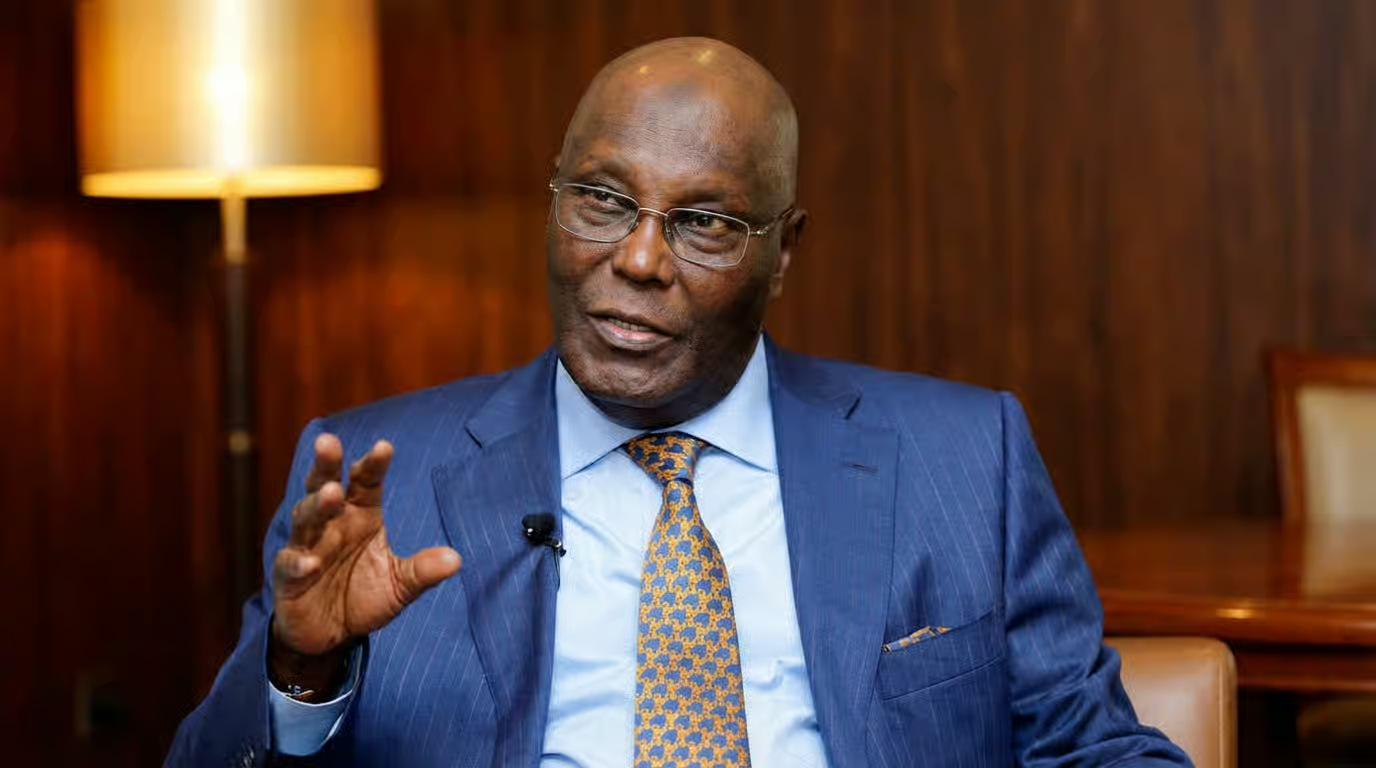
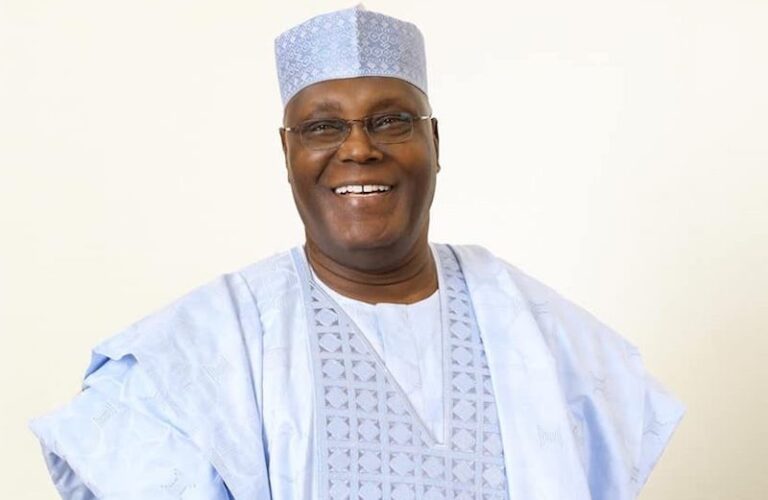
Now insert the fact that transforms erosion into demolition. The South West of 2027 is not a two way contest between the incumbent and abstention. It is a three way battlefield, and the ADC coalition has done what no opposition has managed in the zone since 2011. It has built structure. Not hashtags, structure. Ward by ward machinery in Oyo, Osun, Ogun, Ondo and Ekiti, tested in the fire of a real governorship contest, staffed by the old progressive networks that the incumbent’s circle discarded on its climb and has insulted ever since. Through that machinery, Atiku Abubakar will extract a minimum of one and a half million votes from the South West on 16 January.
Mark the arithmetic of that extraction, because it is a double entry written in the incumbent’s own ledger. Every one of those one and a half million votes is simultaneously subtracted from the fortress and added to the challenger’s national spread, a two way swing of three million in effective terms, before a single Northern ballot is counted. Add Peter Obi’s urban harvest in Lagos, where the NDC’s youth constituency remains dense and unforgiving, and deduct the structural decline in turnout that afflicts every government presiding over hardship, and the seven million target does not merely miss. It collapses into a number that cannot even guarantee the incumbent his own zone’s margins, let alone compensate for a North in open electoral revolt.
And it is the Northern side of the ledger that turns a regional embarrassment into a national impossibility, because the fortress strategy was only ever half a strategy. It requires not merely that the South West over performs but that the Northern collapse remains survivable, and nothing in the data suggests survival. As established in the first instalment of this series, Atiku enters this contest positioned to win no fewer than sixteen of the nineteen Northern states outright, to post 25 per cent or better in all nineteen, and to meet the Section 134 threshold in twenty six states of the federation against a constitutional requirement of twenty four.
Against that avalanche, even a flawless fortress yields arithmetic failure. A candidate cannot lose the North by millions, leak a quarter of his home garrison, forfeit Lagos margins to a third force, and still assemble either the plurality or the spread the Constitution demands. The strategists know this, which is why the seven million figure exists at all. It is not a target. It is a tranquilliser, administered to a political base that would panic if shown the real numbers.
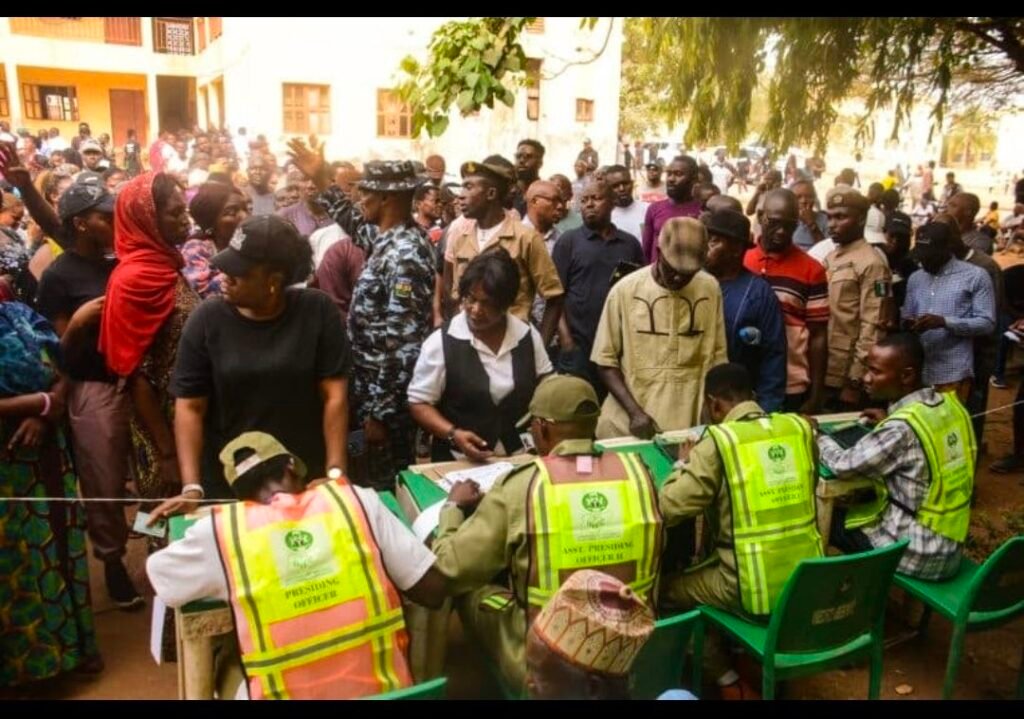
There remains the last refuge of the cornered incumbent, the theory of the machine, the suggestion floated by the cynical that what the fortress cannot win the apparatus will manufacture. Let this be answered plainly and in advance. The 2027 election will be the most scrutinised in Nigerian history, contested under an Electoral Act with tightened transmission provisions, watched by an opposition coalition with legal and monitoring structures in every senatorial district, and conducted before an international community that has already read the IMF’s findings on this administration’s fiscal conduct.
Any manipulation cannot be attempted without detection, documentation, and consequence, for the coalition’s agents will be at every polling unit, its lawyers at every collation centre, and its cameras everywhere in between. The era in which results could be quietly arranged and quietly forgotten died with the smartphone, and every polling unit in the South West will have a thousand witnesses ready to testify.
So let the record of this second instalment stand beside the first. The North will rally, sixteen states strong, for reasons of economics, of turn, and of the man himself. And the South West, the supposed redoubt, will deliver the incumbent his cruellest wound, because fortresses are never taken from outside alone. They fall when the garrison stops believing in the commander.
One and a half million South West votes will march out of the citadel and into the Atiku column, the seven million fantasy will be exposed on live television as the returns are read, and the strategists who promised the impossible will discover the oldest lesson in Yoruba politics, taught from Awolowo’s day to this. This land does not worship power. It weighs it. And on 16 January 2027, the scale will read what the kitchen tables of Ibadan, Abeokuta, Akure, Osogbo and Ado Ekiti have read for four hungry years.
The fortress leaks. The reckoning holds. And the arithmetic of inevitability, written in the first instalment and reinforced here, still carries a single name. Atiku Abubakar.
Aare Amerijoye DOT.B
Director General, The Narrative Force
thenarrativeforce.org
5 July 2026
.