PART 15 OF 50: A FEDERATION THAT CANNOT BREATHE
Aare Amerijoye DOT.B
It is two o’clock in the morning in a village in Zamfara.
The first motorcycles are heard from the bush. Then the shooting begins.
The village head grabs his phone and calls the police. The nearest station is many kilometres away, and the officers there have one vehicle and not enough fuel. They must wait for orders. The orders must come from above. And above, in Nigeria, means far away.
By the time help arrives, the bandits are gone. So are eleven of his people.
Now travel a thousand kilometres south, to a community in Ondo. A similar emergency, a similar call. Here the state has its own security outfit, men who know every footpath, speak the language and live in the next street. They arrive in minutes.
Same country. Same constitution. Two different outcomes.
The difference was not courage. It was distance, the distance between the people in danger and the power to protect them.
In Nigeria, the power to save your life sits too far from your life.
ONE HEAD, THIRTY-SIX BODIES
Nigeria calls itself a federation. In practice, it is run like a single giant head trying to control thirty-six bodies.
Look at the facts.
The Exclusive Legislative List in our constitution holds 68 subjects on which only the federal government can make laws. They include police, mines and minerals, the major ports, and much more.
Look at the money. Of the revenue shared from the Federation Account, the federal government takes about 52.68 per cent. All thirty-six states together share about 26.72 per cent, and all 774 local governments about 20.60 per cent.
One government takes more than half. Thirty-six states and seven hundred and seventy-four councils share the rest.
So the governor of Kebbi and the governor of Akwa Ibom, both elected by millions, must wait for Abuja to decide on matters as close to their people as policing. The council chairman in Ekiti, closest of all to the people, often has the least power and the least money.
Imagine a family where the father in Abuja controls the food, the money, the keys to every room and the guard at the gate, while thirty-six grown children must ask him for everything. That is not a family. That is a dependency.
A federation where everything flows to the centre is a federation in name only.
WHAT THE CENTRE COSTS US
Over-centralisation is not just a theory for lawyers. Nigerians pay for it every day.
They pay for it in blood. One national police force is stretched across 923,000 square kilometres, and too often it is commanded from far away. It is asked to know every forest in Benue, every creek in Bayelsa and every hill in Plateau. It cannot. And communities from Zamfara to Kwara pay for that distance with their lives.
They pay for it in idle wealth. Every state in Nigeria sits on minerals, but control of mines sits at the centre. Gold leaves Zamfara on the backs of smugglers. Lithium leaves Nasarawa. Much of the wealth beneath our states enriches criminals before it benefits the people living on top of it.
They pay for it in jammed ports. Too much of the nation’s cargo has been forced through Lagos, while Port Harcourt, Calabar, Warri and the Ibom Deep Sea Port in Akwa Ibom wait to be fully used. A trader in Onitsha may see his container stuck for weeks, while ports much closer to him sit underused.
And they pay for it in politics. When all the money sits in Abuja, every election becomes a war to capture the centre. The stakes are so high that people kill for it. Decentralise the power, and you lower the temperature of the whole nation.
When the centre holds everything, everyone fights for the centre.
THE REPORT THAT GATHERED DUST
None of this is a secret. The ruling party knew it.
In 2018, its own committee on true federalism recommended devolving more powers to the states. Nigerians were told the age of the overbearing centre was ending.
Then the report gathered dust.
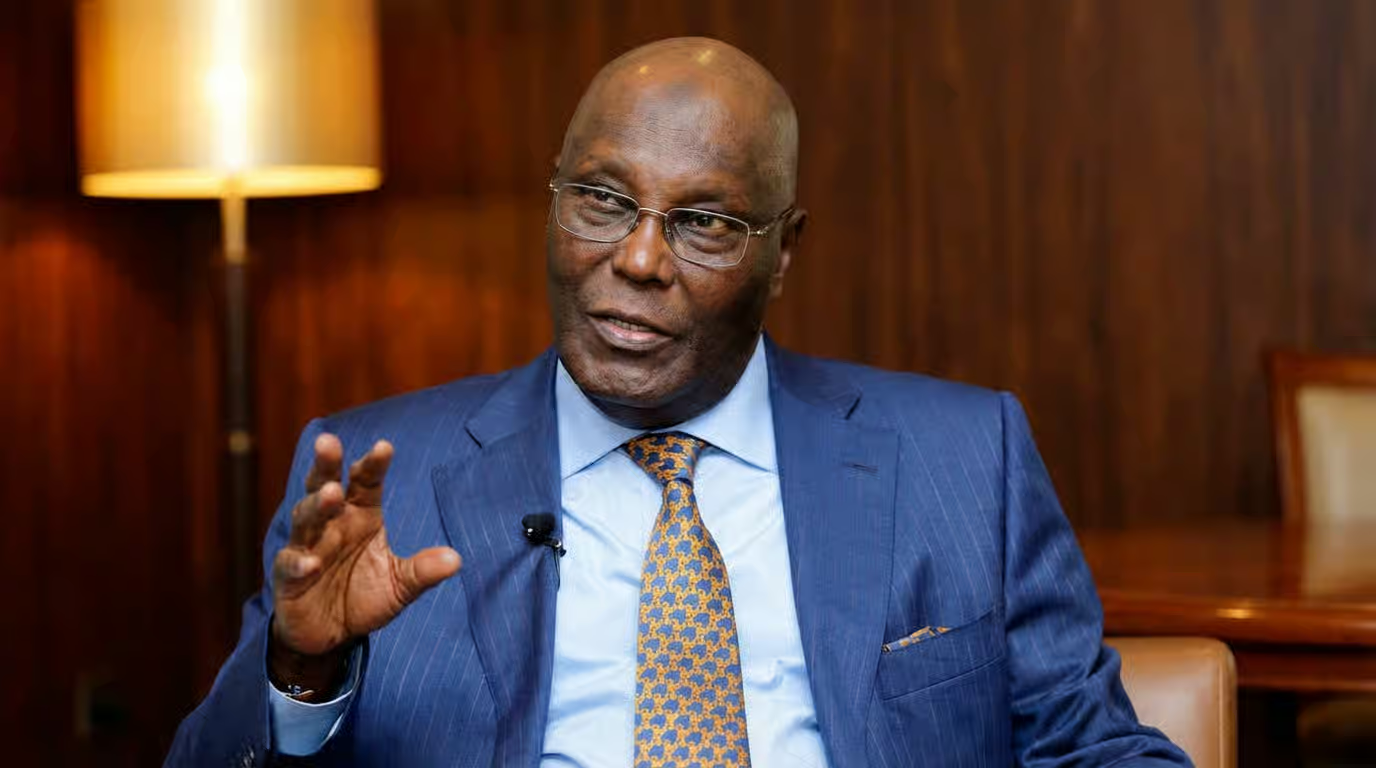
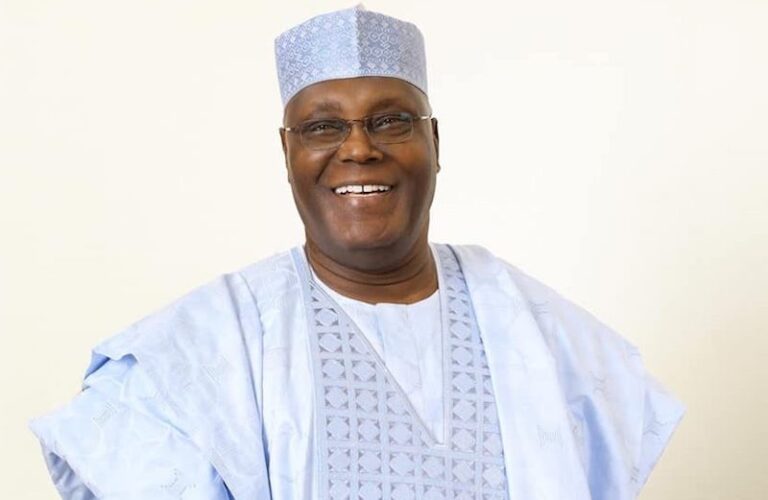
Atiku named it for what it was in January 2023, at a rally in Abakaliki. He called the ruling party “very deceitful” on restructuring, and said: “They abandoned the said issue of restructuring.”
Today a constitutional bill that includes state police has finally gone to the state assemblies. By mid-October 2026, only five of the twenty-four state assemblies needed for approval had passed it.
If it becomes law, every Nigerian should welcome it. But remember how long the idea was resisted and delayed while communities buried their dead. Even now, it is not law.
And note the size. State police is one brick. Restructuring is the house.
They left the idea on the shelf for years. One brick is not a house.
A CONVICTION, NOT A CAMPAIGN SLOGAN
Atiku did not discover restructuring in an election year.
For close to a decade, he has argued for it in public, including at times when it was unfashionable in much of the North. In 2017, when the debate was raging, he answered back publicly that Nigeria needed to be restructured, and soon.
In January 2023 he told Nigerians plainly that he was “committed to power devolution and restructuring,” and that restructuring “will be a major policy thrust of our government.”
Some will ask why it was not done between 1999 and 2007. The honest answer is that those years were spent pulling a young democracy out of debt and decay: winning debt relief from the Paris Club, rebuilding the reserves, reforming the banks and creating a pension system that still stands. And restructuring, by its nature, cannot be decreed by any president. It requires the National Assembly and at least twenty-four state assemblies to amend the constitution.
What a president can do is lead that process with conviction, and use every executive power he has to move authority closer to the people while the constitution catches up. That is exactly what Atiku’s 2027 plan does.
He did not borrow restructuring for an election. He has carried it for years.
ATIKU’S ANSWER: LET THE FEDERATION BREATHE
Atiku’s plan turns that conviction into concrete steps, and each one moves power closer to the people.
Security closer to the people. At his screening on 20 May 2026, Atiku committed to decentralised security structures, alongside intelligence-led operations and inter-agency coordination. Point 8 of his 12 Point Agenda strengthens national security through recruitment, welfare and modern technology. Security that knows the forest and speaks the language, backed by a strong national force, is security that arrives before the bandits leave.
Money closer to the people. Point 3 commits to implementing the Supreme Court judgment on local government autonomy, with funds paid directly to councils. When the council that fixes your road and runs your clinic actually controls its own money, power has truly come home.
Trade closer to the people. Point 4 revives the ports of the East and South-South at Port Harcourt, Calabar, Warri and the Ibom Deep Sea Port, so that Nigeria’s cargo stops squeezing through one gateway and flows through many.
Wealth closer to the people. Restructuring, as Atiku has long argued it, means giving states greater room to develop the resources and economies within their borders, so that every state becomes a centre of production rather than a beggar at the monthly allocation meeting. That is the constitutional work an Atiku presidency will champion with the National Assembly and the states.
And over all of it, transparency. Point 11 commits to auditing contracts and publishing procurement, so that power moved closer to the people comes with the people’s eyes on it.
Power closer to the people is not a threat to Nigeria. It is how Nigeria survives.
TO THE VILLAGE HEAD IN ZAMFARA
To the village head in Zamfara still waiting for help that comes too late. To the trader in Onitsha whose container sits far from home. To the council chairman in Ekiti with responsibilities but no money. To every Nigerian who has been told to wait for Abuja.
You are not asking for Nigeria to break. You are asking for Nigeria to work.
So share this with your town union, your traditional council, your local government forum, your youth and women’s groups, your family platform and your church and mosque communities. Then ask your people one question: when trouble comes to our town, how far away is the power to stop it? When they answer, tell them about the man who has carried restructuring for close to a decade, and about his plan to bring security, money and trade closer to their doors.
Collect your PVC if it is ready, and keep checking with INEC until it is. On Saturday, 16 January 2027, go early, vote, stay and protect your vote until the result is pasted at your polling unit.
Tonight, somewhere in Nigeria, a phone will ring in a far-away office while a village waits in the dark.
On 16 January, vote to bring the power home.
Vote Atiku. Vote Amaechi. Vote ADC.
Next: Part 16, Blood on the farmland: farmer and herder clashes.
#Atiku2027 #AtikuAmaechi2027 #AtikusAnswers #VoteADC #RestructureNigeria
Aare Amerijoye DOT.B
Director General, The Narrative Force
thenarrativeforce.org
25 October 2026