Aare Amerijoye DOT.B
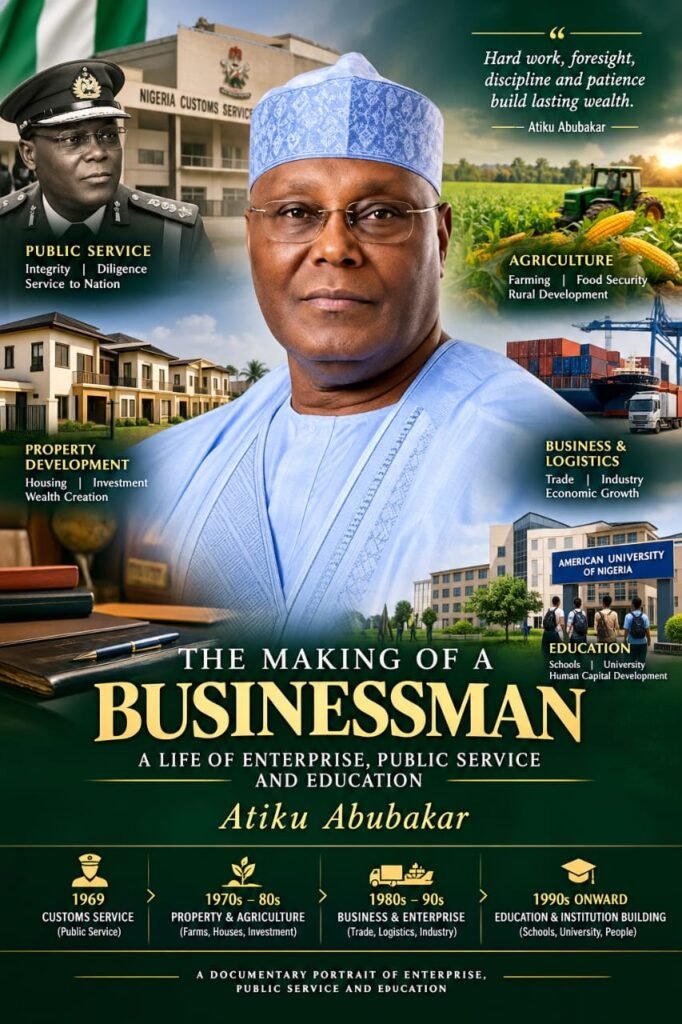
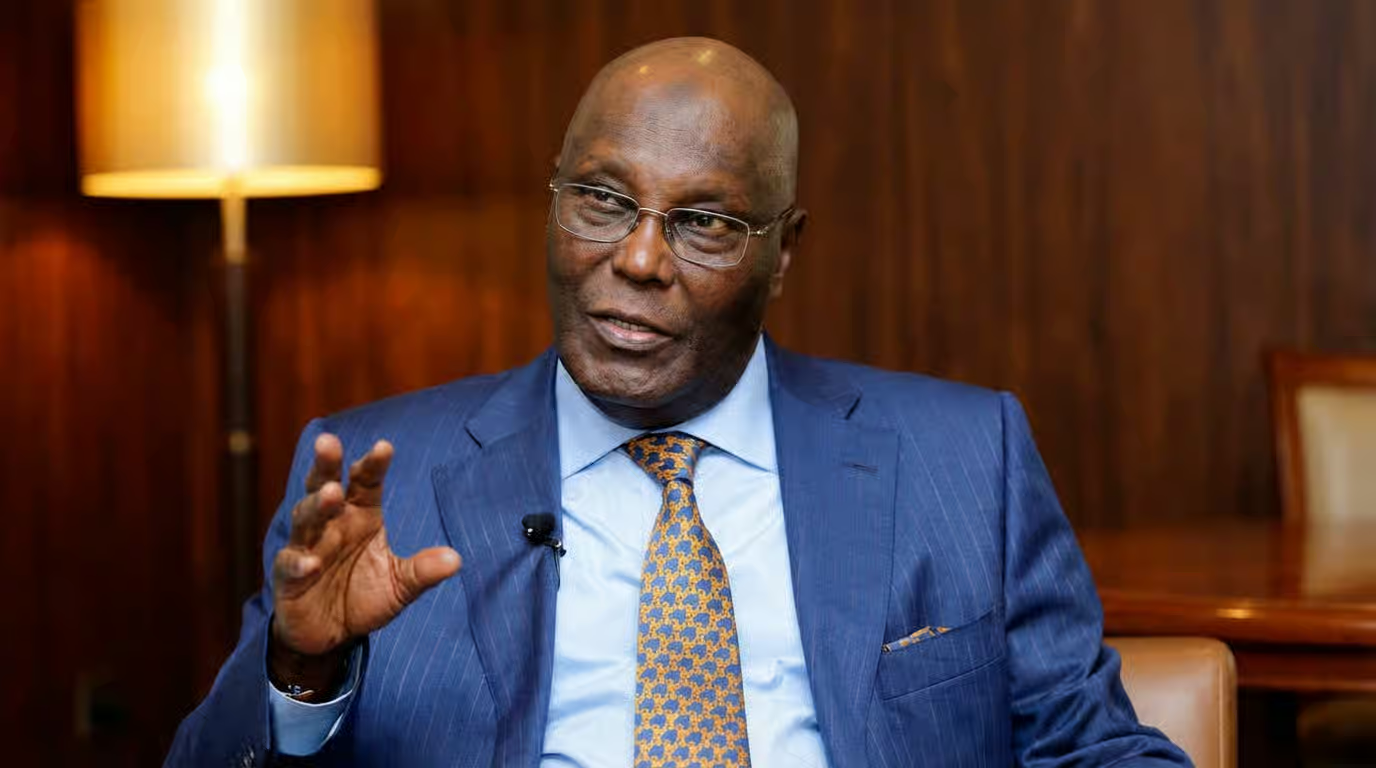
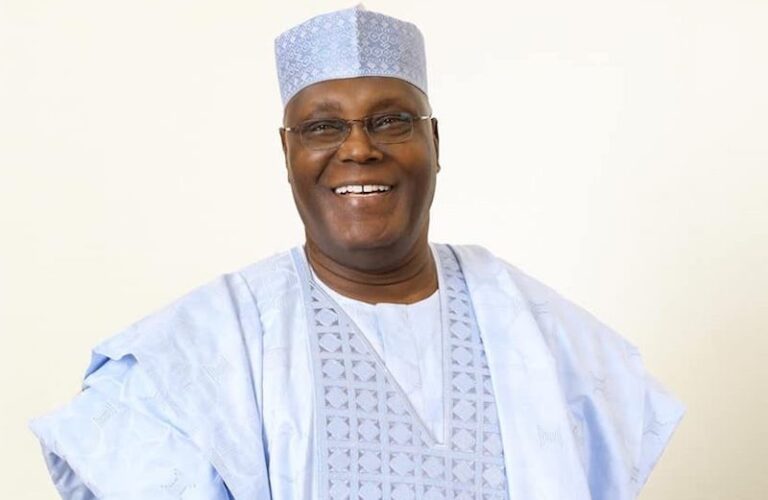
Look carefully at the portrait. A Customs officer. Farmland and a tractor. Houses. A port stacked with containers. A university campus with students walking into it. Underneath, a timeline: 1969, the 1970s and 80s, the 1980s and 90s, the 1990s onward.
That is not a campaign poster. That is a receipt.
Now try to build the same poster for Bola Ahmed Tinubu. Try to fill those panels with a career you can date, an employer that will confirm him, and a business you can visit. You will find that where Atiku’s life has photographs, addresses and harvests, his opponent’s has questions that have followed him for 30 years.
This is the difference Nigerians must weigh on 16 January 2027.
1969: A YOUNG MAN PUTS ON A UNIFORM
Atiku Abubakar joined the Department of Customs and Excise on 30 June 1969 as a Cadet Assistant Preventive Superintendent, Service Number 7370. Some of his Zaria schoolmates refused the same offer because the entry rank looked beneath graduates. He took it.
Then he spent 20 years earning every step. Idi Iroko, where smugglers ambushed his patrol on a sabotaged bridge and he tracked them to their warehouse and seized their goods. Ikeja Airport, where he helped design the international terminal that still receives the world today. Apapa during the Cement Armada, working extra hours searching ships. Kano, where he and his boss fought smuggling and wrote the policy Nigeria still argues about. Maiduguri at just 30, the youngest Area Administrator in the service, commanding a Northeast that is now 6 states.
And through all of it, one constant. He would not take money. Officers feared him because he refused to collect. Men tried to induce him and failed. He left in 1989 as Deputy Director, the second highest rank in the service, with a file carrying no query, no sanction and a string of commendations for exceeding revenue targets.
A public career you can trace posting by posting, year by year, with the documents to match.
Ask now for the equivalent. Where is the employment record that anchors the other man’s early fortune? He told Nigerians he earned $1.8 million in salaries and an $850,000 bonus in America. When the journalist David Hundeyin subpoenaed Deloitte in the United States for those records, the firm’s answer was that it had no record of him. Twenty years of Atiku’s service can be checked in the files of the Nigeria Customs Service. A single claimed American job cannot be confirmed by the company itself.
1970s TO 80s: HOUSES, FARMS, AND A MAN WHO PLANTED
The second panel is property and agriculture, and every item in it is dated.
In 1974 Atiku took a Federal Staff Housing Loan of 31,000 naira, about 5 years of his salary, the same facility open to every federal officer. He bought a plot in Yola GRA, built a bungalow under his own supervision, rented it out and refused to spend the rent. He ploughed it into another building, then another, until he owned 8 houses in the best parts of Yola. Posted to Kaduna in 1980, he bought 6 more plots and built again.
In 1981 he started the Gesse Derdirabe Farm on 2,500 hectares off the Yola to Numan road, financed by a bank loan. Maize and cotton. Over 10,000 bags of maize a year. The largest maize farmer in the whole of Gongola, a state so vast that it is today Adamawa and Taraba, carved out of a North Eastern State that has since become 6. He then leased land to other farmers and imported equipment so that men without capital could work with machines they could never have bought.
Note what farming meant for a public officer. It was the one private enterprise the law expressly permitted, and it is the one he chose. Everything about his wealth in that era is visible from the road: houses that still stand, land that was ploughed, maize that fed people.
You can drive to Atiku’s wealth and touch it. It has an address.
1980s TO 90s: FORESIGHT, AND A COURT IN CHICAGO
The third panel is trade, logistics and industry, and here the contrast becomes brutal.
While the political class behaved as though the oil boom was eternal, Atiku read the market and saw the crash coming. He concluded that an import-dependent Nigeria would be strangled, and that the country’s future lay in oil and gas services. On retiring in 1989 he gave himself fully to enterprise, including the logistics business he built with his Italian partner Gabriel Volpi.
He also left the service in a manner no looter would contemplate. He paid 3 months’ salary into the treasury in lieu of notice, pledged to return all government property, and directed that his gratuity be used to clear the balance of his housing loan. A man who had been stealing does not hand money back to government on his way out.
Now the other record of that same decade. In 1993 a United States District Court in Chicago ordered the forfeiture of $460,000 from bank accounts in the name of Bola Ahmed Tinubu. American prosecutors alleged the money was linked to the proceeds of narcotics trafficking. He was never charged with a crime, and he agreed to surrender the money rather than contest the allegation before a judge.
Understand what that means in American terms. In the United States, trafficking carries mandatory minimums of 5, 10 and 20 years and, in the biggest cases, life without parole. The government can move against money it says is drug proceeds without charging any person, because the case is brought against the money itself. And today the posture is harder still. Under President Donald Trump, Washington has designated the cartels as foreign terrorist organisations, made their destruction the top priority of its counterterrorism strategy, struck suspected drug vessels at sea, sanctioned financiers and pressed other governments to deploy their militaries.
That is the America Nigeria’s next President must sit across the table from. One of the men in this contest hunted traffickers with DEA training, arrested hundreds and seized cocaine, heroin and marijuana as head of the Customs Enforcement and Drugs Unit. The other surrendered $460,000 to the American government. Nigerians can decide for themselves which record they want representing them in Washington.
One man was trained by American drug agents. The other settled with American prosecutors.
1990s ONWARD: WHAT A MAN DOES WITH MONEY
The final panel is education, and it answers a question every voter should ask: what does a rich man do with his wealth?
In 1992 the family founded ABTI Nursery and Primary School in Yola with 17 pupils, when the whole town had only 2 private schools. Then ABTI Academy, a boarding school on the British model. Then, as strikes and underfunding wrecked Nigerian universities and parents were forced to send their children abroad, Atiku built the answer at home. In partnership with the American University in Washington DC, the institution opened in September 2005 with about 200 students as the first American university in sub-Saharan Africa.
Today it is the American University of Nigeria. It employs hundreds, teaches students from across Africa, and when insurgency tore through the Northeast it stayed open and helped feed displaced people in their hundreds of thousands, at a time when others were fleeing Yola.
That is what the poster means by human capital development. Not a slogan. A campus, a payroll and a generation of graduates.
THE LAZY LIE ABOUT ENTERPRISE
The propagandists have one answer to all of this: no Nigerian can be rich honestly, so Atiku’s wealth must be dirty. It is the laziest argument in our politics.
Aliko Dangote, Mike Adenuga, Abdul Samad Rabiu, Femi Otedola, Tony Elumelu, Jim Ovia, Folorunsho Alakija, Mohammed Indimi: all built fortunes through enterprise, risk and foresight, and nobody demands that they explain themselves. Abroad, Bill Gates, Warren Buffett, Jeff Bezos and Elon Musk are celebrated, not interrogated. And business is no bar to office anywhere serious. Donald Trump was a billionaire before the White House. Michael Bloomberg built a global company and governed New York. Silvio Berlusconi built a media empire and led Italy.
So why must the Nigerian politician alone be a man who never built anything? That belief is exactly why we keep electing men who owned nothing before office and everything after it.
Ask the only question that matters. Who was rich before power, and who became rich after it?
BEFORE YOU TYPE, COUNT YOUR OWN YEARS
And to the hirelings who spend their days as urchins online, abusing a man they have never met, here is an exercise. At 15, when Atiku bought his mother a house, what had you bought for yours? At 22, when he was buying shares out of a junior officer’s salary, what were you saving? At 27, when he was building his first house in Yola, what were you building? At 34, when he was the largest maize farmer in Gongola, what were you growing? At 42, when he walked away from the second highest rank in the Customs service with a clean file, what had you earned that nobody gave you?
While some perfected the art of the insult, Atiku was perfecting the art of building a life and then building lives for other people.
THE PORTRAIT AND THE BLANK FRAME
Put the two posters side by side.
One is filled: a uniform in 1969, houses from 1974, a farm from 1981, a logistics business, schools from 1992, a university from 2005, and a service file with no query and no sanction.
The other has a claimed American job the company cannot confirm, and one American document nobody disputes, a forfeiture order for $460,000 in a Chicago court.
Nigeria has tried the mystery. On 16 January 2027 it can choose the record.
AtikuTheRecord #Atiku2027 #ADC #InformedInspiredInvolved
Aare Amerijoye DOT.B
Director General,
The Narrative Force
thenarrativeforce.org
23 September 2026