
Aare Amerijoye DOT.B,
ONE of the enduring questions of Nigerian political thought, since independence, has been national unity. Three questions define this debate: unity for what? Unity of whom? And unity of which type? Let us consider them one by one.
Unity for What?
All too often, Nigerian politicians invoke unity as performance, a platform slogan, a campaign jingle, a photo opportunity at an Eid or Christmas celebration. Pan-Nigerian voices, from Awolowo to Zik to Gani Fawehinmi, warned us against this fraud.
Those who sell unity as an objective without anchoring it to security, prosperity, and the guaranteed survival of every citizen offer us a superfluous unity. Anything less is inadequate. Nigerian power, economic power, institutional power, the power to determine our own future, is the only desirable objective of genuine national unity.
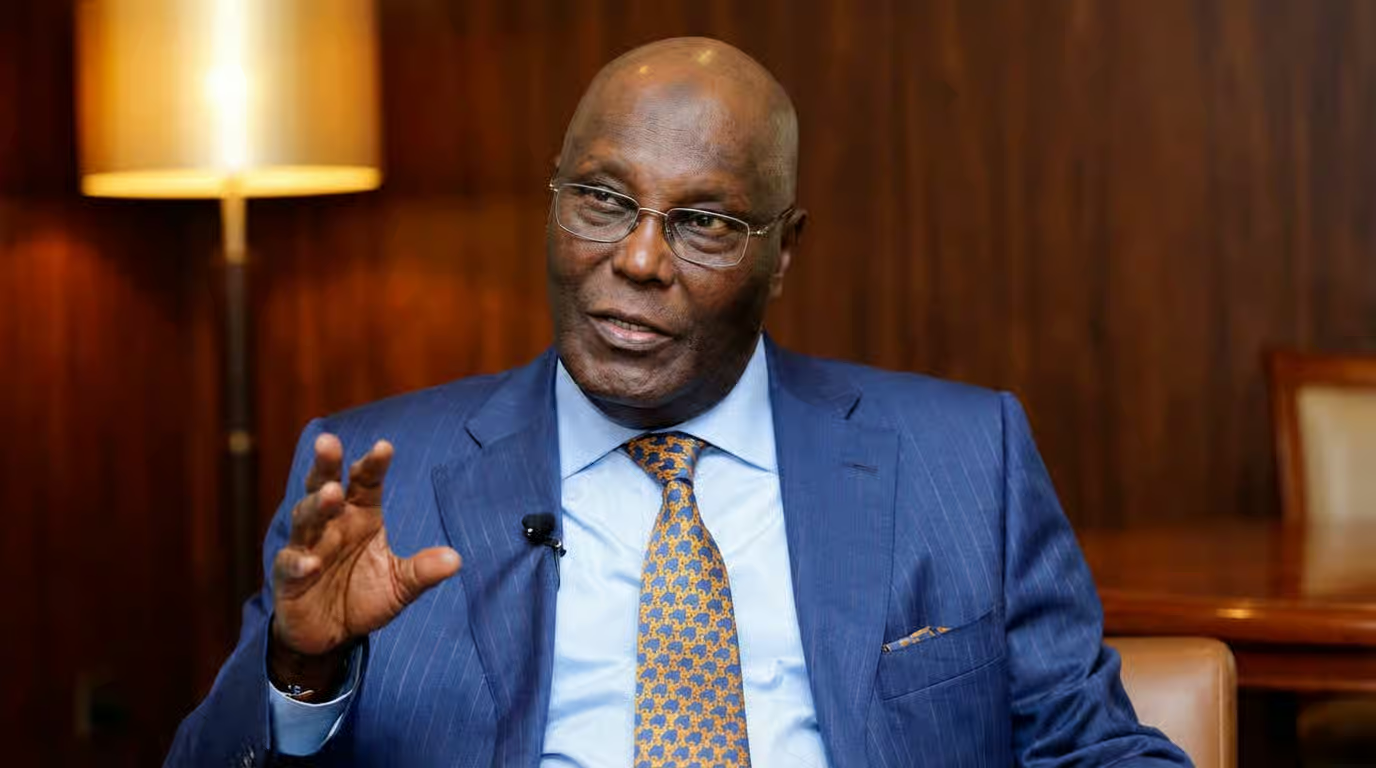
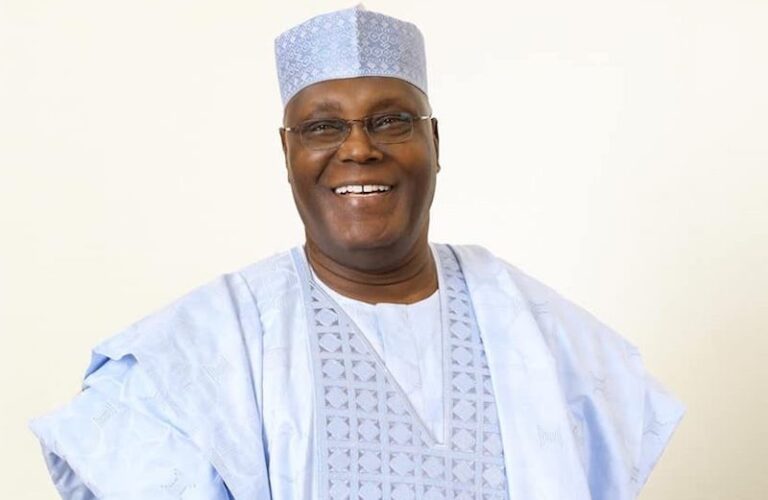
Yet the only unity worth building is the unity that reaches from the farmer in Benue to the fisherman in Ijaw, from the graduate in Kano to the artisan in Aba. This is the unity Atiku Abubakar has spent a political lifetime constructing, brick by brick, zone by zone, and which the African Democratic Congress has now codified as party doctrine.
What Type of Unity?
Nigeria’s post-independence federalism debates, from the Willinks Commission of 1958 through the Aburi Accord of 1967 to the 2014 National Conference report, have consistently returned to the same unresolved architecture: a federation that works for its component parts, not merely for the centre that feeds on them. That debate has never been settled because no administration has had both the political will and the ideological clarity to settle it. Five distinct dimensions of unity illuminate why. Each one exposes a failure of the Tinubu administration. Each one finds a direct answer in the ADC’s policy framework.
1] Unity as State Integration and Political Federation.
The ADC’s own foundational document declares, without ambiguity, its commitment to “true federalism through restructuring” as a non-negotiable pillar of its governance vision. This is not a late insertion. It is the ideological spine of the movement.
Atiku’s My Covenant With Nigerians commits to promoting a strong and true federal system, breaking government monopoly across all infrastructure sectors, and repositioning the public sector to focus on its core responsibilities while enabling private sector leadership in development. A federation where Lagos, Kano, Port Harcourt, and Enugu each breathe and grow on their own terms is the republic Atiku has put on paper, and that the ADC has adopted as its governing compass.
2] Unity as Solidarity of a People Based on Shared Identity.
Those who cite Atiku’s previous electoral defeats as evidence of a failure to unite Nigeria miss the point entirely. A candidate who assembles a cross-zonal coalition and is denied victory by a compromised electoral system has demonstrated the capacity for unity, not its absence. The deficit was never in Atiku’s coalition. It was in the integrity of the institutions that counted the votes.
Atiku Abubakar, the Fulani man who married across ethnic lines, built businesses across every geopolitical zone, and recruited from every faith tradition into his political household, is the empirical proof that solidarity in diversity is not a slogan but a lived Nigerian possibility. The ADC constitution confirms it: membership “is open to every citizen of Nigeria irrespective of religion, ethnic group, place of birth, sex, social or economic status.” The party that writes inclusion into its constitution, and the leader who has lived it, belong together.
3] Unity Through Shared Norms, Ideological Purpose, and the Dignity of the Citizen.
Nigeria lost civic coherence under Buhariism, the ideology of suspicion and exclusion. Under Tinubu, the loss has deepened into economic terror. The removal of the petrol subsidy without a social safety net. The unification of the exchange rate without first building productive capacity. Tax reforms rushed through a parliament that does not read the bills it passes. These are not policies. They are a confession of ideological bankruptcy.
The ADC Policy and Manifesto Committee identified this pattern precisely, noting that “one persistent weakness in Nigeria’s economic reform history is that changes are often introduced abruptly, without proper sequencing or protection for the most vulnerable.”
“It is perfectly right and legitimate that we should consider as good the manners which our parents have taught us, that we should hold sacred the social norms and rites handed down by the tradition of our culture.”
Atiku’s covenant document centres on a vision of “a united Nigeria in which all citizens can live a happy, healthy and productive life.” That is not sentiment. That is a governing mission statement.
4] Unity Through a Hierarchy of Functional Institutions.
Institutional collapse costs at street level. In January 2025, the Corporate Affairs Commission confirmed a system-wide portal disruption that left thousands of business registration applications in limbo for weeks. A teacher in Maiduguri has not received his state salary because federation account sharing was delayed again, while presidential aides flew business class to Dubai for an investment summit. These are the daily costs of a state that has abandoned its citizens.
The ADC Manifesto Committee stated clearly that Nigeria must rebuild a citizen-centred state, a state where institutions serve citizens, where the economy produces and creates jobs, where security protects communities, and where governance delivers measurable value to the people.
Atiku’s covenant document promises to fight corruption headon by championing institutional reforms of anti-corruption agencies and further strengthening them. On security, the ADC proposes that kidnapping and banditry be legally designated as terrorism, punishable under the harshest provisions of the law, ending the revolving-door justice that has emboldened criminality across the country.
5] Unity Through Joint Productive Activity, the Economy as the Arena of National Cohesion.
The ADC coalition assembled in 2025 brought together Atiku’s northern structure, Peter Obi’s southeast and youth mobilisation base, El-Rufai’s northwest networks, Amaechi’s south-south reach, and Kwankwaso’s deep roots across Kano and large parts of the northwest under one platform and one policy document. Whatever the outcome of the forthcoming primary, that architecture remains the most credible opposition formation Nigeria has produced since 1999. And it is Atiku’s policy framework that gave it ideological content.
The party’s manifesto drive has outlined plans to mobilise 35 million voters and promote policies such as a 30 billion dollar power generation initiative and value-added programmes for agriculture and solid minerals. Power is not a luxury. Power is the infrastructure of joint productive activity. Without it, the entrepreneur in Aba buys diesel, the manufacturer in Kaduna shuts down, and the joint economy never arrives.
Atiku himself has linked worsening insecurity directly to youth unemployment and poor access to education, noting that governments have not ensured that children enrol in school, and even when they graduate, there are no jobs or business opportunities. That diagnosis, unemployment as the mother of banditry, demands an economic solution, not a military one alone.
The Verdict
Igba tí a bá fi ọwọ́ méjèèjì gbà kì í ṣubú. A calabash received with both hands does not fall. Nigeria has been catching the calabash of nationhood with one hand for sixty-five years. It has been dropping it repeatedly.
The ADC is not merely a political party seeking power. It is already preparing for governance. Its National Chairman David Mark has described it as a government in waiting, expressing confidence in its readiness to assume leadership and deliver impactful governance. That confidence is born of preparation, the preparation of a movement that arrived with a policy document before it arrived with a presidential flag bearer.
The ADC primary will determine who carries the flag. What no primary outcome can alter is that the policy architecture driving this coalition was built by one man, tested over three decades, and is now the ideological foundation of the most consequential opposition movement of our democratic era.
Nigeria does not need another government that arrives with power and searches for ideas. It needs the ideas that have been waiting patiently for the power to execute them.
The answer, in 2027, is Atiku.
Aare Amerijoye DOT.B
Director General,
The Narrative Force
thenarrativeforce.org14 April 2026