Aare Amerijoye DOT.B
Tonight between 6:00 p.m. and 6:45 p.m. on Arise Television, Nigerians witnessed more than a political interview. What unfolded was not merely a routine exchange between journalists and a politician. It was a revealing moment of political composure, experience, and leadership at a time when the country itself appears exhausted by noise masquerading as governance.
I must confess something personal.
Like millions of Nigerians across the country, I found myself glued to my television set long before the programme began. The remote control rested quietly in my hand, yet I hardly touched it. The room fell into an unusual stillness. Outside, the evening moved on with its normal rhythm — distant traffic, scattered voices, the hum of neighbourhood life — but inside my living room there was only the glow of the screen and the quiet anticipation of a political moment about to unfold.
Then the programme began.
And almost immediately, I realised that what I was watching was not just another television interview.
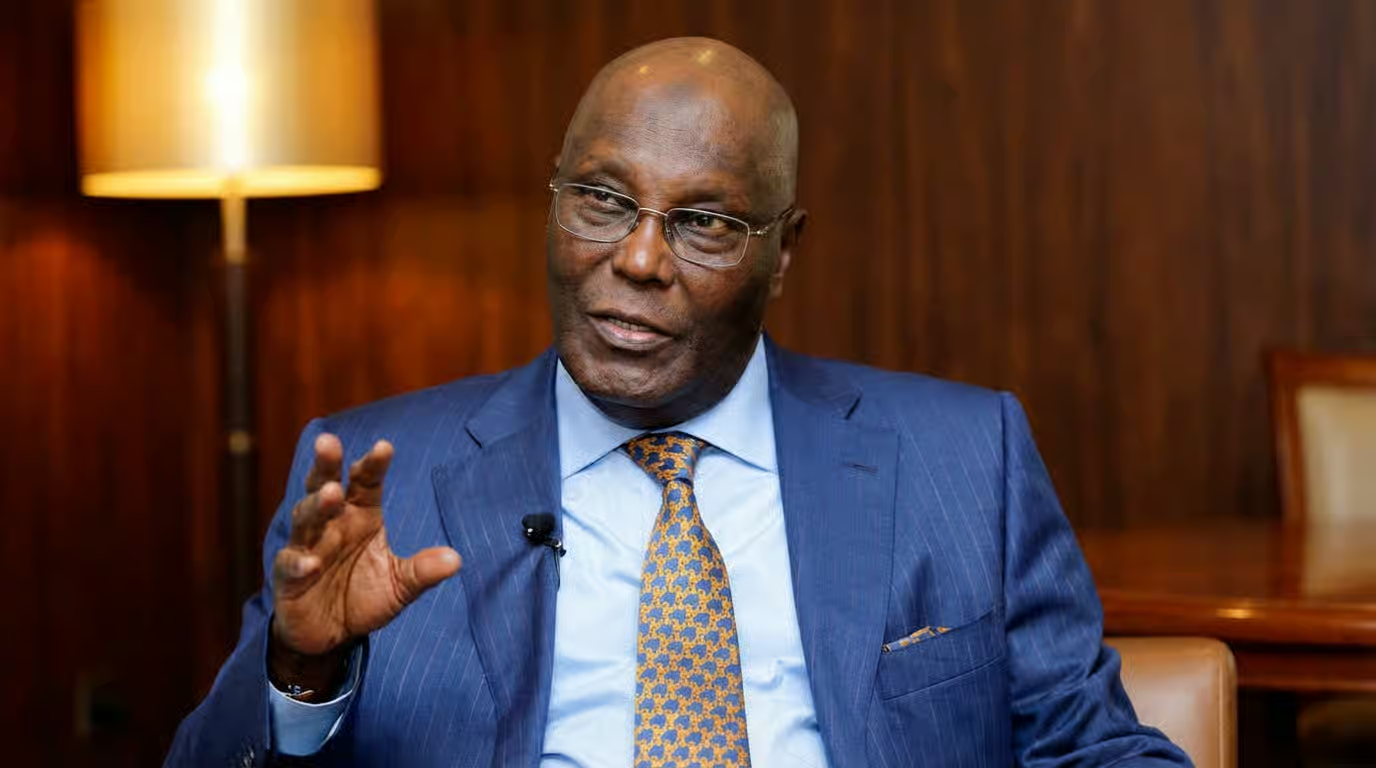
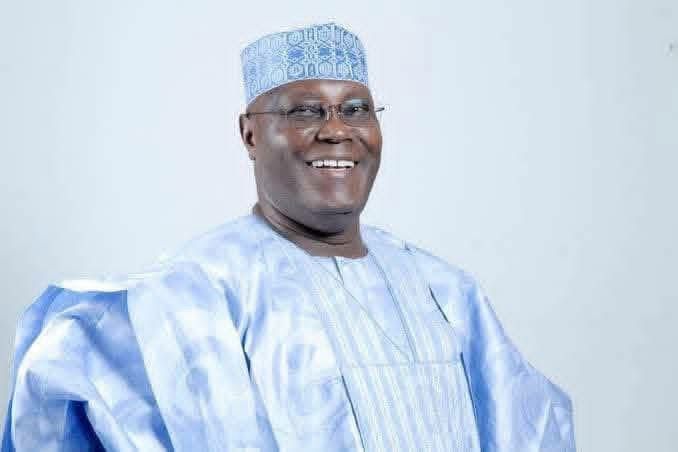
Atiku Abubakar sat before the cameras not with the nervous urgency of a man chasing power, but with the calm assurance of someone who understands both the burdens and mechanics of leadership. The atmosphere in the studio carried a quiet tension — not hostility, but expectation. Nigerians were not simply watching an interview; they were observing a political figure who has spent decades navigating the intricate machinery of the Nigerian state.
From the moment the questions began, something became immediately clear.
Atiku Abubakar does not answer questions the way many contemporary politicians do. He explains.
His gesticulations were deliberate and measured. His hands moved sparingly but meaningfully, rising gently at decisive moments as though arranging the architecture of his thoughts before the audience. Occasionally, he paused to sip from his bottle of water — a brief, almost meditative interlude that reinforced the calm, unhurried rhythm with which he handled every question. At moments he opened his palms outward while speaking, a posture that conveyed explanation rather than defence.
As I watched, something curious happened.
The longer the interview progressed, the more I felt a quiet sense of reassurance rising within me. It was not excitement in the theatrical sense. It was something deeper — the feeling that one was watching someone who understood the seriousness of leadership.
Confidence in politics often announces itself loudly.
Atiku’s confidence tonight appeared quietly.
It rested in the steady rhythm of his voice, the relaxed posture of his shoulders, and the deliberate cadence with which he responded to even the most probing questions. There was no rushing, no defensiveness, no attempt to overpower the conversation. His answers arrived calmly, structured and precise.
And sitting there in my living room, watching every response, I felt something that many Nigerians have long been searching for in our politics — composure.
That composure is not accidental.
It is the composure produced by experience.
Few figures in Nigeria’s democratic history have operated as long within the complex intersections of governance, economics, and politics. From his early career in the Nigeria Customs Service to his tenure as Vice President during a period that witnessed some of the most consequential economic reforms of the Fourth Republic, Atiku has stood repeatedly at the crossroads of national decision-making.
That history surfaced clearly throughout the conversation.
When the discussion shifted to Nigeria’s economic challenges, Atiku avoided slogans. He spoke instead about policy architecture — the investment climate, institutional credibility, private sector expansion, and the urgent need to rebuild economic confidence in a country whose enormous potential has too often been strangled by poor governance.
Nigeria, he suggested implicitly, does not lack talent, resources, or ambition.
What Nigeria has too often lacked is organised leadership.
A nation blessed with vast oil and gas reserves, fertile land, entrepreneurial energy, and over two hundred million citizens should not be struggling to organise basic prosperity. Yet the country repeatedly finds itself trapped between potential and performance.
Each response unfolded with the discipline of someone accustomed to national policy debates: first the context, then the explanation, and finally the proposed direction.
There was no panic in the structure.
It was the tone of a man used to confronting complicated national problems rather than improvising answers under television lights.
One of the most striking moments of the interview emerged when the conversation turned to internal party democracy and the question of political ambition.
“I will step aside for the winner of the primaries.”
It was a sentence that spoke volumes about democratic process.
Yet another moment carried historic significance.
Reflecting on his long political journey, Atiku revealed that the 2027 presidential election will be his final attempt at the presidency. Having participated in Nigeria’s presidential contests since 1992, he stated calmly that the next election would represent the closing chapter of his personal presidential ambition.
Listening to that declaration, I felt a quiet weight in the moment. There was something profoundly human about it , the recognition that a long political journey was approaching its final destination.
Another sensitive issue that surfaced during the interview was the long-standing allegation of corruption that has trailed Atiku through successive election cycles.
On this subject, the former Vice President spoke with notable calm and certainty. According to him, the allegations had been thoroughly investigated during the administration of Olusegun Obasanjo. He explained that a panel was constituted at the time, comprising senior government officials including Bayo Ojo, Nasir El-Rufai and Nuhu Ribadu.
Although he enjoyed constitutional immunity as Vice President at the time, Atiku said he voluntarily waived that protection and allowed the panel to conduct its work without restriction. According to him, after examining the allegations, the committee found nothing that could substantiate the accusations.
In my own view, the persistence of the corruption allegation against Atiku remains one of the most curious phenomena in Nigeria’s political discourse. Despite spending more than nineteen years outside government, no administration and no individual has successfully prosecuted him in any court of law on corruption charges. Yet, just as Atiku himself noted during the interview, the allegation resurfaces almost ritualistically at every election season, deployed as a political instrument to manufacture negative perception against him.
The conversation then moved to the electoral dynamics of Northern Nigeria.
“The North still remains my fortress,” he said calmly.
“Majority of the North will always come together.”
Yet the interview did not dwell only on electoral calculations.
“Restructuring is still part of my agenda.”
And when the discussion turned toward Nigeria’s younger generation, Atiku offered a remark that lingered in my mind long after the programme ended.
“The young generation needs guidance and mentorship on issues of leadership.”
When the interview concluded at 6:45 p.m., the conversation did not end there. The remaining fifteen minutes of the programme were devoted to analysis by communication scholar Abiodun Adeniyi.
Professor Adeniyi observed that Atiku appeared well composed and carried himself with the demeanour of a statesman. According to the professor, the former Vice President projected the image of a political actor who clearly believes he possesses ideas and experience that could help address Nigeria’s challenges.
He also noted the disciplined manner in which Atiku handled the questions.
Professor Adeniyi went further to situate Atiku within the broader landscape of Nigerian opposition politics. In his view, two figures presently dominate that political space: Atiku Abubakar and Peter Obi.
The professor acknowledged that while Obi appears to command stronger enthusiasm among segments of younger voters, Atiku’s political experience and national networks remain formidable assets.
In Professor Adeniyi’s estimation, if the current dynamics remain unchanged, Atiku’s chances of winning the 2027 presidential election stand roughly at fifty–fifty. To me it is not fifty – fifty , Atiku is winning.
Yet beyond electoral mathematics, the interview revealed something deeper.
Temperament.
The ability to remain composed under scrutiny.The ability to respond to complex questions without collapsing into slogans.The ability to speak about Nigeria’s future with calm authority.
Because when nations stand at historic crossroads, history rarely rewards noise.
History rewards leadership.
Nigeria had just witnessed a man who did not need to shout in order to command attention. A man whose confidence rests not on theatrical rhetoric but on accumulated experience. A man who speaks with the quiet assurance of someone who believes that this country can still be organised into a functioning and prosperous state.
And as I finally stepped away from the glow of the television tonight, one thought lingered quietly in my mind.
The next president had just spoken.
Aare Amerijoye DOT.B
Director-General,
The Narrative Force