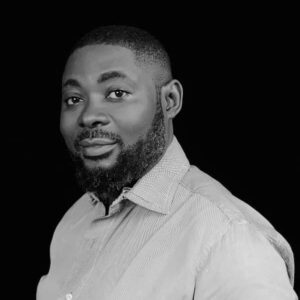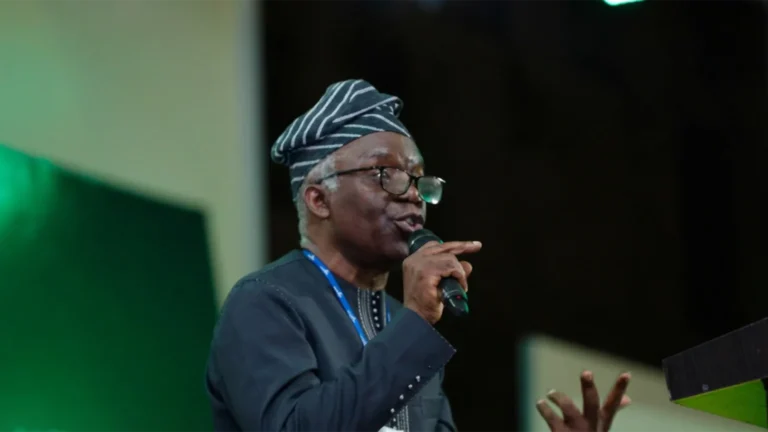
Aare Amerijoye DOT.B
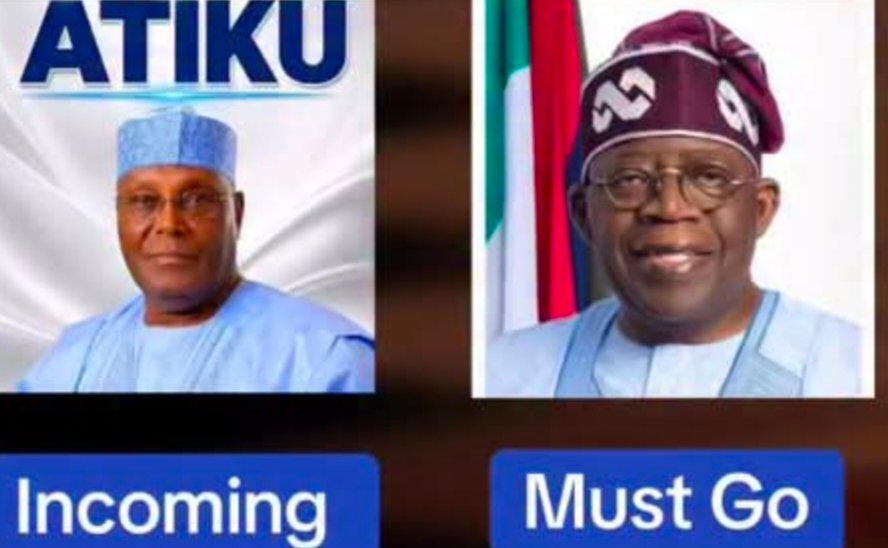
“They say Tinubu is ten steps ahead. But the grandmaster forgets one thing: the people own the table.”
Picture an airport at night. Banjul, 21 January 2017.
A man in flowing white walks towards a waiting plane. He waves. His supporters weep. Behind him, cargo holds are loaded with the comforts of 22 years in power. Around the country, foreign troops stand ready.
Only weeks earlier, this man had promised to rule for a billion years.
He did not last a billion years. He did not even last the month.
Now picture a hotel room in Abidjan, April 2011. A former professor of history sits on a bed in a sweat-stained vest, his wife beside him, cameras flashing in his face. A few days earlier he was a president who refused to leave. Now he is a prisoner on his way to The Hague.
Two men. Two palaces. One ending.
Remember them. Because what happened in Banjul and Abidjan is not a story about Africa’s past. It is a warning addressed, by name, to Abuja.
THE KING OF THE RIVER WHO CANNOT GO HOME
Yahya Jammeh seized The Gambia with a gun in 1994. He was a young lieutenant with no political learning and a hunger that had no bottom.
He crowned himself with titles. “His Excellency Sheikh Professor Alhaji Dr. Yahya A.J.J. Jammeh Babili Mansa.” King of the River. It was not a joke. It was state protocol.
He announced that he could cure AIDS with herbs and bananas. His critics disappeared. Human Rights Watch documented enforced disappearances, extrajudicial killings, torture and arbitrary arrests. His own death squad bore a name that still makes Gambians lower their voices: the Junglers.
He believed he was permanent. Strongmen always do.
Then came December 2016. An unknown man named Adama Barrow, who had once worked as a security guard at an Argos store in London, beat him at the polls: 43.3 per cent to 39.6 per cent.
Jammeh conceded. Then, like every ruler who mistakes the palace for his private house, he took it back.
Nigeria and Senegal, through ECOWAS, answered him. Troops crossed the border. Jammeh ran.
And here is the part the powerful never read to the end.
On 15 December 2024, West African leaders met in Abuja and approved a Special Tribunal for The Gambia, a court built to try crimes against humanity, torture and killings committed under his rule. In October 2025 Jammeh told his followers he was coming home in November. Banjul answered coldly: there is no immunity, and he would face arrest, detention and prosecution. Then one of his feared Junglers, Sanna Manjang, was captured in Senegal. The homecoming quietly died.
Nine years later, the King of the River cannot cross his own river.
“The man who promised to rule for a billion years cannot safely spend one night at home.”
THE HISTORIAN WHO FORGOT HIS OWN LESSONS
Laurent Gbagbo lectured students on how empires fall. Then he tried to prove himself the exception.
In 2010 he lost the presidential run-off. The electoral commission declared Alassane Ouattara the winner with 54.1 per cent. Gbagbo turned to the Constitutional Council, had the result overturned, and sat tight.
The country bled. More than 3,000 people died in the violence that followed, and forces loyal to him stood accused of grave atrocities. He barricaded himself inside the presidential residence as though concrete could hold back history.
It could not. In April 2011 he was dragged out. He became the first former head of state to stand trial at the International Criminal Court. He was eventually acquitted, but the image of that vest in that hotel room will outlive any judgment.
And the final blow came in his own homeland. In 2025 his name was struck off the electoral roll and he was barred from the presidential ballot.
The man who would not leave the palace in 2010 could not even find his name on the ballot in 2025.
That is how the story always ends. Not with a bang. With a door that no longer opens.
THE SAME SYMPTOMS IN ASO ROCK
Every falling strongman passes through the same stages. The first is deafness.
In July 2026, the Catholic Bishops of Nigeria walked into Aso Rock and told President Bola Ahmed Tinubu that the nation was bleeding.
His answer? The nation is not bleeding.
Read that again. A president told by the shepherds of millions that his people are bleeding, and his reply is to deny the blood.
So let us count it.
Petrol, the match that lit the fire. The NBS recorded an average pump price of 238.11 naira in May 2023. By May 2026 it was 1,596.25 naira a litre. That is a rise of about 570 per cent in three years. This September, the Dangote gantry price rose four times in three weeks to 1,350 naira, and Lagos pumps crept towards 1,400.
The naira. Below 470 to the dollar on the day he was sworn in. 1,326.69 on the CBN official rate on 2 September 2026.
Food. The government now celebrates headline inflation of 15.39 per cent and food inflation of 19.57 per cent for August 2026. But ask any market woman in Kano, Makurdi, Onitsha or Ado Ekiti. A slower rise is not a fall. The prices that doubled and tripled are still climbing. They are only climbing quietly.
Poverty. The World Bank estimates that about 6 in 10 Nigerians now live below the poverty line.
The savings. Nigerians were told that the pain of subsidy removal would buy them roads, hospitals and schools. In July, the Finance Minister admitted to Reuters that the savings were absorbed by debt servicing. The people paid. The creditors collected.
The hidden trillions. The IMF, in its 2026 Article IV review, reported 8.8 trillion naira in spending outside the budget. The government denies it. The figure has not gone away.
The guns. A serving Major General, Rabe Abubakar, was abducted on 30 May 2026 and died in captivity on 13 June. When a general cannot be protected, what shield does a farmer in Benue have? What hope does a trader on the Abuja to Kaduna road carry?
And the answer from the ruling party to all this suffering? A headcount of defecting governors. 31 of 36, they boast.
Jammeh had the army. Gbagbo had the Constitutional Council. Neither had the people.
“Governors do not own votes. Palaces do not own history.”
THE MAN WHO BRINGS A PLAN, NOT A THRONE
There is another way, and it has a name.
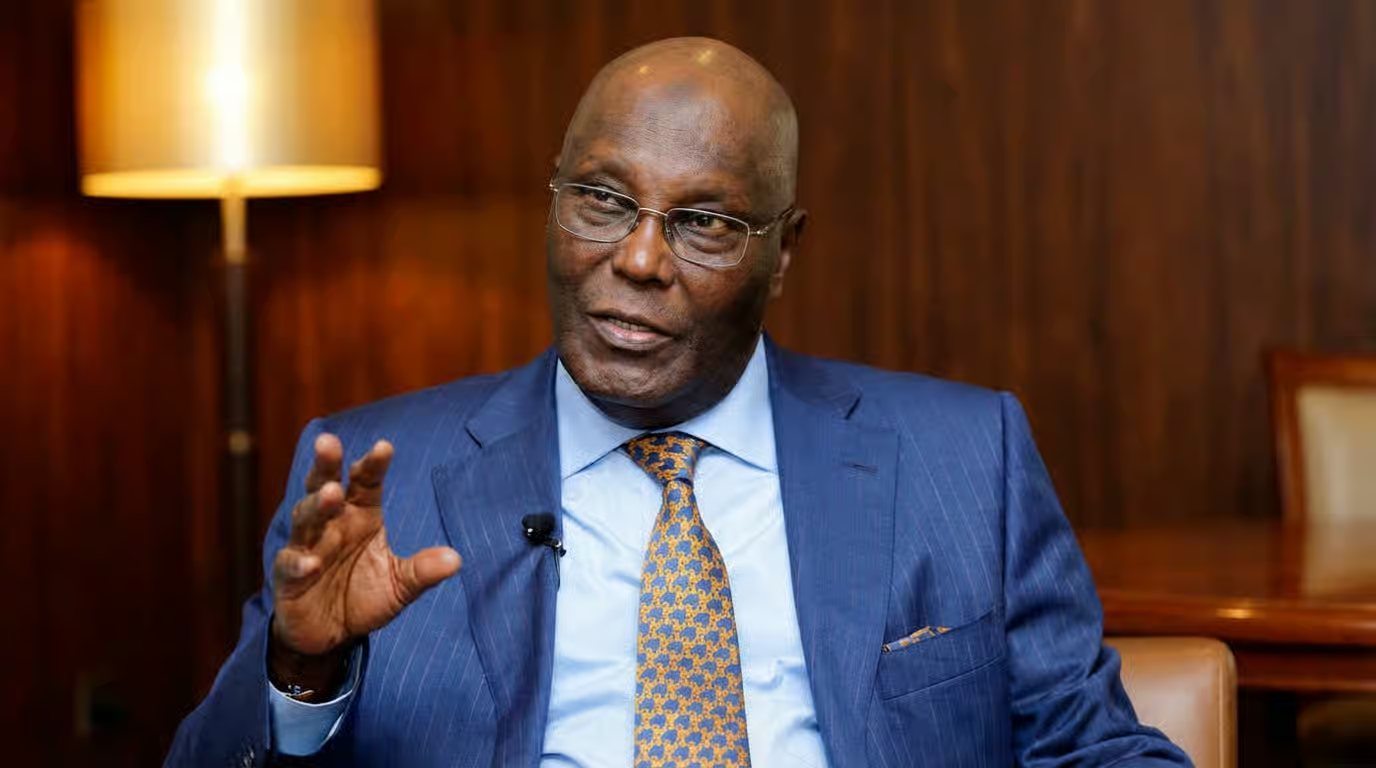
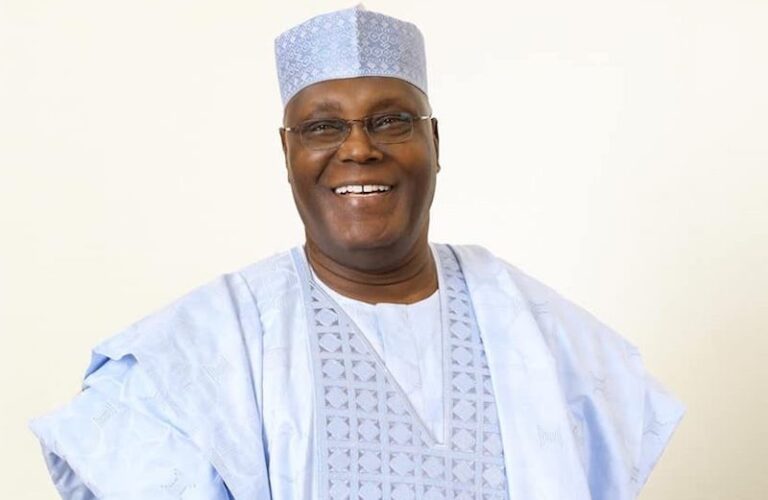
Atiku Abubakar, the ADC candidate, does not come with a crown. He comes with a record, and records do not lie.
Under the Obasanjo and Atiku administration, Nigeria’s GDP rose from 58 billion dollars in 1999 to 270 billion dollars in 2007. Reserves climbed from about 3.7 billion dollars to about 45 billion. Nigeria walked out of the Paris Club debt trap in 2006. As Vice President, Atiku chaired the National Economic Council and the National Council on Privatisation, the engine rooms of that reform.
He speaks of restructuring as surgery, not slogan: states strong enough to compete and grow, state police close enough to the danger to confront it, and a lean centre that minds defence, foreign affairs and money.
His economic plans are committed plans, published before the vote and placed in the hands of Nigerians to examine, question and judge.
That is the line between a leader and a ruler. A leader shows you the plan before you choose him. A ruler tells you the decision after you can no longer choose.
Atiku does not seek power to settle old scores. He seeks it to rescue a future. In a country drunk on propaganda, he is the cold water of competence.
THE TABLE BELONGS TO THE PEOPLE
Nigeria does not need foreign troops at its borders. It does not need a court in The Hague.
Nigeria has something stronger than both. A ballot. A PVC. And tens of millions of people who have run out of patience.
On 16 January 2027, the reckoning will come not through guns, but through thumbprints. Cast them. Guard them at every polling unit. Watch them until the last result is transmitted.
To those who boast of being ten steps ahead, Africa has already written the ending. Ask the airport in Banjul. Ask the hotel room in Abidjan. Ask the ballot paper that no longer carries Gbagbo’s name.
The chessboard can be flipped. Kings can fall. And they fall fastest when they forget the pain of the pawns.
On 16 January 2027, the king will fall. And in his place, the people will elect a servant.
112 days.
The crown is already cracking.
Atiku2027 #ADC #WhenTheCrownCracks
Aare Amerijoye DOT.B
Director General, The Narrative Force
thenarrativeforce.org
27 September 2026