By Adefemi Bayode Adebisi
28-09-2026
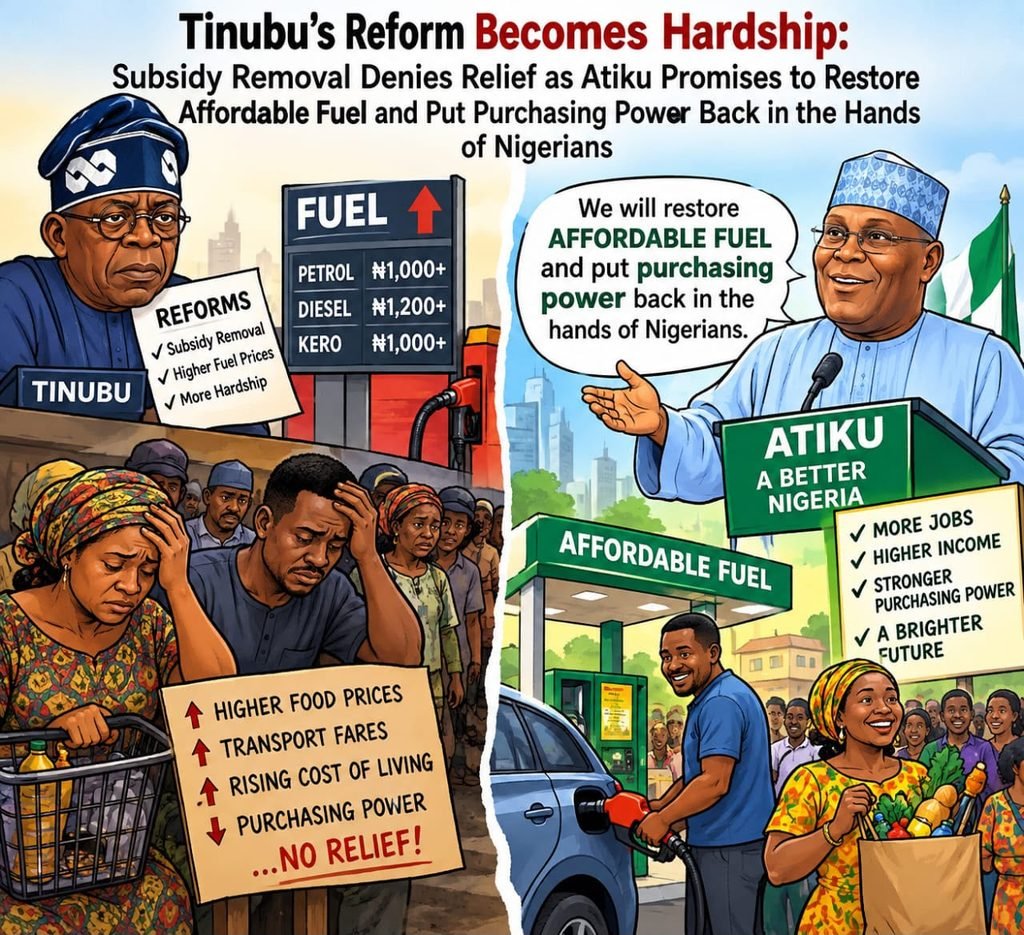
Let us begin with the question that cannot be shouted away by slogans
If the removal of petrol subsidy was necessary to save Nigeria from fiscal collapse as the Tinubu administration maintains then what should Nigerians say when the reform saves government finances but leaves millions of households struggling to afford food, transportation, electricity and the basic cost of living?
That is the question at the heart of the subsidy debate
President Bola Tinubu announced the removal of the petrol subsidy on 29 May 2023, arguing that the policy was financially unsustainable and that the resources being consumed by subsidy could instead be deployed to development and In May 2026, the Presidency again defended the decision, saying subsidy removal had saved Nigeria from imminent bankruptcy and laid the foundation for economic recovery
That is the government’s argument but there is another side of the ledger that is to be checked
The Nigerian who boards a bus every morning does not experience fiscal consolidation as a line in a government balance sheet, the trader does not measure reform in debt to GDP ratios, the farmer does not harvest macroeconomic stability and the civil servant does not eat GDP growth but in actual sense they experience reform through the price of petrol, transportation, food, rent, school fees and everything else that moves when energy becomes expensive
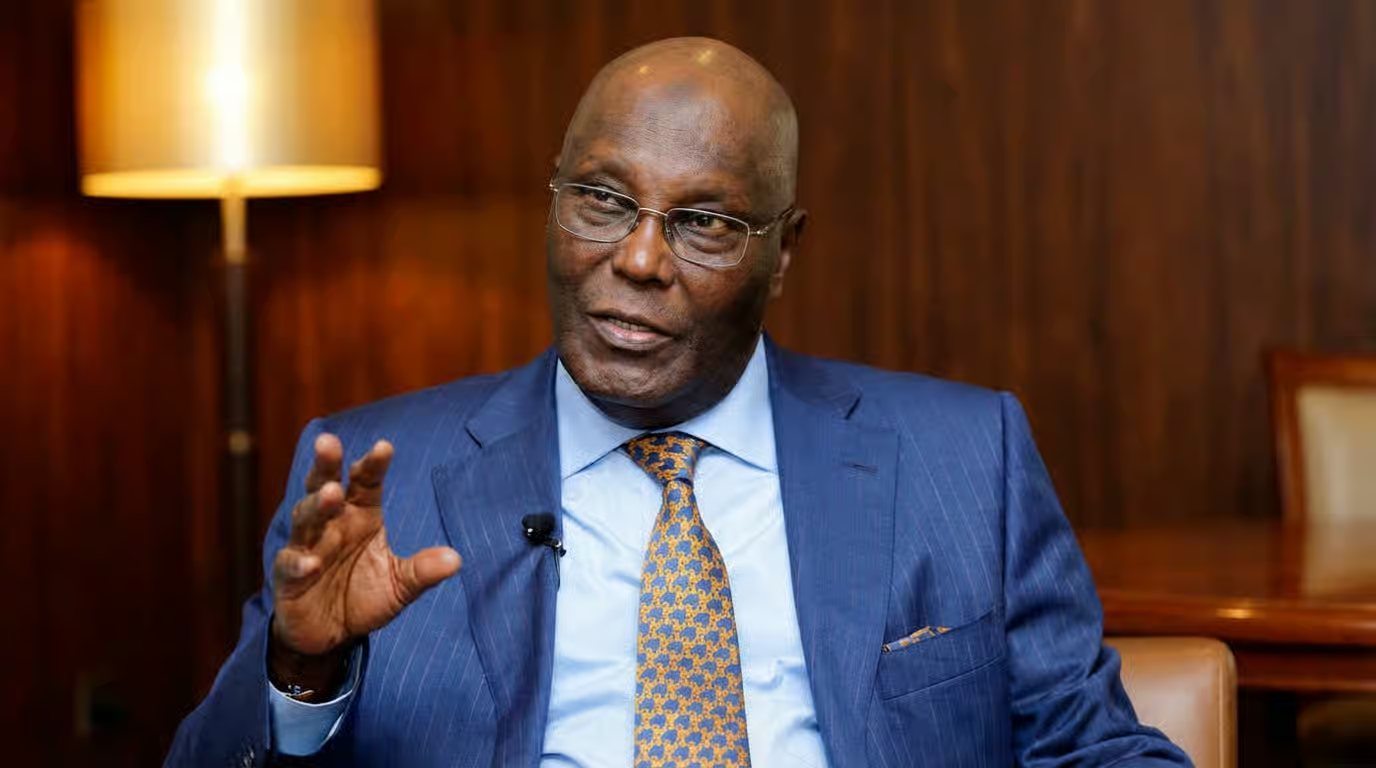
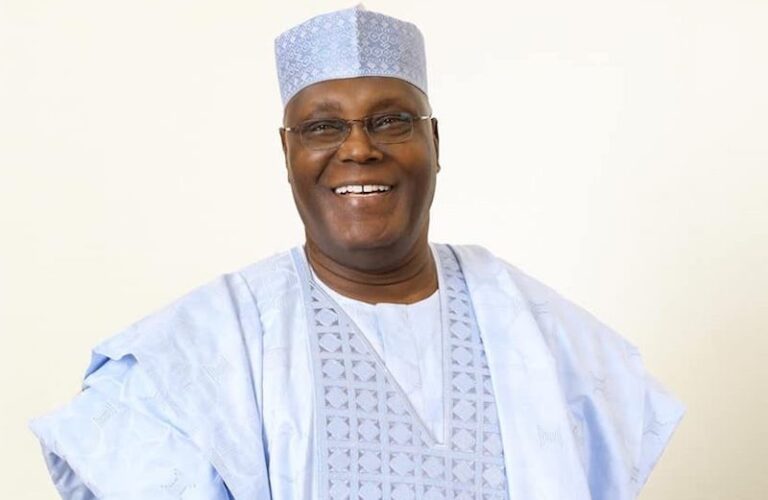
And that is where Atiku Abubakar has placed his challenge
In August 2026, H.E Atiku said that his position had changed from his earlier acceptance of subsidy removal because the expected benefits had not translated sufficiently into improved living conditions, He subsequently stated unequivocally that, if elected, he would restore subsidy
The debate therefore is not merely about whether subsidy is theoretically good or bad
It is about who bears the cost of economic reform, how long they are expected to bear it, and whether government has provided sufficient relief while waiting for the promised benefits to arrive
THE GOVERNMENT SAYS SUBSIDY IS GONE BUT THE HARDSHIP IS NOT
There is an uncomfortable reality that neither political rhetoric nor economic terminology can erase which is the fact that the cost of living remains a serious problem
The IMF reported in June 2026 that Nigeria’s poverty rate had reached an estimated 63 percent at the national poverty line while about 27 million Nigerians were estimated to have experienced food insecurity in late 2025, in the same context also warned that higher fuel and food prices could aggravate poverty and food insecurity which is the order of the day in Nigeria
The World Bank similarly reported that household incomes had yet to fully recover and that poverty remained high despite improvements in some macroeconomic indicators
And the pain is not theoretical.
It is evident that petrol prices had risen to around 1,350 per litre and as high as 1,500 in some parts of northern states, while diesel had exceeded 2,000 per litre as this shows renewed cost of living pressure as international oil prices rose
So when government says subsidy is gone, Nigerians are entitled to ask a second question rather than chorusing and chanting “On Your Mandate”
What replaced it in their lives?
If the answer is reform, where is the relief?
If the answer is investment, where is the measurable improvement in household purchasing power?
If the answer is targeted assistance, how many vulnerable Nigerians are actually receiving it, how frequently and in what amount?
These are not political questions alone BUT
They are questions of public accountability
“Was subsidy removal necessary?”
And if the present day government keeps arguing on the necessity then the more important question is:
Was the transition managed in a way that protected Nigerians from unacceptable hardship? because the ultimate purpose of an economy is not to produce beautiful government statistics RATHER
It is to improve human lives
ATIKU’S CHALLENGE: PUT THE CITIZEN BACK INTO THE EQUATION
This is where Atiku’s argument deserves to be examined seriously
Atiku has not presented his position merely as nostalgia for the old system. His public statements have centred on restoring affordability and using government intervention to cushion Nigerians from the consequences of high fuel prices. His spokesperson has described the proposed intervention as different from the former opaque import subsidy regime, with government support tied to crude production and domestic refining
There has also been subsequent clarification from Atiku’s camp that the proposed intervention should not be understood simply as a return to the old import subsidy arrangement
That distinction deserves attention
Because there are two completely different propositions:
“Bring back the old subsidy system exactly as it was.”
and
“Use a controlled government intervention to reduce the cost of fuel while domestic production and refining capacity are strengthened.”
Those propositions should not be treated as identical without examining their mechanisms.
The real policy questions should therefore be straightforward:
How much would government spend?
Who would receive the benefit?
How would the subsidy be targeted?
What safeguards would prevent diversion?
Would domestic refiners benefit?
Would domestic crude supply be prioritised?
How long would the intervention last?
What independent body would audit the expenditure?
And, most importantly:
Would the Nigerian consumer actually pay less?
That is the debate Nigerians needs to make avail of themselves rather than listening to the warnings from the presidency that bringing back subsidy will return us to the era of the back after they have succeeded in dumping us in the clog we live in recent time
WHERE DID THE SAVINGS GO?
This may ultimately become one of the most important questions of the 2027 election
The government has repeatedly discussed the savings and fiscal benefits associated with subsidy removal, In August 2026, the Federal Government convened a press conference specifically to explain the savings arising from the policy
But Nigerians are entitled to demand something more fundamental than a press conference
We need traceability
How much was saved?
How much accrued to the Federal Government?
How much went to states and local governments?
How much went into infrastructure?
How much went into social protection?
How much went into debt servicing?
How much went into other recurrent expenditure?
And what measurable improvement can Nigerians identify as the direct consequence?
These questions become even more important because the IMF reported that the estimated savings from fuel subsidy removal did not appear to have fully accrued to the budget in 2025 while higher debt service costs and other expenditures absorbed significant fiscal resources
The above truly establish a legitimate accountability question
If Nigerians were asked to make the sacrifice, Nigerians deserve to see the destination of the savings
PURCHASING POWER IS THE REAL BATTLE
At the centre of all this economic language is one simple concept which is Purchasing power
A worker may receive a salary increase and still become poorer if the cost of everything rises faster than income
A trader may sell more goods and still make less profit because transportation and energy costs consume the margin
A farmer may produce more food and still struggle because diesel, fertiliser, logistics and transportation have become more expensive
A student may receive a nominally unchanged allowance while the cost of getting to school doubles
That is why the subsidy debate cannot be reduced to the question of whether government should spend money on petrol but the broader question is whether the Nigerian economy allows ordinary citizens to retain enough of their income to live with dignity
And this is precisely why fuel policy matters
Petrol is not merely petrol in Nigeria
It is transportation
It is logistics
It is food distribution
It is small business.
It is electricity generation for businesses and households that cannot depend consistently on public power
When petrol prices rise sharply then the effect travels through the economy
Reuters reported in August 2026 that the removal of fuel subsidies alongside other reforms had contributed to increased cost of living pressure while many ordinary Nigerians remained excluded from the gains celebrated by investors
So when Atiku talks about restoring affordability, the argument is ultimately about purchasing power
THE QUESTION IS NOT WHETHER NIGERIA SHOULD REFORM
Nigeria must reform
Nigeria cannot permanently depend on excessive borrowing, inefficient subsidy arrangements and imports where greater domestic production is both possible and economically beneficial
But reform must have a human destination
The Nigerian people should not be told indefinitely
“Endure today because tomorrow will be better.”
Eventually, tomorrow must arrive
And when it arrives, Nigerians must be able to see it in their kitchens, their businesses, in our transport fares, our wages, farms and our children’s education
That is where the Atiku proposition enters the debate
His argument is essentially that government should not abandon Nigerians to the full force of market prices while the productive economy is still struggling to absorb the shock
Whether his proposed intervention would work is a legitimate question
Whether it could be financed sustainably is a legitimate question
Whether it could avoid the corruption associated with previous subsidy regimes is a legitimate question
But dismissing the proposition simply by repeating that “subsidy is gone” does not answer those questions but it merely repeats the policy
THE REAL TEST OF LEADERSHIP
It is adequately drawn from words of the sages that leadership should not be measured only by the courage to take difficult decisions
it should also also be measured by the ability to protect citizens from the consequences of those decisions
Tinubu’s administration made the choice to remove the subsidy
The administration says that choice was necessary
But the evidence also shows that poverty, food insecurity and household hardship remain serious problems
Atiku is now offering Nigerians a different policy direction on fuel affordability
He says he would restore subsidy with intervention and use it to relieve hardship
It is advisable the proposal is not dismissed reflexively rather it should be interrogated or questioned in the manners below because Atiku is well prepared forthe task ahead
How much?
For whom?
For how long?
From which revenue?
Under what safeguards?
With what audit?
And with what measurable outcome?
Those are the questions that matter.
NIGERIANS DESERVE RELIEF, NOT JUST RATIONALE
There is a point at which economic explanation stops being sufficient
A mother cannot feed her children with an explanation of fiscal consolidation
YES, a commercial driver cannot buy petrol with a lecture on market liberalisation
No farmer can transport his produce with an IMF report
A small business owner cannot pay for diesel with GDP growth, NEVER
Economic reform ultimately has to arrive at the household
That is why the debate between Tinubu’s subsidy removal and Atiku’s proposed intervention should not become a contest of political insults
It should become a contest of evidence
Tinubu says subsidy removal was necessary to rescue Nigeria from fiscal collapse
Atiku disagrees with the policy that subject Nigerians to paying too high a price and that government intervention is necessary to restore purchasing power
Both propositions can be examined.
But one fact is already clear
Nigeria cannot call an economic reform successful merely because government finances improve if millions of citizens continue to struggle to afford the basics of life
The purpose of reform is not reform itself BUT
The purpose is prosperity AND
The prosperity must eventually be felt by the people
So the question Nigerians should keep asking is not simply
Is subsidy gone?
It should rather be
Has the Nigerian people’s sacrifice produced the relief they were promised?
If the answer is not yet clear, then the debate is far from over
And if Atiku’s alternative is to be judged, let it be judged on its details, its financing, its safeguards and its ability to put purchasing power back into the hands of Nigerians
That is where the argument belongs.
Not in slogans
Not in insults
Not in partisan noise
But in the price Nigerians pay to live, the income we retain after paying it and the quality of life government ultimately delivers
Adefemi Bayode Adebisi
Social Media Firestorm Committee
The Narrative Force