Aare Amerijoye DOT.B
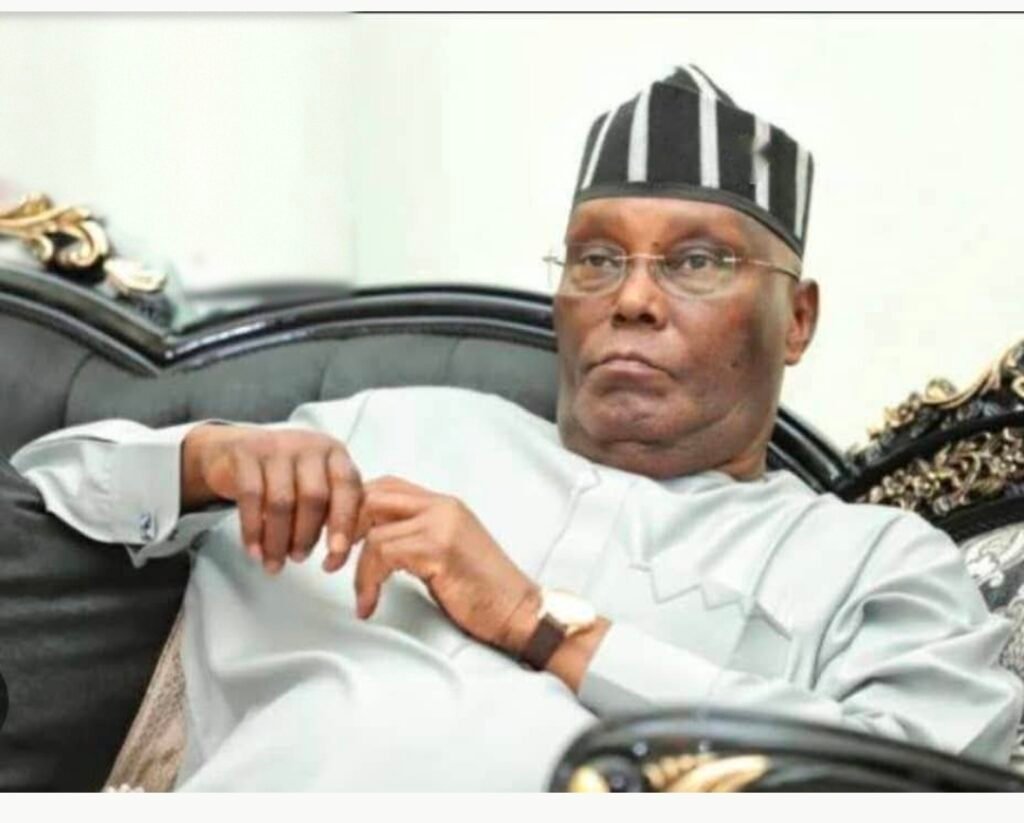
A CRITIC WORTH ANSWERING
Some critiques you tolerate. Others you thank God for.
The intervention that came to me from the Middle Belt, from a former Chief of the Nigerian Air Force and Senator of the Federal Republic, belongs to the second class. He did not merely disagree with my earlier analysis. He struck flint against stone, and the sparks have lit a longer fire than either of us intended.
His charge is twofold. That I inflated Atiku Abubakar’s standing in the North. And that the North Central is a country of its own, not a wing of any northern consolidation.
I take the charge seriously. Then I take it to the numbers.
Truth is never diminished by examination. Only falsehood fears the lamp.
THE NORTH IS NOT ONE THING, AND THAT IS THE POINT
Let me concede the ground my critic thinks he must fight for. The North is not monolithic. There is the Hausa and Fulani bloc. There is the Middle Belt. There are the northern minorities, each with its own memory, its own grievance, its own arithmetic of trust.
But diversity is not weightlessness. Whether the North speaks in one voice or in twenty, its combined ballot has moved every presidential contest in this Republic like a tide moves a harbour. You do not have to like that fact. You have only to count.
And within that tide, no zone has ever been more consequential, or more misread, than the Middle Belt.
He also observed that my last article was long. In a country where reading is dying and shallowness now wears the costume of modernity, brevity is often applause for saying nothing. Still, the point is taken. This one is shorter. It is not softer.
THE ZONE THAT REFUSED TO KNEEL
The Middle Belt has never been a mere line on a map. It is a crucible. It was forged in the assertion of minorities who declined to be absorbed, and it carries the names of Joseph Sarwuan Tarka, Patrick Dokotri and Solomon Lar not as museum pieces but as living instruction.
From the colonial era, when the Middle Belt Movement stood before a hegemony that seemed immovable, through the First Republic and the United Middle Belt Congress and its demand for autonomy and fairness, through the aborted Third Republic and into this dispensation, one region has served as the conscience of Nigeria’s federal balance.
It resisted subjugation. It demanded recognition. It shouted justice into ears that had trained themselves not to hear.
So when my critic insists that this zone be treated on its own terms, he is not wrong. He is simply not finished. Because a zone that decides the Republic cannot be quarantined from the discussion of who wins it.
NOW, THE COLD NUMBERS
According to INEC’s official data, the North Central comprises six states, Benue, Kogi, Kwara, Nasarawa, Niger and Plateau, alongside the Federal Capital Territory.
The register in 2023 stood at 15,363,731 voters. That is ahead of the North East at 12,542,429, and behind the North West at 22,255,562 and the South West at 17,958,966. On weight alone, this zone is not a bystander at any presidential contest. It is a chief mourner or a chief celebrant.
The zonal result, with the FCT included, was this. Atiku Abubakar, then on the PDP platform and today the ADC candidate, 1,162,087. Bola Ahmed Tinubu of the APC, 1,760,993. Peter Obi of the Labour Party, 1,415,577.
At a glance, a three way scramble. In the detail, a revelation.
Plateau, that ancient citadel of Middle Belt identity, gave Obi 466,272 against Tinubu’s 307,195 and Atiku’s 243,808. The Labour surge, powered by a Christian majority demography and a generation’s disaffection, detonated under a structure that had stood for two decades.
Benue told the same story in a different accent. Tinubu 310,468, Obi 308,372, Atiku 130,081.
Then the zone turned. In Niger, Tinubu 375,183, Atiku 284,898, Obi 80,452. In Nasarawa, Obi 191,361, Tinubu 172,922, Atiku 147,093. Kogi went to Tinubu with 240,751 to Atiku’s 145,104 and Obi’s 56,217. Kwara followed the APC with 263,572, Atiku 136,909, Obi 31,186.
Six states. Three different winners. One conclusion.
The Middle Belt is the only zone in Nigeria that no man owns. It is not inherited. It is earned, ballot by ballot.
THE ARITHMETIC MY CRITIC DID NOT COUNT
Here is where the charge of exaggeration collapses.
Set the zones side by side. In the South West, a fortress of 17,958,966 registered voters, with five of six states in his column, Tinubu polled 2,279,407.
In the North Central, against a Labour hurricane and a fractured party, his margin over Atiku was 598,906.
Read that again. A national incumbency in formation, the full weight of federal machinery, an opponent bleeding votes to a third force in his own traditional strongholds, and the gap in the most volatile zone in the Federation was under six hundred thousand.
That is not the profile of a man without influence in the Middle Belt. That is the profile of a man holding a line in a hurricane.
And the ADC did not arrive in this zone as a stranger. Senator David Mark and other principals of standing in the Middle Belt carry networks, credibility and structure into the party. That is not accident. It is architecture.
Extend the lens. In the North East, Atiku polled 1,737,846 to Tinubu’s 1,185,458 and Obi’s 315,107. In the North West, Tinubu recorded 2,652,235 against Atiku’s 2,329,540 and Obi’s 350,182.
Note what that means. Tinubu’s celebrated northern lead in his best northern zone was roughly three hundred thousand votes, in a register of over 22 million. That is not a wall. That is a ribbon.
PROTEST IS WEATHER. STRUCTURE IS CLIMATE.
The Obi phenomenon in 2023 was real, and only a dishonest analyst would pretend otherwise. Plateau and Benue answered to faith, to identity and to a fury that had nowhere else to go.
But a protest wave, like harmattan dust, arrives suddenly and settles just as fast. What it cannot do is build. And when the dust cleared, more than 1.16 million voters in that zone had still stood where they had always stood.
Hold that number against everything that was thrown at it, and tell me again that the influence is illusory.
AND NOW THE COUNTRY ITSELF IS THE ARGUMENT
Since then, the argument has left the spreadsheet and moved into the kitchen.
Inflation has eaten wages. Purchasing power has collapsed. Insecurity has become a daily calculation, not an occasional headline. Reforms delivered without cushioning, without sequence and without accounting have transferred the whole cost of adjustment onto people who had nothing left to give.
The suffering does not consult a map. It is the same in Jos and in Kano, in Otukpo and in Ilorin, in Lagos and in Umuahia. The farmer who cannot reach his farm, the driver who cannot fuel his bus, the trader whose capital has evaporated between morning and evening, the parent choosing which child returns to school. They are not divided by zone. They are united by hunger.
On 16 January 2027, that hunger will hold a pen.
WHAT WE ARE ASKING NIGERIANS TO VOTE FOR
Let no one mistake this for a case built only on another man’s failures. It is not.
Atiku Abubakar’s proposition rests on record and on plan. It rests on the years in which this economy expanded from 58 billion dollars in 1999 to 270 billion dollars by 2007, an expansion presided over by an administration in which he chaired the economic team and drove privatisation, telecommunications liberalisation and pension reform.
It rests on a method. Deregulation phased, cushioned and accounted for, not detonated in a single sentence at an inauguration. Under the Atiku Economic Recovery Plan, support is shifted from importation to production, from middlemen to Nigerian refineries, from unverifiable claims to verifiable barrels, targeted, capped, budgeted and independently audited. And the savings already taken from the people are to be traced, recovered and returned to the purposes they were promised for.
It rests on the restoration of true federalism, on security architecture built where the crimes happen rather than commanded from a distance, and on an industrial and agricultural policy that treats young Nigerians as producers rather than as statistics of migration.
That is a case a citizen can interrogate before casting a vote, not a decree delivered after one.
THE HINGE AND THE KEY
So I say to my distinguished critic, with respect that is neither ceremonial nor small. You are right that the Middle Belt must be understood on its own terms. You are right that it must never be swallowed into a lazy generalisation about the North.
But the terms of the Middle Belt have always been these. It rewards bridge builders. It punishes conquerors. From Tarka’s Congress to Lar’s stewardship, this zone has given its confidence to those who spoke the grammar of inclusion and meant it.
The zone is the hinge on which 2027 swings. And the ADC is asking for the honour of turning it, not by proclamation, but by presence, by argument and by work.
To every movement now organising in that cause, the RiseUpNaija Movement with its target of 20 million votes converted into roughly 100 verified votes in every polling unit, and Nigeria Youths for Atiku carrying that message to a generation that has been lectured for long enough, the assignment is plain. Register. Verify. Protect the vote from the accreditation to the collation.
The numbers have spoken once. The suffering is speaking now.
On 16 January 2027, the Middle Belt will speak, and Nigeria will hear it.
Aare Amerijoye DOT.B
Director General
The Narrative Force
thenarrativeforce.org
2 September 2026