Aare Amerijoye DOT.B
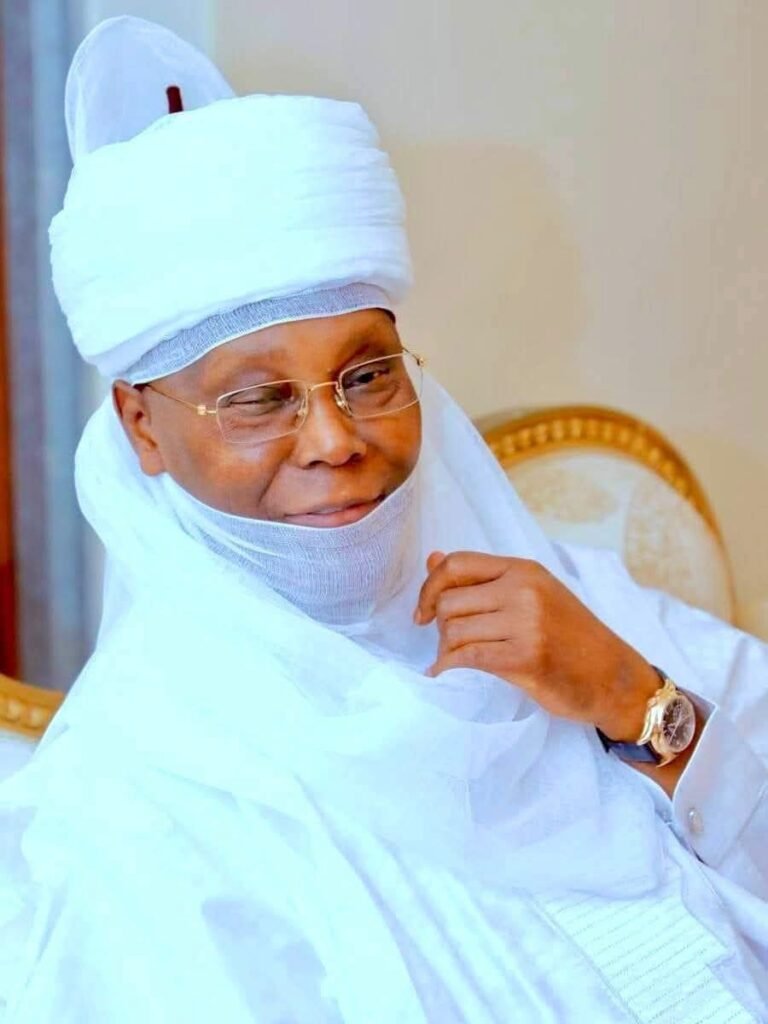
THE MAN THE STORM MADE
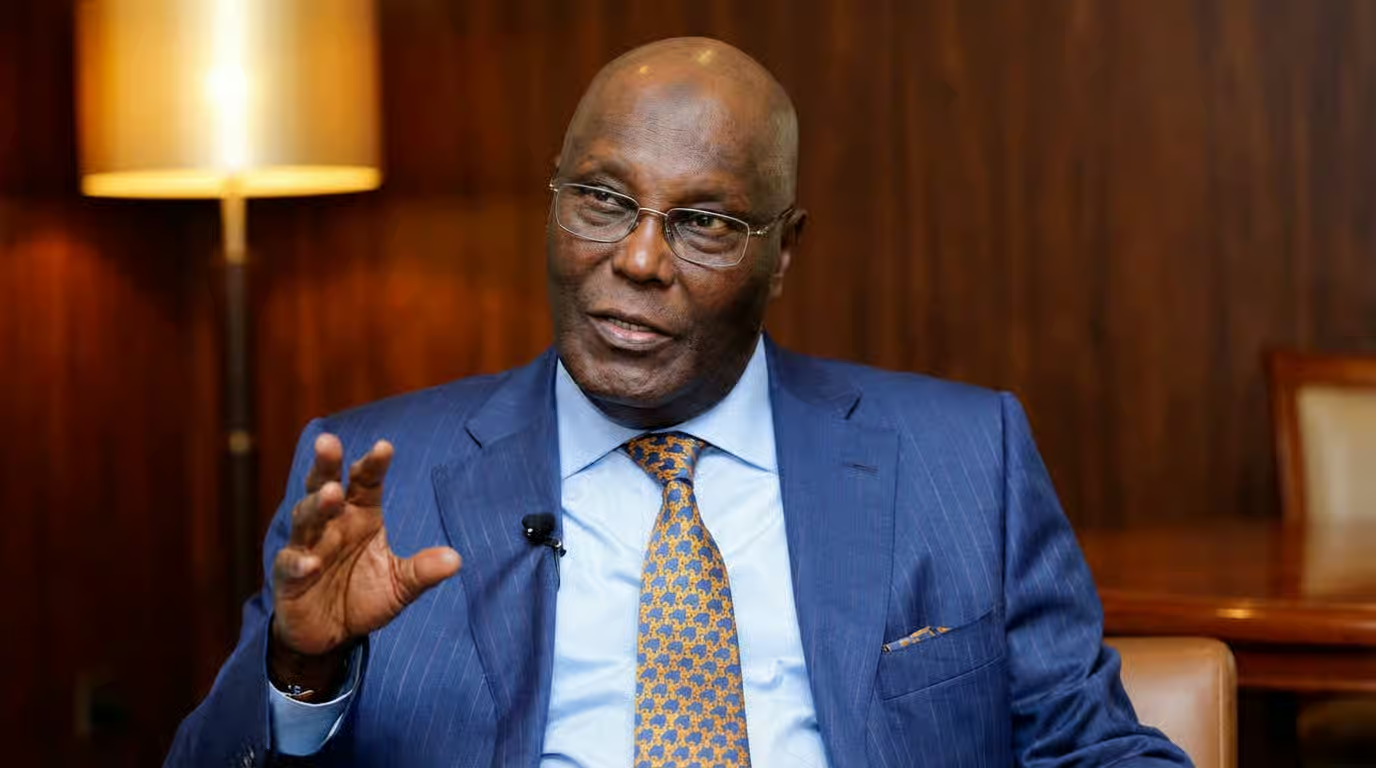
Every generation produces one man the storm cannot break.
In the northern savannahs, where history and politics meet like the Niger and the Benue, a name rises above the noise of a nation in doubt. It is not a whisper. It does not need an introduction in Daura or Sokoto, in the forests of Ondo, the hills of Enugu, the creeks of Bayelsa or the markets of Onitsha. It is spoken in all of them, and it is answered in all of them.
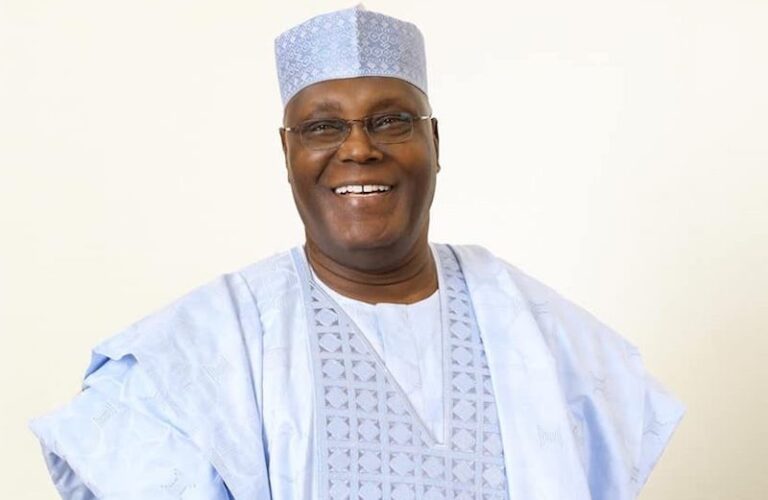
That name is Atiku Abubakar.
He was born in Jada, Adamawa State, on 25 November 1946. He lost his father at eleven. He was the orphaned son of a Fulani trader, and he has never once needed a briefing to understand what hunger tastes like, what injustice feels like, or what it costs a poor Nigerian to climb.
That is the difference. Some men study poverty. This one survived it.
He rose through the Nigeria Customs Service to the rank of Deputy Director, the equivalent of today’s Assistant Comptroller General, and he rose there in an institution where reputations are made or destroyed in public. Then he went into politics and built something rarer than a career. He built a national coalition.
From the defunct Social Democratic Party to the People’s Democratic Party, through the Action Congress and now to the African Democratic Congress, one thing never moved: true federalism, an economy that produces, and a country that holds together.
Parties changed. The man did not.
THE VAULT AND THE KEY
Let us speak plainly, because the arithmetic of Nigerian politics does not flatter anybody.
The Northern voting bloc is the iron vault of this Republic. No candidate has ever entered Aso Rock without opening it. In 2027, Atiku Abubakar is the only Northern presidential candidate in the field, and he is the Waziri of Adamawa. He does not need a locksmith. He is holding the key.
In 2019 he polled 11,262,978 votes nationwide, with the North East, North Central and much of the North West delivering heavily for him (INEC, 2019). In Adamawa he defeated a sitting President in that President’s own region.
In 2023, contesting against the machinery of the Federal Government, he still took 6,984,520 votes, and his Northern total including the Federal Capital Territory came to 5,233,473, within touching distance of the declared winner’s Northern figure of 5,587,757 (INEC certified state results, 2023).
Read that again. With the full weight of incumbency arrayed against him, the North split almost evenly, and it split with three Southern candidacies on the other side of the ledger.
In 2027 there is one Northern candidate. There are three Southern ones. That is not a slogan. That is a sum.
BEYOND THE NORTH, AND WITHOUT APOLOGY
The lazy caricature says Atiku is a regional man. The ballot papers say otherwise.
In the South East his support for Igbo economic rights and political inclusion has earned him a respect no amount of propaganda has managed to dislodge. In the South South he is trusted as a genuine believer in resource control and fiscal federalism, not a convert of convenience. In the South West, campaigning into a hurricane, he still drew 941,941 votes in 2023 (INEC, 2023), a figure that grows every year among Yoruba professionals, intellectuals and young people who have stopped voting on sentiment and started voting on arithmetic.
He has invested where he preaches. The American University of Nigeria in Yola was not a campaign promise. It was built, it is running, and its graduates are working.
No politician alive in Nigeria today carries this combination of national spread and religious neutrality. Atiku Abubakar can walk into any of the six geopolitical zones without a security briefing about whether he will be received. Name the other man who can.
THE VERDICT OF HIS OWN ADVERSARY
Here is the fact his opponents would pay to bury.
The one man who governed Nigeria beside him for eight years, and who then spent years opposing him, stood up in Abeokuta on 11 October 2018, publicly forgave him, and endorsed him as the better man to lead Nigeria.
Chief Olusegun Obasanjo is not an easy witness. He is not a sentimental one. He knew Atiku Abubakar at close range, in office, under pressure, for two full terms. And when the country’s future was on the table, his considered public verdict was Atiku.
When your fiercest critic has already testified for you, the case for the prosecution is finished.
WHAT HE WILL DO
Rhetoric is cheap in this country. Documents are not. Atiku Abubakar campaigns on paper, and the paper can be read, argued with and held against him.
JOBS. His published economic platform commits to mass employment through small and medium enterprise financing, foreign direct investment, industrial parks, agricultural value chains and technology incubation centres, with a stated target of 3 million jobs annually (My Covenant with Nigerians, 2022).
EDUCATION. A digital literacy revolution and a technical skills programme aimed squarely at young Nigerians who are neither in school nor in work.
HEALTH. Universal Health Coverage delivered through combined public and private capacity, with a stated target of halving maternal and infant mortality within four years.
RESTRUCTURING. Real devolution. States controlling their resources, their security and their infrastructure. His position on this has not shifted in a decade, through every campaign he has run.
POWER AND INFRASTRUCTURE. A generation target of 25,000MW, pursued through decentralisation, public private partnerships and renewable expansion into the rural areas that the national grid abandoned.
SECURITY. An overhaul of the security architecture and decentralised policing, because a country that cannot protect a farmer cannot feed itself, and a country that cannot feed itself cannot borrow its way to safety.
THE ECONOMY, HONESTLY. Under the Atiku Economic Recovery Plan, subsidy support is to be shifted from importation to production, from middlemen to Nigerian refineries, from unverifiable claims to verifiable barrels, capped, budgeted openly and independently audited. Not a return to the old racket. An end to it.
This is a candidate who tells you what he intends to do before you vote, in a document you are free to reject. That is what a manifesto is for.
THE CHOICE
When others were silent, he spoke. When others compromised, he held. When others chased shadows, he chased solutions.
Some men seek power to settle scores. Some seek it to accumulate. This one has already made his money, already served at the summit of the state, and has nothing left to prove except the thing he has said he wants to do since 1999: build a Nigeria that works for the person who owns nothing.
We are not looking for a president. We have had presidents. We are looking for a compass, a reformer, a stabiliser and a builder. In Atiku Abubakar this nation finds all four in one man, humbled by loss, hardened by experience, and ready.
On 16 January 2027 the ballot will not ask you how you feel. It will ask you what you have decided.
Heed the echo from the North. Heed the plea from the South. Heed the silent prayer of a mother who has stopped counting how many meals her children missed this week.
Sometimes the safest future lies in the steady hands of the man who has seen the storm, survived the flood, and still believes the sun will rise.
THE RECORD, IN NUMBERS
In 2019 Atiku Abubakar polled 11,262,978 votes against Muhammadu Buhari’s 15,191,847. In 2023, running into the full machinery of a sitting government, he polled 6,984,520 against Bola Ahmed Tinubu’s 8,794,726, a margin of 1,810,206 in a country of over 93 million registered voters.
Look closer at where those 2023 votes came from and the picture turns. Counting the Federal Capital Territory with the North, Atiku took 5,233,473 Northern votes to Tinubu’s 5,587,757. A gap of 354,284. That is the whole of the North, divided, against a South that was not divided at all.
In 2027 the South carries three candidacies into the same electorate. The North carries one.
Aare Amerijoye DOT.B
Director General
The Narrative Force
thenarrativeforce.org
3 September 2026