Aare Amerijoye DOT.B
On a summer afternoon in June 1923, in the Aeolian Hall in London, a tall, angular, magnificently unusual woman hid behind a painted curtain and spoke her poems through a megaphone into a hall that did not want to hear them. The audience hissed. The critics sharpened their pens. The story is still told that an elderly lady waited afterwards with her umbrella raised, ready to strike the poet for what she had done to the English language.
The poet was Edith Sitwell. The work was Façade. Within a generation, the piece that was jeered had become a classic, and in 1954 the woman who had been mocked was made a Dame of the British Empire.
I begin there because Nigeria has its own version of that afternoon. For more than 30 years, one man has stood before a sceptical hall and spoken of restructuring, of strong federating units, of a lean centre and empowered states, of private enterprise as the engine of national wealth. He was hissed at, and his words were twisted. Today the hall is repeating his words back to him.
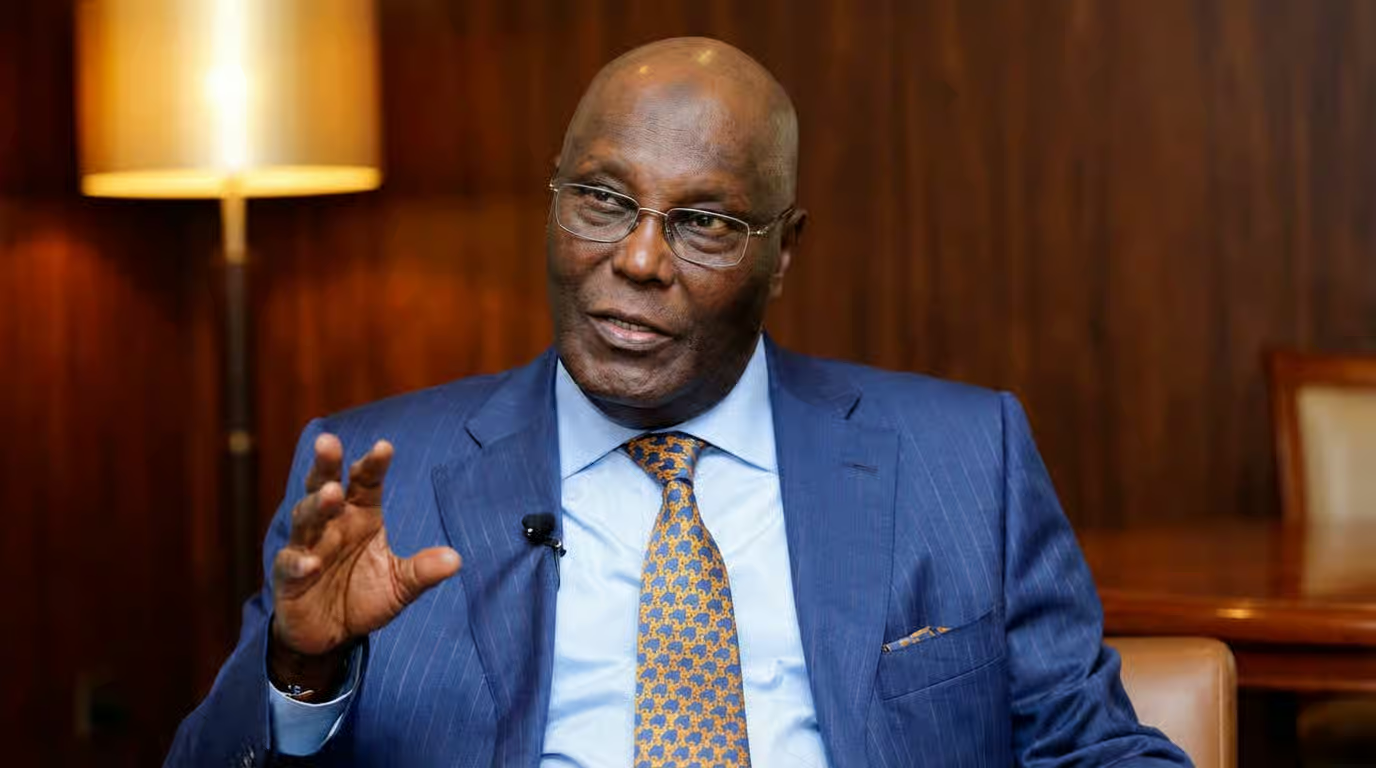
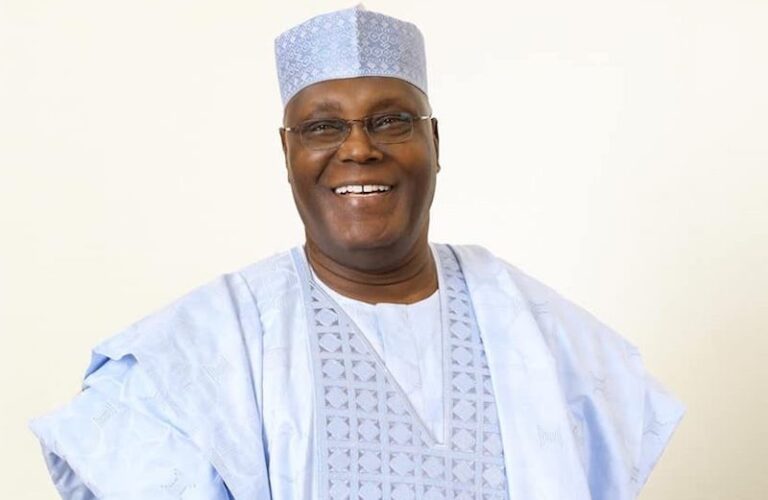
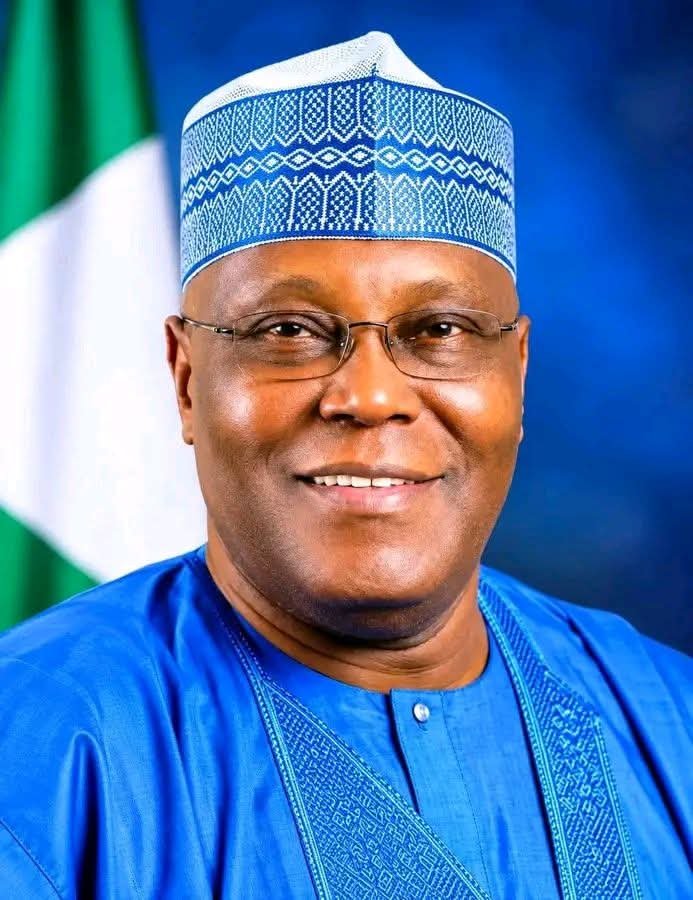
That man is Atiku Abubakar, the ADC candidate for President.
The hall that jeered the poet ended by crowning her.
THE CONTEST
On 16 January 2027, Nigerians will witness a contest that is momentous, consequential and historic. It is not a routine rotation of names on a ballot paper. It is a national referendum on whether competence still counts in the Nigerian republic.
Atiku enters that arena as the most seasoned, most tested and most thoroughly prepared candidate in the field. He does not enter as a novice seeking an apprenticeship at the nation’s expense. He enters as a veteran of statecraft who has sat in the room where national economic decisions are made and knows where the levers are.
This is not a contest he stumbled into. It is a contest he has prepared for across a lifetime, deliberately, patiently and in full public view.
THE MOTIVES
Ask what drives a man, and you will learn what he will do with power.
Atiku lost his father at the age of 11, in 1957. He grew up without the shelter that most children take for granted, went to work early, fended for himself and built his first house while still in his twenties. Nobody handed him a life. He built one.
A man shaped by that kind of boyhood does not seek power to decorate himself. He already has comfort, name and accomplishment. He founded the American University of Nigeria in Yola with his own money, and that institution stayed open through the insurgency and fed displaced people in their hundreds of thousands. He does not need the presidency to be remembered.
His motive is purer and harder than ambition. It is the stubborn, restless, unfinished desire to see Nigeria work. Three times in his political life he stood down for the stronger position, in 1993, in 1999 and in 2003. Not once in 33 years has he asked a stronger man to yield to him. That is not the record of a man hungry for office. It is the record of a man who has always measured his ambition against the national interest and let the nation win.
A man who has already built his own house does not need to loot yours.
THE INTENTIONS
Atiku’s intentions are not whispered in private rooms. They are written down, published in advance and placed before Nigerians to examine him and his plans.
He has named welfare and security as his two governing priorities, and he has said, in his own words, that the welfare of citizens is the fundamental responsibility of government. His Economic Recovery Plan commits to a targeted, capped, transparently budgeted and independently audited production subsidy, moving public support away from importation and middlemen towards Nigerian refineries and verifiable barrels.
He is committed to restructuring the federation so that the states become strong federating units, able to compete and attain their full potential, with a leaner centre concentrating on defence, foreign affairs and monetary policy, and with state police to bring security closer to the people.
He intends to be a unifier. His politics has always run across the lines of region, faith and tongue, and his circle of allies reads like a map of Nigeria rather than a map of one village.
These are committed plans and working documents, not slogans. A voter can hold them in his hand today and hold the man to them tomorrow.
THE PREPAREDNESS
Preparation is the quiet virtue that separates the leader from the performer.
Atiku served 20 years in the Nigeria Customs Service and retired in 1989 as Deputy Director, the second highest rank in the service. He knows the machinery of government from the engine room, not from the brochure.
For 8 years as Vice President, he chaired the National Economic Council under the Constitution and the National Council on Privatisation under the Public Enterprises Act. Those were not ceremonial chairs. The period saw the GSM licences auctioned in 2001, when Nigeria had fewer than 500,000 telephone lines. It saw banking consolidation reduce 89 weak banks to 25 strong ones. It saw the Paris Club debt settlement and the rise of external reserves from 3.7 billion dollars to about 45 billion dollars.
Edith Sitwell once said of herself, “I am not eccentric. It’s just that I am more alive than most people.” There is something of that in Atiku. At an age when many men retire into memory, he is energetic, alert, curious and fully engaged, reading the reports, taking the calls, travelling the country and debating the details. He is more alive to Nigeria’s possibilities than most of the men who have governed it.
Experience is not a burden he carries. It is the map he reads from.
WHAT VISION IS
The word vision is used so often in Nigerian politics that it has almost lost its meaning. So let us define it.
A dream is a picture of a better place. A vision is that picture joined to a road, a timetable, the resources to travel it and the stamina to keep walking when the road turns hard. A dream is a wish. A vision is a commitment.
Sitwell put it beautifully when she wrote that “rhythm is one of the principal translators between dream and reality.” In governance, that rhythm is planning, sequencing and discipline: the steady, measured work of turning what a leader sees into what a citizen can touch.
Scripture puts it more starkly: where there is no vision, the people perish. Nigeria has seen what happens when power arrives without a plan. Atiku offers the opposite: a vision already translated into published plans, measurable commitments and a record that shows he has done this work before.
His vision is of a Nigeria where the states are strong and the centre is lean, where private enterprise creates jobs faster than the population creates job seekers, where a farmer in Benue, a trader in Onitsha, a herder in Adamawa and a teacher in Ekiti can plan their lives without fear, and where the young graduate sees a future at home rather than an exit abroad.
THE WOMAN WHO TURNED THE CAR AROUND
In March 1936, the American photographer Dorothea Lange was driving home in the rain after a long assignment. She passed a roadside sign that read Pea-Pickers Camp. Tired and eager to get home, she drove on for about 20 miles. Then something in her would not let her continue. She turned the car around and drove back.
In that camp she found a mother and her hungry children, and she made a photograph, Migrant Mother, that became the face of an entire era of American suffering. It moved a government to send food to the camp.
That story is told with rare tenderness by the historian Linda Gordon, whose biography of Lange, like her earlier book The Great Arizona Orphan Abduction, won the Bancroft Prize for the best book in American history. Gordon’s Lange is a woman who refused to let limits define her and who understood that real vision is not only seeing far. It is refusing to look away from what is near.
That is the second half of vision, and it is the half that many powerful men lack. Atiku has it. When the insurgency drove families from their homes in the North East, the university he built in Yola did not shut its gates and look away. It stopped, turned towards the suffering and fed the displaced. A leader who does that with his own resources will do it with the nation’s.
Vision is not only seeing far. It is refusing to drive past the hungry.
THE CHRONICLER HAS NOT ENDED THE TALE
Linda Gordon wrote in her orphan abduction study that whether a history has a happy ending “depends on when the chronicler ends the tale.”
Nigeria’s story is not finished. The present chapter is heavy with hunger, insecurity and disappointment, but it is a chapter, not the conclusion. The pen is still moving, and on 16 January 2027 it passes into the hands of the Nigerian voter.
During the London Blitz of 1940, with bombs falling on her city, Sitwell wrote Still Falls the Rain, a poem that looked straight into suffering and still found meaning beyond it. Nigerians know that rain. They have walked through it for years. But rain is not the end of the season.
Atiku Abubakar is the candidate who has seen the morning, planned the road to it, walked much of that road before and proven that he can carry a nation’s economy on his shoulders. His contest is honourable. His motives are clean. His intentions are published. His preparation is unmatched. His vision is not a dream. It is a plan.
The hall once hissed at him. The hall is now listening.
119 days remain. Let the chronicler write a happy ending.
Atiku2027 #ADC #VoteAtiku #TheNarrativeForce
Aare Amerijoye DOT.B
Director General,
The Narrative Force
thenarrativeforce.org
20 September 2026