Aare Amerijoye DOT.B
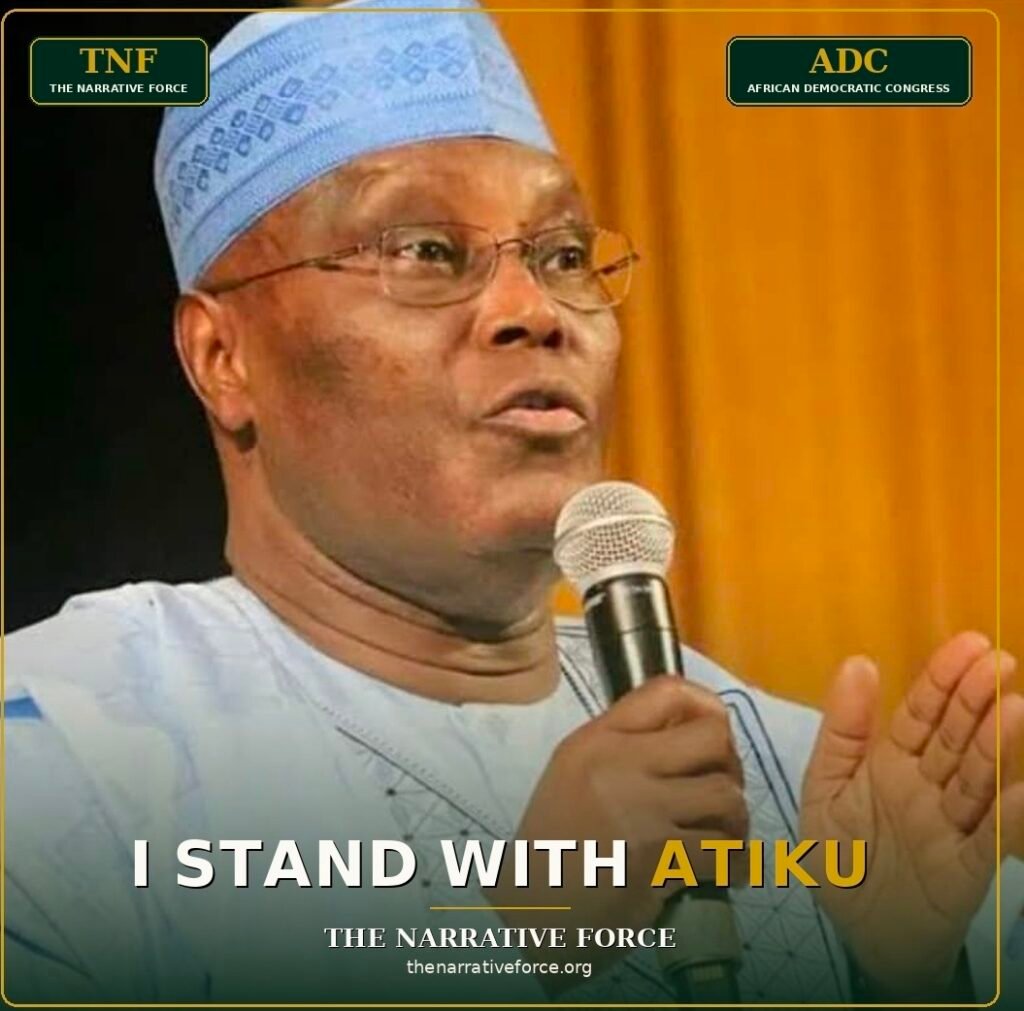
Before the spin doctors, before the manufactured smears, before the hired pens now warming up for 2027, there was a written record. And that record is devastating for Atiku Abubakar’s enemies, because character is not cosmetic. Character is the raw material of leadership, and the character documented in Atiku’s biography tells Nigerians exactly what kind of presidency awaits them on the other side of 16 January 2027.
Open the book to the chapter on the People’s Front of Nigeria. It was Shehu Musa Yar’Adua, one of the most formidable political minds this country ever produced, who looked at a young Director of Customs and saw a politician. You are good, he told him. You relate well with people. Yar’Adua did not recruit noise makers. He recruited substance. And a man who relates well with people will govern well with people, listening to labour instead of tear-gassing it, engaging governors instead of humiliating them, carrying the National Assembly along instead of buying it.
He is deep and sharp, patient and accommodating. It is easy to underestimate him.
Those are not my words. They are the words of Yomi Edu, a long-time associate quoted in the book, who added that Atiku was extremely generous, focused and reliable, a man who never talks carelessly. Now translate each of those adjectives into government, because that is precisely how character becomes policy.
A president who is deep and sharp will not govern by trial and error. Nigeria has bled for three years under policies announced at podiums before they were designed on paper, subsidy removed overnight with no cushion, the naira floated with no anchor, tariffs reversed and re-reversed. Atiku’s depth is documented differently. The book records that the birth of the People’s Front was preceded by meticulous planning and strategy sessions on funding, constitution, logistics and membership, with a thorough analysis of likely political scenarios. That is the Atiku method: think first, plan thoroughly, then act decisively. It is the method behind his published policy blueprint, and it is the method that produced the economic team whose reforms grew Nigeria’s GDP from 58 billion dollars in 1999 to 270 billion dollars by 2007 while he served as Vice President and chairman of the National Economic Council.
A president who is patient and accommodating will heal a wounded federation. Remember the school that formed him. The Yar’Adua group deliberately gathered old and new politicians, progressives and radicals, Muslims and Christians, Southerners and Northerners, rich and poor, in one room, determined to build a Nigeria united by common goals rather than divided along ethnic and religious lines. Atiku was baptised politically in the most deliberately pan-Nigerian political family of his generation. The leadership he will provide is that same bridge-building creed scaled to the presidency: a government of national competence, not a government of one state, one clan and one club.
A president who does not talk carelessly will restore the dignity of the office. No more insults hurled at citizens from foreign podiums. No more policy by provocation. Nigeria’s Commander-in-Chief will once again be measured in word and weighty in silence, because the book tells us he was reserved and not flippant long before any office demanded it of him.
And a president who is extremely generous, in the precise way the book describes, will put the treasury where his character has always been: in people. This is the man who, with his own money, built schools, mosques and health centres, awarded scholarships and helped ordinary people start small businesses. The book adds that he does not believe in keeping money idle but in advancing good causes. A man who did that with his personal fortune will do it with the national purse, and his blueprint already says so: massive investment in education and human capital, credit for small businesses, and an economy that backs the hustler in Ado Ekiti as readily as the conglomerate in Lagos.
His philosophy on wealth seals the argument. This is a man who told his own children that he would not leave material things behind for them, only a good education and a good upbringing, expecting them to struggle and create their own wealth. What manner of African big man says that? Not the kind who enters power to primitively accumulate. A leader who refuses to bequeath unearned wealth to his own blood will not preside over a state where connection replaces competence. That single sentence is a stronger anti-corruption manifesto than a thousand press releases.
Then there is the quality his critics mistake for a flaw: stubbornness. The book says Atiku takes his time, consults widely, weighs everything, but once his mind is made up, no pressure on earth moves him. His own family urged him against politics in 1988. He listened patiently, followed his conviction, resigned and never looked back. In governance, that trait has a different name. It is called policy stability. Investors flee countries where the rules change with the president’s mood. Under a leader who decides deliberately and then stands firm, Nigeria will finally offer the consistency that capital, both foreign and domestic, has begged for.
And why does he want the job at all? His answer, printed decades ago, was not a slogan cooked up by consultants. I was educated free of charge, he said. Politics to me has been a way of paying back.
Politics to me has been a way of paying back.
That is servant leadership defined in one line by an orphaned boy lifted by free education, now determined to lift two hundred million others. His peers saw it early: at the People’s Front’s first national convention in June 1989, in a hall full of titans, delegates elected him one of the National Vice Chairmen. They watched him at close range and trusted him with leadership. Nigerians in 2027 are merely being asked to confirm a verdict his own generation already delivered.
Generous. Focused. Reliable. Deep. Sharp. Patient. Accommodating. Steadfast. These are not campaign inventions. They are the documented raw materials of the presidency Nigeria has been starved of, and on 16 January 2027, Nigerians will simply sign what history wrote long ago.
Aare Amerijoye DOT.B
Director General,
The Narrative Force
thenarrativeforce.org
17 July 2026