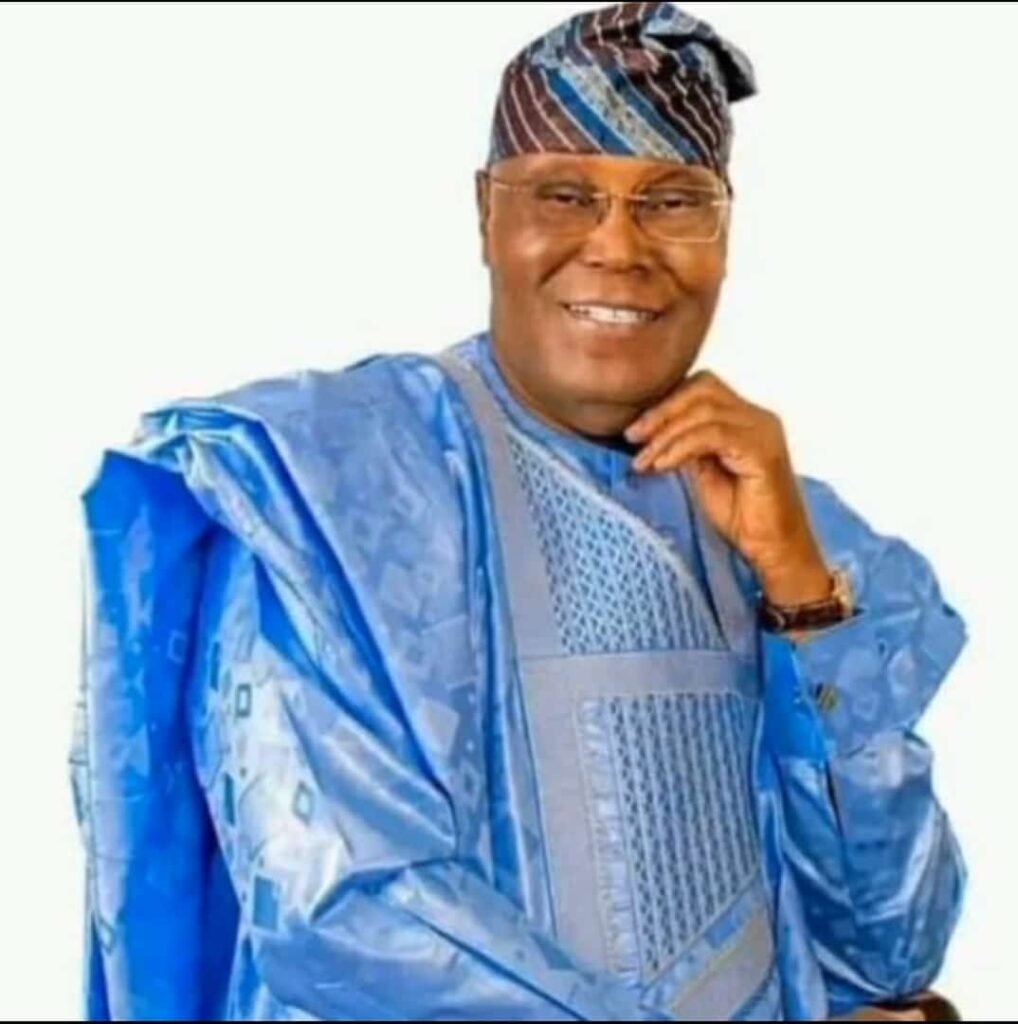
Aare Amerijoye DOT.B
Every year, Nigeria marks June 12 with speeches, holidays and solemn tributes to the freest mandate in our history. Yet buried in the pages of Atiku Abubakar’s biography lies a chapter of that story most Nigerians have never heard. It deserves to be taught in every classroom, and it deserves to be weighed by every voter before 16 January 2027.
THE SACRIFICE THAT MADE JUNE 12 POSSIBLE
At the 1993 SDP presidential convention in Jos, a young businessman from Adamawa with barely three years in politics stunned a field of twenty eight aspirants by placing a strong third on the first ballot, behind only MKO Abiola and Babagana Kingibe. His supporters were convinced the presidency was within reach.
Then came the moment that separates statesmen from politicians. With the second ballot imminent, Atiku mounted the podium and announced he was stepping down for Abiola. The biography records that he begged the delegates to permit him to withdraw so the contest would end without rancour. His supporters broke down and wept openly. He calmed them with one explanation: the decision was taken in the interest of the nation. He was ready, the book records, to subordinate his personal ambition for the sake of democracy and the survival of Nigeria, and to make personal sacrifices to end military rule.
Now consider the arithmetic. Abiola defeated Kingibe on that second ballot by a margin of just two hundred and twenty seven votes. Eleven of the fourteen SDP governors stood with Kingibe. The military leadership preferred Kingibe. The biography is emphatic that it was Atiku’s withdrawal and his directive to his supporters, backed by the weight of the Yar’Adua political family, that gave Abiola the much needed edge, and that had that weight gone the other way, Kingibe would have taken the ticket.
Sit with that. No Atiku sacrifice, no Abiola candidacy. No Abiola candidacy, no June 12. The mandate we celebrate every year passed through the open hand of a man who gave up his own crown so that democracy might have a chance.
THE TESTIMONY OF HIS OPPONENTS
Character revealed under pressure in 1993 did not appear from nowhere. It was already on record, sworn to by the very men who fought him.
In the political wars of the early nineties in the old Gongola, Atiku’s fiercest rival was Dr Bala Takaya, ringed by loyalists determined to bury Atiku’s ambitions. What did Atiku do when fortune turned his way? The biography records it plainly. He sent his rivals financial assistance they never requested, including Takaya himself, and sustained struggling political actors with his own resources rather than watch them ruined.
Jonathan Zwingina, then a devoted Takaya man, confessed on record that the rival camp was simply baffled by such conduct. He testified further that Atiku carried no discrimination in his politics, relating to Christians and to people outside his own stock with the same open hand, and judging men only by hard work, intelligence and honesty. Nath Yaduma, another pillar of the opposing camp, conceded that Atiku was liberal, open and willing to share whatever he had.
The biography distils his creed into a single sentence: he seeks at all times to reduce the number of his enemies by winning them over. He believes in making friends, not enemies. In a country bleeding from the politics of vengeance, that is not a footnote. That is the medicine.
A BUILDER BEFORE A POLITICIAN
Long before he sought office, Atiku had passed the test today’s noise makers dread most: he built something real. The biography chronicles how a modest logistics venture grew under his stewardship into a multi million dollar enterprise employing over fifteen thousand people across Nigeria and several other African countries. Fifteen thousand families fed, not from the public treasury but from enterprise, risk and sweat.
THE MANIFESTO THAT WAITED FOR NIGERIA
Read what Atiku campaigned on at Jos in 1993 and tell me it does not read like a letter to the Nigeria of today. He declared that no nation can call itself independent if it cannot feed itself, and pledged agriculture as the first priority of government. He promised an economy designed to benefit the people rather than punish them. He committed himself to true federalism as the surest exit from our recurring crises. He said the presidency would not be won by wealth or name recognition but by identification with the hopes of the common man, and that he was in the race to bring a new lease of life to the poor.
Food security. A humane economy. Restructuring. The poor at the centre. He was preaching it three decades before it became fashionable. That is not a politician chasing the moment. That is a man the moment has finally caught up with.
THE VERDICT
The biography records his own summary of a lifetime of being underrated and proving the cynics wrong.
“All my life, I have always fought my battles.”
Character is not what a man says about himself in an election season. It is what your enemies admit about you and what the record proves when nobody is campaigning. By that standard, the man who surrendered his own ambition so that June 12 could be born stands almost alone in Nigerian politics.
On 16 January 2027, Nigerians will not merely choose a candidate. They will choose a character. The record is open. The witnesses have spoken. The man his rivals could not hate is the man Nigeria can trust.
Aare Amerijoye DOT.B
Director General,
The Narrative Force
thenarrativeforce.org
17 July 2026