The Great Federal Hot-Potato Game: How the Center Bakes the Crisis and Blames the Kitchen

By Kunle Oshobi

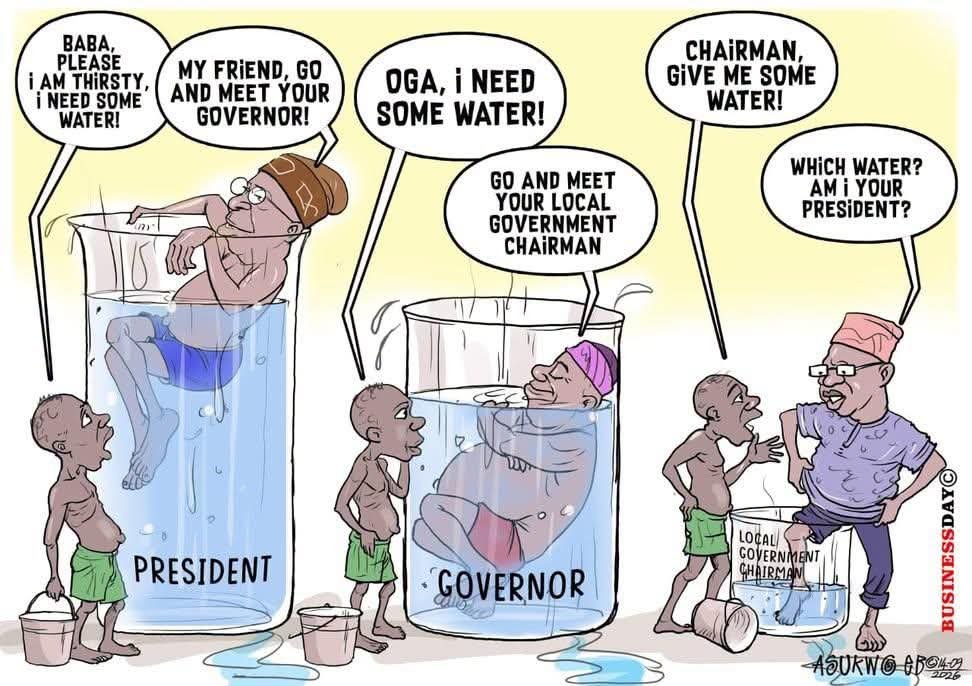
There is a comedy playing out in the corridors of power, but unfortunately, the audience is paying with empty stomachs. The headline act of the Tinubu administration’s economic strategy seems to be a classic game of political hot-potato: crash the vehicle of macroeconomic stability, leap out of the driver’s seat, and point wildly at the state governors and local government chairmen riding in the backseat.

The administration’s sudden enthusiasm for grassroots accountability would be admirable if it were not so transparently convenient. The official line urged upon long-suffering citizens is simple: “Your state and local governments are getting massive federal allocations now. Go and hold them responsible for your hunger!”
It is a masterclass in deflection, but the mathematics and the constitution tell a radically different story.

The Illusion of “Increased Allocations”
Yes, the nominal figures disbursed by the Federation Account Allocation Committee (FAAC) to subnationals have surged. But celebrating an increase in paper naira while ignoring its decimated purchasing power is economic theatre.
When a federal government unleashes a twin-engine shockwave—the unhedged floating of the naira and the abrupt removal of fuel subsidies—it prints trillions of inflated naira notes.

Sending extra buckets of devalued currency to a state governor while the cost of basic food, transportation, and materials has quadrupled is not financial empowerment; it is returning a fraction of a house’s value after burning down the neighborhood.
Crucially, the Federal Government still retains the lion’s share of the FAAC allocation, comfortably scooping the largest chunk of the national revenue pie before dropping the remaining slices down the federal ladder.

Who Controls the Lever?
To suggest that state and local government officials hold the remote control to inflation or commodity pricing is to rewrite basic economics:

  • Monetary Policy: State governors do not set the Monetary Policy Rate, manage the Central Bank’s foreign exchange reserves, or dictate national money supply.
  • Fiscal Policy & Customs: Local government chairmen do not set import tariffs, clear goods at the ports, or determine the pump price of refined fuel.
  • Macroeconomic Conditions: The structural drivers of headline inflation—from fuel costs to currency volatility—are federal policy decisions conceived and executed entirely out of Abuja.

Expecting a local government chairman to tame runaway inflation using a slightly higher nominal allocation is like asking a bucket brigade to put out a forest fire while the central fire station keeps pouring gasoline from above.

Taking the Wheel or Shifting the Blame?

True leadership is measured not by how deftly an administration can pass the buck when ill-digested reforms bite, but by taking ownership of the policy climate it created.

Subnational governments must absolutely be held accountable for transparent spending within their jurisdictions. However, weaponizing increased nominal allocations as a shield against federal economic missteps is a strategy as hollow as the buckets everyday citizens carry to empty taps.

If the central administration wants the praise for sweeping “reforms,” it must also own the immediate wreckage those reforms cause, rather than pretending the steering wheel was at the local council office all along.

Kunle Oshobi is The Head of Planning and Strategy and Chairman Narrative Command of The Narrative Force

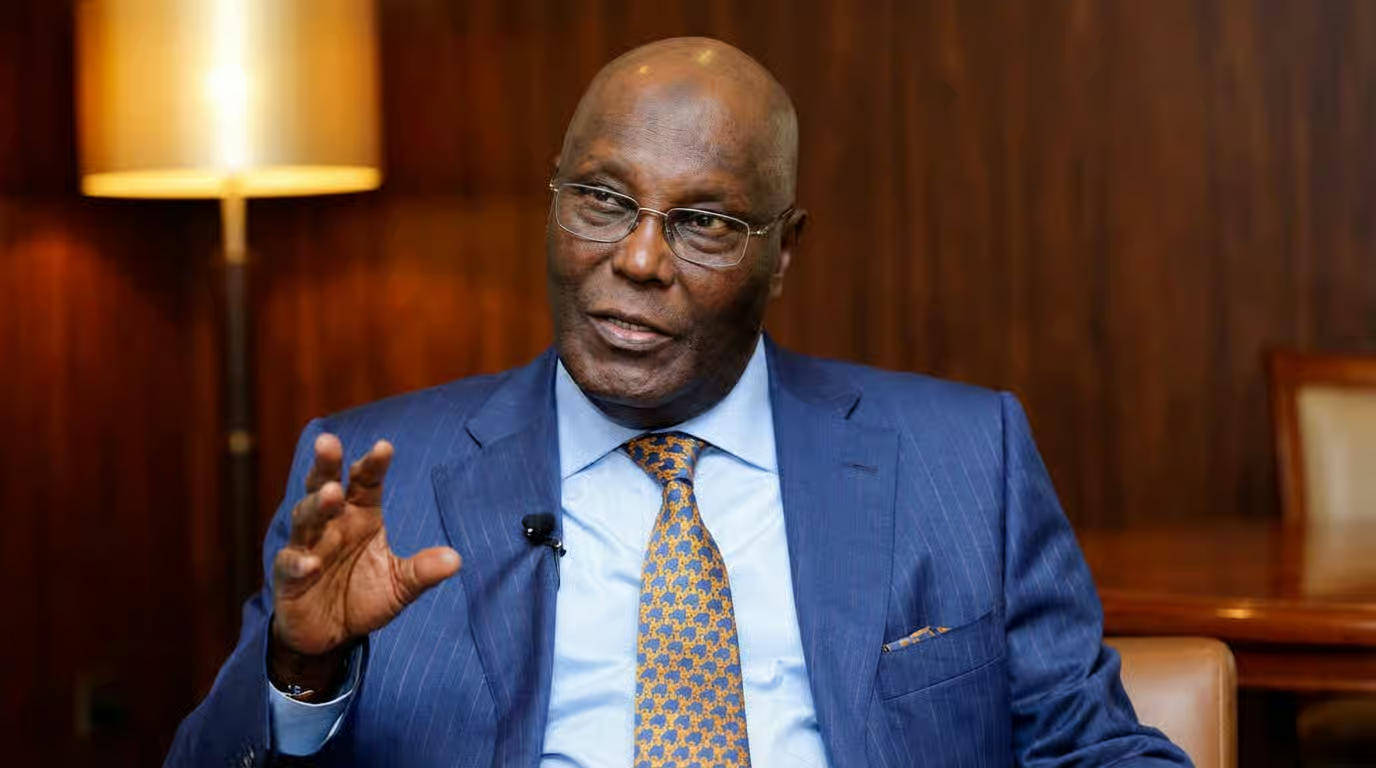
Aare Amerijoye Donald Olalekan Temitope Bowofade (DOT.B) is a Nigerian political strategist, public intellectual, and writer. He serves as the Director-General of The Narrative Force (TNF), a strategic communication and political-education organisation committed to shaping ideas, narratives, and democratic consciousness in Nigeria. An indigene of Ekiti State, he was born in Osogbo, then Oyo State, now Osun State, and currently resides in Ekiti State. His political and civic engagement spans several decades. In the 1990s, he was actively involved in Nigeria’s human-rights and pro-democracy struggles, participating in organisations such as Human Rights Africa and the Nigerianity Movement among many others, where he worked under the leadership of Dr. Tunji Abayomi during the nation’s fight for democratic restoration. Between 2000 and 2002, he served as Assistant Organising Secretary of Ekiti Progressives and the Femi Falana Front, under Barrister Femi Falana (SAN), playing a key role in grassroots mobilisation, civic education, and progressive political advocacy. He has since served in government and party politics in various capacities, including Senior Special Assistant to the Ekiti State Governor on Political Matters and Inter-Party Relations, Secretary to the Local Government, and Special Assistant on Youth Mobilisation and Strategy. At the national level, he has been a member of various nationally constituted party and electoral committees, including the PDP Presidential Campaign Council Security Committee (2022) and the Ondo State 2024 election committee. Currently, he is a member of the African Democratic Congress (ADC) and serves as Secretary of the Ekiti State ADC Strategic Committee, where he plays a central role in party structuring, strategy, and grassroots coordination. Aare Amerijoye writes extensively on governance, leadership ethics, party politics, and national renewal. His essays and commentaries have been published in Nigerian Tribune, Punch, The Guardian, THISDAY, TheCable, and leading digital platforms. His work blends philosophical depth with strategic clarity, advancing principled politics anchored on truth, justice, and moral courage.

Leave a Reply

Your email address will not be published. Required fields are marked *

Recent News

Trending News

Editor's Picks

AND NOW YOU TEACH MANNERS, FEMI!

An Open Letter to Chief Femi Fani-Kayode From: Aare Amerijoye DOT.B Director General, The Narrative Force4 October 2026 Dear Femi, You have done it again. You have climbed onto a pulpit made entirely of insults and preached a sermon on manners. “Nothing so completely baffles one who is full of trick and duplicity himself, than...

TINUBU HAS THE NATURAL FOUR DIRECTORS GENERAL OF ATIKU TO CONFRONT. THE DIRECTORS GENERAL ARE: HUNGER, FAILED PROMISES, HIS POLITICS OF KAKITOCRACY AND HIS CRONYISM OF FAVOURING ONLY THE BOURDILLON CABAL

Aare Amerijoye DOT.B Every presidential campaign in Nigeria spends its first anxious weeks hunting for a Director General. Names are floated, governors lobby, and godfathers send emissaries at midnight. Atiku Abubakar has been spared that trouble. Bola Ahmed Tinubu appointed four Directors General for him at Eagle Square on 29 May 2023, and has kept...

WHEN SUBSIDY IS “BAD” — WHY IS GERMANY SUBSIDISING ENERGY COSTS FOR ITS PEOPLE?

Dr Alex Adum Ter PhD There is something fundamentally wrong with the simplistic economic argument by the incumbent government of President Bola Ahmed Tinubu that “subsidy is bad” whenever the subject is about how to cushion the negative impact of fuel subsidy removal on Nigerians, as though the mere existence of government support for citizens...

D-37 INDEPENDENCE DAY PRESS STATEMENT.

Alex Ter Adum, PhD* THE ILLUSION OF PROSPERITY A Reality Check on President Tinubu’s 66th Independence Address President Bola Ahmed Tinubu’s 66th Independence Day address was a confident presentation of an economy supposedly moving from painful reform to shared prosperity. The administration pointed to GDP growth above 4 per cent, declining inflation, greater foreign-exchange stability,...

Must Read

©2026. The Narrative Force. All Rights Reserved