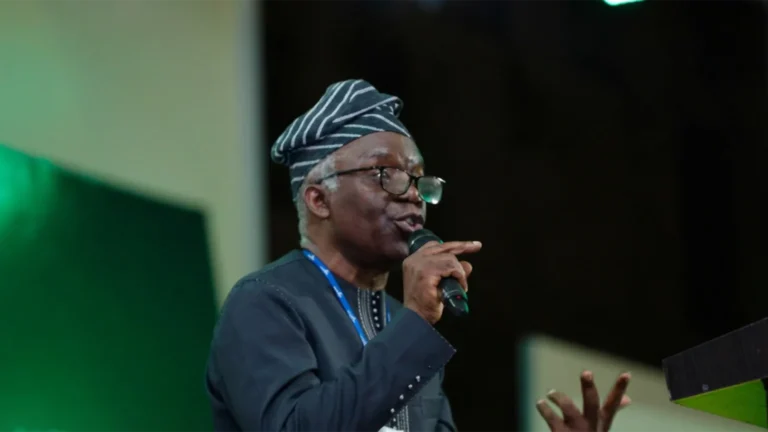
Aare Amerijoye DOT.B
4:50 IN THE MORNING
You wake before the alarm because the fan has stopped.
It stopped at some hour you did not witness, and the room has been filling with heat ever since. You lie still and listen to the compound. No hum. No neighbour’s freezer clicking. Only the generator two houses away belonging to the man who can still afford to run one, and even he kills it at eleven now.
You are metered, which is supposed to mean you are among the fortunate. Last year your street was moved into a higher band you never applied for, on a feeder you have never seen, and the tariff followed at once. The supply did not. Under the structure introduced in April 2024, the top band sits at roughly 225 naira a unit against about 63 naira in the band below, and your band is decided by the cable that happens to pass your junction. Not by your income. Not by your usage. Not by anything you could change by working harder.
Your neighbours down the lane have it worse in the other direction. They have no meter at all, among millions of Nigerians in a market still short of some 7 million of them, so they receive an estimate whether or not light ever came. And the free metering drive is aimed first at the bands already enjoying the best supply.
Sit with that arrangement a moment, because it is elegant in its cruelty. The best served are served first. The worst served are billed for darkness.
You are being charged for a promise, and the promise is the only thing that arrives on time.
Ending discriminatory banding is not a technical adjustment. For the tailor it is a machine that runs. For the welder, the barber, the frozen food seller and the borehole operator, it is the difference between a business and a hobby. No nation in the history of the world has industrialised in the dark.
5:40 IN THE MORNING
You leave in darkness and you already know the number before you reach the junction.
On Saturday, 12 September 2026, the refinery lifted its gantry price again, from 1,265 naira to 1,350 naira a litre, the fourth rise since 21 August. Pumps moved to between 1,350 and 1,400, and higher in the North, where every litre must be hauled a thousand kilometres before anyone can sell it.
The driver is not a wicked man. He has run this route for twenty years and does your arithmetic in reverse. When he calls the new fare there is a small silence in the bus, the particular silence of people recalculating a week.
Understand what fuel is in a country like ours. Not a product. The multiplier sitting underneath every other price. It moves the yam from the farm to the city, because no yam grows in a city. It moves you to the job that pays you, the drugs to the pharmacy, the cement to the site. Touch it recklessly and you have reached into every household in the federation at once.
In May 2023 it was touched in a single sentence, from a podium, with no framework beneath it. Between 1999 and 2007 the same road was walked in about seven measured steps, from 20 naira to 75 naira, through a regulatory structure built for the purpose, so the economy absorbed each move and stayed upright. One approach treated deregulation as a process a nation could survive. The other treated it as an announcement.
What has been committed now is not the old importation racket with its phantom vessels and unverifiable claims. It is a capped, transparently budgeted, independently audited intervention moved from importation to production, from middlemen to refineries, from paper to barrels an auditor can count.
7:20 IN THE MORNING
The trailers overtake you on the left, forty feet of container each, grinding the road to powder.
Almost every one came out of Lagos, because that is where cargo enters, because the ports that should receive it have been left asleep. The Minister responsible has said so himself: Port Harcourt, Warri, Calabar and Onne remain significantly underutilised through policy neglect, poor infrastructure linkages and inconsistent investment. The Calabar channel has been reported at 6 to 7 metres when a modern vessel needs 15. A port a big ship cannot enter is a monument.
So a trader in Calabar clears her goods seven hundred kilometres from her own quay and pays a haulier to bring them back past the empty berths, and that detour is sitting inside the price of the rice you will buy tonight. The trailer that just passed you is not traffic. It is a tax.
Now imagine those berths working. Cargo landing near where it is consumed. Shorter haulage, lower landed cost, fewer trucks killing the Lagos corridor, and work for stevedores, agents, drivers, welders and food sellers across the South South and South East. A working port is the most efficient employment scheme ever devised, and it hires the man who never finished school beside the man with a master’s degree.
3:00 IN THE AFTERNOON
Somebody in your family needs a hospital today, and the first question is not what is wrong. It is how much is in the account.
About 70 per cent of all health spending in this country comes straight out of the patient’s pocket, and medical costs push more than a million Nigerians into poverty every year. Carry that sentence with you: in Nigeria, falling ill is a leading cause of becoming poor.
And the staff are going. One report counted 43,221 doctors, nurses, pharmacists and laboratory scientists leaving between 2023 and 2024, a rise of about 200 per cent across cadres. The Minister of Health himself said more than 16,000 doctors left within five to seven years and called it a silent emergency. Entry level doctors in state hospitals have earned as little as 150,000 naira a month, and the currency collapse of 2023 halved even that in real terms. Resident doctors and the joint health unions were driven into indefinite strikes over unpaid salaries and a salary structure agreed and then never implemented. Health’s share of federal spending has slid to roughly 4.2 per cent.
We are not failing to train doctors. We train superb doctors and then export them. Every departure gate at Lagos and Abuja carries a policy verdict delivered by men and women who studied medicine here and concluded they could not raise children on what this country pays them to save lives. Fix the pay, the theatre, the light and the security and the bleeding slows. Appeals to their patriotism have been tried for thirty years and have never slowed it once.
5:00 IN THE EVENING
Your cousin finished her degree, served her country, and now owes.
She borrowed because the alternative was leaving school. By 3 September 2026 the fund had disbursed 355.87 billion naira to 1,659,853 beneficiaries across 319 institutions. Do not read that as a trophy. Read it as the size of the mountain of private debt moved onto the backs of Nigerian young people, in an economy that cannot promise them work, in a currency that will be worth less when the bill matures than it was when she signed. Two years after service, 10 per cent of whatever she earns belongs to somebody else.
A nation that cannot guarantee employment has no business guaranteeing repayment.
There was a time, and it was not a mythical time, when the children of nobody in particular walked out of Nsukka, Zaria, Ife and Ibadan on scholarship and became the engineers, physicians and permanent secretaries who built the institutions we now watch decay. Nobody posted them a bill afterwards. That was not extravagance. That was a country investing in itself, which is what serious countries do and what unserious ones call unaffordable.
A country that finances its students with debt has decided its young are a liability rather than an asset.
6:30 IN THE EVENING
On the way home you pass the woman who sews.
She can cut, she can price, she can sell, and she cannot borrow. The bank wants collateral she does not have. The microfinance rate would swallow her margin whole. The government scheme she heard on radio wanted a portal, a consultant and a cousin in Abuja, and she has none of the three.
Multiply her by the tens of millions of young Nigerians who have the skill and not the capital and you have the national tragedy in one image. Not a lazy generation. A funded nothing.
A fund for people like her is only as good as its plumbing, and the plumbing is the point. Money reaches Bida, Nsukka, Ilorin, Aba, Gombe and Ikole only where disbursement is direct, the criteria published, the register of beneficiaries open to inspection and the books independently audited. Anything routed through four intermediaries arrives as a rumour.
A young population is either a workforce or a grievance. Capital decides which.
11:40 AT NIGHT
The fan has stopped again.
You sit on the edge of the bed and count the money for the third time, because the answer has not changed and you are hoping the naira will repent.
Now count something else. In one ordinary day, six doors were closed in your face. The band you never chose. The fare that ate the morning. The price of everything, carried in on a trailer from a port seven hundred kilometres away. The hospital that beggars you and the doctors leaving anyway. Your cousin’s debt. The seamstress’s absent capital.
Not one of them closed by accident. Each closed by a decision, taken by a person, in a building, on a date.
WHY THIS MAN
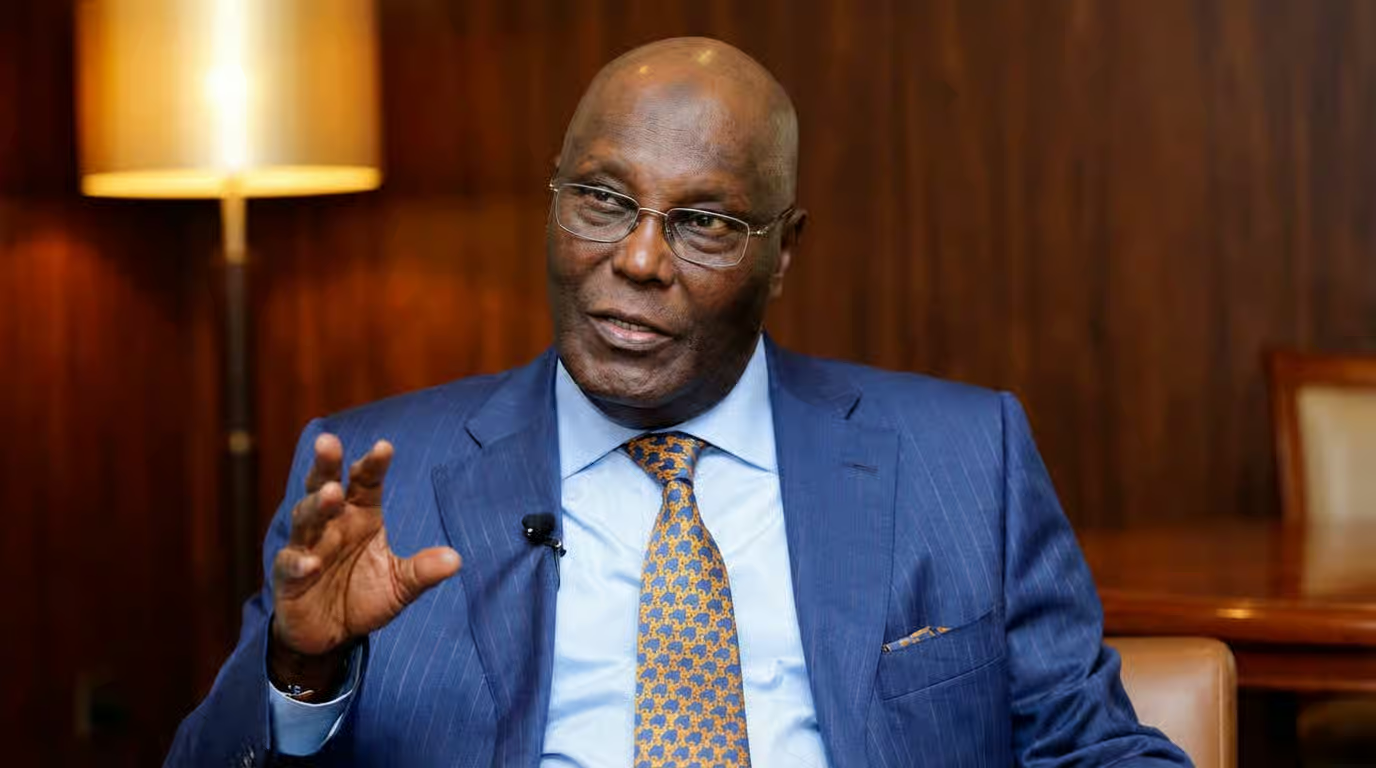
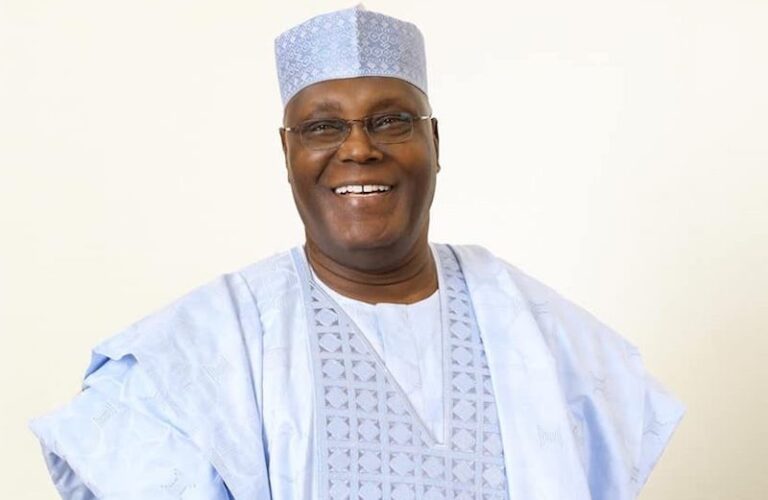
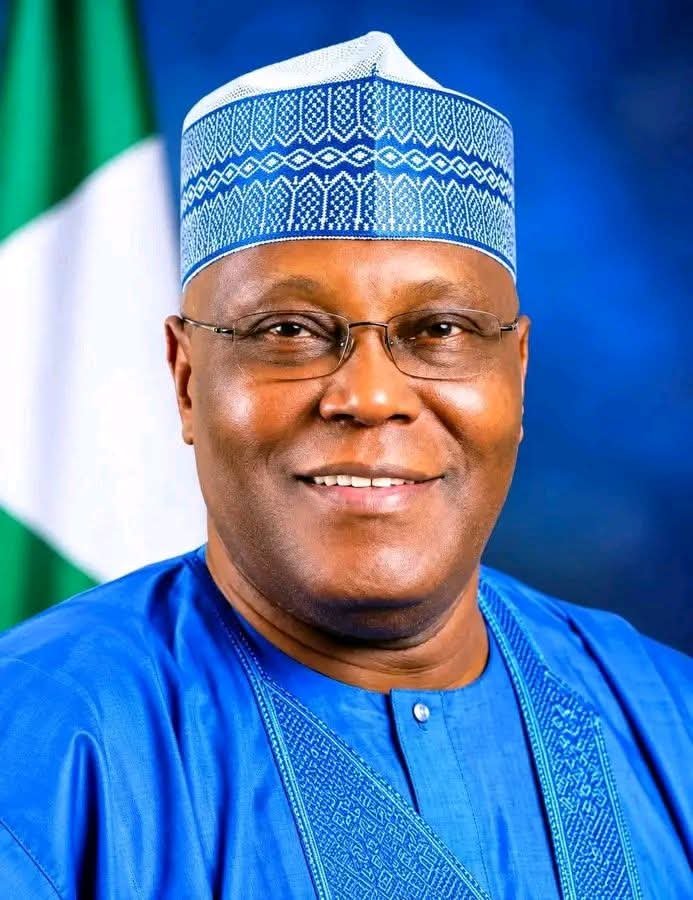
Every one of those six doors is one Atiku Abubakar has publicly undertaken to open. And on this particular subject, the economy of an ordinary household, he is not theorising.
Under the 1999 Constitution the Vice President chairs the National Economic Council. Under the Public Enterprises Act 1999 he chairs the National Council on Privatisation. Those are not compliments paid by a friendly biographer. They are statutory offices, and he held both for eight years.
Look at what came out of those years. Gross domestic product rose from 58 billion dollars in 1999 to 270 billion by 2007. Reserves went from 3.7 billion dollars to about 45 billion. The Paris Club burden was settled in 2005, some 18 billion written off against about 30 billion, 12.4 billion paid, and this country walked out of that creditors’ room in 2006 owing them nothing. Inflation stood at 5.4 per cent in 2007. The telecommunications licences auctioned in 2001 at 285 million dollars each turned a nation of fewer than 500,000 telephone lines into the market that now carries your bank, your business and this article. Banking consolidation lifted minimum capital to 25 billion naira and turned 89 fragile banks into 25 that could stand. The Pension Reform Act of 2004 made a worker’s pension his own property rather than a pleading letter. More than 100 enterprises were reformed or divested under the Council he chaired, among them the seaport concessions of 2005 and 2006, which remain the last serious reform our ports have seen.
That is the difference between a man promising to wake the ports and a man who has already concessioned them.
Tomorrow you will wake at 4:50 again and the fan will have stopped again, and the fare will be whatever the pump says. None of that is weather. All of it is policy, and policy is the one form of weather a people can vote on.
There are 126 days to 16 January 2027. Price your own day, then vote it.
Vote Atiku Abubakar. African Democratic Congress.
Rescue! Revive!! Restore!!!
Atiku2027 #ADC2027 #RescueReviveRestore #ANigeriaThatWorks #TheNarrativeForce
Aare Amerijoye DOT.B
Director General,
The Narrative Force
thenarrativeforce.org
13 September 2026