TINUBU’S SUBSIDY REMOVAL IS NOT WORKING, AND ATIKU’S RELIEF IS NOT POPULISM
Aare Amerijoye DOT.B

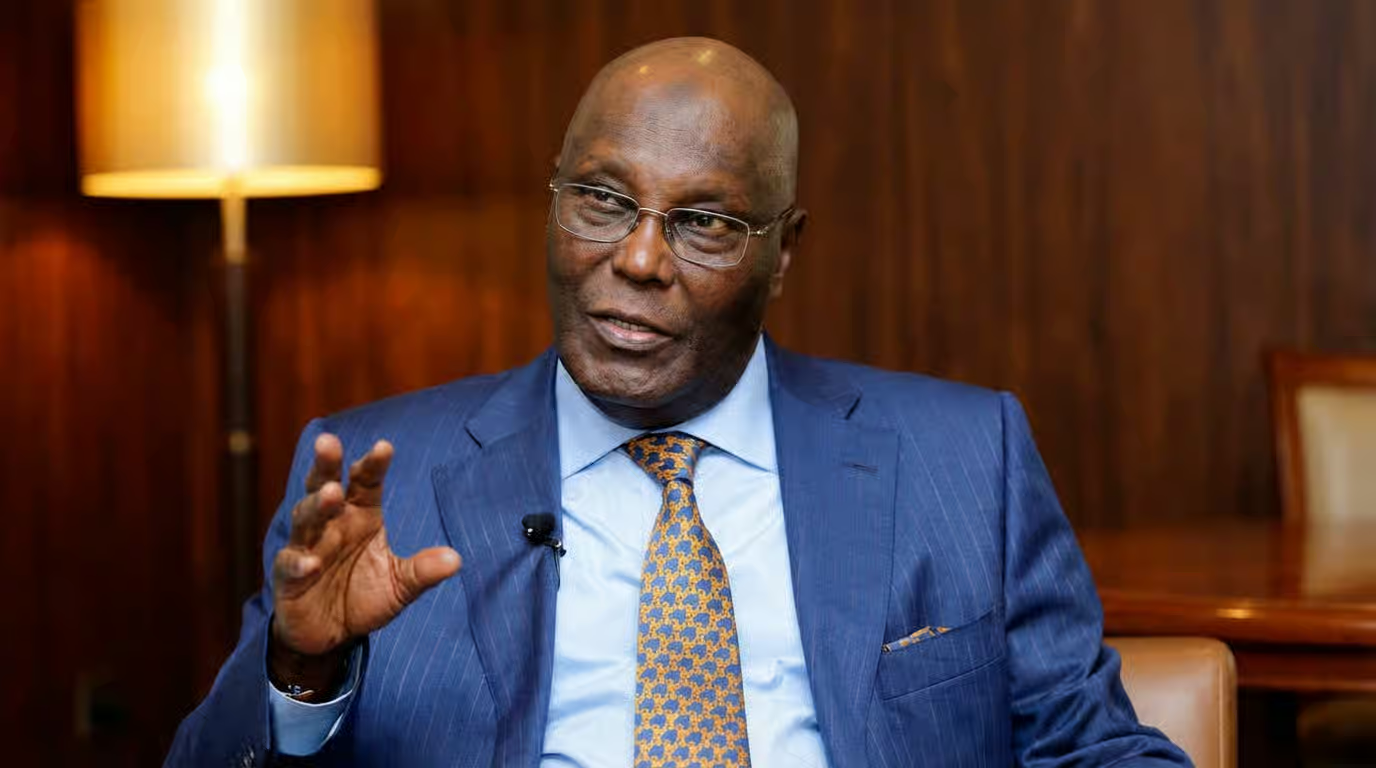
Night after night, Rotus Odirri climbs onto ARISE television and pours the same anaesthetic into the national ear. Subsidy removal is working, he chants. Atiku’s promise of relief, he sneers, is populism. It is a smooth performance. It is also a comfortable fiction that the Federal Government’s own figures demolish line by line.
So let us stop the emotion and open the books. Not Atiku’s books. Not the ADC’s books. The books kept by the Tinubu administration itself, by the National Bureau of Statistics, the World Bank, the IMF and the Debt Management Office. Figures do not campaign. Figures do not audition for a studio panel. Figures simply tell the truth, and the truth is standing at the bus stop with an empty pocket while Odirri applauds a currency chart.
A man who calls hunger a success has never queued for garri. He has only queued for airtime.
WORKING FOR WHOM, ODIRRI?
Let me not caricature Odirri. Let me state his case at its strongest, in the very words his camp uses, and then let the receipts answer. His defence rests on three pillars. One, that removal boosted public revenue and generated trillions in savings shared among federal, state and local governments. Two, that it ended an unsustainable drain on the nation’s oil resources and corrected long standing market distortions. Three, that it is pushing Nigeria toward domestic refining and long term stability.
Fine. Let us take them one by one and see what survives contact with the truth.
Take the trillions in savings. Where are they? By the government’s own admission, through Taiwo Oyedele, the reforms generated about 15.8 trillion naira between June 2023 and December 2025, and 9.39 trillion of that went straight back into salaries for the public payroll. So the celebrated saving was largely spent cushioning the very government that imposed the pain. What reached the trader who draws no federal salary? The farmer? The artisan? Not one verifiable naira. A saving the people cannot find in their own pockets is not a saving. It is an accounting entry.
Take the correction of distortions. A hungry family does not eat a corrected distortion. While the market was being tidied, poverty was exploding. In October 2025 the World Bank, the very institution that praised these reforms as bold, disclosed that 139 million Nigerians were living in poverty, up from 81 million in 2019. Its Country Director, Mathew Verghis, said in plain English that the gains have yet to reach most citizens. Fifty eight million more Nigerians dragged under the poverty line. If that is a corrected economy, God save us from a broken one.
Take the transition to domestic refining. Even with the Dangote refinery running, petrol still sells at between 1,300 and 1,400 naira a litre. The refinery arrived. The relief did not. A promise of tomorrow’s cheap fuel does not feed the man crushed by today’s price.
Every pillar of his argument is a claim about government ledgers. Every answer is a fact about human beings. That is the whole difference between his side and ours.
So spare us the studio slides, Odirri. Even the polished overviews now concede, in their own cautious language, that there is deep public doubt over whether these macro savings ever became visible improvement in daily life. That doubt is not propaganda. It is 139 million verdicts, delivered from 139 million empty plates.
A policy is not judged by the comfort of the man defending it on television. It is judged by the condition of the man it is done to.
THE PRICE AT THE PUMP
On 29 May 2023 the President said subsidy was gone. Petrol then sold for about 175 naira a litre. Today it sells for between 1,300 and 1,400 naira, and has struck 1,500 naira in several states. A rise of roughly 600 per cent in three years.
Do not take it from me. Take it from the government’s own tax reform chairman, Taiwo Oyedele, who admitted this very month that petrol climbed from about 185 naira to between 1,100 and 1,400 naira, and called the cost, in his own words, major and felt. So even Aso Rock’s own accountant feels it. Only Odirri, safe under studio lights, does not.
THE VALUE OF YOUR SWEAT
At the 2023 election the naira stood near 460 to the dollar. It now sits near 1,400, having crashed past 1,717 in November 2024. In three years the worker’s savings have lost roughly two thirds of their value. His salary did not fall. His money simply died in his pocket while he slept.
And spare us the word disinflation. Disinflation does not mean prices are falling. It means they are still rising, only in slightly slower cruelty. Food inflation, the figure a mother actually meets at the market stall, hit 20.31 per cent in July 2026 and has now risen for six straight months. The World Bank says poor households spend up to 70 per cent of their income on food. Go and tell that woman the reform is working. She will answer you with the price of a paint of rice.
Slower ruin is not recovery. A man still sinking, only more gently, still ends up at the bottom.
THE RECEIPTS, WRITTEN IN THEIR OWN HAND
Here is the ledger, every entry sourced, none of it ours.
Extreme poverty rose from 34.7 per cent of Nigerians in 2018/19 to 41.8 per cent in 2022/23, on World Bank data. Another 7 million citizens fell below the poverty line in 2025 alone. The ultra poor, those who cannot meet basic calorie needs even if they spend every last kobo on food, rose from 14 per cent of the nation in 2019 to about 27 per cent, roughly 70 million human beings who go to bed hungry with money in hand because money now buys nothing. Nigeria alone accounts for about 15 per cent of the world’s poorest people. One in every seven poorest persons on the face of the earth is a Nigerian, under this reform Odirri calls a triumph.
And the government’s grand answer to all of this? A minimum wage of 70,000 naira a month, frozen since 2024. At today’s rate that is about 50 dollars. Fifty dollars a month, in an oil nation. Worse, it reaches only the thin layer of Nigerians on the formal public payroll, at the lowest grade. The vast informal majority of more than 220 million people, the traders, the artisans, the farmers, the keke riders, received not one naira of cushion. That is why the Nigeria Labour Congress this year demanded a 120 per cent review. A wage that fewer than one in a hundred citizens even collects is not relief. It is a press release.
WE DID NOT DRIVE TO ABUJA, WE SURVIVED TO ABUJA
Odirri loves to wave the word infrastructure. Let me answer him from the tar itself, from the very asphalt his government has abandoned to ruin.
Only recently, in the company of a former Deputy Governor, I set out by road from Ado to Abuja at seven in the evening. The journey took almost nine hours. A few years ago that same trip was a matter of about five. The distance did not grow. The road simply died under us. Whole stretches are cratered beyond apology, and even the portions now being redone in cement are already washing away before the contractor has left the site.
And let no one pretend it was one unlucky stretch. Every single road that feeds into Abuja is a wound. There is no safe way into the capital of this country. There is only the least deadly one.
Come from the South West, as I did, and the traveller from Ekiti grinds through Akure, Kabba and Okene only to be tipped onto the notorious Lokoja to Abuja highway. That corridor, after billions of naira in so called rehabilitation, is still described in plain words by Daily Trust as a death trap. It is narrow. It is full of blind bends. It is pitted with potholes that swallow tyres and snap suspensions in a single hit. At Koton Karfe a second bridge has collapsed, and the sections between Gegu and Koton Karfe have decayed so completely that in April 2026 the gridlock ran for days on end and swallowed even the sitting Governor of Kogi, Usman Ododo, in his own convoy. If the road can trap a governor, imagine what it does to the ordinary trader with no siren.
That corridor does not merely delay Nigerians. It buries them. In September 2025, 6 travellers were killed on the Abuja to Lokoja road, 4 of them burnt beyond recognition near Abaji. In December 2025, 4 more died at Abaji. In January 2025, one crash in Kogi alone killed 6 and injured 60. These are not opposition numbers. They are the Federal Road Safety Corps counting corpses on the only highway millions of Nigerians have to reach their own seat of government.
Nor does the horror respect direction. Approach from the North and the Kaduna to Abuja road carries its own grim reputation for blood and abduction. And should you finally crawl into the Federal Capital Territory itself, you are met by open manholes that Daily Trust this very month called death traps, their covers stolen and sold for scrap while the authorities look the other way. This is Abuja. The seat of power. The one city the government dresses up for visitors. If this is the face they cannot hide, imagine the villages they never intended you to see.
Now hold all of that against the boast. Nigeria announces capital budgets in trillions of naira, yet capital execution has historically limped at just 26 to 30 per cent. Of an estimated 195,000 kilometres of national road, by widely cited accounts barely 60,000 are fit for service, and bad roads are blamed for more than 5,000 deaths every year. So when Odirri says infrastructure, let us translate the word as this government actually uses it. It means a budget line that never becomes a road, and a road that has quietly become a grave.
They did not build us highways. They poured us obituaries and painted lane markings on them.
A road you cannot drive on is not infrastructure. A road that kills the citizen on his way to the capital is not a legacy. It is a crime scene with a commissioning plaque.
THE BORROWING TRAP HE NEVER READS OUT
Now to the page Odirri always skips.
The 2026 budget was approved at 68.32 trillion naira. Projected revenue is only about 36.87 trillion. By BudgIT’s reading, the government can fund barely 53.9 per cent of its own budget from what it actually earns. For every 100 naira it hopes to make, it plans to borrow 70. This is not a national budget. It is a payday loan with a coat of arms.
Debt service alone will devour 15.81 trillion naira in 2026, taken off the top before one school, one clinic or one road is touched. The IMF projects that interest payments will eat 53.7 per cent of federal revenue this year. The government now spends almost as much feeding its debts as it spends running the entire country.
Then hold this figure against your chest, Odirri. The same government swears, through Oyedele, that all the agony of subsidy removal generated about 15.8 trillion naira in extra resources between June 2023 and December 2025. So the entire saving squeezed from the blood of the masses over more than two years is roughly what a single year of debt service will swallow whole. And of that saving, by the government’s own confession, 9.39 trillion went straight back into salaries for the public payroll.
So ask the question the panel never asks you to answer. What exactly reached the trader in Oja Oba? The farmer in Ikole? The welder who is on no government salary and never will be? Nothing. That is Atiku’s question. It is a fair one. And you have no answer, only a smirk.
ON THIS WORD, POPULISM
Now to Odirri’s dirtiest trick, the word populism, flung at Atiku like mud in the hope some sticks.
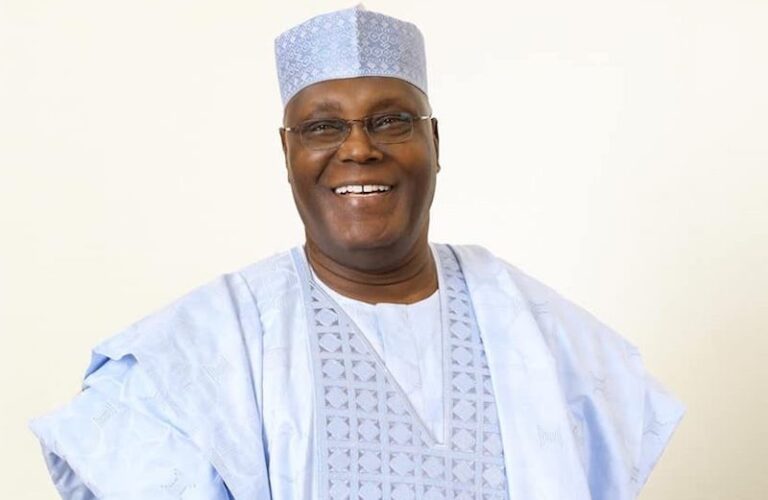
Learn what Atiku actually proposed before you insult it. By his own team and the Atiku Economic Recovery Plan, the pledge is not to drag back the old, looted import subsidy regime. It is a targeted, capped, transparently budgeted and independently audited production subsidy. Move the support from importation to production. From smuggling middlemen to Nigerian refineries. From ghost claims to verifiable barrels. And recover the savings Nigerians were promised and never once saw.
That is not a return to the past. That is a repair of the direction. And direction is the entire quarrel.
Let the history be exact, since Odirri clearly never studied it. The responsible, gradual road to deregulation was pioneered by the Obasanjo and Atiku administration, which adjusted petrol upward in about seven measured steps between 1999 and 2007, through a proper framework, letting the economy breathe after each move. When Goodluck Jonathan later attempted full removal in one leap in January 2012 and the people rose, his government had the decency to listen and rolled the price back within two weeks.
And who condemned that abruptness loudest in 2012? Bola Tinubu. The same Tinubu who, on reaching power in 2023, executed the identical one go removal he had denounced, and then, unlike Jonathan, refused to step back an inch. Reckless in method, then too proud to repent. That is the charge. Not that subsidy was touched. Atiku is a deregulation man and always has been. The charge is that it was ripped out overnight with no landing prepared for a suffering people, and its promised billions then dissolved into an accounting no living Nigerian can trace.
So weigh the two men honestly. One tears out a nation’s cushion in a single night and will not look back. The other offers an audited, home refinery driven relief to steady that same nation. Only in an ARISE studio could the second be branded the populist. Out here, in the real Nigeria, we call the first one reckless and the second one responsible.
TWO GOVERNMENTS, ONE LONG DESCENT
Odirri wants this administration measured against the whole sweep of Nigerian history. There is no honest contest there, so let us give him the only fair yardstick that exists. The only government you can truthfully compare the Tinubu administration to is the Buhari administration that birthed it. They are not two governments. They are one unbroken APC project wearing two faces.
And here the World Bank hands us the verdict itself. Most of the rise in Nigerian poverty, it records, occurred before 2023. That is, on Buhari’s watch, before Tinubu inherited the wreckage and drove it deeper. This is not two accidents. It is one road, one party, one decade of decline since 2015.
Between the two of them, the APC has pulled off what no drought, no oil crash and no war ever managed. It has taken a young nation blessed with oil, gas, sun and over 220 million people, and aged it by a hundred years in a single decade. That is not governance. That is a slow demolition, narrated to us as progress by men like Rotus Odirri.
HISTORY IS LISTENING, ODIRRI
So I end where you should have begun, with the trade we share. That microphone at ARISE is a public trust, not a government loudspeaker. When a policy is weighed and found to have thrown millions into hunger while the books look neater, the honest commentator reports the hunger, not just the books.
Nigerians are not begging you for a currency graph. They are asking why the light you keep promising at the end of this reform turns out, every single time, to be another lorry coming straight at them. Until you can answer that with figures instead of feeling, do us all one mercy.
Stop deluding our ears.
The people already know what is working. And they know exactly who is being worked.
#WhatIsWorking
#StopDeludingOurEars
#AtikuForNigeria
#ADC2027
#EndTheHardship
Aare Amerijoye DOT.B, Director General, The Narrative Force, thenarrativeforce.org. 22 August 2026.