Aare Amerijoye DOT.B
Government is not elected to inflict pain. It is elected to lift burdens, to widen the small window of hope through which ordinary people glimpse a better life. When a government becomes the author of the very suffering it swore to end, it has not merely failed a policy test. It has broken its covenant with the people.
That is the charge against the administration of President Bola Ahmed Tinubu. He is, in the plain verdict of millions who now call him T-Pain, a killjoy. And he is a killjoy in defiance of the Constitution he swore to defend.
WHAT THE CONSTITUTION ACTUALLY COMMANDS
Let us begin where every honest argument about Nigerian governance must begin: the supreme law of the land.
Section 14(2)(b) of the Constitution of the Federal Republic of Nigeria, 1999 (as amended), is not a suggestion. It is a command. It declares that the security and welfare of the people shall be the primary purpose of government. Not the comfort of office holders. Not the applause of foreign investors. The welfare of the people.
Section 16 goes further, directing the State to manage the economy so as to secure the maximum welfare, freedom and happiness of every citizen, and to ensure that the material resources of the nation serve the common good rather than a privileged few.
The primary purpose of government is the welfare of the people. Everything else is secondary.
This is the yardstick. Not one crafted by the opposition, but one written into the nation’s founding charter. Measure this administration against it, and the verdict writes itself.
THE RECORD OF SUFFERING
Consider what has happened to the Nigerian household since May 2023.
The World Bank, in its Nigeria Development Update of April 2026, reported that the share of Nigerians living below the poverty line rose to 63 per cent in 2025, from 56 per cent in 2023. That is roughly 140 million citizens now trapped below the line. Poverty did not ease under these reforms. It deepened.
Petrol, the artery of the entire economy, moved from about 185 naira a litre to a national average of roughly 1,600 naira, a sixfold rise, after an abrupt one-step removal of subsidy that gave families no time to breathe and offered no cushion. The saving was promised to the people. Where the promised savings have gone remains, by the government’s own admission, largely unaccounted for.
The naira has been battered, trading around 1,364 to the dollar. According to World Bank data, GDP per capita has fallen by more than half over the decade, to about 1,224 dollars from 2,586 dollars in 2015. The national debt, official figures show, ballooned to about 159.35 trillion naira by March 2026.
The minimum wage tells the cruellest story. It rose on paper from 30,000 naira to 70,000 naira. Yet in real value the worker is poorer. In 2019 the 30,000 naira wage was worth about 83 dollars. In 2026 the 70,000 naira wage is worth about 42 dollars. The number doubled. The worth was halved.
The wage went up. The living went down. That is the whole tragedy in a single line.
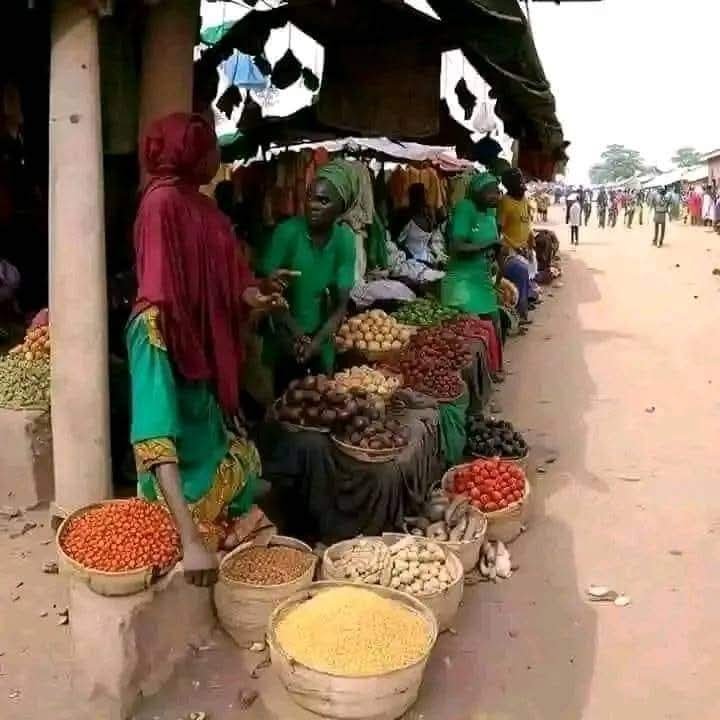
Government spokesmen point to a falling inflation rate, now around 15.43 per cent, as proof of progress. But a family does not eat a rate. Food inflation still climbed to 20.31 per cent in July 2026. Lower inflation does not mean lower prices. It means prices are climbing a little more slowly than before, while the people are already broken. The market and the chart now tell two different stories, and only one of them can be eaten.
THE OBSCENE CONTRAST
Here is where dereliction of duty becomes an insult.
While the masses were told to endure, to sacrifice, to tighten belts that had no more notches left, the people in power tightened nothing.
In May 2026 the Federal High Court in Lagos, per Justice Yellim Bogoro, declared unlawful the National Assembly’s 110 billion naira spending on lawmakers’ comfort, made up of 40 billion naira for 465 vehicles and 70 billion naira in support allowances. The court called it what it was: self-dealing and a conflict of interest, the beneficiaries being the very officials who approved it. The judge took judicial notice of the widespread hardship in the land and ruled that such an allocation, in such a season, was a failure to prioritise the national interest.
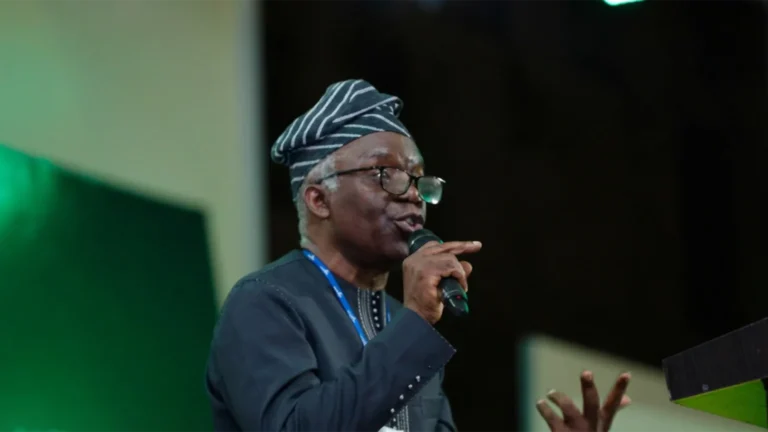
The suit was brought by the Socio-Economic Rights and Accountability Project. Reacting to the verdict, the human rights lawyer Femi Falana, SAN, said public office holders cannot continue to live in what he described as obscene opulence while millions face economic hardship.
Consider, too, the items that have appeared in federal budgeting under this administration: billions of naira proposed for a presidential yacht, billions more for luxury vehicles for the Villa and for an office of the First Lady that the Constitution does not even recognise, and further billions for renovations and the presidential air fleet, even as the citizen is lectured on austerity.
They asked the poor to fast, then bought themselves a yacht.
This is not governance. It is a feast in the house while the children of the house starve at the gate. It is precisely the inversion the Constitution forbids: the resources of the nation serving a privileged few rather than the common good.
THE PROOF FROM WITHIN
The most damning testimony does not come from the opposition. It comes from inside the government itself.
The Coordinating Minister of the Economy, Taiwo Oyedele, has publicly warned that when inequality persists it becomes dangerous, comparing it to sitting on gunpowder that eventually explodes. He also conceded that the government must do more to ensure ordinary Nigerians feel the recovery.
When a President’s own economy minister admits the people are not feeling it, and that the inequality is a keg of gunpowder, the argument is over. The suffering is not opposition propaganda. It is a fact acknowledged at the highest table.
Yet in his October 2025 independence broadcast, the President assured the nation that it had turned the corner and that the worst was over. Tell that to the 140 million. Tell that to the worker whose salary vanishes in a week. A leader who declares victory over a hardship the people are still drowning in is not consoling them. He is mocking them.
A GOVERNMENT MUST CHOOSE THE PEOPLE
None of this is an argument against reform. Nigeria needs a disciplined, deregulated, productive economy, and the responsible path to it, as the Obasanjo and Atiku administration showed, is a measured, gradual one that lets households absorb each step, not a reckless plunge that pushes millions off a cliff overnight while the savings disappear.
The failure here is not that reform was attempted. The failure is one of priorities and of the human heart. A government that finds 110 billion naira for the comfort of 469 lawmakers, and billions for yachts and fleets, but tells 140 million suffering citizens that there is no money for relief, has told the nation exactly whose welfare it holds primary. And it is not yours.
That is the constitutional betrayal. Section 14(2)(b) makes the people’s welfare the first duty. This administration has made it the last.
History is watching, and so are the people. In January 2027 they will hold in their hands the one instrument no yacht and no convoy can buy: the ballot. A government elected to improve lives, and which chose instead to inflict suffering while it feasted, cannot expect the sufferers to renew its lease. The masses are not deceived. They are only waiting.
Government exists to serve the people. When it forgets that, the people remember it at the polls.
SecurityAndWelfareFirst #GovernmentForThePeople #EndTheSuffering #Nigeria2027 #Atiku2027 #ADC #TheNarrativeForce
Aare Amerijoye DOT.B, Director General, The Narrative Force, thenarrativeforce.org
23 August 2026