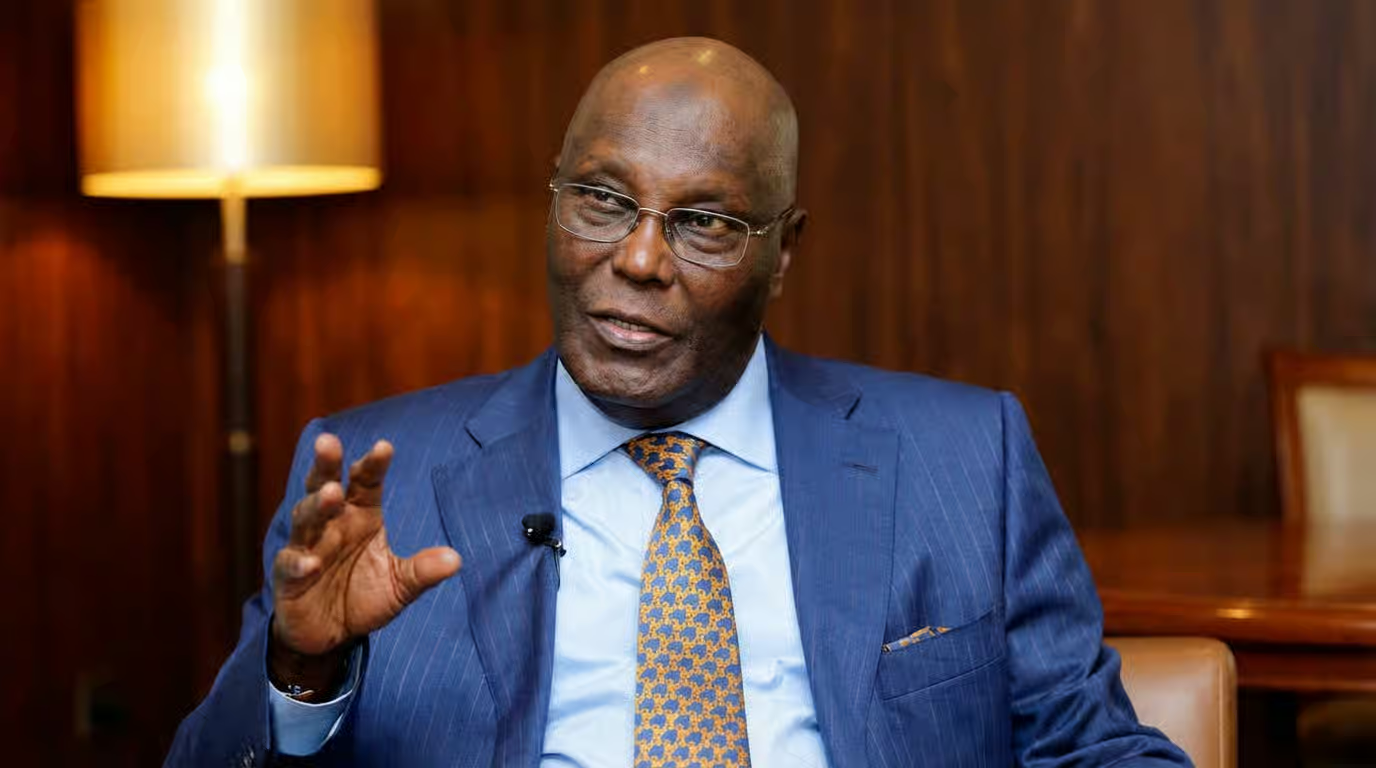
There is something particularly puerile about the argument that Atiku Abubakar cannot legitimately propose a different petroleum-policy framework in 2026 because he advocated subsidy reform before 2023.
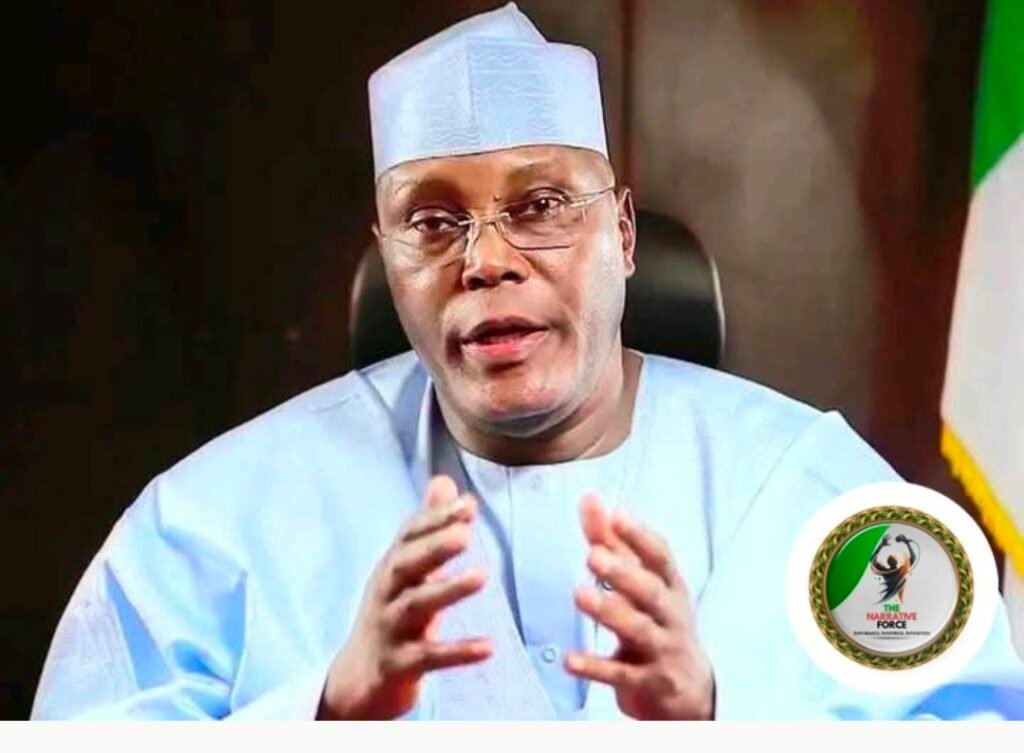
That argument misunderstands both economics and history.
Economic analysis rests heavily on the principle of ceteris paribus—other relevant conditions remaining equal. But the relevant conditions in Nigeria’s petroleum economy are no longer what they were between 1999 and 2023.
So why should the policy prescription remain frozen in time?
From 1999 through 2023, Nigeria’s public refineries were largely comatose, domestic refining was grossly inadequate, and the country relied overwhelmingly on imported refined petroleum products. The economic architecture was therefore fundamentally distorted: Nigeria exported crude, imported refined products and used public resources to cushion the cost of those imports.
Atiku’s position during that period was not an argument for an abrupt, overnight shock. He consistently advocated phased and gradual subsidy reform, accompanied by measures to protect vulnerable Nigerians. In explaining his position, Atiku himself has pointed to the gradualist approach adopted during his time in government and noted that countries such as Malaysia and Indonesia have used phased approaches to subsidy reform.
The economic circumstances of 2026 are materially different.
Nigeria now has the Dangote Petroleum Refinery, which has a 650,000-barrel-per-day nameplate capacity and has subsequently demonstrated performance of 700,000 barrels per day in test runs.
There are also operating and expanding modular refineries. Waltersmith, for example, has expanded from 5,000 to 10,000 bpd, while other private refining projects are advancing.
BUA is developing a 200,000-bpd refinery, with its chairman saying in July 2026 that the project is on course for commissioning in the first quarter of 2027.
And beyond private refining, Nigeria retains substantial public refinery nameplate capacity. The four state-owned refineries have a combined nameplate capacity of about 445,000 bpd, although their operational status remains problematic.
The point is not to pretend that all this installed capacity is already producing at full utilisation. It is not. The NMDPRA reported 1.125 million bpd of installed conventional and modular capacity in Q1–Q3 2025 but only 61.58% utilisation, demonstrating precisely why crude supply, rehabilitation, operating efficiency and commercial viability remain critical.
But the strategic template has changed.
Nigeria is no longer condemned to choose between importing virtually all its refined petroleum products and maintaining an opaque import subsidy regime.
That is the central economic fact that changes the policy question.
THE ECONOMICS OF CHANGING ONE’S MIND
The opponents who say, “But Atiku supported subsidy removal before 2023”, are effectively arguing that an economist must never change a policy position when the underlying facts change.
That is not economics.
It is dogma.
The famous Keynesian maxim—“When the facts change, I change my mind”—captures an elementary principle of serious policy analysis: good policy is conditional upon facts, institutions, incentives and circumstances.
If the productive structure changes, the policy prescription may rationally change with it.
In the period when Nigeria had virtually no meaningful domestic refining alternative, subsidising imported petroleum products perpetuated a deeply dysfunctional system.
But when Nigeria possesses a world-scale domestic refinery, expanding modular capacity, another major private refinery approaching commissioning and the prospect of rehabilitated public refining capacity, and ongoing IPO preparations to expand Dangote Refinery to 1.5 million barrels a day refining capacity, the rational policy question changes from:
“How do we subsidise imported petrol?”
to:
“How do we make Nigerian refining competitive enough to supply Nigerians at affordable prices and eventually supply the regional market?”
That is precisely the intellectual space Atiku’s new proposal occupies.
And that is why describing the proposal as “economic ignorance” by Bola Tinubu is particularly weak.
Atiku is not necessarily contradicting his earlier economics; he is applying economics to a changed set of facts.
FROM FREE-MARKET ORTHODOXY TO PEOPLE-CENTRED MARKET DESIGN
There is also an important political-economic dimension to this evolution.
Atiku’s 2023 presidential platform was presented under the PDP and contained a strongly market-oriented economic programme, including the elimination of fuel subsidy. Contemporary analysis of the PDP manifesto described its orientation as shifting the balance toward private-sector activity and international investment.
In 2026, however, Atiku is the presidential candidate of the African Democratic Congress.
The ADC’s own current policy framework explicitly places the welfare of women, youths, persons with disabilities and vulnerable Nigerians, wealth creation, economic prosperity, public accountability and inclusive governance among its cardinal commitments. Its emerging manifesto also advocates gradual and sequenced reforms backed by social protection.
That ideological and policy context matters.
The question is no longer simply how to maximise market freedom.
It is how to design the market so that economic efficiency and national productive capacity translate into tangible benefits for the people.
That is not abandoning the market.
It is people-centred market design.
THE PETROLEUM INDUSTRY ACT ALREADY PROVIDES AN IMPORTANT LEGAL PLATFORM
There is another reason Atiku’s proposal deserves serious consideration.
Section 109(2) of the Petroleum Industry Act provides the legal basis for the regulator to establish domestic crude-supply obligations. That Domestic Crude Supply Obligation can be an important foundation for ensuring that Nigerian refineries have access to Nigerian crude.
The creative policy challenge is therefore to connect the statutory domestic-crude-supply architecture with appropriate, transparent fiscal and regulatory incentives that make domestic refining commercially competitive.
That is where Atiku’s proposal becomes particularly interesting.
The PIA should not be treated as a static document that merely regulates the petroleum industry. It should be used creatively to build an integrated domestic-refining ecosystem.
THIS IS NOT A RETURN TO THE OLD UNDER-RECOVERY SYSTEM
The critics must also stop pretending that every subsidy is economically identical.
The old Nigerian system was heavily associated with subsidising imported products and opaque under-recovery arrangements.
Atiku’s proposal is conceptually different.
The objective is to intervene in the production/input-cost structure of domestic refining so that the cost of producing petroleum products in Nigeria is reduced and the benefit is transmitted through lower and more stable consumer prices.
That does not mean the policy has zero fiscal cost. It means the fiscal intervention should be defined, capped, appropriated, measurable and auditable, rather than becoming an unlimited and opaque liability.
The government therefore does not need to produce some mythical enormous pile of cash before the policy can be implemented.
What it needs is a credible fiscal and regulatory framework, transparent costing, verification, domestic-crude access, enforceable performance conditions and political will.
LOOK AT THE INTERNATIONAL EXPERIENCE
This is also why the lazy claim that Atiku’s proposal is somehow outside mainstream economic practice should be rejected.
Malaysia has used regulated and targeted fuel input subsidies to shield consumers from international petroleum-price shocks. In 2018, RON95 was maintained at RM2.20 per litre and diesel at RM2.18 while government intervention absorbed the difference. Malaysia continues to use targeted fuel subsidies today.
Indonesia has used producer/input subsidies, including fertiliser subsidies, to reduce production costs and pursue food-security objectives. Egypt has likewise used subsidised fertiliser to support domestic agricultural production. India and China have long used various forms of input, producer and commodity-support policies for strategic sectors.
The products may differ in certain cases.
The economic principle is similar:
Where a strategic domestic product has major consequences for national welfare, governments can intervene in the cost or production structure to protect productive capacity and consumers—provided the intervention is properly designed and disciplined.
That is the intellectual proposition Atiku is advancing.
EVEN THE SMUGGLING ARGUMENT IS CHANGING
The traditional argument that subsidised Nigerian petroleum products will inevitably be smuggled into neighbouring countries also requires fresh examination.
Nigeria’s neighbours are not static.
Countries across West and Central Africa are themselves seeking greater domestic refining capacity. As their own refineries and petroleum industries develop, their governments will have stronger incentives to prevent Nigerian subsidised products from destroying their emerging domestic refining markets.
In other words, regional refining development can progressively change the economics and politics of cross-border smuggling.
Nigeria should not design its entire petroleum policy around the assumption that its neighbours will remain permanently dependent on Nigerian subsidised products.
The strategic objective should instead be to make Nigeria a competitive refining and petroleum-products hub for Africa.
THE GOVERNMENT SHOULD ANSWER THE POLICY, NOT ATTACK THE PROPONENT
The APC and the Federal Government therefore have a simple choice.
They can continue saying:
“Atiku is ignorant.”
“This is voodoo economics.”
“Where will he find the money?”
Or they can do what a serious governing party should do:
Cost the proposal.
Model the fiscal impact.
Test the effect on refinery economics.
Publish the assumptions.
Challenge the domestic-crude supply mechanism.
Demonstrate the expected effect on pump prices.
Show Nigerians why their alternative is superior.
That is what an intellectually serious opposition-government debate should look like.
REVENUE IS NOT THE SAME THING AS ECONOMIC SUCCESS
The government cannot simply point to increased government revenue and the ability of states to pay salaries as proof that the current petroleum-policy architecture is necessarily superior.
Those are important fiscal outcomes.
But increased government revenue can also arise because a cost previously borne by the public treasury has been shifted onto households and businesses.
The question therefore is not merely:
“How much more revenue does government collect?”
The question is:
“Who ultimately bears the cost of the economic adjustment?”
If the government gains revenue while transport fares rise, food prices rise, production costs rise, real wages fall and household purchasing power collapses, then the policy has redistributed the burden. It has not necessarily eliminated the underlying economic inefficiency.
Atiku’s proposition attempts to address the architecture itself.
It asks whether Nigeria can use its emerging domestic refining capacity, domestic crude resources, regulatory powers and targeted fiscal instruments to reduce production costs, conserve foreign exchange, stabilise petroleum prices, protect vulnerable Nigerians and ultimately develop a regional refining hub.
That is a legitimate economic proposition.
It deserves a serious answer.
THE FINAL TEST
Atiku should not be defended on the basis that every element of his proposal is automatically correct.
He should be defended on something more fundamental:
He has recognised that economic policy must respond to changing economic realities.
The Nigeria of 2026 is not the Nigeria of 2003.
It is not the Nigeria of 2015.
It is not even the Nigeria of May 2023.
The productive capacity, refining landscape, regulatory framework, foreign-exchange environment and social consequences of economic policy have changed.
Therefore, the policy prescription can—and should—change.
That is not inconsistency.
That is economic reasoning.
The real inconsistency would be insisting that a policy designed for one set of structural conditions must remain sacrosanct after those conditions have fundamentally changed.
Atiku has opened a legitimate policy debate.
The APC should meet him there.
Not with insults.
Not with “voodoo economics.”
Not with political name-calling.
Not with the intellectually lazy question, “Where will he find the money?”
But with numbers, models, evidence and a better alternative.
Because in the end, Nigerians do not need a government that merely proves that it can collect more revenue from them.
They need a government capable of re-engineering the economic architecture so that Nigeria’s resources, industries and markets work for Nigerians.
And that is why Atiku’s new petroleum-policy proposition deserves not ridicule, but serious consideration.
Alex Ter Adum, PhD