
Aare Amerijoye DOT.B
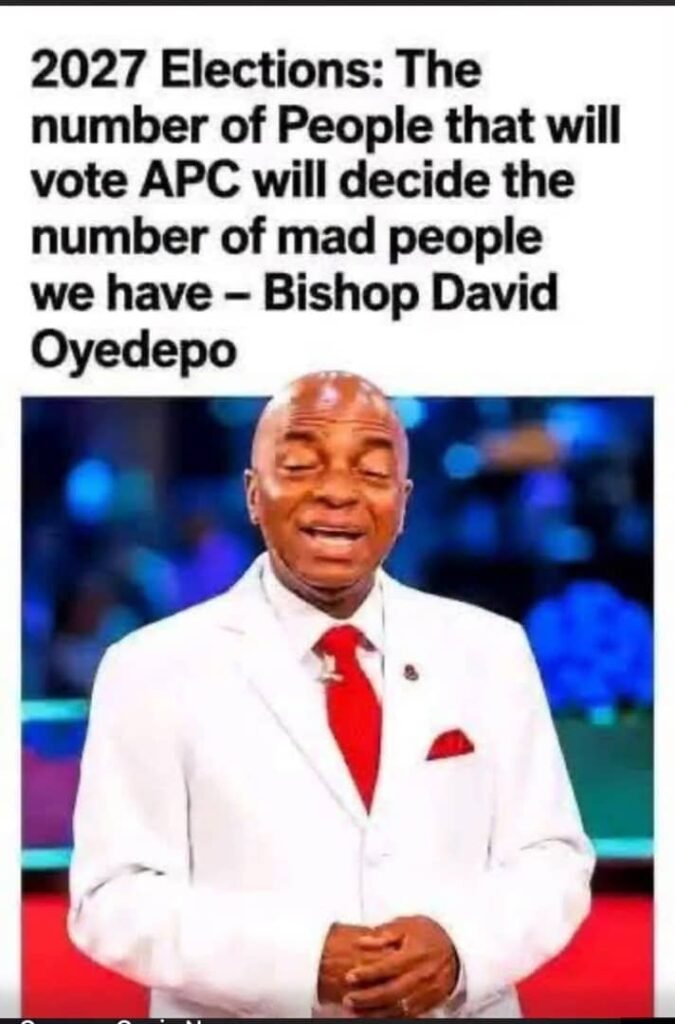
A picture card is travelling this week with Bishop David Oyedepo’s face and a sentence about madness under his name. The sentence is old. It was carried from 2022 into 2027 by changing a date, and nobody has shown that the Bishop ever said it.
Leave the Bishop at his altar. The question on that card needs no famous mouth. It stands on its own feet, and it walks into every village in this country.
After all that Nigerians have suffered since May 2023, what kind of mind still wakes up, puts on an APC cap, and goes out to recruit his neighbours for Bola Tinubu?
We will not answer with abuse. We will answer as a doctor does: take the history, examine the patients, then write the diagnosis.
THE CASE NOTES
Case one is in Katsina. Call him Malam Sani. He owns 4 hectares, but he has not planted the far 2 for 2 seasons, because the men on motorcycles came to that end of the farm and did not leave. He now buys the grain he used to sell. When the ward chairman came round with bags of rice, Sani took one and asked a single question: will this bag also chase the bandits from my farm?
Case two is at Main Market, Onitsha. Call him Chinedu. He sells electrical parts priced from abroad, and since the naira was floated in one abrupt stroke in June 2023, his shelves have grown thinner every quarter. He once trained 3 apprentices. Now he keeps 1, and that one is asking about the road to Libya. Customers who bought bulbs by the carton now buy them one at a time.
Case three is near Yelewata in Benue, where scores were killed in a single night in June 2025. Call her Mama Doowuese. She is a Tiv farmer who now lives in a camp, 20 minutes’ walk from land she can see but cannot touch. Her yams are in someone else’s barn, or in nobody’s.
Case four is a Fulani man in southern Kaduna. Call him Bello. Rustlers took his herd. Kidnappers took his son and returned him only after the family sold what the rustlers had missed. Those who say the pastoralist is the whole problem have never sat with Bello. He is a patient too.
Case five is in Okene. Call her Hajiya Ozavize. She fries bean cakes by the roadside. Beans, oil and gas have all climbed, so she rolls each ball smaller, and her customers notice. At home, her children now eat twice a day, and some days once.
Case six is in Ado Ekiti. Call him Baba Ajayi, a retired headmaster. His monthly pension no longer covers his blood pressure drugs, and the children in Lagos who used to fill the gap now send less, because their own salaries stopped stretching long ago.
THE EXAMINATION
Not one of these six is mad. In medicine, madness is a loss of contact with reality. These six live in daily, painful contact with it. Reality knocks on their doors every morning and names its price.
So the disorder is not in the suffering citizen. It is in the man who looks at Sani, Chinedu, Doowuese, Bello, Ozavize and Ajayi, and still goes out to canvass for more of the same. Examine him closely and three conditions appear.
The first mobiliser lives inside a convoy. He sees Nigeria through tinted glass, from a generator-lit house, and he honestly believes the country is fine because his own table is full. His condition is sensory deprivation. The cure is to park the jeep for one week and ride a keke through Okene.
The second mobiliser sees everything and is paid not to. That is not madness; it is appetite. No doctor has a drug for him. The only prescription is the ballot, which will take away the table he is feeding from.
The third mobiliser is the one whose head truly needs examining. He suffers exactly as the six suffer. His children are home because the fees went up. His shop is empty, his farm is abandoned, his salary is gone by the 10th of the month. And still he carries the banner, for a branded cap and a token.
A man who holds the ladder for the thief climbing into his own house does not need a campaign office. He needs a doctor.
THE PRESCRIPTION
A diagnosis without a cure is only gossip, so here is the cure.
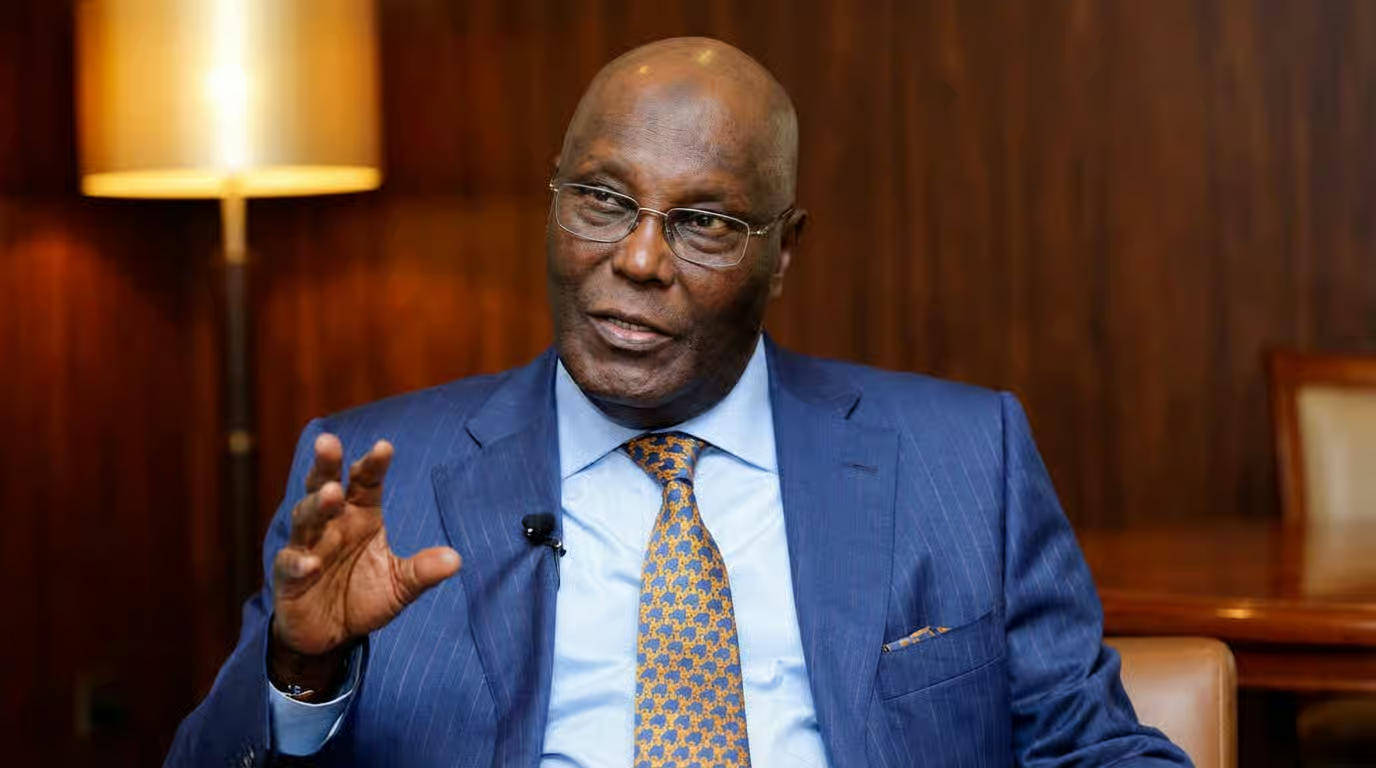
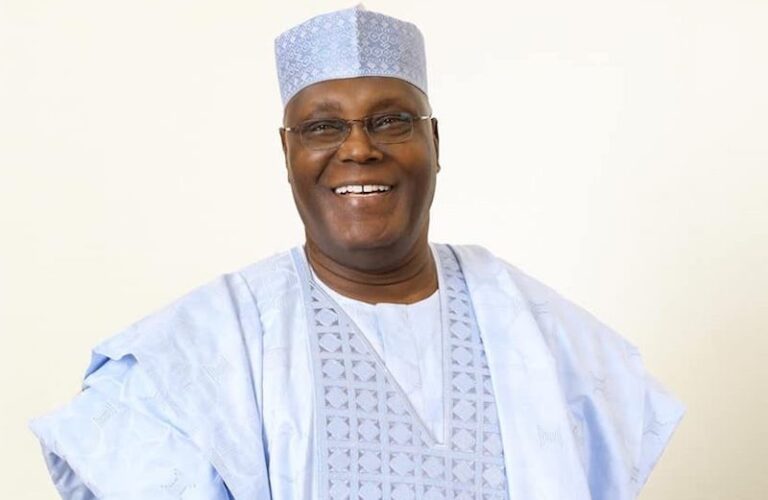
Atiku Abubakar has named welfare and security as the two first duties of government, and he has placed his committed plans before Nigerians in advance, as working documents for the people to examine: farmers back on their farms under state and community policing within a restructured federation, a targeted and audited production subsidy that reaches the people who bore the pain, and states empowered to compete rather than wait in Abuja with a begging bowl.
He is not asking Nigerians to imagine. He was in the room when this country last grew, from a $58 billion economy in 1999 to $270 billion in 2007. The record is written. The plans are published. The patient can read both before he chooses.
A WORD TO THE THIRD MOBILISER
This is not a sentence of condemnation. It is a referral. You can still walk out of the ward cured. Take off the cap. Go home and look at your own kitchen. Then go to your polling unit on 16 January 2027 and vote for your own house, not for the man who emptied it.
The examination ends at the ballot box. There are 113 days left.
Ìgbà díẹ̀ ló kù. Lokaci kaɗan ne ya rage. Obere oge ka ọ fọdụrụ.
Aare Amerijoye DOT.B
Director General,
The Narrative Force
thenarrativeforce.org
26 September 2026
To live with an unknown disease is to bleed through an open wound you refuse to see.
He who ignores the root of his ailment invites pain to build a home.
Well said, Aminu. Nigeria’s ailment is known and so is the cure. The work now is to carry that conviction to the polling unit on 16 January 2027. Thank you for reading.