
PART 3 OF 4: THE YOUNGEST COMMANDER
Aare Amerijoye DOT.B
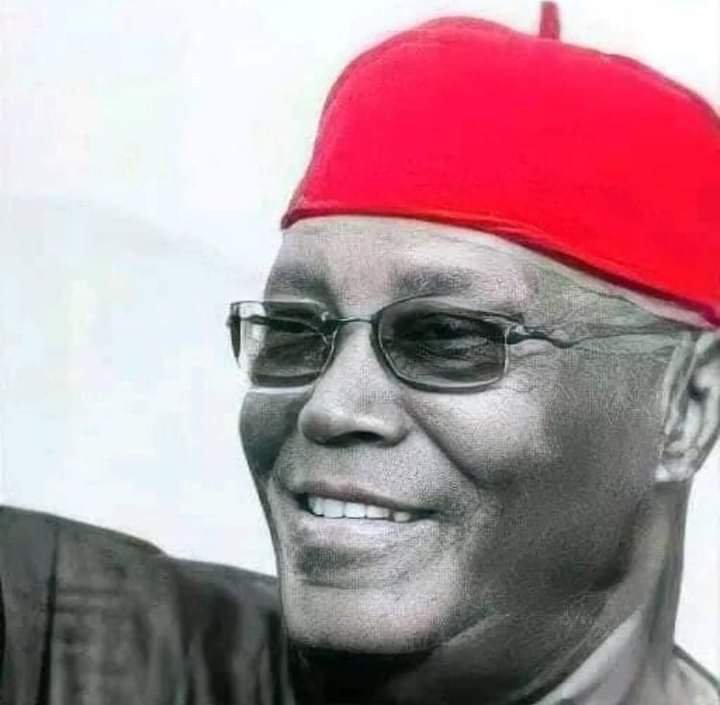
In Part 2, we watched Atiku at the desk where character is tested. He pushed back the envelopes others took home. An importer he served said he was “not very rich but he was not corrupt.” A clearing agent and a businessman became wealthy through his honest guidance and never paid him a kobo. His colleagues named him “Murtala Muhammed Junior”. He came through the Dimka coup with clean hands, and he wrote smuggling policy that Nigeria still needs.
Now the stakes rise. He is 30 years old. Most men at 30 are still waiting for their first real break. Atiku Abubakar was handed an entire region of Nigeria to command, and he did not wait to be told how to run it.
THE COMMAND OF THE NORTHEAST
In 1977, at just 30, Atiku became the youngest Area Administrator in Customs, posted to Maiduguri. He was promoted Assistant Comptroller and placed in charge of the vast Northeast, covering what are today Borno, Bauchi, Adamawa, Taraba, Yobe and Gombe States. Six states. Long, open borders with Chad, Niger and Cameroon. Desert, savannah and a trade older than Nigeria itself.
That trade had run informally since the days of the ancient Kanem-Borno Empire, when caravans carried hides, cotton, groundnuts and cloth across the Sahel. It had never been properly documented. Atiku set out to change that. He put in place a mechanism for proper documentation and introduced a Customs log-book system recording goods entering and leaving Nigeria. Think of who benefited. Thousands of traders whose livelihoods had lived in the shadows could now trade lawfully and keep their goods. The nation collected its due. The trader and the treasury both won, which is the truest test of good governance anywhere on earth.
But here is the vision that set him apart. He believed Customs should facilitate trade between countries, not block it. He believed in promoting trade with appropriate tariffs rather than frightening people for the purpose of extortion. And he believed in people. He trained his officers himself, insisting that proper training is the best way to make Customs officers do their jobs professionally. Read that again. A 30 year old commander, with a region the size of a country on his hands, chose to spend his own time raising the men under him. Lesser men keep their subordinates small so that they can shine alone. Atiku has never been that kind of man. Wherever he has gone, from a border post to the seat of the Vice President, he has built the people around him, and till today that is still what flows in his veins: assisting people, mentoring people, lifting them beyond where he met them.
At 30, he was commanding the entire Northeast. At 30, he was already reforming the system.
Nigeria has paid dearly for leaders who reached the top still learning how to lead. Atiku learned command at 30, in the hardest terrain in the country, with smugglers, vast borders and thin resources. He has been leading ever since.
THE HEAD OF STATE TAKES NOTE
In 1978 the Head of State, General Olusegun Obasanjo, toured the state and visited the Customs Area Command. Atiku briefed him on his anti-smuggling operations. Obasanjo was so impressed that he decided on the spot to allocate 8 Land Cruisers to the Command. With them, Atiku’s men became far quicker in responding across that vast, arid territory. He did not use that windfall for comfort. He used it to equip his officers.
A junior commander does not get vehicles from a Head of State by accident. He gets them because his plan is clear, his command is disciplined and his results are visible. Atiku had all three.
He also looked beyond the border. He built working relationships with his counterparts in Chad, and he mastered the trade economy that bound Nigeria to Chad and Niger, where the naira itself circulated in the markets and cities depended on goods made in Nigeria. He understood, long before it became fashionable to say so, that Nigeria’s security and prosperity are tied to its neighbours.
That same year he was selected for a 3-month senior officers’ course in Finland, alongside officers from Saudi Arabia, Iran, Iraq, Sudan and Kenya. On his return he wrote a report urging specialisation within Nigerian Customs, modelled on the Finnish system, to improve effectiveness and efficiency. Nobody at headquarters acknowledged it. He wrote it anyway, because that is what reformers do.
A TITLE FIT FOR A PRINCE
In 1979 the Lamido of Adamawa, Alhaji Aliyu Musdafa, conferred on Atiku the title of Turaki of Adamawa. It was a title usually reserved for a prince and seldom given to an outsider. His friend Jamilu urged him to take it, but Atiku received the honour with humility, consulting his family and his boss, Abubakar Musa, before accepting. In a country where titles are too often bought by men in a hurry, this one was offered, unasked, to a serving officer on the strength of his character.
The Lamido treated him as a son and filled the father-shaped void in the life of an orphan. The fatherless boy who had learned what a mentor means would spend the rest of his life being that for other people. Atiku, in turn, admired the Lamido’s liberalism and wisdom, and his ability to hold a diverse emirate together through colonialism, independence, military rule and democracy.
His turbaning on 19 November 1982 at the Lamido’s palace in Yola drew thousands, from top government officials to ordinary residents, and national press coverage. He shared the day with Alhaji Ali Baba, then Minister of Internal Affairs, who was installed as Dan Madami of Adamawa. The Lamido later offered Atiku one of his daughters in marriage, together with the prospect of the title of Waziri. Atiku accepted with gratitude, promised never to disappoint him, and chose Princess Rukaiya.
A FAMILY BUILT ON RESPECT
Because his own childhood was lonely, Atiku wanted a large family. He sees his wives as his siblings, his friends and his advisers, and he publicly praised Titi’s understanding when he married Ladi in 1979. He says each of his wives enriches his life, and he supports each one to stand on her own.
When Titi wanted to abandon her studies for the family, he pushed and encouraged her to finish. She graduated in 1983 with such an excellent result that the same school hired her as a lecturer, and she taught there for a decade.
That degree was not the end of the story. Years later, as Nigeria’s Second Lady, Titi Atiku Abubakar founded the Women Trafficking and Child Labour Eradication Foundation, whose campaigning helped produce the anti-trafficking law and the agency, NAPTIP, that still rescues Nigerian girls today. The husband who refused to let his wife abandon her studies helped make one of the most consequential women in modern Nigeria. Ask yourself how many Nigerian leaders can point to a single life they insisted on lifting, let alone one that grew into a national institution.
When he later sought the hand of Fatima in marriage, Inspector-General of Police Mohammadu Gambo-Jimeta, his senior at Adamawa Provincial Secondary School, vouched for him as a good, humble and promising man, and told her that if she missed this man she would never find another like him. Her friend Aishatu Nasir described him as respected and caring. Fatima herself said he was the marrying type, not a man to fool around. They married on 22 July 1986.
AN OPEN MAN IN AN OPEN CITY
In 1980 he was posted to Kaduna as Assistant Area Administrator of a much bigger command. He loved Kaduna for its cosmopolitanism, because he has always preferred an open and diverse society to a closed and discriminatory one. He enrolled his children at Saint Anne’s Catholic School, content that they would receive a good education without being asked to give up their Islamic faith. He supported Titi’s return to school at Kaduna Polytechnic once the children were older.
A Muslim father who sent his children to a Catholic school. That is the Nigeria Atiku has always lived.
FARMER, FEEDER, VISIONARY
In 1981 Atiku started the Gesse Derdirabe Farm on 2,500 hectares off the Yola to Numan road. He grew maize and cotton, produced over 10,000 bags of maize a year, and became the largest maize farmer in the whole of Gongola State. Understand what that means. Gongola was so vast that it was later split into 2 states, Adamawa and Taraba, and it was itself carved out of a North Eastern State that has since become 6. To be the largest maize farmer in Gongola was to out-produce every farmer across a territory bigger than several African countries.
He later leased land to other farmers and brought agricultural equipment and inputs into the country for their use, so that men with no capital could farm with machines they could never have bought. He did not build a fence around his success. He turned his farm into a ladder for other farmers, in an era when the powerful hoarded everything they touched. Nigeria is today importing what it should be growing. The man asking to lead it has actually grown food at scale, met a payroll in the field, and knows what a farmer needs, because he needed it himself. Friends say he has the Midas touch. The truth is simpler: he invests wisely.
He also saw the future before others did. In the early 1980s he foresaw the trouble facing an import-dependent Nigeria as oil prices fell, and he became convinced that the country’s future lay in oil and gas. It was a conviction he would one day turn into a business of his own.
BACK TO APAPA, AND FAMILY FIRST
In 1982 he returned to Lagos to take over Apapa Ports from his friend and boss, Abubakar Musa. He brought order to the ports, keeping those with no business there out of the operational zones, and replaced a shabby office with one befitting the command.
He left his family in Kaduna because the children had moved too often and needed stability, and he travelled to see them most weekends. He took in his cousin Abdullahi Nyako, who had nowhere to stay in Lagos, and regularly guided relatives in their careers, steering Nyako towards the Federal Civil Service and advising Hamman to join Customs for its security and opportunity.
He did not hand people money and walk away. He sat them down and mapped their futures: which school, which career, which door. The officers he trained, the wives he pushed back to the classroom, the cousins he placed in school, the relatives he guided into careers: this is a man who builds people. The cousin he placed in Government College, Ganye grew into Dr Umar Ardo, a well known public figure in Adamawa. The relative he pointed towards Customs built a career there. The wives he sent back to school became a lecturer and a teacher.
Mentoring is not a campaign pose for Atiku. It is the habit of a lifetime, and till today it is still what flows in his veins: assisting people, mentoring people, and watching them rise higher than he found them.
Now hold that beside the men who have ruled Nigeria. Many arrived at the top having lifted nobody, built nothing and trained no one, and they governed exactly as they had lived. Atiku arrives with a trail of people he raised, institutions he founded and systems he reformed, stretching back half a century. No serious Nigerian of his generation has served a longer or harder apprenticeship in leadership. That is not campaign talk. That is the evidence.
A SON WHO WEPT LIKE A CHILD
Atiku registered his mother, his aunt Azumi and his uncle for regular medical check-ups at a clinic in Yola. He built his mother a new house and rebuilt the old mud house he had bought her as a teenager. He sent her and Azumi on pilgrimage to Mecca, gave her a car, and made sure she lacked nothing. When she died suddenly in 1984, he wept like a child and said he felt sad and lonely. The Lamido personally received condolences on his behalf. Titles, offices and fortune had come to him, but none of them could fill that space.
At Murtala Muhammed Airport he raised funds for and built a modern mosque near the international terminal, so that Muslim workers no longer had to pray on makeshift ground. Nobody ordered him to do it. Nobody would have queried him if he had not. He simply saw a need and met it, which is the single most reliable thing anyone can say about Atiku Abubakar across 50 years.
Everything he had built, his rank, his record, his future, was about to be placed on the line. In Part 4, it is April 1984. Armed soldiers stand on the tarmac at Lagos airport. 53 suitcases are about to disappear without inspection, and the power behind them reaches all the way to the Head of State. Atiku must choose between his career and the truth. Then the story turns to drugs, to a forfeiture order in an American court, and to the question every Nigerian must answer on 16 January 2027. Part 4 is the one you cannot afford to miss.
AtikuTheRecord #Atiku2027 #ADC #InformedInspiredInvolved
Aare Amerijoye DOT.B
Director General,
The Narrative Force
thenarrativeforce.org
22 September 2026

Ion behave of me with my follow member we are A D C all so i pray for god to protect our country enterely then i from kebbi state may allah give Atiku/malami this new election amin
Amin, Naziru. Kebbi has always stood firm, and your prayer is the prayer of millions. Keep the faith and keep your PVC ready.