Aare Amerijoye DOT.B
You need only claim the events of your life to make yourself yours.
Florida Scott-Maxwell
For forty years Nigerians have been taught to apologise for their own numbers. Every visiting economist, every borrowed policy paper, every gloomy seminar in Abuja has told us the same thing in the same tone of voice: there are too many of us. Too many mouths. Too many births. Too many young men on street corners with nothing in their hands. We have been schooled to look at the greatest concentration of human energy in Africa and see a bill arriving.
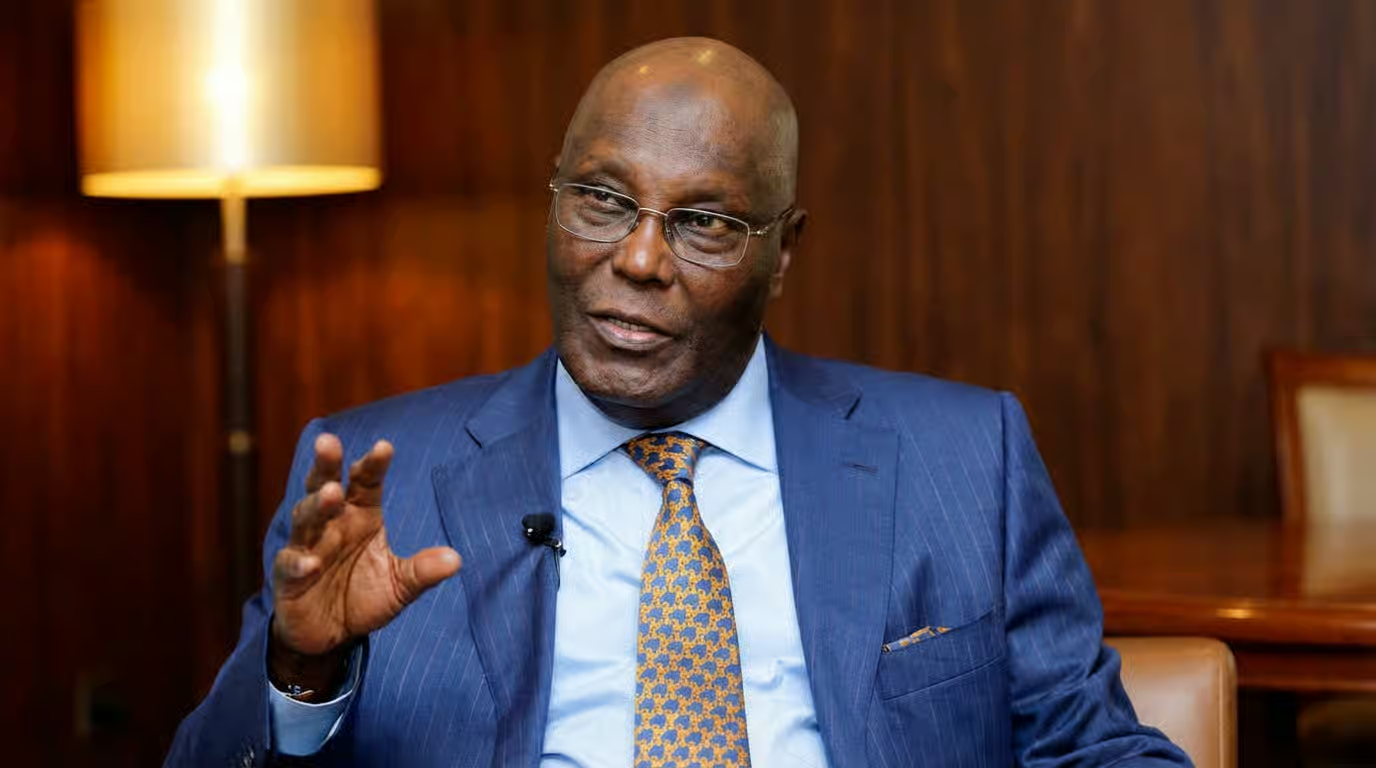
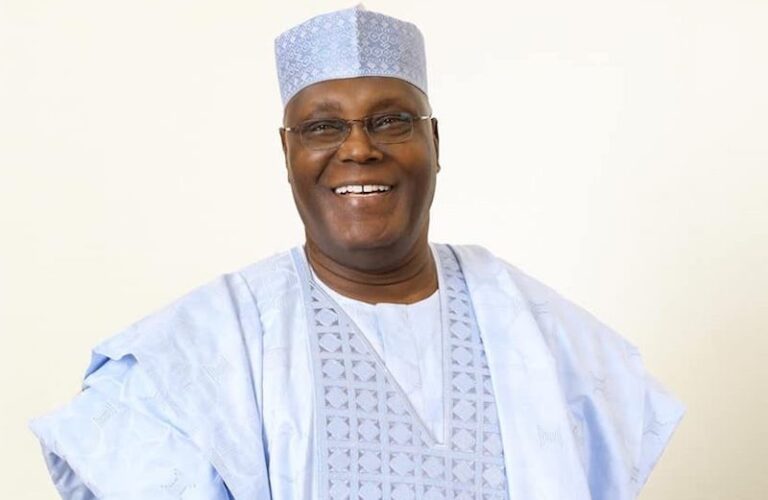
Atiku Abubakar has never accepted that reading, and he does not accept it now. His position is the exact inversion of it, and it has not moved in all his years in public life: wealth is created by private hands, the state exists to make their work possible, and what a country makes at home is what a country is worth. It is written into the plans he has placed before Nigerians ahead of 16 January 2027. A country of more than 200 million people, with a median age of about 18, is not a country carrying a burden. It is a country sitting on the largest untapped productive force on the continent and refusing to switch it on.
No economy on earth has ever grown while its able bodied hands sat idle and its talent rotted unused.
That is the law of the thing, and no rebasing exercise, no borrowed statistic and no speech delivered abroad can repeal it. A country is worth exactly what its people are permitted to make, sell and become. Every hand left idle is production that never happened. Every talent left unused is a business that was never founded, a machine that was never repaired, a crop that was never processed, a teacher who never taught. The waste does not show up as a line in the budget, which is why governments are so comfortable with it, but it is the single largest item of national expenditure we have.
The question before us is not how to feed a crowd. It is how a crowd becomes a workforce, and how many of those hands can be turned into owners of a trade rather than applicants for somebody else’s vacancy.
WHAT THE ABLE HAND IS FOR
Begin with the arithmetic that nobody in government wants to do. Every able bodied man and woman in this country is four things at once. He is a producer, capable of making something that did not exist before he woke. He is a marketer, capable of moving that thing to someone who needs it. He is a consumer, whose demand is the reason any factory anywhere opens its gates in the morning. And he is a potential enterprise, a business waiting on capital, skill and a road.
Idle, he is none of these, and the state must carry him. At work, he is all four, and he carries the state.
No treasury on earth pays the wages of 200 million people, and no serious politician pretends otherwise. What a government can do, and what this one has refused to do, is build the conditions under which a man puts himself to work and then puts three of his neighbours to work behind him. Power he can rely on. Credit at a rate a human being can repay. A road to the market. A title a bank will accept. Do that and the job is not created in a ministry. It is created in a workshop in Nnewi, a plot in Otukpo, a shop in Wuse, by people who were never going to wait for an appointment letter in the first place.
That is the whole of the matter. A young man in Kano welding gates in a shed with no power supply is producing at perhaps a tenth of what his hands could produce. A woman in Aba cutting and sewing for a market she cannot reach beyond her own street is marketing at a fraction of her reach. A farmer in Benue watching a third of his yam harvest rot for want of storage and a passable road is not a poor producer. He is an excellent producer being punished by a country that never built him the second half of his farm.
Nigeria is not short of hands. Nigeria is short of the arrangements that make hands worth something.
Atiku’s commitment is to build those arrangements deliberately, and to be measured on them.
PRODUCTION: MAKE IT HERE OR STAY POOR
A nation that consumes what others produce is exporting its own jobs and importing other people’s prosperity. Atiku’s working documents for 2027 turn on a single hinge, which is the shift of every incentive the federal government controls away from importation and towards production.
This is why the subsidy question is at bottom an industrial question and not a fiscal one. His committed plan is not the resurrection of the old import racket. It is a targeted, capped, transparently budgeted and independently audited production subsidy, moving public money away from middlemen holding import papers and towards Nigerian refineries, Nigerian processors and verifiable Nigerian output. Subsidise the barrel that is refined here, not the invoice that is written abroad.
Apply the same logic across the economy and you have the plan entire. Cotton ginned and spun in Katsina rather than shipped raw. Cassava processed into starch and ethanol in Ogun rather than sold wet at the roadside. Hides and skins finished in Kano into leather that carries a Nigerian name. Gas gathered and converted at home for the fertiliser our own farmers queue for. Every one of those conversions is a factory, and every factory is a payroll.
MARKETING: THE OTHER HALF OF THE FARM
Production without distribution is a form of cruelty. We grow food in this country and we still go hungry, because the distance between a Tiv farmer’s barn and a Lagos plate is measured not in kilometres but in bad roads, dead rail, extortion at checkpoints and the absence of cold storage.
Atiku’s plans set a direction here that is easy to state and hard to fake. Infrastructure is to be treated as commerce rather than as ceremony. Rail that moves cargo and not only politicians. Roads judged by whether they reach the farm gate, not by whether they reach the local government secretariat. Storage and market information, so that an Ebira onion grower knows the Lagos price before the buyer arrives to tell him a lie about it. Ports and customs processes that clear goods in hours rather than weeks, which is precisely the discipline he learned in twenty years in the Nigeria Customs Service and applied at Apapa.
Fix the moving of things and you have doubled the value of everything already being made.
CONSUMPTION: OUR NUMBERS ARE OUR MARKET
Here is where the pessimists are most badly wrong. Our population is our demand, and demand is the scarcest commodity in world business today. Manufacturers in Asia and Europe are fighting over shrinking, ageing markets. We have a young, growing, hungry one, and we keep handing it to foreigners.
A Nigerian with wages in his pocket does not hoard them in Geneva. He buys bread, cement, fabric, school fees, a phone, a fare, a roof. Every naira he spends returns to another Nigerian’s till. That is what an internal market is, and it is the engine that industrialised every country that has ever industrialised.
The tragedy of the present moment is not merely that people are poor. It is that their poverty has switched off the demand that would have kept our own factories alive. Restore incomes and you restore the customers of Nigerian enterprise. Atiku’s framing has been constant on this point. Welfare is not charity dispensed from a palace. It is the fundamental responsibility of government, and it is also, in cold commercial terms, the most reliable stimulus a Nigerian factory will ever receive.
ENTERPRISE: THE STATE MUST STOP COMPETING WITH ITS OWN PEOPLE
I want to find ways of getting past this blind fumbling with existence.
Joanna Field
Field, whose real name was Marion Milner, spent seven years keeping a record of what actually made her happy, rather than what she had been told ought to. Her finding was that most people accept their wants ready made from other hands and never do the daily sifting for themselves. Nigeria is governed today in exactly that borrowed manner, taking its prescriptions, its models and its excuses ready made from other hands, and never once auditing what actually works on our own soil.
What actually works is Nigerian enterprise, and it has gone on working with little help from the state in all the years since. The traders of Onitsha, the artisans of Kano, the technicians of Nnewi, the tailors of Aba and the Fulani herder rebuilding a herd after a raid are not waiting to be inspired. Between them they hold more usable skill than every consultancy report commissioned in Abuja since 1999, and it is being spent at half capacity or thrown away entirely while the young carry it abroad. They are waiting for credit at a rate a human being can repay, for power that does not fail at the moment of the cut, for a land title that a bank will accept, and for a government that will stop competing with them, taxing them into the ground and then lecturing them about hard work.
Atiku’s creed here is the least ambiguous thing in Nigerian politics. The private sector creates wealth, the state creates the conditions. Devolve power and resources to strong federating units so that states compete to attract the factory rather than queue in Abuja for a handout. Keep the centre lean. Let the men and women who already carry this economy on their heads be given, for once, the tools of the trade.
THE MAN HAS DONE THIS BEFORE
None of this is a maiden speech. As Vice President, Atiku chaired the National Economic Council under section 153 of the Constitution and the National Council on Privatisation under the Public Enterprises Act of 1999. Under that Council more than 100 public enterprises were reformed or divested, among them Eleme Petrochemicals, the state cement plants and the seaport concessions of 2005 and 2006.
Consider only the telephone. In 1999 this country of ours had fewer than 500,000 working lines, and a telephone was a privilege of the powerful. The GSM licences were auctioned in 2001 at 285 million dollars each, and within a decade an ordinary Nigerian trader was running a business from a handset. That single act of opening did more for production, marketing, consumption and enterprise than any budget speech delivered before or since. Banking consolidation took 89 banks to 25 and raised capital to 25 billion naira, giving the economy institutions large enough to lend. The Pension Reform Act of 2004 created a pool of long term savings out of nothing.
Across those eight years the economy grew from 58 billion dollars to 270 billion dollars. Nasir el-Rufai said publicly in February 2025, with Atiku sitting in the room, that nobody gives Atiku the credit he is owed for the economic policymaking of that period, and that much of what they did was done under his leadership.
The man also built with his own money. American University of Nigeria at Yola, the first American-style university in sub-Saharan Africa, kept its doors open through the worst of the insurgency and fed displaced people in their hundreds of thousands. That is a private citizen converting his own capital into other people’s capacity, which is the same philosophy he now intends to apply to a federation.
WHAT IS ASKED OF US
Scott-Maxwell wrote that a seed must break the vessel holding it before there can be any harvest at all. Nigeria is at exactly that point. The arrangements that have contained us, the import dependency, the over-mighty centre, the treatment of our own people as a cost rather than a capacity, must break if anything is to grow.
That breaking is not done by lamentation. It is done at a polling unit, by a citizen with a card, on 16 January 2027, and 124 days is not a long time.
Claim it. Claim the country, claim the work, claim the vote. A people who possess what they have been and done are no longer anybody’s statistic. They become owners of their own story, and no government on earth is comfortable with a citizenry like that.
Atiku Abubakar is not asking Nigerians to wait for prosperity to be delivered to them. He is asking for the mandate to build the country in which Nigerians put themselves to work, and in which the young man looking for a job this year becomes the man giving one out the next.
Atiku2027 #ADC #TheNarrativeForce #InformedInspiredInvolved
Aare Amerijoye DOT.B
Director General, The Narrative Force
thenarrativeforce.org
15 September 2026