WHICH IS THE GREATER HISTORICAL QUESTION BEGGING FOR ANSWERS?

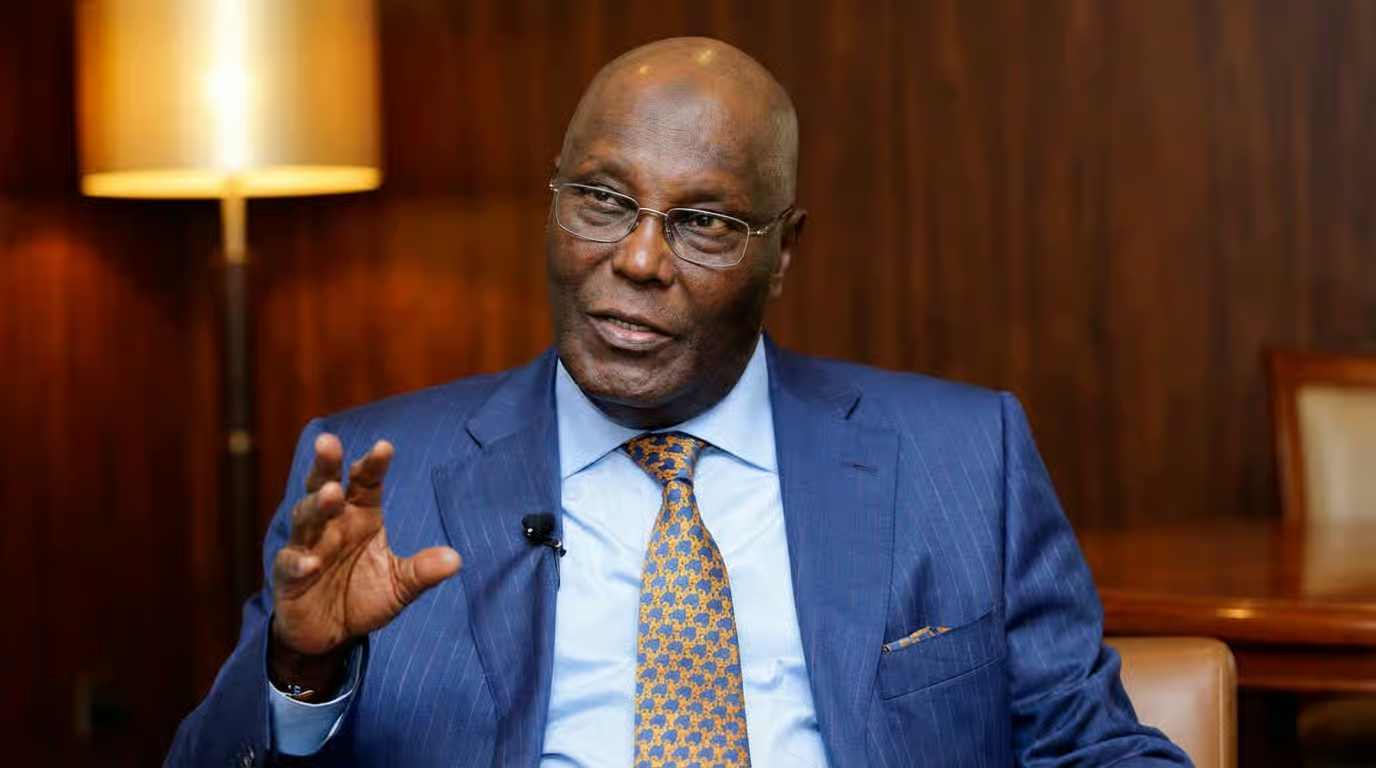
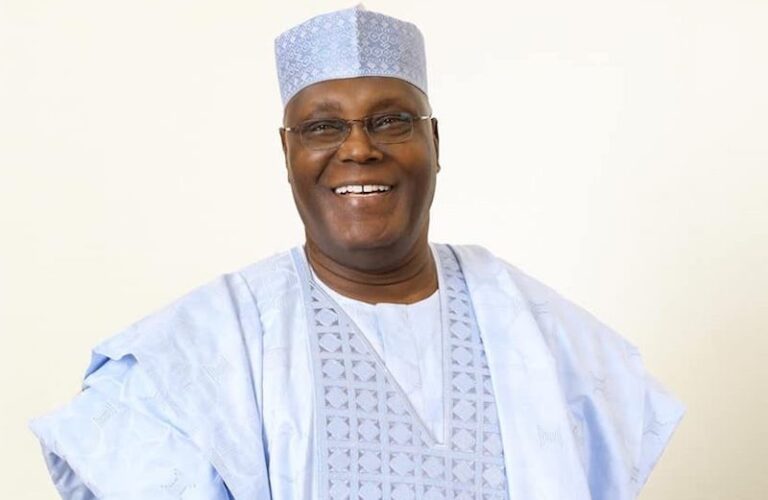
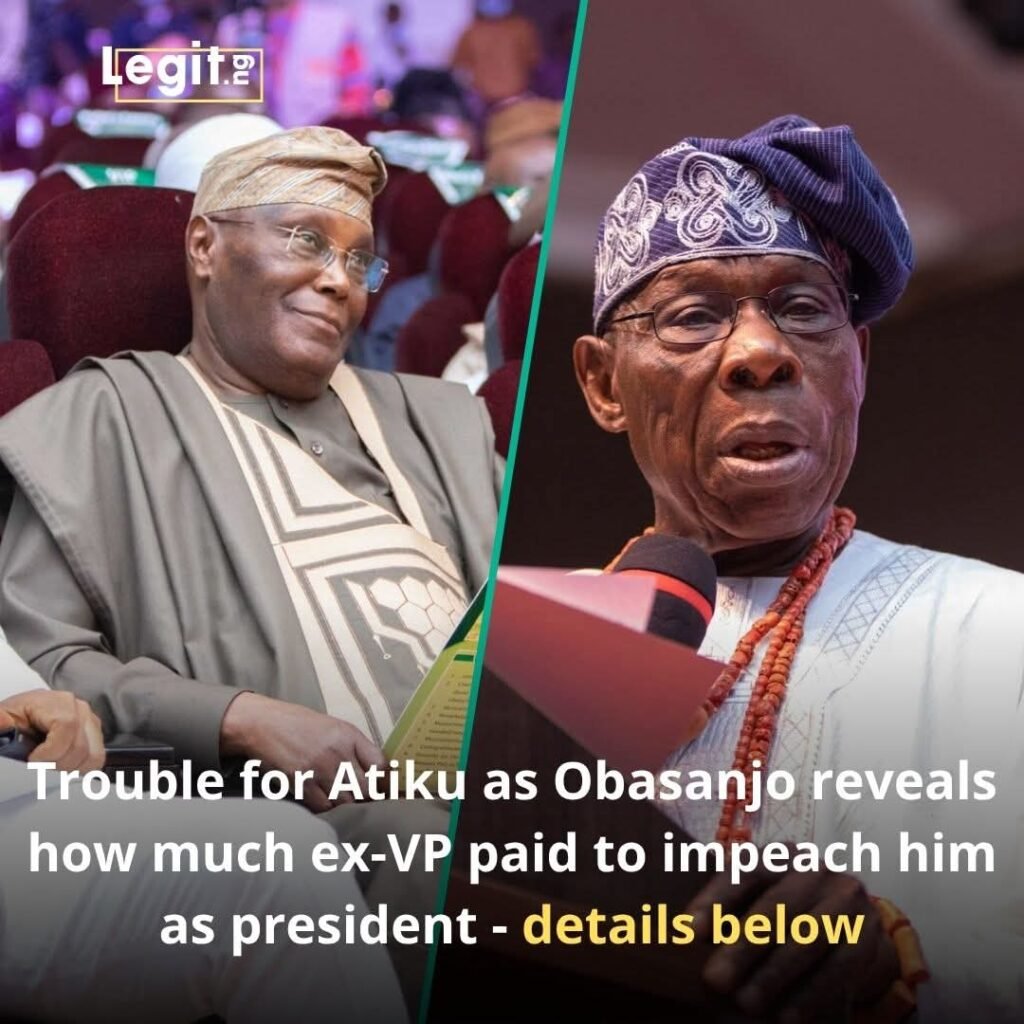
Who made the real political mistake in 1999; Obasanjo who picked Atiku Abubakar as his running mate, or the Northern leaders who brought him from prison to power? Was Obasanjo in any political comfort zone as at the point Atiku Abubakar who had already won a governorship election, emerged as his running mate?

Political history is often shaped by decisions whose consequences become clearer only with the passage of time. Many leaders look back at critical moments and ask whether different choices might have produced better outcomes.

In the Nigerian political landscape, one such debate concerns the events surrounding the 1999 transition to democratic rule and the decisions that determined who eventually led the nation.

Chief Olusegun Obasanjo has, on several occasions, expressed views suggesting that selecting Atiku Abubakar as his running mate was a mistake. However, for many, the more fundamental question is not whether Obasanjo choosing Atiku Abubakar as his running mate was a mistake, but whether the decision to bring Obasanjo out of prison, grant him pardon, and support his emergence as president was itself the more significant political miscalculation. A grave error by the Northern leaders.

From this perspective, the responsibility rests not with Obasanjo but with the influential Northern political leaders who, in the interest of national reconciliation after the annulment of the June 12 election and the death of Moshood Abiola, rallied behind him (Obasanjo) after the death of Gen. Sani Abacha. They believed that elevating a Yoruba leader to the presidency would help heal the nation’s political wounds and strengthen national unity. Their mistake was in not seeking the impute of Yoruba leaders. The displeasure of Yorubas with Obasanjo’s emergence was evident in his rejection by his kith and kin in the 1999 presidential election where he recorded abysmal poor electoral performance.

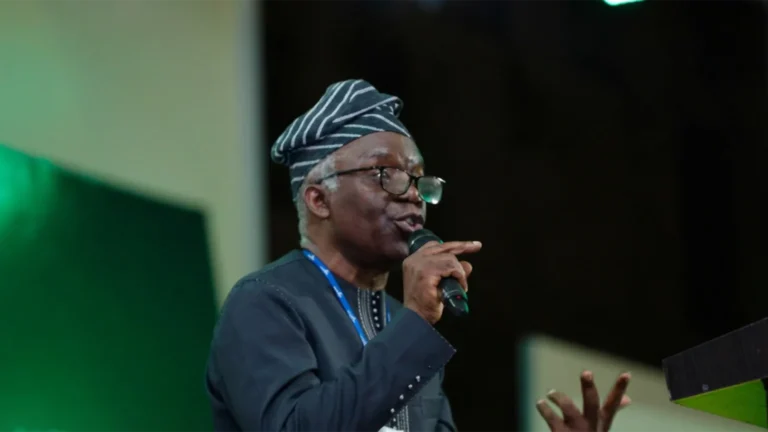
Those who hold this view maintain that another respected Yoruba leader, Chief Olu Falae, was already in the race and could have been considered for the presidency. They argue that history might have taken a different course had a different choice been made. Whether that would have produced better outcomes remains a matter of political debate rather than established fact.

The lesson from this episode is that political leadership is not merely about personalities but about judgment made by those entrusted with selecting leaders. Every major political decision carries consequences that extend far beyond the individuals involved, influencing institutions, public trust, and the nation’s future, for generations.

History should therefore encourage reflection rather than blame alone. Political leaders and citizens alike can learn from past decisions by evaluating them honestly, acknowledging both achievements and shortcomings. Such reflection is essential for strengthening democratic institutions and ensuring that future leadership choices are guided by competence, character, and national interest, and not emotions. There should always be proper scrutiny of candidates.

Ultimately, history belongs to the people, and every generation has the responsibility to interpret it with fairness and balance.

While opinions about the decisions of 1999 will continue to differ, the enduring lesson is that those who make pivotal political choices must also accept that history will judge both their intentions and the outcomes of those choices.

Ehigie Uzamere

Aare Amerijoye Donald Olalekan Temitope Bowofade (DOT.B) is a Nigerian political strategist, public intellectual, and writer. He serves as the Director-General of The Narrative Force (TNF), a strategic communication and political-education organisation committed to shaping ideas, narratives, and democratic consciousness in Nigeria. An indigene of Ekiti State, he was born in Osogbo, then Oyo State, now Osun State, and currently resides in Ekiti State. His political and civic engagement spans several decades. In the 1990s, he was actively involved in Nigeria’s human-rights and pro-democracy struggles, participating in organisations such as Human Rights Africa and the Nigerianity Movement among many others, where he worked under the leadership of Dr. Tunji Abayomi during the nation’s fight for democratic restoration. Between 2000 and 2002, he served as Assistant Organising Secretary of Ekiti Progressives and the Femi Falana Front, under Barrister Femi Falana (SAN), playing a key role in grassroots mobilisation, civic education, and progressive political advocacy. He has since served in government and party politics in various capacities, including Senior Special Assistant to the Ekiti State Governor on Political Matters and Inter-Party Relations, Secretary to the Local Government, and Special Assistant on Youth Mobilisation and Strategy. At the national level, he has been a member of various nationally constituted party and electoral committees, including the PDP Presidential Campaign Council Security Committee (2022) and the Ondo State 2024 election committee. Currently, he is a member of the African Democratic Congress (ADC) and serves as Secretary of the Ekiti State ADC Strategic Committee, where he plays a central role in party structuring, strategy, and grassroots coordination. Aare Amerijoye writes extensively on governance, leadership ethics, party politics, and national renewal. His essays and commentaries have been published in Nigerian Tribune, Punch, The Guardian, THISDAY, TheCable, and leading digital platforms. His work blends philosophical depth with strategic clarity, advancing principled politics anchored on truth, justice, and moral courage.

Leave a Reply

Your email address will not be published. Required fields are marked *

Recent News

Trending News

Editor's Picks

THE CHOICE IS CLEAR

Aare Amerijoye DOT.B I have plunged into deep and relentless cogitation, striving to unravel the catastrophic descent of Nigeria into insolvency. How did a once thriving nation, where a former Head of State, General Yakubu Gowon, famously declared that money was not our problem but how to spend it, degenerate into an abyss of destitution?...

BABACHIR LAWAL’S AREA BOYISM IS AMUSING: NIGERIANS HAVE TAKEN HIM FOR AN EMPTY ENTERTAINER WHO APPLAUDS HIS OWN DELUSIONS

Aare Amerijoye DOT.B There is a species of Nigerian politician who, having lost the argument, the primary and the plot, reinvents himself as a performer. Babachir Lawal has embraced the role with relish. His so-called Kachalla Series is not commentary. It is cabaret. And like every tired act, it survives only on the applause of...

GANI WOULD BE PROUD TODAY

The late Chief Gani Fawehinmi was the first man to raise the question of Tinubu’s academic qualifications. Long before it became a national conversation, that fearless human rights lawyer stood alone and asked what many were too afraid to ask. Years have passed, but the question has refused to die. In 2023, Atiku Abubakar carried...

Must Read

©2026. The Narrative Force. All Rights Reserved