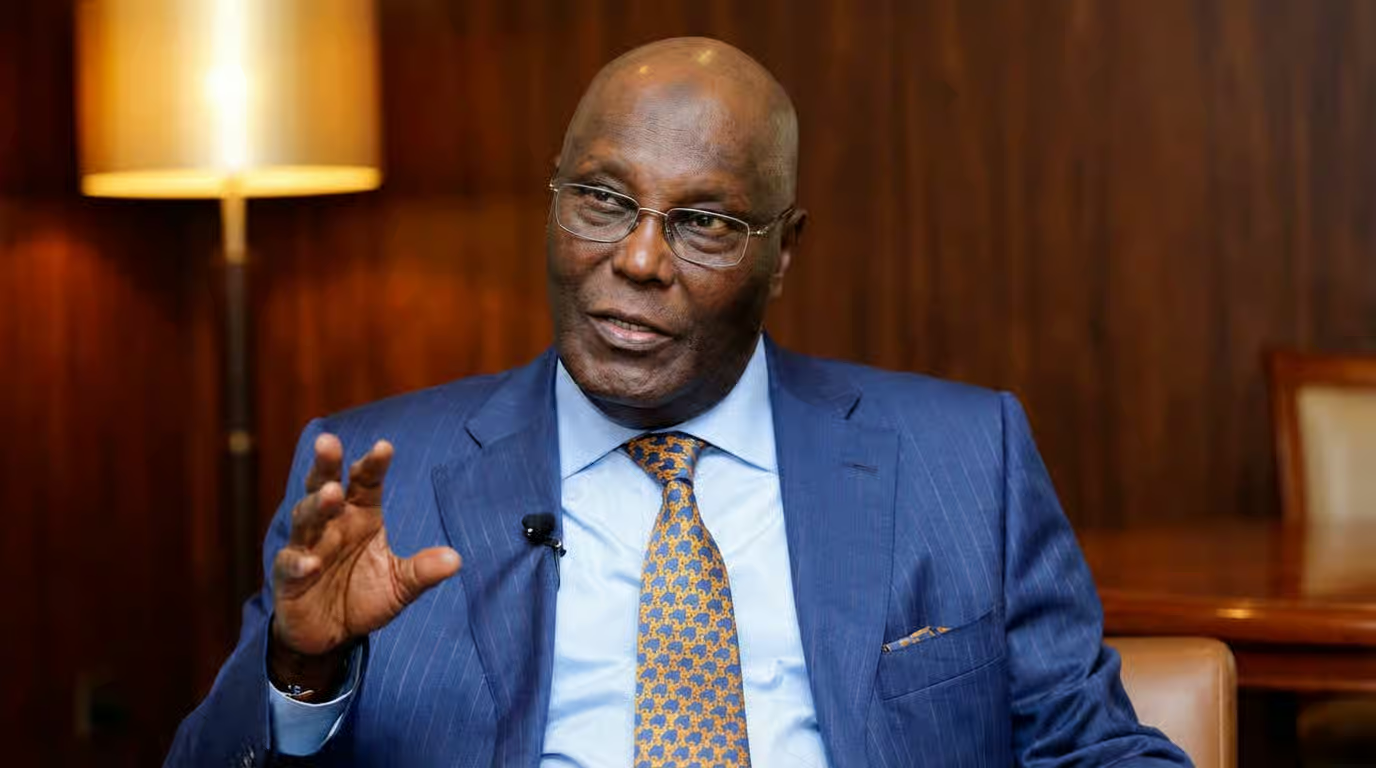
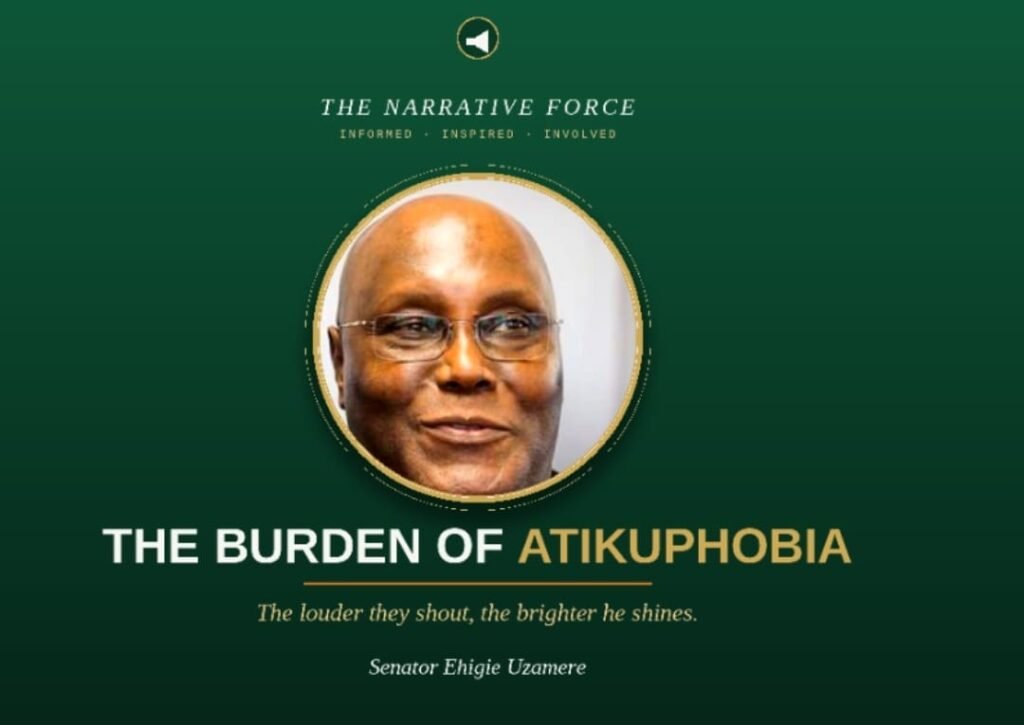
Recent public comments by Babachir Lawal have once again ignited conversations about what many political observers jokingly describe as “Atikuphobia” – an apparent preoccupation with every political move associated with former Vice President Atiku Abubakar.
Whether Atiku is making a public statement, attending a political meeting, or remaining silent, there always appears to be a reaction from those who view him through the lens of political rivalry, rather than objective analysis.
If the satirical expression “Atikuphobia” were to be recognised as a political condition, its most obvious symptom would be an inability to discuss Nigeria’s political future without repeatedly bringing Atiku Abubakar into the conversation. The irony is that this constant focus only reinforces the perception that Atiku remains one of the most influential political figures of Nigeria’s Fourth Republic. Few politicians have commanded such sustained national attention for more than two decades.
Rather than engaging with the issues facing Nigerians, those afflicted with this condition often devote considerable energy to questioning Atiku’s silence, utterances, motives, ambitions, or political relevance. Yet every attempt to diminish his influence seems to produce the opposite effect. The more his critics speak about him, the more they keep him at the centre of national discourse.
For over twenty-five years, Atiku Abubakar has remained a dominant figure in Nigeria’s democratic journey. He has survived political realignments, party mergers, defections, electoral contests, and relentless criticism, yet his name continues to shape discussions about leadership, governance, and the future of the country. That enduring relevance cannot be dismissed by repeated attacks or dismissive rhetoric.
If Babachir Lawal genuinely disagrees with Atiku Abubakar’s political philosophy or strategy, he is entitled to express those views. Democracy thrives on disagreement, robust debate, and competing ideas. However, political criticism is most persuasive when it is rooted in facts, policy alternatives, and constructive engagement rather than an apparent fixation on a single individual, and the repetition of hollow arguments.
The humorous notion of “Atikuphobia” serves as a reminder that in politics, excessive attention to an opponent can inadvertently elevate that opponent’s profile. Sometimes, the loudest critics become the strongest promoters by ensuring that the person they oppose remains constantly in the public eye. In that sense, every fresh attack only confirms Atiku Abubakar’s continued relevance in Nigeria’s evolving democratic landscape. Especially, when these criticisms have no truth in them.
Ultimately, Nigerians are less interested in endless exchanges between political actors than they are in credible solutions to the nation’s pressing challenges. And, give it to Atiku Abubakar, he dwells on proferring solutions to the ills that impede our development. That is when he is not asking public officials to come true with their past. Public figures should devote more energy to presenting ideas on economic recovery, security, job creation, national unity, and telling Nigerians the truth about their past conducts rather than fighting to cover them up. Elections will ultimately be decided not by persistent attacks on political opponents but by the confidence voters place in those who offer the most convincing vision for Nigeria’s future, and those who are honest about who they are.
Senator Ehigie Uzamere