Zoning, Ekwueme, and the Great Nigerian Double Standard

Aare Amerijoye DOT.B
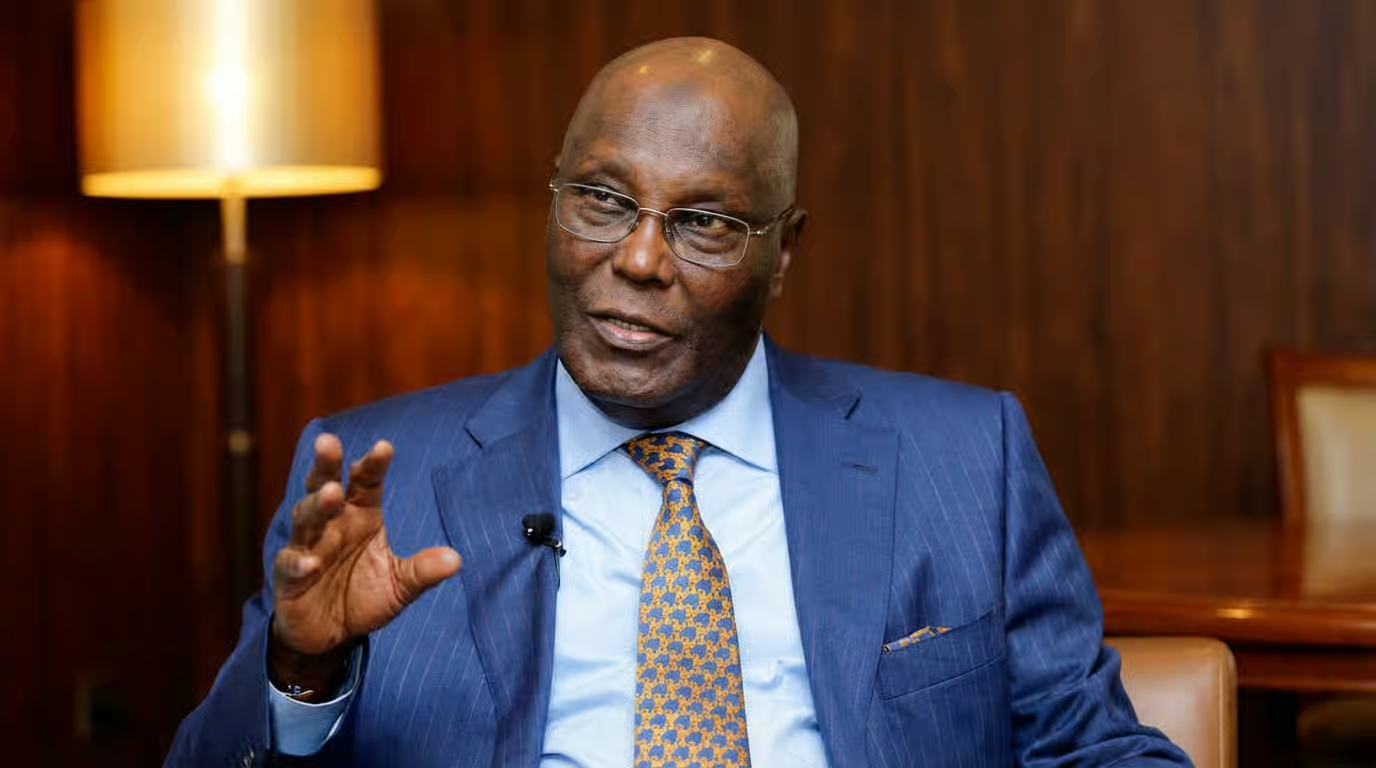
I was listening to Sumner Sambo of Arise Television this Monday morning when he said something that the political establishment would rather you did not hear twice. Speaking on the station’s Morning Show, the Director of News and Politics Editor argued that Atiku Abubakar’s insistence on contesting in spite of the zoning convention will deepen Nigeria’s democratic journey, that the rotational practice we have had is merely an informal arrangement, and that meritocracy must remain the focus of elections. He added a sentence that ought to be carved above the door of every party secretariat in this country: the zoning convention has made many politicians complacent, content to simply wait for their turn.
Within hours the usual choir assembled. Zoning is sacred, they sang. Equity demands it. Atiku is selfish. The South must finish its turn.
Very well. Let us have the conversation properly, and let us have it in full. Because every time this country opens the zoning file, the same people slam it shut at exactly the page where the argument stops being convenient.
If zoning is a national covenant, produce the document. If it is a party rule, name the party. If it is neither, then stop using it as a weapon against one man.
FIRST QUESTION: WHERE EXACTLY IS THIS ZONE?
Ask any of the new apostles of rotation to show you zoning in the Constitution of the Federal Republic of Nigeria and watch the silence arrive.
Section 131 sets out who may contest for President. It speaks of citizenship by birth, of age, of party sponsorship, of education up to school certificate level. It does not speak of latitude. Section 134 requires a winner to earn not less than one quarter of the votes in at least two thirds of the states of the federation and the Federal Capital Territory, which is a spread requirement, a demand that a President be acceptable across the country rather than a decree that he be born in a particular half of it. Section 14 subsection 3 gives us federal character, and federal character governs the composition of government, the sharing of offices, the reflection of diversity in appointments. It has never said that a region takes ownership of the presidency for a fixed number of years. And Section 42 forbids the discrimination of any citizen on the ground of his place of origin, which is precisely what a binding zone would amount to.
So the honest position is Sambo’s position. Rotation is a convention. It is an understanding. It is a habit of elite bargaining. It is not law, and no court in this republic will enforce it.
Now push the question further. Which section of Nigeria actually practises this thing?
Does Lagos rotate its governorship between the divisions of that state? Does Rivers rotate between its senatorial zones with the solemnity now demanded at the centre? Do the parties rotate their national chairmanship, their ministerial slates, their board appointments and their juicy agencies by any published and binding formula? In state after state, in local government after local government, the same men who preach rotation nationally have held or handed power within their own domains by raw political strength and nothing else.
Zoning in Nigeria has one consistent feature. It is invoked downward, never upward. It disciplines the ambitious outsider. It never disciplines the incumbent.
THE YEAR THE MAP BECAME A LAW
If we are to argue about a rule, we should at least agree on when it was made.
The idea entered our politics formally in the Second Republic. The National Party of Nigeria wrote a zoning arrangement into its internal rules ahead of 1979, an idea popularly credited to Dr Kingsley Ozumba Mbadiwe under the memorable formula that we zone in order to unzone. The purpose was explicitly temporary. Rotate the offices for a season, embed in the national consciousness that every Nigerian may aspire to the highest office, then let the country outgrow the scaffolding. The NPN applied it in the primaries that produced Shehu Shagari, with Alex Ekwueme as his deputy. Note the phrase carefully. Zone in order to unzone. It was designed to expire.
The idea returned as constitutional theory at the National Constitutional Conference of 1994 and 1995, where Ekwueme and others proposed rotating the presidency among six zones and gave this country the six geopolitical zones we still use today. That proposal was never entrenched.
But the year the thing became loud, the year it stopped being an academic proposal and became a national commandment, is 1999.
That is the year to name and the year to remember. After the annulment of the 12 June 1993 election and the death of Chief Moshood Abiola, the political elite that midwifed this republic agreed that the presidency would go South, and specifically to the South West, as compensation for the injury of June 12. So complete was the arrangement that both major parties fielded Yoruba candidates and the country was offered a choice between Olusegun Obasanjo and Olu Falae. The Peoples Democratic Party then wrote rotation of offices into its own party constitution.
Fix that firmly in your mind. The zoning convention Nigerians are now told is a sacred national covenant was born in 1999 as a targeted act of restitution to one zone, and it was written into the rulebook of exactly one party.
Zoning was born to correct an injustice done to the South West. It has since been converted into a permanent lease.
SECOND QUESTION: WHO IS ACTUALLY IN DEFICIT?
Here is the arithmetic that the Presidency has spent the better part of this year trying to argue away.
Since 1999, power has sat in the South for roughly eighteen years and in the North for roughly ten. Atiku Abubakar put that figure on the table in an interview with Arise News in April, asking simply who is in deficit if we want to be fair. By 2027 the disparity is not theoretical. It is a matter of counting.
Special Adviser to the President on Information and Strategy, Bayo Onanuga, responded that the imbalance was caused by the death of Umaru Musa Yar’Adua, and described it as an accidental breach rather than a deliberate shift.
Read that defence slowly, because it destroys itself.
THE DEFICIT THAT PRODUCED THE CANDIDATE
Understand this clearly, because it is the whole argument in one movement.
If rotation means anything at all, it means blocks of eight years. The South took its block cleanly, from 1999 to 2007, and nobody in the North disturbed it. The block from 2007 to 2015 belonged to the North. The North received three of those years under Umaru Musa Yar’Adua before God took him. The remaining five years of that northern block were consumed by a southern President.
Five years. Not a rumour, not a grievance, not a sentiment. Five years of a northern term spent by another zone, of which roughly one was constitutional succession that nobody quarrelled with, and four were a full term deliberately sought and won at a primary in January 2011 against the North’s stated expectation.
Yes, death was an accident. Nobody in the North blames Providence, and nobody contested the succession of 2010, because the Constitution provided for it. But what happened in 2011 was not an act of God. It was an act of politics, chosen in daylight by living men who are still with us.
That is the wound. And every northern candidacy since then has been the scar tissue.
It was precisely in reaction to that breach that Alhaji Adamu Ciroma and the Northern Political Leaders Forum assembled in 2010 to produce a single consensus candidate, weighing Ibrahim Babangida, Bukola Saraki and Aliyu Gusau before settling on Atiku Abubakar. They were not attacking rotation. They were invoking it. They were saying, in the plainest terms available to them, that a block had been taken from their region and that the arrangement now required balance. They were told, in effect, that zoning was not law and that any Nigerian was free to contest.
They were told exactly what Sumner Sambo said on Monday.
They lost that primary, and the imbalance was locked in. The eight years of Muhammadu Buhari from 2015 to 2023 did not repay it. Those years were the North’s next block, not compensation for the last one. Nothing was ever returned. The five years remain outstanding to this day, and by the middle of 2027 the ledger will read roughly eighteen years for the South and eleven for the North, with three entire zones still on nothing at all.
So when the Presidency insists that the shortfall was an accident of mortality, the answer is arithmetic. Death took three years. Politics took the other five. And the men who took them are the same men now lecturing the North about the sanctity of waiting your turn.
Nobody creates a deficit, refuses to repay it, and then calls the creditor greedy for asking.
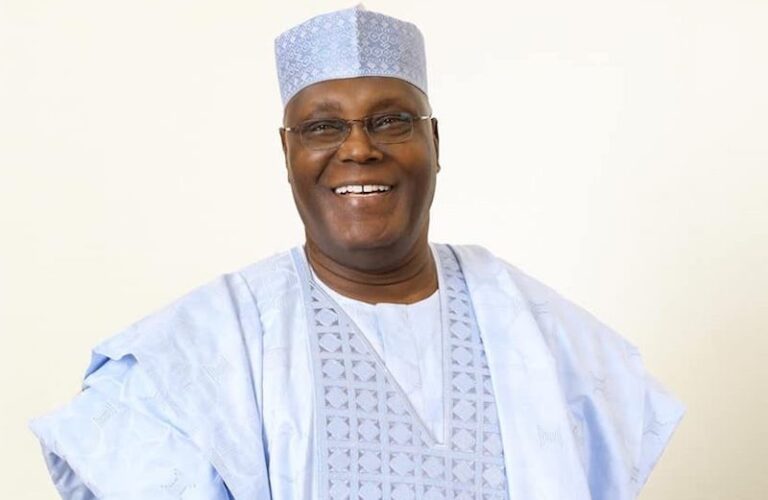
This is why the northern candidacy of 2027 exists. Not appetite. Not obstinacy. Not one man’s ambition, whatever the Presidency’s spokesmen prefer to write on social media at midnight. It exists because a debt was incurred in 2011, was never settled in 2015 or 2019 or 2023, and stands unsettled today. Atiku Abubakar is not disrupting the arrangement. He is the last man still presenting the invoice.
Let the accusation be met head on, since it is the only one they have left. They say Atiku Abubakar contests in every season and therefore believes in nothing. Bring the calendar and test it.
In May 2015, what did the ledger show? The South had held this office for thirteen years, eight under Obasanjo and five under Jonathan. The North had held it for two years and eleven months. Two years and eleven months, against thirteen. A northern candidacy in that cycle was not an assault on rotation. It was rotation. It was the correction that the arrangement itself demanded, and the Nigerian electorate agreed so emphatically that they removed a sitting President to deliver it, the only time in this republic it has ever been done.
In 2019, what did the ledger show? The North had climbed to six years and eleven months against the South’s thirteen, still less than half. And in that cycle the Peoples Democratic Party formally zoned its presidential ticket to the North. Atiku did not defy his party’s convention that year. He contested under it, won the primary under it, and nobody anywhere accused him of breaching anything.
In 2023, what did the ledger show? Even after the full eight years of Buhari, the North stood at roughly ten years and eleven months against thirteen. The debt of 2011 had still not been cleared.
And in 2027 it remains uncleared, at roughly eighteen years to eleven.
So examine what the record actually shows. In every cycle in which this man has sought the presidency since that breach, the arithmetic placed his region in deficit. Not once has he contested in a season when the North was ahead. Not once has he asked for more than the arrangement itself says he is owed. His position in 2011, in 2015, in 2019, in 2023 and now in 2027 has been one single unchanging sentence, that the ledger must balance and that no Nigerian may be barred by his birthplace.
Fifteen years. One position. Consistency of that kind is rare enough in our politics that it ought to be recognised even by those who dislike the man.
Now measure his accusers by the same instrument. They held that zoning was inviolable in 1999 when it delivered the South West. They held that it was meaningless in 2011 when honouring it would have cost them the presidency. They held that it was a relic in 2014 and 2015 when their own primary was thrown open to all comers. They rediscovered it as holy writ in 2022. And they now preach it as a national commandment in 2027, when obeying it costs them nothing and enforcing it against one man saves them everything.
One of these parties has changed its position four times. It is not the one from Adamawa.
The argument was sound in 2011 when it favoured a southern candidate. It became heresy in 2023 when it favoured a northern one. And in 2027 we are asked to pretend that the memory of an entire country evaporated somewhere in between.
A convention that expands to protect one region and contracts to punish another is not a convention. It is a tactic.
THIRD QUESTION: DID WE EVER READ EKWUEME PROPERLY?
Everybody now quotes Alex Ekwueme. Almost nobody quotes him accurately.
What he championed at that conference was not a crude North versus South handshake. It was rotation among the six geopolitical zones, entrenched in the constitution, following a defined sequence, so that no zone could be permanently excluded and no zone could bargain its way to a second helping while others waited.
Two things follow, and both are fatal to the current sermon.
First, Ekwueme wanted formal entrenchment. He understood that an unwritten arrangement would be honoured only by the weak and ignored by the strong. That entrenchment never came, and as recently as 2025 the House of Representatives rejected yet another bill seeking to constitutionalise rotation among the six zones. So we are left with the worst of both worlds, an obligation with no text, a rule with no umpire, a debt with no ledger.
Second, if we are truly Ekwueme’s disciples, then let us count in sixes rather than in twos. Do that, and the ledger of the Fourth Republic reads as follows.
The South West has held the presidency for twelve years, eight under Obasanjo and four more under the incumbent by the end of this term. The North West has held it for just under eleven, being the three years of Yar’Adua and the eight of Buhari. The South South has held it for five years under Goodluck Jonathan.
The North East has held it for nothing. The North Central has held it for nothing. The South East has held it for nothing.
Three zones, tens of millions of Nigerians, twenty eight years of civil rule, and not a single day in the office that this convention was supposedly invented to share.
Now consider what is being demanded of us in 2027. We are asked, in the name of equity, to hand a thirteenth, fourteenth, fifteenth and sixteenth year to the zone that already leads the table, while three zones remain on zero. Whatever that arrangement is, it is not rotation. Rotation implies movement. What we have is a queue in which the same two doors keep opening.
And observe whose name is being used to justify it. Those who invoke Ekwueme to keep power in the South West through 2031 are borrowing an Igbo statesman’s authority to extend a Yoruba tenure while his own South East is told, once again, to be patient. Ekwueme deserves better than to be conscripted into that.
Atiku himself has been more honest on this than his critics. He has publicly said that he opposed the rotation amendment in that era and now regards that as a mistake, and he has called for zoning to be formally entrenched if the country genuinely wants it. That is a man saying, write it into the constitution and I will obey it. Nobody currently shouting has taken up the offer, because an unwritten rule is far more useful to them than a written one.
FOURTH QUESTION: WHOSE PARTY RULE IS THIS ANYWAY?
Zoning, where it has any concrete existence at all, exists as an internal party matter. The Peoples Democratic Party wrote rotation of offices into its own constitution in 1999. That is a rule for members of that party, enforceable, if at all, within that party. It binds no other party. It binds no voter. It certainly does not bind the tens of millions of registered Nigerians who have never attended anybody’s national executive committee meeting.
Which brings us to the most delicious contradiction of the season.
The All Progressives Congress has historically insisted that zoning is not its doctrine. It threw its presidential primary wide open in December 2014, and as late as the build up to 2023 voices within that party were still describing zoning as a PDP invention and insisting that Nigeria should focus on competence and merit.
Competence and merit. Their words, not ours.
So the party that produced a northern President in 2015 by declaring zoning irrelevant now wishes to secure a southern President a second term by declaring zoning sacred. The doctrine did not evolve. The doctrine simply followed the throne.
THE LONG LIST OF MEN WHO NEVER WAITED THEIR TURN
If contesting outside your zone is a political crime, then the docket is very crowded, and Atiku Abubakar is the least of the offenders.
Begin at the beginning. At the Jos convention of February 1999, the year the arrangement was supposedly born, the presidency was understood to be going South and specifically to the South West. Yet Alhaji Abubakar Rimi of Kano in the North West entered that contest and campaigned before withdrawing late in the exercise. From the South East, Dr Alex Ekwueme, the very father of the rotational idea, declined to concede the ticket to a fellow southerner and ran to the end. So did Chief Jim Nwobodo. From the South South, Chief Don Etiebet, Dr Francis Ellah and Chief Graham Douglas also refused to stand down for the South West. The founding convention of the zoning era was itself a free for all.
In 2003, with a southern President barely halfway through the South’s supposed eight years, Rimi returned to the field and Chief Barnabas Gemade of the North Central joined him, both contesting the ticket of a party that had zoned it southward. In the general election of that year, General Muhammadu Buhari of Katsina challenged Obasanjo outright, and challenged again in 2007, and again in 2011. Nobody has ever called Buhari a wrecker of national equity.
In 2007, when the ticket had gone North, Chief Orji Uzor Kalu of Abia went to the ballot on the Progressive Peoples Alliance and Professor Pat Utomi also stood, both southerners contesting in a northern season.
Then came 2011, already described above, when a southern President sought and won a term drawn from a northern block, defeating the consensus candidate the North had assembled in protest. He was not excommunicated for it. He is today a respected elder statesman, and quite rightly so. But let the record show what happened and who did it.
In December 2014 the All Progressives Congress took its primary to the Teslim Balogun Stadium in Lagos and let five men fight for it. Governor Rochas Okorocha of Imo State, a sitting South East governor, contested and polled six hundred and twenty four votes. Governor Rabiu Kwankwaso of Kano, also a sitting governor, polled nine hundred and seventy four. Atiku Abubakar polled nine hundred and fifty four. Sam Nda-Isaiah closed the field with ten. Buhari won with three thousand four hundred and thirty and went on to take the presidency the following February. Not one southern aspirant was asked to withdraw for the sake of equity.
And in 2022, when the South’s turn had supposedly arrived after eight years of Buhari, who contested? In the ruling party, Senate President Ahmad Lawan of Yobe and Governor Yahaya Bello of Kogi, both northerners, sought the ticket against the southern claim. In the PDP the primary was thrown open and aspirants from nearly every zone fought to the last night. Peter Obi left that party over the quarrel and took his candidacy elsewhere, as did Kwankwaso.
So let the ledger be read aloud.
Rimi did it. Ekwueme did it. Nwobodo did it. Etiebet did it. Ellah did it. Douglas did it. Gemade did it. Buhari did it three times before winning on the fourth. Kalu did it. Utomi did it. Jonathan did it, and won. Okorocha did it. Kwankwaso did it twice. Lawan did it. Yahaya Bello did it.
Every one of those men is remembered as a politician who took his chance. Only one man, from the only northern zone that has never held this office for a single day in the Fourth Republic, is now called an enemy of national unity for doing what all of them did.
That is not a principle. That is a targeting.
And note precisely what is being demanded of the North in 2027. Not that it accepts a southern President, which it did in 1999, again in 2011 and again in 2023. What is demanded is that the entire northern half of Nigeria voluntarily field no candidate of consequence at all, so that a southern incumbent may face only southern challengers and cruise home. That is not equity. That is an instruction to disarm before the contest begins.
THE REAL QUESTION ON 16 JANUARY
Strip away the sermon and the electoral question is embarrassingly simple.
No incumbent Nigerian President has ever been defeated by a challenger drawn from his own bloc. An opposition that zones itself into the same corner as the man it seeks to remove has lost before the first ballot is printed. That is not sentiment, it is history, and any strategist who ignores it is not defending equity, he is defending the incumbency.
Meanwhile the country burns. Farmers cannot reach their farms in Benue and Zamfara. The naira has taught a generation what hunger means. The International Monetary Fund’s Article Four consultation this year raised a finding of trillions in off budget flows that this government is still explaining. Schools are emptying. Hospitals are exporting their doctors. And we are asked to choose the next President by consulting a map rather than a record.
Sumner Sambo is right, and his point deserves to be pushed to its conclusion. A convention that allows a politician to sit at home and wait for his geography to mature is a convention that has already begun to rot democracy from the inside. Mbadiwe’s generation zoned in order to unzone. Forty seven years later we have zoned in order to entrench, three whole zones have never once seen the inside of that office, and a debt taken from the North in 2011 has never been repaid.
Merit is the only rotation that never runs out.
The Constitution says any qualified Nigerian may run. Atiku Abubakar is a qualified Nigerian. So is every man and woman on that ballot. The zone did not feed anybody’s family this year, and it will not feed anybody’s family next year.
One hundred and eighty one days remain until 16 January 2027. On that morning, Nigerians will not be voting for a compass direction. They will be voting for a country.
Let the argument be about competence. The North is not afraid of that argument. The question is whether those hiding behind the map are.
Aare Amerijoye DOT.B
Director General, The Narrative Force
thenarrativeforce.org
20 July 2026