The Journey to 2027 Is Mature — Part Three of Four

Three years of Tinubu’s economic catastrophe, and the documented contrast of a proven record.
There are governments that fail gradually. There are governments that fail spectacularly. And then there are governments that fail with such comprehensive thoroughness across every measurable dimension of economic life that the failure itself becomes the dominant political fact of the era, overwhelming narrative, converting every potential supporter into a witness for the prosecution, and writing the opposition’s campaign manifesto in the language of the people’s daily suffering.
Bola Tinubu’s administration belongs to the third category. No government in Nigeria’s democratic history, not the twilight of Shehu Shagari, not the SAP-devastated era of Ibrahim Babangida, not the economically turbulent final year of Goodluck Jonathan, has produced a record of economic suffering as simultaneously broad, deep, and statistically documented as what has been delivered to the Nigerian people since May 29, 2023.
Every statistic is a campaign poster. Every figure is a court exhibit. Every percentage point is a nail in APC’s political coffin.
WHEN NUMBERS BECOME PROSECUTION
Nigeria’s headline inflation stood at 28.92 percent in December 2023 under the National Bureau of Statistics’ established methodology, the highest recorded rate in nearly three decades. As the compounding effects of fuel subsidy removal, naira devaluation, and supply chain disruption cascaded through the economy simultaneously, the NBS rebased series recorded 34.8 percent by mid-2024. Food inflation breached 40 percent in real market terms. The average Nigerian family’s food basket more than doubled in price within 18 months of inauguration. This did not happen in a war zone. It did not happen during a pandemic. It happened under a sitting government that chose these policies and implemented them without adequate cushioning for their entirely predictable human consequences.
The CBN’s official window rate stood at approximately N461 per dollar when Tinubu assumed office on May 29, 2023. That figure alone told only half the story. The parallel market, which is where the overwhelming majority of ordinary Nigerians, small business owners, importers, traders, students paying foreign school fees, and families supporting relatives abroad actually accessed dollars, had already driven the rate to approximately N750 per dollar, a gap that represented the accumulated distortion of years of managed exchange rate fiction.
Within weeks of inauguration, the administration unified the exchange rate, collapsing the official fiction into market reality. The naira then continued its freefall. By early 2024 it had crashed beyond N1,600 per dollar on both the official and parallel markets simultaneously. Whether measured from the official baseline of N461 or the parallel market baseline of N750, the trajectory is the same: a currency in ruins, a government that caused it, and a population that paid for it in every transaction of daily life.
Petrol sold at approximately N185 per litre under the regulated subsidy regime. Post-removal, prices climbed to between N900 and N1,100 per litre across most states, an increase of approximately 475 percent that cascaded through every dimension of economic life: transportation costs, food production, electricity generation, school fees, hospital logistics, and manufacturing inputs. Nigeria did not merely remove a subsidy. It removed the floor from underneath the poor and handed the invoice to the most vulnerable citizens in the federation.
The human consequences of three years of this administration’s economic management are not abstract. They are counted. Over 87 million Nigerians live below the income poverty line according to national poverty assessments, the largest absolute concentration of income poverty in Nigerian recorded history. But the income poverty figure alone does not capture the full dimension of the catastrophe.
The UNDP and Oxford Poverty and Human Development Initiative Multidimensional Poverty Index, which measures deprivation not merely by income but across health, education, and living standards simultaneously, places the number of multidimensionally poor Nigerians at 133 million people. One hundred and thirty-three million. In a country of approximately 220 million. That is not a poverty statistic. That is a civilisational indictment, and it has been compounded, deepened, and entrenched by three years of this administration’s governance.
Under the National Bureau of Statistics’ broader measure of labour underutilisation, which captures not only the unemployed but the underemployed and the discouraged, more than half of Nigeria’s young people lack adequate productive work, a figure the government’s revised methodology cannot honestly obscure.
Nigeria’s total public debt stock has continued its relentless climb under this administration. The Debt Management Office’s most recent reporting places the figure well beyond N120 trillion, a number that would have been unthinkable at the start of Nigeria’s democratic era and that represents the accumulated consequence of borrowing without corresponding growth, spending without corresponding revenue, and administering without corresponding accountability. The debt servicing burden tells the more damning story.
In the 2023 fiscal year, debt servicing consumed approximately 96 kobo of every naira of Federal Government revenue, meaning that for every naira the Federal Government collected, it retained less than four kobo for roads, hospitals, schools, security, and every other function of governance. Nigeria was not merely borrowing to invest. It was borrowing to pay interest on its existing borrowings, a fiscal condition that has a precise technical name: insolvency dressed in the language of budget management. The Nigerian people are not being asked to pay for this administration’s governance. They are being asked to pay for its interest payments. And they are paying, in fuel prices, in food costs, in a currency that buys less every morning they wake up.
“A hungry man is not a free man,” warned Adlai Stevenson. A nation of 133 million multidimensionally poor people is not a contented electorate. It is a nation on the verge of democratic reckoning, and that reckoning arrives at the polling unit in 2027 with the controlled fury of a people who have been pushed beyond endurance and who remember exactly who pushed them.
THE GOVERNING PRECEDENT
No democratic government in Nigeria’s electoral history has survived re-election in conditions of comparable economic collapse. This is not speculation. It is the documented record of Nigerian democratic behaviour.
Goodluck Jonathan lost the 2015 presidential election in a macroeconomic environment that, measured against today’s indicators, was a period of relative stability. Inflation was lower. The naira was stronger. Fuel prices, though contentious, had not quintupled. Poverty figures, though troubling, had not reached 133 million multidimensionally deprived citizens. Yet the electorate removed him.
If the Nigerian people removed Goodluck Jonathan in 2015 for an economic performance that was manageable by comparison with what now prevails, the verdict they will deliver on Tinubu’s three-year record in 2027 is not a matter of political projection. It is a matter of democratic certainty, written in the logic of a people who have not forgotten what governance is supposed to feel like and who know, from daily lived experience, exactly what this one has cost them.
THE ATIKU CONTRAST: DOCUMENTED, NOT RHETORICAL
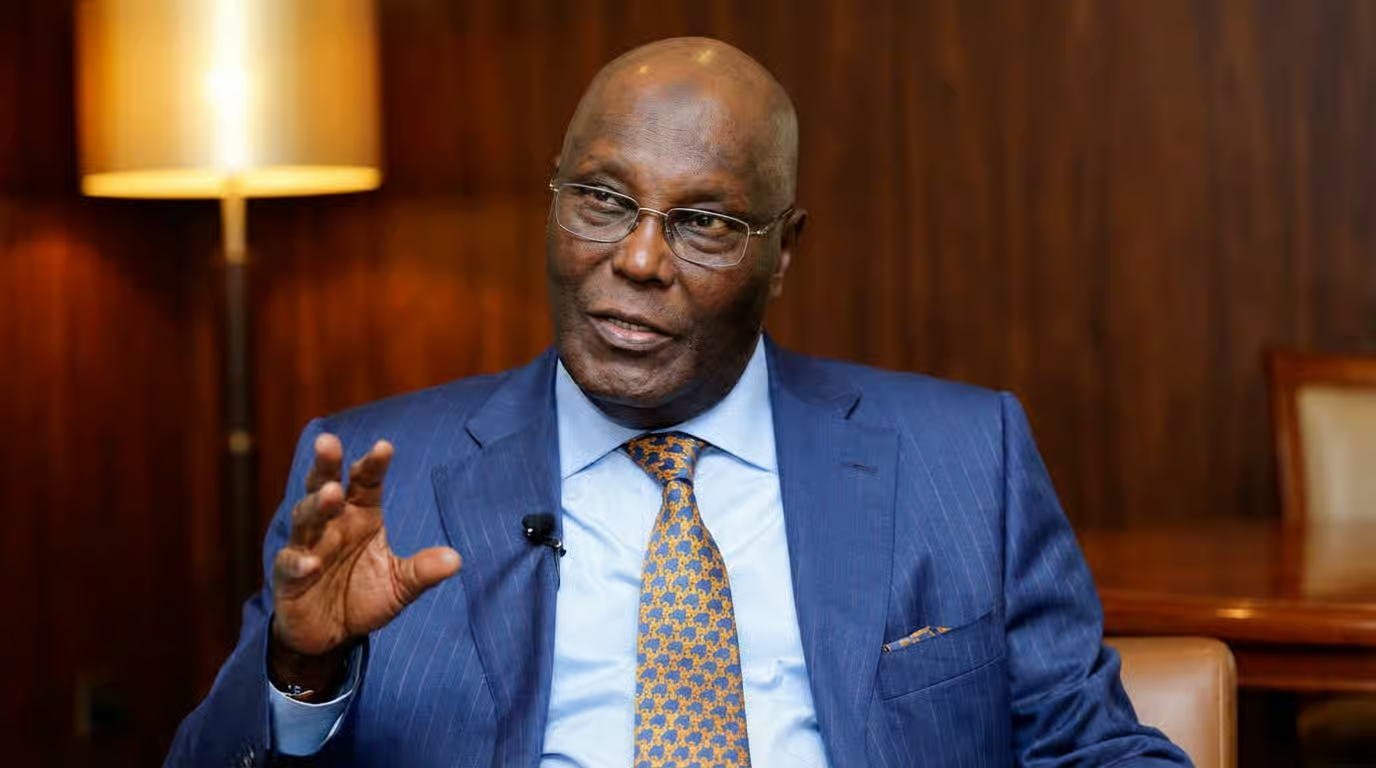
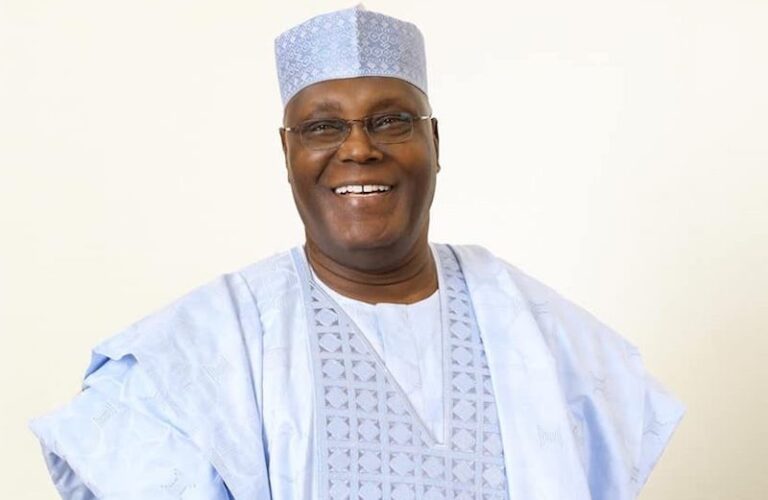
Against this record of systematic economic destruction, the opposition to Atiku Abubakar’s candidacy invariably circles to one question: is he the answer? Let the record answer that question, not with the rhetoric of campaign season, but with the documented verdict of national accounts.
As Vice President of the Federal Republic from 1999 to 2007, Atiku Abubakar’s stewardship of the Nigerian economy produced the following verifiable outcomes.
Nigeria’s external reserves grew from approximately four billion dollars in 1999 to over 43 billion dollars by 2007, a tenfold increase built on disciplined fiscal management and the strategic Paris Club debt relief negotiations conducted in partnership with then-Finance Minister Ngozi Okonjo-Iweala. That is not a rhetorical claim. It is a Central Bank of Nigeria record.
Nigeria’s GDP expanded substantially over the same period, representing the most sustained and most consequential period of economic growth in Nigeria’s post-independence history, achieved through eight years of disciplined, vision-driven governance under the Obasanjo-Atiku administration. That growth transformed Nigeria’s standing in the continental and global economic community in ways that 20 years of subsequent administrations have collectively failed to match or surpass.
The Paris Club debt stock of approximately 30 billion dollars, which had strangled Nigeria’s developmental capacity for decades and consumed a disproportionate share of every annual budget, was retired in full in 2006, freeing Nigeria’s fiscal space for a generation. It was the single most consequential act of economic statecraft in Nigeria’s democratic history, and Atiku Abubakar was at the centre of it.
Inflation trended downward through the administration’s tenure, reaching single-digit levels by 2006 and 2007 following years of fiscal consolidation, a trajectory that stood in sharp contrast to the double-digit acceleration Nigeria has experienced under every subsequent administration and the historic heights it has reached across three years of the present government.
The National Economic Empowerment and Development Strategy provided Nigeria with its first structured, nationally owned, internationally recognised economic development framework, replacing the ad hoc improvisation that had characterised previous administrations with coherent planning that commanded the confidence of multilateral institutions and foreign investors alike.
This is not mythology manufactured for campaign purposes. This is the documented record of the National Bureau of Statistics, the Central Bank of Nigeria, the Debt Management Office, and the World Bank’s Nigeria country assessments. It exists in the public domain. It can be verified by any journalist, any analyst, and any voter who chooses to look.
“The measure of a man,” said Plato, “is what he does with power.” By that eternal and irrefutable measure, the 2027 choice between Tinubu’s three years of documented catastrophe and Atiku’s eight years of documented prosperity is not close. It is not even a contest.
THE AGE ARGUMENT: MEASURING WISDOM AGAINST RECKLESSNESS
Those who will raise the question of age against Atiku Abubakar should first be invited to contemplate what youth and vigour have delivered since May 29, 2023. Bola Tinubu assumed the presidency at 71 years old, a fact his admirers presented as the crowning vitality of a man in the prime of his political powers. Nigeria received this youthful energy with appropriate anticipation. What it got in return was fuel at over N1,000 per litre, a naira worth less than a third of its pre-inauguration value, 133 million citizens in multidimensional poverty, and a debt servicing burden that consumed 96 kobo of every naira of government revenue. If this is what Nigeria looks like after three years of a 71-year-old president at the height of his powers, the country can be forgiven for wondering what exactly the age argument is supposed to protect it from.
Atiku Abubakar will be 80 at the time of the 2027 election. He will also bring to that office eight years of documented Vice Presidential governance that produced a tenfold growth in external reserves, the retirement of 30 billion dollars in Paris Club debt, and the most sustained GDP expansion in Nigeria’s post-independence history. Nigeria does not need a young president. It needs a competent one. And competence, in the context of this republic, is not a function of the year on a birth certificate. It is a function of what a man has actually done with power when power was entrusted to him. By that measure, the comparison between Atiku at 80 and Tinubu at 71 is not close. It is an embarrassment to the side raising the question.
THE VERDICT IS ALREADY WRITTEN
Tinubu has governed for three years and delivered historic misery. Atiku governed for eight years and delivered historic prosperity. The Nigerian electorate is not ideological. It is experiential. It votes on what it has lived. And what it has lived since May 29, 2023 is the most comprehensively documented case for change in Nigeria’s democratic memory.
Every fuel queue is a campaign office. Every market stall with doubled prices is a polling unit briefing. Every graduate who cannot find work is a vote being formed. Every pensioner whose savings have been destroyed by naira collapse is a verdict being composed. Every one of the 133 million multidimensionally poor Nigerians counted by the UNDP and Oxford’s Poverty and Human Development Initiative is a ballot being written in the language of lived suffering. They are composing it in silence, in deprivation, and in the patient arithmetic of a people who know that the polling unit is coming, and who know, with the certainty of lived experience, exactly what they intend to say when it arrives.
The indictment is complete. The statistics have written it. The people have lived it. In 2027, they will deliver the verdict.
“The arc of the moral universe is long,” said Martin Luther King Jr., “but it bends toward justice.” For 133 million Nigerians living in multidimensional poverty, for the youth whose naira has become confetti, for the family whose food basket has doubled in cost, that arc is bending in 2027. It is bending with purpose. It is bending with fury. And it is bending, finally and irreversibly, toward Alhaji Atiku Abubakar.
Aare Amerijoye DOT.B, Director General, The Narrative Force, thenarrativeforce.org
May 2026.