Aare Amerijoye DOT.B
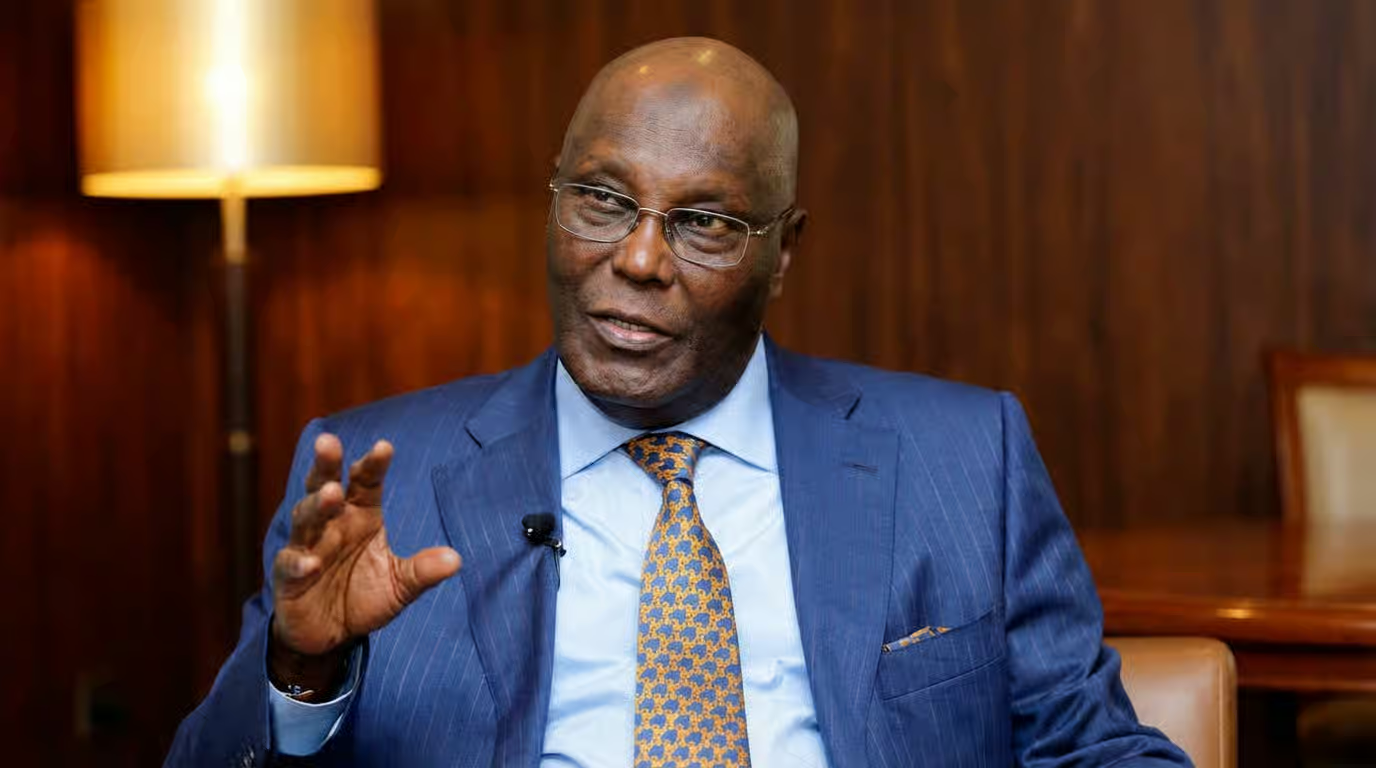
“When fuel prices rise, transport fares rise; when transport rises, food prices follow. When food prices soar, families suffer. I will break that wretched chain that has defined our national life in the nearly four years of Tinubu’s presidency.”
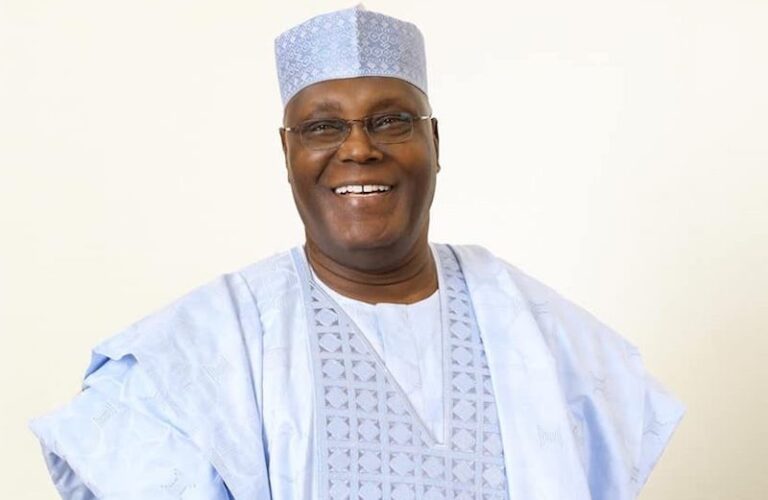
His Excellency, Alhaji Atiku Abubakar, GCON, Presidential Candidate of the African Democratic Congress (ADC)

THE CHAIN THAT STRANGLES A NATION
Every oppression has an anatomy. Every suffering has a logic. And the suffering of the Nigerian masses under this government is not an accident of nature; it is a chain, forged link by link, and hung around the neck of the poor.
The first link is fuel. On 29 May 2023, in one careless sentence, the pump price of petrol was multiplied and the naira was thrown to the wolves. The second link is transport. The okada man, the danfo driver, the keke rider, the truck owner, all of them buy that fuel, and so the fare from the village to the market doubled, then doubled again. The third link is food. The yam that must travel from Benue, the rice that must travel from Kebbi, the tomato that must travel from Kano, all of them ride on that transport, and so the price of every mouthful rose with every kilometre. And the last link is fastened around the family. The mother who now cooks once where she cooked twice. The father who now walks where he once rode. The child who now stays home where he once learned.
That is the dialectic of hunger in today’s Nigeria. It is not mysterious. It is not an act of God. It is the arithmetic of a policy imposed abruptly, without cushion, without conscience, and without account, and it has defined our national life for nearly 4 years.
One man has named that chain for what it is. One man has promised, in plain words, to break it. His name is Atiku Abubakar.
THE TESTIMONY OF THE STREETS
What follows is not the testimony of statisticians. It is the testimony of the streets. The names in these stories are the everyday names of our people, and the stories are the daily testimonies you will hear in any market, any motor park, any church, any mosque, from Badagry to Banki, from Sokoto to Calabar. They are representative voices, and every Nigerian reading this will recognise them, because every Nigerian is living them.
I begin from home, because it was at home that the cry first arrested my own heart.
EKITI, WHERE THE CRY FIRST ARRESTED MY HEART
Come with me to Oja Oba in Ado Ekiti. There sits Mama Bola, a gari seller for 30 years. She will tell you that the same measure of gari she once sold to students with a smile is now weighed like gold, because the cassava comes from farms her suppliers can no longer afford to reach. She has watched customers price her wares, sigh, and walk away hungry. She told me, and this is a sentence I cannot forget, that she now sells food to people she can see are starving.
Come with me to Ikole Ekiti. There is Baba Ojo, a yam farmer whose barn was once his pride. The cost of transporting his yams from the farm gate to the market has swallowed his margin whole. Fertiliser is beyond him. Labourers now charge what he cannot pay, because they too must eat. So the farm shrinks every season, and the man who once fed others now rations his own household.
Come with me to the gates of the university in Iworoko. There is Seun, an undergraduate whose parents sell their wrapper and their peace to keep him in school. His daily battle is not his books; it is the fare from his lodge to his lecture hall, the price of one meal a day, the cost of photocopying a handout. He is brilliant, and he is tired.
Come with me to Ayedun Ékítí,Usi Ékítí, Odo Oro Ekiti and to towns like it across our state. There sit the pensioners, men and women who served this country for 35 years, whose monthly pension can no longer buy a bag of rice, who must choose between their blood pressure medicine and their evening meal.
And come with me to any junction in Ado Ekiti, where the okada rider waits. He buys fuel at a price fixed in Abuja, charges a fare his passengers argue down because they too are broke, and returns home each night with profit that has quietly become loss.
This is Ekiti, the Fountain of Knowledge, land of professors and farmers, reduced to a fountain of tears. And Ekiti is not alone.
THE NORTH EAST WEEPS
In Adamawa, in the markets of Yola and Jimeta, the groundnut oil seller decants her ware into ever smaller bottles, because the full bottle has priced itself beyond her neighbours. Yet it is from this same soil that hope now rises, for the son of this soil is on the ballot.
In Borno, the displaced farmer in a Maiduguri camp, who once harvested his own millet, now queues for a ration and gathers firewood to sell, praying daily for the peace that will let him go home to his farm.
In Yobe, at the cattle market of Potiskum, the herdsman watches buyers price his cow at half its worth, because the trader knows the cost of trucking it south will eat the rest.
In Bauchi, in the grain market of Azare, the mudu measure has become an instrument of heartbreak; the same money that filled a sack 4 years ago now fills a bowl.
In Gombe, the tomato farmer watches his baskets soften and spoil by the roadside, because the truck he once hired for a modest sum now demands a fortune he does not have.
In Taraba, on the green heights of Mambilla and the plains below, the farmer grows what the nation craves and yet cannot move it, for the roads are broken and the transporters’ price is a second harvest he must surrender.
THE NORTH WEST GROANS
In Kano, walk through Kantin Kwari, once the beating heart of the textile trade of West Africa. Count the shuttered stalls. Ask Alhaji Sani, who has traded there since his youth, where his customers went. He will tell you: hunger does not buy cloth.
In Kaduna, the working mother boards the bus at dawn and does the bitter arithmetic; the bread for her children’s breakfast now costs what her whole market basket once cost.
In Katsina, the farmer displaced from his village tills another man’s plot for a wage, and speaks in whispers of levies reportedly demanded by armed men before a harvest can be gathered in peace.
In Zamfara, a land whose earth holds gold, the widow cannot reach her late husband’s farm for fear, and feeds her children from the charity of a compound that has little to share.
In Sokoto, the onion farmer of the riverine plains watches middlemen name his price for him, because he cannot afford to move his own produce to where it would fetch its worth.
In Kebbi, in the rice fields around Argungu, the paddy farmer who was told he was the pride of national food security now finds fertiliser and diesel so dear that the pride has become a debt.
In Jigawa, the hibiscus and sesame farmer hears that his crop earns dollars abroad, yet the gain never reaches his calloused hands; it evaporates somewhere between the farm gate and the port.
THE MIDDLE BELT BLEEDS
In Niger State, the fisherman on the great river spends more on fuel for his outboard engine than his catch will bring at the shore.
In Kwara, the Ilorin okada rider has memorised the daily litany: fuel up, fare up, passengers down, profit gone.
In Kogi, at the confluence in Lokoja, the yam trucks from the north and the fuel tankers from the south pass each other on broken roads, and the trader watches both add their suffering to her price list.
In Benue, the food basket of the nation, the orange rots on the tree and the yam rots in the barn, while the farmer who grew them buys imported rice at a price that insults his labour, and too many of his kinsmen sleep in displacement camps rather than their ancestral compounds.
In Plateau, the Irish potato farmer of the high plains counts his losses twice, once to the cost of inputs and haulage, and once to the insecurity that has repeatedly emptied whole villages, as widely reported.
In Nasarawa, the civil servant who works in Abuja but sleeps in Mararaba, because Abuja rent is a fantasy, spends a third of his salary and 4 hours of every day on the road.
And in the Federal Capital Territory itself, under the shining glass of the capital, the security guard, the cleaner and the driver who keep that glittering city running go home each night to satellite settlements where the national minimum wage of 70,000 naira, worth roughly $47 at today’s exchange rate, cannot pay for rent, transport and food in the same month.
THE SOUTH WEST SIGHS
In Lagos, the danfo conductor calls a fare and the whole bus erupts, passenger against conductor, poor man against poor man, while the author of the fare sits untouched in power. The tenant receives a rent review letter and reads it like a sentence.
In Ogun, along the once roaring industrial corridors of Ota and Agbara, the factory worker who survived the layoffs walks past the padlocked gates of the companies that did not survive, as firm after firm cited energy costs and a collapsed naira.
In Oyo, at Bodija market in Ibadan, the food seller has invented new, smaller measures, because the old measures now carry prices that frighten her customers away.
In Osun, the tailor in Osogbo sits before a silent machine through another power outage, then pays an electricity tariff that has climbed beyond his earnings, for darkness sold at a premium.
In Ondo, the cocoa farmer hears of record world prices and laughs a bitter laugh, for the cost of chemicals, labour and haulage has devoured the boom before it reached his village.
And in Ekiti, as I have testified, the Fountain of Knowledge weeps.
THE SOUTH EAST TOILS
In Anambra, the Onitsha main market trader, heir to the greatest commercial instinct on this continent, watches the exchange rate each morning the way a farmer watches the sky, because one swing of the dollar can wipe out a year of toil.
In Imo, the Owerri keke rider changes his fare board so often that his passengers now negotiate before they sit.
In Abia, the Aba shoemaker, whose hands can match any factory in the world, buys leather and glue at import prices, powers his workshop on a generator, and then is told to compete. Still he endures, for endurance is the Aba way, but endurance is not a policy.
In Enugu, the civil servant of the coal city walks the last kilometres to work to save the fare, and calls it exercise to save his dignity.
In Ebonyi, the woman at the Abakaliki rice mill cracks and winnows from dawn to dusk, and the rice she polishes with her own hands is beyond the budget of her own kitchen.
THE SOUTH SOUTH CRIES OUT
In Rivers, the Port Harcourt taxi driver idles in queues and traffic, burning money he has not yet earned, in a city that sits on oil.
In Delta, the Warri boat passenger pays a river fare that has tripled, for the outboard engine drinks the same costly fuel as the danfo.
In Bayelsa, the riverine mother paddles or pays; when her child burns with fever at midnight, the cost of fuel for the boat to the clinic is the first medical bill, and sometimes the one that decides everything.
In Edo, the Benin trader speaks of her children the way one speaks of the departed; they have japa’d, one to Canada, one across the desert on a road she prays over nightly, because this economy offered them nothing to stay for.
In Akwa Ibom, the teacher in Uyo marks scripts by rechargeable lamp and wonders why the salary that once carried her with dignity now expires in the second week of the month.
In Cross River, in the carnival city of Calabar, the hotelier and the cook and the dancer all say the same thing: the visitors are fewer, the costs are higher, and joy itself has become expensive.
THE NUMBERS BEHIND THE TEARS
Lest anyone dismiss these testimonies as anecdote, let the cold figures speak.
The National Bureau of Statistics reports headline inflation of 15.91 per cent for June 2026, with food inflation at 17.52 per cent and rising, and this after years in which food inflation ran far higher still, compounding upon the wounded purchasing power of the poor. The World Bank now assesses that roughly 6 in 10 Nigerians, on the order of 140 million souls, live in poverty, with millions more added in 2025 alone. The national minimum wage of 70,000 naira translates to roughly $47 a month. And by the government’s own accounting, trillions of naira in subsidy savings were supposed to transform the lives of the masses; the masses are still waiting, and Nigerians are entitled to ask where those savings went.
These are not my figures. They are the figures of the statisticians and the multilateral institutions. But behind every decimal point is Mama Bola in Oja Oba, Alhaji Sani in Kantin Kwari, the widow in Zamfara, the teacher in Uyo.
THE MAN WHO SEES
Now hear this, suffering people of Nigeria, and hear it well. In the midst of this darkness, one leader has looked at you, truly looked at you, and named your suffering out loud.
While others tell you the nation is not bleeding, Atiku Abubakar has traced the anatomy of your hunger link by link: fuel to transport, transport to food, food to the family table. That is not the language of a man briefed by aides in an air-conditioned villa. That is the language of a man who has stood where you stand.
And why does he see what others cannot? Because he has lived it. Atiku Abubakar lost his father at the age of 11. He knew the fatherless boyhood, the hard road, the early labour. He fended for himself, built himself up through work, honesty and enterprise, and rose from the dust of Jada to the summit of national life without forgetting the dust. When a man like that speaks of the mother who cooks once where she cooked twice, he is not reciting a script. He is remembering.
And he does not come armed with compassion alone; he comes armed with a record. When he served as Vice President and headed the economic team, Nigeria’s economy grew from $58 billion in 1999 to $270 billion in 2007, debt was rolled back, and reforms were carried out with method, not madness. That administration adjusted fuel prices gradually, in measured steps over 8 years, so that the economy and the people could absorb each move. Compare that patient statesmanship with the reckless single stroke of 29 May 2023, and you will understand the difference between a surgeon and a butcher.
Empathy without competence is pity. Competence without empathy is tyranny. In Atiku Abubakar, the suffering masses of Nigeria have found, at last, the rare union of both.
HOW HE WILL BREAK THE CHAIN
Atiku’s pledge is not nostalgia and it is not a return to the corrupt racket of old. Under his Economic Recovery Plan, he proposes a targeted, capped, transparently budgeted and independently audited support regime that shifts relief from importation to production, from middlemen to Nigerian refineries, from unverifiable paper claims to verifiable barrels, so that the pump price stops strangling the poor while the treasury stops bleeding into private pockets. And he has vowed that whoever is found to have stolen the people’s subsidy savings must return the money.
Break the first link, and the chain falls apart. Fuel relief becomes transport relief. Transport relief becomes food relief. Food relief becomes the family’s relief. The mother cooks twice again. The child returns to school. The okada man goes home with profit. The farmer reaches his farm and his market. That is the promise, spoken plainly, by the one candidate whose record shows he knows how to keep economic promises.
ÌGBÀ DÍẸ̀ LÓ KÙ
So lift up your heads, suffering masses of Nigeria, for your redemption draws near.
To my Yoruba kith and kin I say: ìgbà díẹ̀ ló kù. Only a little time remains.
To my Hausa brothers and sisters I say: lokaci kaɗan ne ya rage. Only a little time remains.
To my Igbo brothers and sisters I say: obere oge ka ọ fọdụrụ. Only a little time remains.
144 days. That is all that stands between you and the ballot. On 16 January 2027, the market woman and the professor, the okada rider and the pensioner, the farmer and the trader, the north and the south, the mosque and the church, will hold in their hands the one instrument no government can price beyond their reach: the vote.
Collect your PVC. Guard it like the title deed to your children’s future. Come out at dawn on 16 January 2027. Vote Atiku Abubakar and the African Democratic Congress. Stay, watch, and protect your vote peacefully until it is counted and transmitted.
The chain that was forged in 4 years can be broken in one day. That day has a date. Ìgbà díẹ̀ ló kù. Lokaci kaɗan ne ya rage. Obere oge ka ọ fọdụrụ.
Atiku is coming to give you respite, and you shall all rejoice.
AtikuIsComing #ADC2027 #IgbaDieLoKu #BreakTheChain #16January2027
Aare Amerijoye DOT.B
Director General,
The Narrative Force
thenarrativeforce.org
26 August 2026