PART 11 OF 50: ROBBED IN THE DARK
Aare Amerijoye DOT.B
The knock comes on a Tuesday morning.
Mama Chinyere opens the door of her two-room flat in Enugu. A young man in a reflective jacket pushes a sheet of paper into her hand and is gone before she can ask a single question.
She puts on her glasses.
She reads it once. She reads it again. Her hands begin to shake.
The bill for the month is more than her whole pension.
She sits down slowly on the wooden bench by the door, and her mind goes back over the month. Light for a few hours on some days. Nothing at all for most of a week. One bulb. One small fan. One old fridge she switches off at night to save money.
She did not use that light. Nobody could have used that light. Half the time it was never there.
But the paper says she owes it.
And if she does not pay, they will come back. Not with a meter. With a ladder, to cut her off.
Somewhere in Kaduna, at that same moment, a retired headmaster is staring at the same kind of paper. In Mushin, a mechanic is crumpling his. In Jos, twenty tenants in one compound are shouting at each other over a number none of them can explain.
Four million, seven hundred thousand doors like Mama Chinyere’s.
In Nigeria, the light goes off but the bill never does.
THE BILL FROM NOWHERE
What happened to Mama Chinyere has a name. It is called estimated billing.
It means somebody in an office you have never visited decided how much electricity you used, without a meter, without entering your house and without asking you. Then they printed the number and sent it to your door.
Your bill is not a measurement. It is a guess. And the guess is never in your favour.
Now hear the scale of it, in the regulator’s own figures.
At the end of August 2026, according to the Nigerian Electricity Regulatory Commission, 4,704,224 electricity customer accounts in Nigeria had no meter.
Read that number slowly. Four million, seven hundred and four thousand, two hundred and twenty-four.
Each one is not a person. It is a household, a shop, a compound, a church, a mosque, a barbing salon, a pure water factory. Behind a single account there may be a family of six, or a compound of twenty tenants all sharing one estimated bill.
In August, 141,746 meters were installed across the whole country. It sounds like progress until you do the arithmetic. At that pace, even if not one new customer ever joined the grid, it would take nearly three years to meter the Nigerians who are being guessed at today.
Three more years of bills from nowhere.
Three more years of reflective jackets and ladders.
THE FENCE BETWEEN TWO NIGERIAS
Look at what happens on your own street.
The man with the prepaid meter pays only for what he uses. When the light is off, his meter stops counting. When money is short, he buys a little and manages.
His neighbour, separated by nothing but a fence, has no meter. The same darkness falls on both houses for the same hours. But the neighbour’s bill keeps coming, month after month, as if the sun itself had been shining inside his parlour.
Same street. Same darkness. Two different bills.
On paper, the regulator limits how much an unmetered customer can be charged. On paper. Ask the Nigerian holding the bill whether the paper protected him. Ask the retired headmaster in Kaduna. Ask the mechanic in Mushin. Ask the tenants in Jos.
And when a family finally says enough and demands a meter, what does it hear?
Pay for it.
In September 2026, the approved prices for a single-phase prepaid meter in one distribution zone stood at roughly ₦99,000 to ₦107,000. A three-phase meter cost around ₦186,000 to ₦189,000.
Think about that. A family already being overcharged for light it never received is told to find about one hundred thousand naira to stop being overcharged.
It is like a man who is robbed every month being told: if you want the robbery to stop, buy the robber a new torch.
They guess your bill, then they charge you to stop guessing.
THE TRAP
Now put Part 10 and Part 11 side by side, and the whole trap comes into view.
The tariff went up. In April 2024, Band A rose from about ₦68 per kilowatt-hour to ₦225, before falling to around ₦206 and later settling near ₦209.
The supply did not go up. In January 2026 the national grid fell to zero megawatts, and on a good day it still rarely carries much more than about 5,000 megawatts for the whole nation.
And millions are still billed by guesswork.
Higher price. Same darkness. Estimated bill.
That is not a power sector. That is a collection agency.
Every naira squeezed out of an estimated bill is a naira taken out of a child’s school fees, a trader’s market capital, a pensioner’s blood pressure tablets. It does not light a single bulb. It only darkens a home.
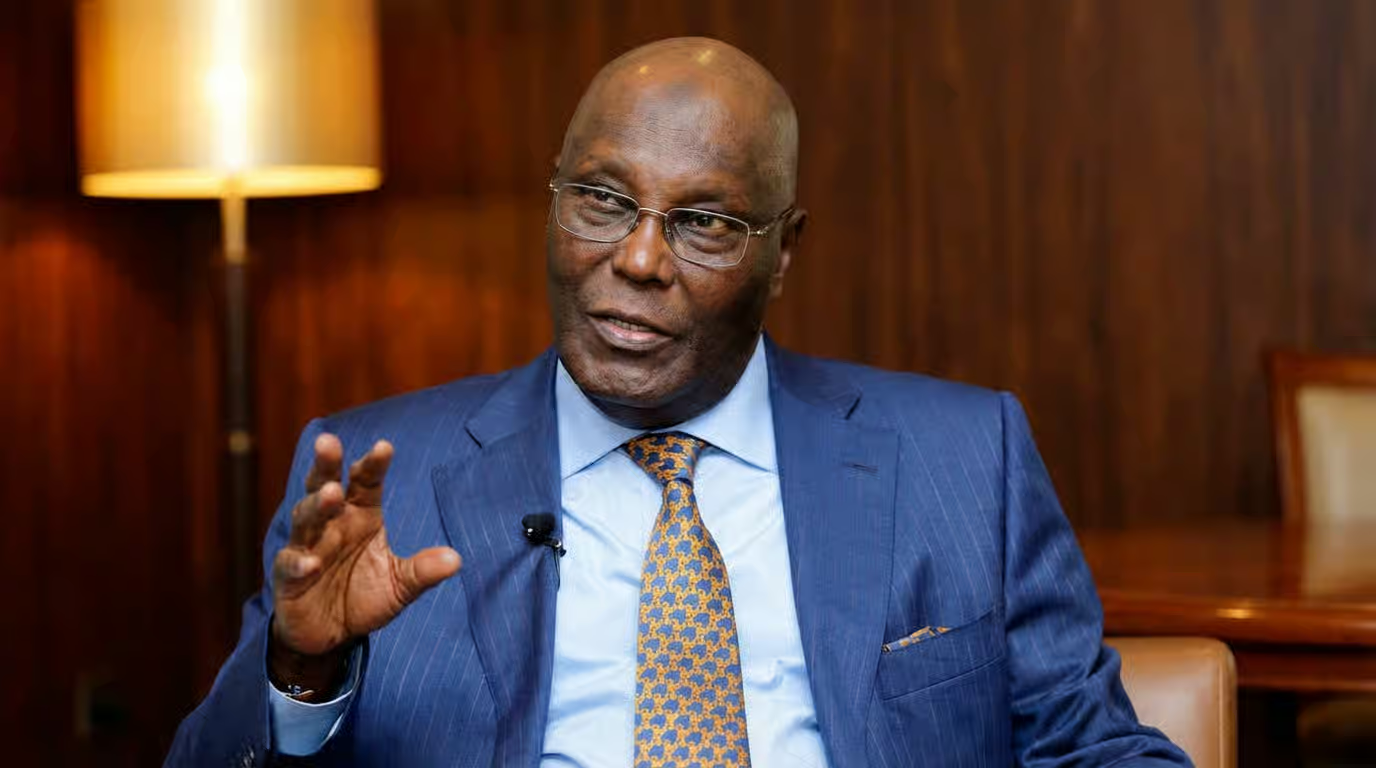
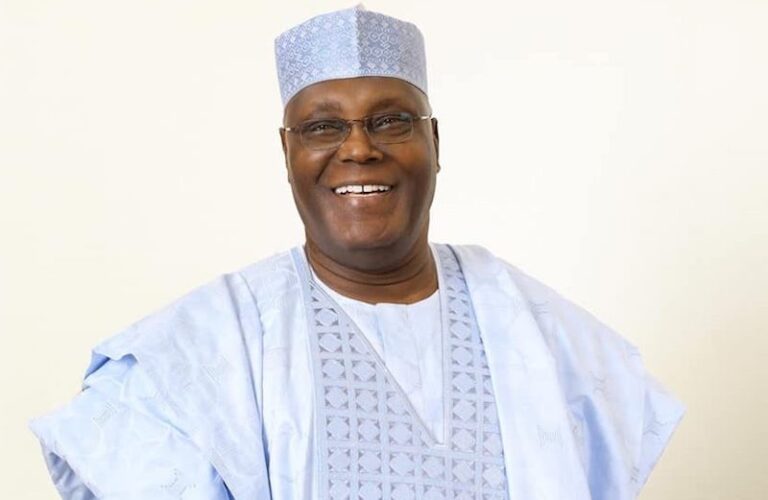
On 7 October 2026, Atiku put his finger on exactly this kind of cruelty when he said of the present government: “He has made production expensive and called the resulting hardship reform.”
Expensive light. Estimated bills. Darkness. And they call it reform.
Nigerians have another word for it.
An estimated bill is not a bill. It is a fine for being poor.
THE ONE MAN WHO NAMED IT
Here is what should make every Nigerian holding an estimated bill sit up.
Of all the promises a politician could make about electricity, the easiest is to say “we will increase power” and stop there. Every government has said it. It costs nothing to say.
Atiku went further. He named the robbery itself.
Point 6 of his 12 Point Agenda to Rescue, Revive and Restore Nigeria is power sector reform, and its first command is not vague. It is specific: end discriminatory billing.
He did not hide it in a footnote. He put it at the head of his power promise, where everybody can see it and hold him to it.
And there is no billing in Nigeria more discriminatory than this. It is Mama Chinyere paying for light she never saw while the man behind the fence pays only for what he used. It is the street you live on deciding how much you are robbed. It is a compound in Jos split into enemies by a number somebody invented.
A leader does not name a wound unless he intends to treat it.
Others promised you more power. Atiku promised you an honest bill.
ATIKU’S ANSWER: PAY FOR WHAT YOU USE, NOT WHAT THEY GUESS
So hear the answer, one piece at a time.
First, end discriminatory billing. The principle becomes the one every Nigerian already understands: you pay for what you use, measured, not for what someone guesses. No more bills from nowhere. No more fence between two Nigerias.
Second, make electricity affordable. That is the second command of point 6, and Atiku has said it in plain words to every Nigerian: “I will work to make life affordable again.” A fair bill for real power is the floor of that promise. A Nigerian who is billed only for what he truly receives, at a price he can bear, is a Nigerian with money left for food, rent and school fees.
Third, open the books. Point 11 of the agenda commits to auditing contracts and publishing procurement. When procurement is published, the meter is no longer a mystery. Nigerians will be able to see who supplies it, at what price and under what contract, and to ask why a family that is already being overcharged must pay so much to stop it. Sunlight is the enemy of every racket, and this racket has lived too long in the dark.
Fourth, bring the light itself. Behind it all stands the 20,000 megawatt target from Part 10, the 20 million kilowatts sent to me by the Chairman of the Atiku Presidential Campaign Council. A meter measures power. It does not create it. The meter and the megawatt must arrive together, so the meter on your wall is counting real light and not hours of darkness.
Fifth, ease the burden on the household. The targeted, capped production subsidy in the Atiku Economic Recovery Plan, on fuel refined in Nigeria, is designed to bring down the cost of fuel. For the millions who still run a generator because the grid has failed them, that is relief at the pump while the grid is rebuilt.
Measure it. Supply it. Price it fairly. Publish it. That is how the robbery ends.
WHY ATIKU CAN DO IT
Anyone can promise. The question every Nigerian must ask is: who has shown he can make a broken system work?
Look at the record.
When Atiku served as Vice President and statutory chairman of the National Economic Council and the National Council on Privatisation, Nigeria’s external reserves rose from $3.7 billion to about $45 billion. In 2005 the Paris Club wrote off $18 billion of Nigeria’s debt, and in 2006 Nigeria walked out of that debt trap entirely. The Pension Reform Act of 2004 gave Nigerian workers a contributory pension system that still stands today. Banks were consolidated from 89 to 25, stronger and better able to serve the economy.
That is a man who understands that systems either serve the people or rob them, and who knows how to rebuild a system so that it serves.
And here is the proof that sits in your pocket right now.
Nobody in Nigeria receives an estimated bill for their phone.
You buy credit. You use what you buy. You see what is left. When it finishes, you top up. Nobody comes to your door with a guess. Nobody tells you that you made calls you never made.
That culture of paying for exactly what you use entered the lives of ordinary Nigerians when the telecoms sector was opened up in the administration in which Atiku served as Vice President. In 1999 Nigeria had fewer than 500,000 telephone lines. Today the market woman in Onitsha and the farmer in Sokoto manage their phone credit down to the last kobo. They are not confused by it. They trust it, because it is fair.
If Nigerians can be trusted to pay for every minute of a phone call, they can be trusted to pay for every unit of electricity, if only the country will give them the meter and the light.
Nobody estimates your airtime. Why should anyone estimate your light?
TO MAMA CHINYERE
To Mama Chinyere in Enugu, still holding the paper with shaking hands. To the retired headmaster in Kaduna whose pension vanishes into a bill for darkness. To the mechanic in Mushin who has waited years for a meter he is asked to buy. To the tenants in Jos quarrelling over a number nobody can explain. To every Nigerian who has opened the door to a reflective jacket and felt their heart sink.
You are not careless. You are not wasteful. You are being robbed in the dark.
But the people who are robbed in the dark hold one light that no distribution company can disconnect, no tariff can price and no estimate can guess.
Your vote.
So do not let this article end on your screen. Share it with your landlord association and your tenants’ group, your estate WhatsApp platform, your market union, your pensioners’ association, your family group and your church and mosque platforms. Then do something simple and explosive. Bring out your last three electricity bills, put them side by side with the hours you actually had light, and show your neighbours. When they see the gap with their own eyes, show them point 6 of Atiku’s agenda: end discriminatory billing, make electricity affordable. Every Nigerian who has ever been guessed at deserves to know that one candidate named the robbery and promised to end it.
Collect your PVC if it is ready, and keep checking with INEC until it is. On Saturday, 16 January 2027, go early, vote, stay and protect your vote until the result is pasted.
Next month, the reflective jacket will knock again.
On 16 January, answer the door with your thumb.
Vote Atiku. Vote Amaechi. Vote ADC.
Next: Part 12, Importing our own oil: dependence on imported fuel.
#Atiku2027 #AtikuAmaechi2027 #AtikusAnswers #VoteADC #EndEstimatedBilling
Aare Amerijoye DOT.B
Director General,
The Narrative Force
thenarrativeforce.org
22 October 2026