Aare Amerijoye DOT.B
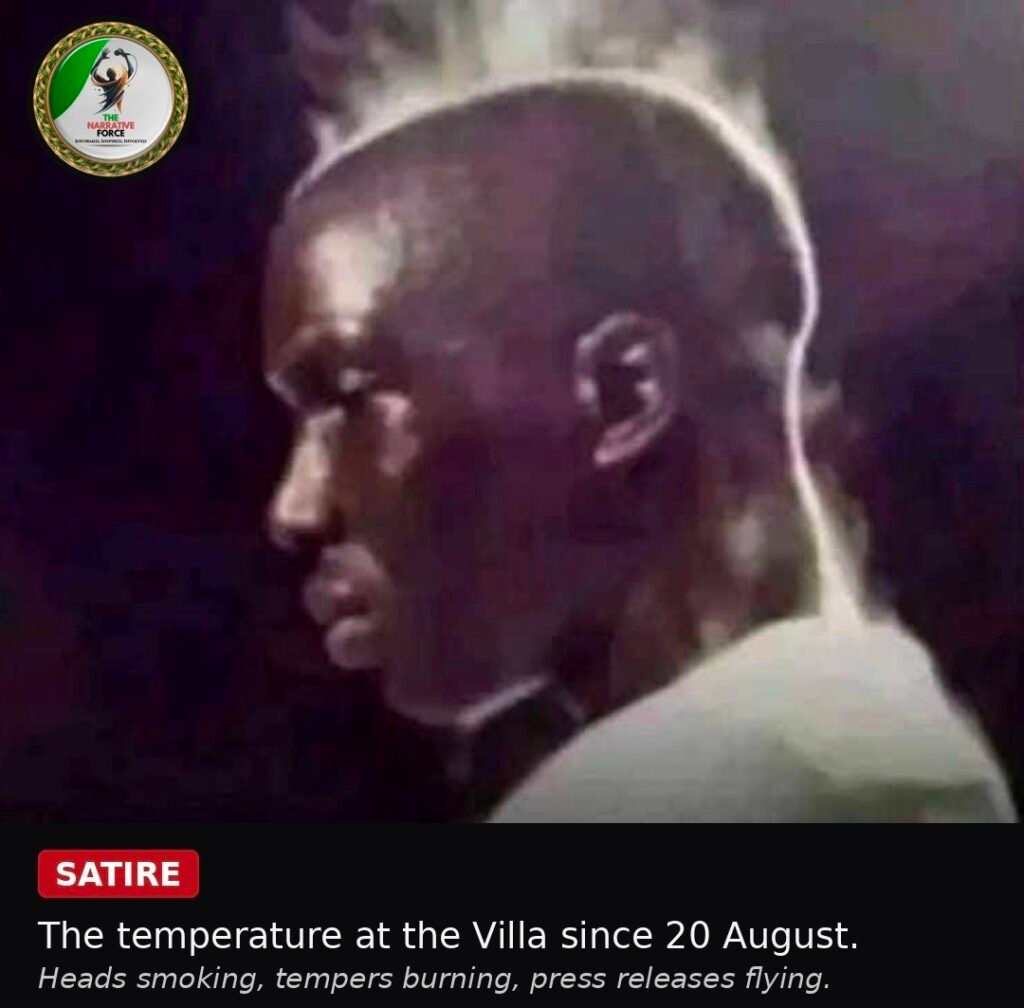
The palace jester has returned for an encore.
On 26 August 2026, Bayo Onanuga, Special Adviser to the President on Information and Strategy, issued yet another Statehouse broadside against Atiku Abubakar, accusing the ADC presidential candidate of “confusion” and a “third U-turn in one week” on petrol subsidy.
Nigerians should preserve this statement. Frame it. Teach it in schools. Because it is a rare and precious document: a press release that refutes itself, answers its own questions, convicts its own principal, and certifies, in its own words, the very credentials it set out to deny. A man paid handsomely to defend the government has instead undressed it in the public square.
Let us walk the jester through his own script.
ONE SPOKESMAN, ONE CORRECTION, ONE POSITION
The charge of “three positions in one week” dissolves the moment an adult reads it. What actually happened is this: a spokesman characterised the policy imprecisely, a senior aide corrected the characterisation within the same news cycle, and the candidate himself restated the position he first announced on 20 August, in his own voice, in the same terms.
Two aides is a staff matter. It is not a policy somersault.
Since 20 August, Atiku Abubakar has said one thing and one thing only in his own name: a targeted, capped, transparently budgeted and independently audited support for petrol, shifted from importation to production, from middlemen to Nigerian refineries, from unverifiable claims to verifiable barrels, under the Atiku Economic Recovery Plan. He said it on 20 August. He said it again this week. That is one position and one corrected paraphrase. Only in the arithmetic of Aso Rock, the same arithmetic that turned 8.7 million votes into a “landslide”, does that add up to three.
HE PRINTED THE ANSWER, THEN ASKED THE QUESTION
Onanuga demands, with theatrical exasperation, that Atiku explain “what objective economic conditions will determine its eventual termination”.
He should sue his own press release. Four paragraphs earlier, he quotes the campaign’s framework in full: the support remains until domestic refining expands, supply stabilises, competition deepens, and the market can deliver affordable prices without government intervention.
He printed the answer with his own hands, then demanded to know why no answer exists.
Those are objective economic conditions. They are measurable. They are published. The Special Adviser transcribed them faithfully and then announced to the nation that Nigerians had been told nothing. This is not spin. This is a man losing a debate against his own typing. And if this is the standard of comprehension at the Villa, much about the last 3 years suddenly becomes easier to understand.
THE BARREL THAT LEAKS ON HIS OWN DESK
For his grand finale, the jester brought a chemistry lesson. Petrol, he lectures, is only 45 per cent of the barrel. Diesel is 25 per cent. Kerosene and jet fuel are 9 per cent. There is asphalt. There are lubricants and waxes. There is, he notes gravely, petroleum coke. Will Atiku subsidise the toothbrushes too?
Grant him every percentage. The argument still drowns in its own barrel, because a targeted petrol subsidy obliges no one to subsidise anything else. That is what the word targeted means. It is in the dictionary, somewhere between “somersault” and “u-turn”, two words the Villa knows intimately.
But the barrel leaks worse than that. Who deregulated diesel? Onanuga’s own statement answers: the Obasanjo-Atiku administration, in 2004. Read that again. The Special Adviser, in the act of calling Atiku ignorant of petroleum markets, certifies that Atiku sat at the heart of the government that carried out the very deregulations he recites as gospel. He summoned a witness to convict Atiku and the witness testified for the defence.
And the sneering at “discounted crude” for refineries? Since October 2024, this same government has operated a crude for naira arrangement, selling Nigerian crude to domestic refineries on concessional naira terms, while those refineries keep the profit on every by-product in Onanuga’s list: the diesel, the jet fuel, the polymers, the asphalt, the coke. By the logic of his own statement, the accused is seated in the Villa, and the jester wrote the charge sheet.
THE SUBSIDY THEY SWORE WAS GONE
Now to the rotten heart of it. This government’s entire claim to consistency rests on one sentence, delivered off the cuff on 29 May 2023: “subsidy is gone.”
It was the shortest-lived sentence in the history of Nigerian economic policy. The IMF reported in February 2024 that subsidy had quietly returned through price caps. The government’s own ASAP fiscal report admitted 3.6 trillion naira spent on subsidy in 2023, with 5.4 trillion naira projected for 2024. After the announcement. After the applause. After Nigerians had absorbed the full shock at the pump and been told to endure it as patriotism.
They removed subsidy at a podium and restored it in the dark.
So let the record show the true sequence of somersaults. This government removed subsidy in public, paid it in private, denied paying it, was exposed by the IMF and by its own report, and now sends its Special Adviser out to lecture the nation on policy clarity. A pickpocket delivering a sermon on honesty would blush.
WHO TAUGHT WHOM ABOUT SUBSIDY
President Tinubu, on 20 August, dismissed Atiku’s proposal as “serious ignorance”. Nigerians should weigh where the serious ignorance truly sits.
Is it with the man whose administration walked petrol from 20 naira to 75 naira in about 7 measured steps between 1999 and 2007, built the PPPRA framework that managed the path, and deregulated diesel in 2004, each move taken as the economy absorbed the last?
Or is it with the man who, in January 2012, published an article denouncing subsidy removal as a “Jonathan tax” on the poor, then eleven years later executed the same removal himself, more abruptly, more completely, in a single sentence on inauguration day, then quietly paid subsidy again while denying it? When the people protested in 2012, that government at least listened and stepped back to 97 naira within a fortnight. This one called the protesters unpatriotic and the pain “temporary discomfort”, entering its fourth year.
Opposed removal in 2012. Executed it brutally in 2023. Restored it secretly in 2023 and 2024. Mocks its restoration in 2026. Four positions, one man, one Villa. If Onanuga is hunting somersaults, the Olympic gymnasium is his own office, and his principal holds the gold medal: a triple somersault with a concealed landing, scored by the judges at the IMF in February 2024.
THE FISCAL HEALTH THAT EXISTS ONLY IN PRESS RELEASES
Onanuga claims subsidy removal has “significantly restored fiscal health to the three tiers of government and stabilised the macroeconomic environment”.
His own colleague has already testified otherwise. On 30 July 2026, the Finance Minister, Taiwo Oyedele, admitted, as reported by Reuters, that the subsidy savings were absorbed by debt servicing. The same government now puts those savings at 15.8 trillion naira. Fifteen point eight trillion naira, squeezed from the pockets of the poorest people on earth, and their reward is a press release calling their hunger “temporary discomfort”. Nigerians are entitled to demand an account, kobo by kobo, because not one kobo of it reached them.
The record of this “fiscal health”: public debt up from 33.13 trillion naira in 2021 to 159.28 trillion naira by December 2025. Debt service consuming between 67 and 84 per cent of revenue by independent tracking. A 2026 deficit of 31.45 trillion naira, 6.4 per cent of GDP, smashing through the 3 per cent ceiling of the Fiscal Responsibility Act.
And the “stabilised” cost of living? By the NBS’s own count, food inflation climbed to about 40 per cent by mid 2024, the worst in the nation’s recorded history, in the direct aftermath of the removal. In June 2026 it still runs at 17.52 per cent and rising, headline inflation at 15.91 per cent, roughly 6 in 10 Nigerians in poverty by World Bank measures, and a 70,000 naira minimum wage worth about 47 dollars.
A patient in intensive care is being described to the world as an athlete.
This is the sickbed from which the Special Adviser lectures the nation on economics.
WHAT TARGETED MEANS
Onanuga asks: how much will it cost, who benefits, how is it funded, when does it end?
Every question he poses, the framework answers. Capped means the cost has a ceiling. Transparently budgeted means the figure sits in the appropriation for every Nigerian to see, unlike the opaque under-recoveries this government ran while swearing to God there were none. Independently audited means verifiable barrels, not the unverifiable import claims that made the old regime a racket. Production side means the support flows through Nigerian refineries, building the very domestic capacity Onanuga’s quoted conditions require. And it ends when those conditions are met, the conditions he personally transcribed and then pretended not to have seen.
That is not confusion. That is more clarity than this government has offered on 15.8 trillion naira of the people’s money, or on why it paid a subsidy it told the world was dead.
THE JESTER’S REAL JOB
Having lost the argument, the statement reaches for abuse: Atiku is “suffering from a lack of basic understanding”, nursing an “obsession”, peddling “destructive populism”.
Name calling is what a press release does when its arithmetic fails. And distraction is what a jester is for. When the king is naked, the jester’s job is to point at the crowd. When the treasury cannot account for 15.8 trillion naira, the jester’s job is to lecture the opposition on percentages of a barrel. There was a time Bayo Onanuga hunted power with facts. Today he serves it with percentages, and even the percentages turn on him.
The record before Nigerians is brutally simple. On one side, a candidate whose administration grew this economy from 58 billion dollars to 270 billion dollars, deregulated diesel, built the PPPRA, and now proposes a capped, audited, production side support with published exit conditions. On the other, a government that removed subsidy in a sentence, restored it in the dark, set the all-time record for food inflation, cannot account for the savings its own minister says were swallowed by debt, and sends out a jester to shout “confusion” at the one man in the race with a documented record of doing this properly.
Nigerians are not confused. They are hungry, and they are counting.
Ìgbà díẹ̀ ló kù. Lokaci kaɗan ne ya rage. Obere oge ka ọ fọdụrụ.
144 days to 16 January 2027.
Aare Amerijoye DOT.B
Director General,
The Narrative Force
thenarrativeforce.org
26 August 2026