Akin Samuel KAYODE
An Illuminating and Incisive Rebuttal to Otunba Biodun Ajiboye’s Claim on Atiku Abubakar.
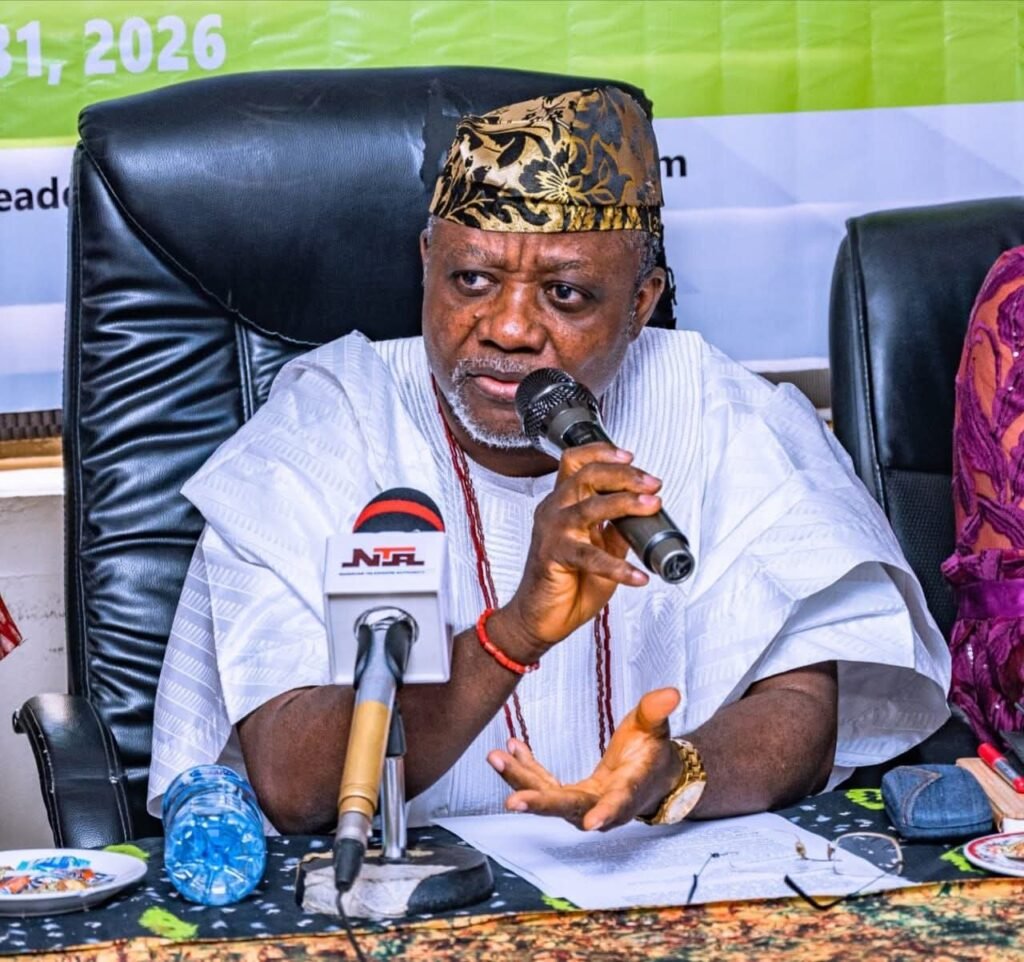
On Saturday, 29 August 2026, while appearing on The Mic On Podcast, moderated by Seun Okinbaloye, Otunba Biodun Ajiboye, Director General of the National Institute for Cultural Orientation and an APC stalwart, reportedly declared: “Atiku has no value to add to governance, he has never succeeded in winning any reasonable election. Bola Tinubu has never lost an election in his life.” The statement contains a historical error, a logical fallacy and an incomplete understanding of what constitutes political and governing competence. While political advocacy is legitimate, political arguments are strongest when they are anchored in facts rather than convenient omissions.
The historical error is straightforward: Atiku Abubakar has won elections. In 1999, he contested the Adamawa State governorship election and was declared Governor-elect. Before assuming office, however, he was approached by Olusegun Obasanjo to become his running mate in the presidential election. Atiku accepted the national assignment and relinquished the governorship. The Obasanjo/Atiku ticket subsequently won the 1999 presidential election, and the pair were re-elected in 2003. Thus, Atiku did not become Vice President because he failed to win an election; he became Vice President after winning a governorship election and subsequently joining a presidential ticket that won nationally.
That fact alone makes the assertion that Atiku has “never succeeded in winning any reasonable election” historically untenable. Atiku’s subsequent presidential defeats in 2007, 2019 and 2023 are equally part of the record and should neither be hidden nor denied. But losing presidential elections does not erase previous electoral victories, just as electoral defeat does not erase executive experience, policy knowledge or political relevance.
Tinubu’s electoral record should equally be acknowledged fairly. He won the Lagos State governorship elections in 1999 and 2003 and was declared winner of the 2023 presidential election. His political organisation, electoral resilience and capacity to build enduring political structures are legitimate strengths. There is therefore no need to diminish Tinubu’s achievements in order to defend Atiku. The stronger argument is to acknowledge the electoral record while challenging the assumption that electoral success automatically proves superior governing competence.
That assumption is the logical weakness at the heart of Ajiboye’s statement. Winning an election demonstrates the ability to secure a mandate; it does not, by itself, demonstrate the ability to govern effectively. If electoral victories were the definitive measure of governing competence, there would be little need for manifestos, policy debates, performance assessments, institutional evaluations or public accountability. We would simply count election victories and declare the politician with the longest winning streak the best leader. Governance, however, is measured by what a leader does with the authority entrusted to him.
This is particularly important when considering the assertion that Atiku has “no value to add to governance.” That is not a conclusion established by his electoral defeats. Atiku served as Vice President of Nigeria for eight years, participated in national executive and economic policymaking, and operated at the highest level of government. He has also consistently articulated positions on economic liberalisation, private sector participation, restructuring, devolution of powers and institutional reform. Those ideas can be challenged, criticised or rejected, but they cannot honestly be described as evidence of a man with nothing to contribute.
If Otunba Ajiboye believes Atiku has no governing value, then the appropriate response is to examine the substance. Which aspect of Atiku’s executive record demonstrates that he is incapable of contributing to governance? Which policy position proves that he lacks the capacity to govern? Which aspect of his economic philosophy is fundamentally deficient? Which administrative experience establishes that he has nothing useful to offer Nigeria? These questions demand evidence. “He lost elections” does not answer them.
The same standard must be applied to Tinubu. His electoral victories establish that he has demonstrated considerable political and electoral capacity. But they do not place his governance record beyond scrutiny. Nigerians did not elect a president merely to win an election; they elected a president to govern. Consequently, the serious assessment must concern the outcomes of governance: economic productivity, purchasing power, employment, security, investment, infrastructure, institutional strength, social welfare and national cohesion.
This is why the central question should not be, “Who has never lost an election?” The more consequential question is, “Who has demonstrated the stronger capacity to translate political authority into effective governance?”
Nigeria is not governed by electoral statistics. Citizens experience government through the price of food, availability of jobs, security of lives and property, access to education and healthcare, infrastructure, business conditions and the strength of public institutions. A politician’s electoral winning streak cannot substitute for measurable governance outcomes.
There is also a fundamental distinction between electoral competitiveness and governing competence. A politician may be an exceptional electoral strategist and still face legitimate questions about administration. Conversely, a politician may lose an election while possessing considerable executive experience, policy expertise and institutional knowledge. Democratic politics is not a mathematical contest in which every defeat reduces a politician’s value to zero.
Atiku’s own political history demonstrates this. He won the Adamawa governorship in 1999, became Governor-elect, relinquished that position after being selected as Obasanjo’s running mate, helped win the 1999 presidential election, served two terms as Vice President and subsequently contested the presidency several times. His record therefore contains both significant victories and significant defeats. An honest assessment must acknowledge both.
The 2023 presidential election illustrates the same point. Tinubu won the election and became President. Atiku lost. That is the democratic outcome. But Atiku nevertheless received almost seven million votes. Those votes do not make him the winner, but neither do they establish him as politically irrelevant or devoid of value. They demonstrate that millions of Nigerians considered his candidacy credible enough to support.
Political discourse becomes impoverished when it adopts the simplistic formula of “my candidate won, therefore he is competent; your candidate lost, therefore he is useless.” That is not serious democratic analysis. The proper test is comparative: examine the candidates’ records, ideas, policies, economic philosophy, institutional vision, executive experience and capacity to build a functional and cohesive Nigerian state.
Otunba Ajiboye is perfectly entitled to defend President Tinubu and promote the APC. Political advocacy is part of democracy. But partisan loyalty should not require historical revision, and political disagreement should not be presented as established fact. Tinubu’s electoral achievements are facts. Atiku’s electoral achievements are also facts. Tinubu’s political organisational strength is a fact. Atiku’s eight years as Vice President are also a fact. Atiku’s presidential defeats are facts. None of these facts, standing alone, answers the larger question of who is better equipped to govern Nigeria.
The more meaningful debate, therefore, should address substance. Who has the stronger economic vision? Who offers the more credible strategy for creating productive employment? Who has the clearer understanding of Nigeria’s federal structure? Who offers stronger institutional reforms? Who can attract and retain productive investment? Who can strengthen national security and social cohesion? Who has the more convincing roadmap for improving the material conditions of Nigerians?
Those are governance questions. And those are the questions by which every political leader should be judged.
It is therefore entirely legitimate to argue that Tinubu is a better candidate than Atiku. What is not intellectually defensible is to suggest that Atiku’s presidential defeats prove that he has no value to add to governance. That conclusion simply does not follow from the evidence.
Indeed, the historical record tells a different story. Atiku won the Adamawa governorship election in 1999. He became Governor-elect. He was subsequently selected by Obasanjo as his running mate. The ticket won the presidential election, and Atiku served as Vice President for two terms. He later lost presidential contests, but those defeats did not erase the offices he had previously won or the executive experience he acquired.
The argument should therefore be brought back to where it belongs: performance, competence, policy and vision.
If Tinubu’s supporters believe his record demonstrates superior governing capacity, let that case be made on the strength of his policies and outcomes.
If Atiku’s critics believe he has nothing to offer Nigeria, let them demonstrate it by interrogating his ideas and executive record rather than simply pointing to elections he lost.
Because the standard for leadership cannot be reduced to an unbeaten electoral record.
Winning an election proves that a politician can win an election. It does not prove that he can govern better than everyone else.
Atiku’s defeats are part of his history, but so are his victories. Tinubu’s victories are part of his history, but they are not a substitute for performance assessment.
In the final analysis, the ballot box determines who receives the mandate; governance determines what that mandate is worth.
That is the standard by which Tinubu should be judged. It is also the standard by which Atiku should be judged.
And that is a far more serious, factual and intellectually honest debate than simply declaring one man a winner and the other a man of “no value”.
Akin Samuel KAYODE.
Member, The Narrative Force.
@all