PART 5 OF 50: THE SOUND OF A PADLOCK CLOSING
By Aare Amerijoye DOT.B
Click.
That is the sound.
You have heard it, even if you did not know what it meant. It is the sound of a padlock closing on a Nigerian business for the last time.
Click. A bakery in Ibadan, where the generator now drinks more money than the bread earns.
Click. A shoemaker’s workshop in Aba, where a man who once trained eleven apprentices now sits alone among unsold shoes.
Click. A provision store in Jos. A barbing salon in Benin. A welding shed in Gombe. A tailoring shop in Sokoto. A business centre in Owerri.
Click. Click. Click.
All across Nigeria, every evening, the sound repeats. No minister cuts a ribbon when a small business dies. No press release is issued. No flag flies at half mast. The owner simply locks the door, hands the key to the landlord, sends the apprentices home and walks away from the work of a lifetime.
And every click is a family that has lost its bread, a young person who has lost a job and a street that has gone a little darker.
Small businesses do not die of old age in Nigeria. They are murdered by cost.
THE BACKBONE IS BREAKING
Do not let anyone tell you small businesses are a small matter.
The trader, the artisan, the mechanic, the hairdresser, the food seller, the carpenter, the printer, the pharmacist and the market woman are the great employer of Nigeria. They employ the great majority of working Nigerians. They train our apprentices. They feed our families. They keep our markets breathing.
Oil money flows to a few. Small business money flows to everybody.
When they prosper, Nigeria prospers from the ground up. When they die, no amount of crude oil can bring them back.
Today, the backbone of this nation is breaking. And you can hear it breaking, one padlock at a time.
THE FIVE KILLERS
Walk into any market in Nigeria and ask what is killing business. You will hear the same five killers, in Hausa, Igbo, Yoruba, Pidgin and a hundred other tongues.
The first killer is power. The grid fails, so the generator must roar all day, and diesel has become liquid gold. Those still on the grid are handed estimated bills for light they never saw.
The second killer is transport. Every bag of flour, every roll of fabric, every carton of stock rides to the shop on a lorry or a bus, and transport costs have exploded.
The third killer is money. Loans, where they exist at all, carry interest that would choke a giant, let alone a kiosk.
The fourth killer is inputs. Raw materials and spare parts, so many of them imported, have soared as the naira has fallen.
The fifth killer is closed markets. Honest traders who once sold Nigerian goods into Benin, Niger, Chad and Cameroon have watched those routes strangled.
Five killers. Every one of them made worse, not better, in the last three years.
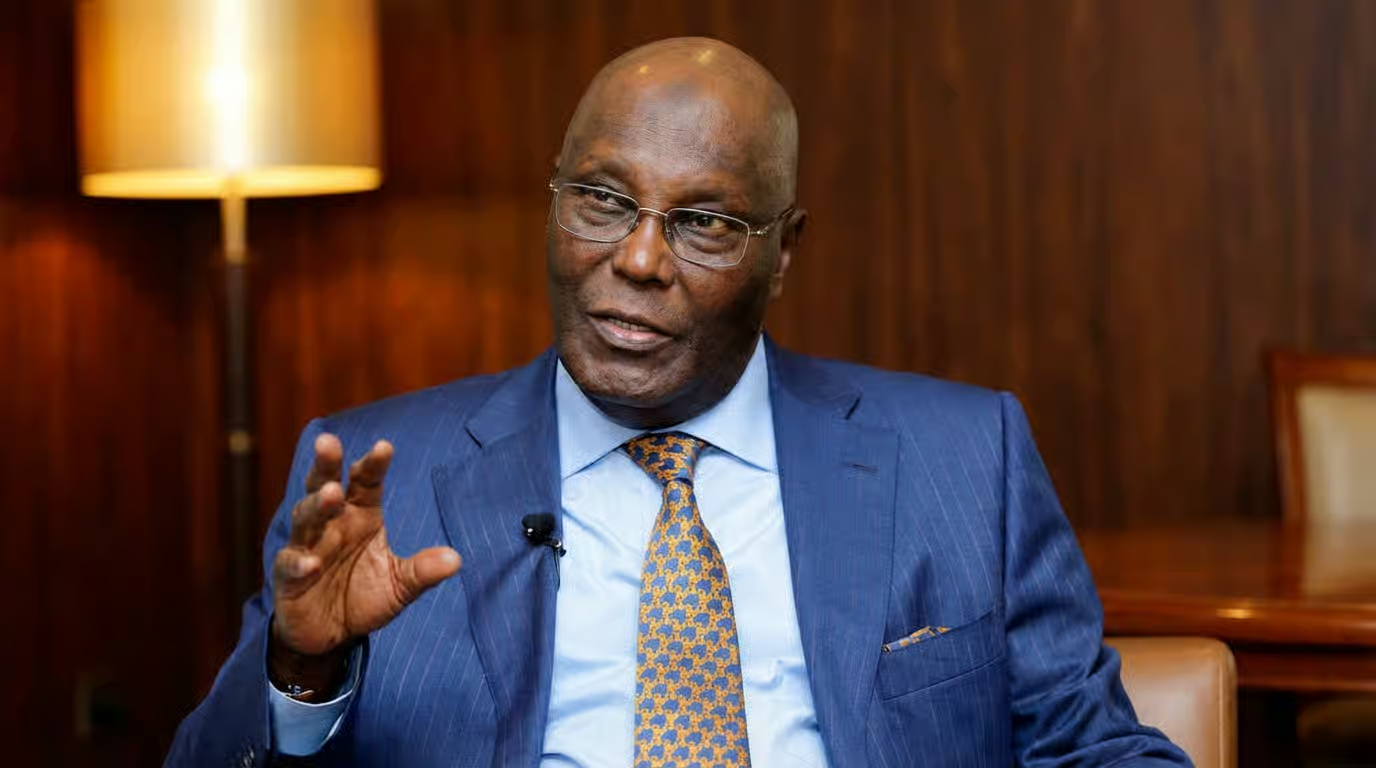
Atiku named the crime in one sentence on 7 October 2026: “He has made production expensive and called the resulting hardship reform.”
Read it again. That sentence is the death certificate of thousands of Nigerian businesses.
ATIKU’S ANSWER: KILL THE KILLERS
Atiku does not offer the dying shop a handout. He offers it something far more powerful: a government that removes, one by one, the costs that are killing it.
His 12 Point Agenda to Rescue, Revive and Restore Nigeria goes after every one of the five killers.
Killer one, power. Point 6 commits to power sector reform that ends discriminatory billing and makes electricity affordable. His target is to raise generation to 20 million kilowatts. For the baker, the welder, the barber and the cold room owner, that is the difference between a padlock and a profit.
Killer two, transport. Point 1 commits to a capped production subsidy on petroleum products refined in Nigeria, to reduce transport costs. Cheaper diesel means cheaper deliveries, cheaper stock and a generator that stops eating the profit.
Killer three, money. Point 7 commits to a 10 billion dollar Youth and Women Fund for startups, entrepreneurship and inclusion. For the market woman and the young entrepreneur who have never seen a bank loan, it is the capital that has always been just out of reach.
Killer four, inputs. Point 4 commits to reviving the Eastern ports of Port Harcourt, Calabar and Warri and the Uyo Deep Sea Port. More working ports mean faster clearing, less congestion and cheaper raw materials reaching the workshop.
Killer five, closed markets. Point 5 commits to reopening the land borders and reviving legal cross-border business. The trader at Seme, Illela, Jibia and Mfum will once again sell Nigerian goods to West Africa, legally, openly and at a profit.
And there is more. Point 11 commits to audited contracts and published procurement, so that the small contractor competes on merit instead of losing to the well connected.
Five killers. Five answers. One plan.
Remove the costs, and the padlocks come off.
A GOVERNMENT THAT CLEARS THE ROAD
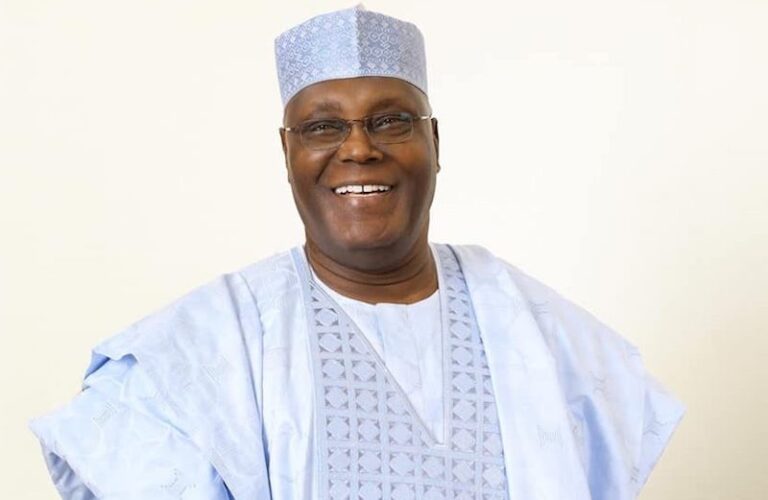
At his ADC screening on 20 May 2026, Atiku laid out the principles behind it all: job creation, private sector expansion, fiscal discipline, macroeconomic stability and restored investor confidence.
Put that in the language of the market and it means this. Government’s job is to clear the road, not to block it. Keep the currency steady so the trader can plan for next month. Spend public money with discipline so that government stops chasing every naira out of the pockets of the people it is meant to serve. Then step aside and let Nigerians do what they do best: work, build, trade and win.
This is not a conversion for an election season. For years his policy documents have named micro, small and medium enterprises, alongside farming and manufacturing, as the engines that must free Nigeria from its dependence on oil. The 2027 agenda turns that conviction into measures with targets.
HE HAS SEEN THIS MIRACLE BEFORE
Atiku has watched small businesses explode across Nigeria, because he helped create the conditions for it.
In 2001, under the administration in which he served as Vice President, the GSM licences were auctioned. Overnight, a whole economy sprang up around them: recharge card sellers on every corner, phone repairers under every umbrella, accessory shops, call centres and business centres on every street. Millions of Nigerians built livelihoods on that single reform.
In the same era, 89 weak banks were consolidated into 25 strong ones, building a banking system with the muscle to lend.
That is what happens when government gets the conditions right. You do not need to beg businesses to grow. Lift the weight off their backs, and they will rise on their own.
He has seen small businesses flourish when the conditions were right. He knows how to make them right again.
TO THE SHOEMAKER IN ABA
To the shoemaker in Aba who sent his apprentices home. To the baker in Ibadan who now bakes only twice a week. To the trader in Kano whose stock gathers dust because her customers cannot afford it. To the mechanic in Warri, the hairdresser in Calabar, the printer in Ilorin and the cold room owner in Lafia.
Hear this. You were not defeated by laziness. You were not defeated by bad luck. You were defeated by cost, and cost is a choice made by government. A different government can make a different choice.
So do not keep this article to yourself. Carry it into your market association, your traders’ union, your artisans’ guild, your cooperative, your church and your mosque. Read it aloud to the shop owner next door. Sit down with the trader who has just locked her stall, ask her which of the five killers took her business, and show her the point in Atiku’s agenda that answers it. The men who made production expensive have money for propaganda. We have the truth of every shuttered shop in Nigeria, and we have each other.
Then turn that truth into votes.
Collect your PVC if it is ready, and keep checking with INEC until it is. Bring your apprentices, your customers, your suppliers and your neighbours. On Saturday, 16 January 2027, go early, vote, stay and guard your vote until the result is pasted.
They locked your shop with their policies.
You will unlock it with your thumb.
Vote Atiku. Vote Amaechi. Vote ADC.
Next: Part 6, Out-of-school children.
#Atiku2027 #AtikuAmaechi2027 #AtikusAnswers #VoteADC
Aare Amerijoye DOT.B
Director General,
The Narrative Force
thenarrativeforce.org
20 October 2026