A man prepared for this moment, at the hour Nigeria needs him most
Aare Amerijoye DOT.B
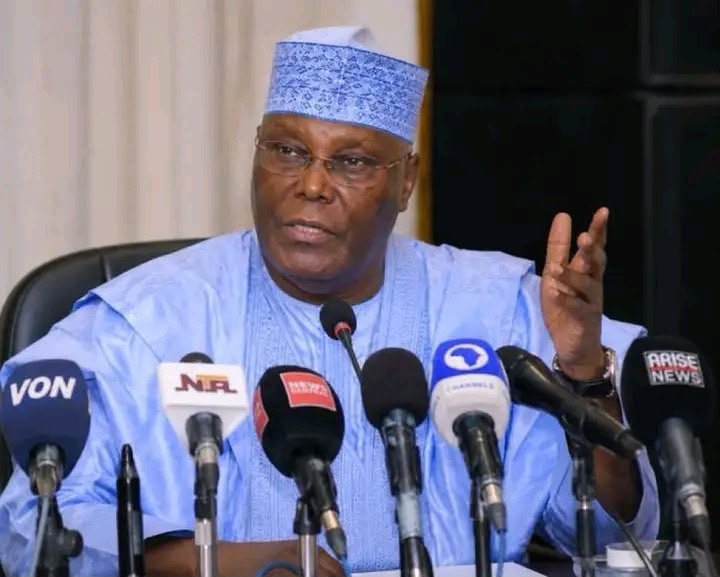
The story of Atiku Abubakar’s long road to the Presidency is not the story of a man who would not stop. It is the story of a preparation meeting its appointed hour. Six times he has offered himself to this nation. Six times the door seemed to close. Yet destiny does not abandon the patient, and faith does not fail the faithful. With official campaigns now open and the nation set to vote on 16 January 2027, the man and the moment have finally arrived together.
Atiku is often described in the language of business: the entrepreneur, the investor, the builder of enterprises that employ many Nigerians across Adamawa, the Niger Delta and beyond. All of this is true. But it undersells him. What Nigeria confronts today is not a problem of ambition. It is a problem of competence, of a steady hand that understands how wealth is created, how jobs are made, and how a broken economy is nursed back to health. Where others promised prosperity, he has spent decades producing it.
That is why his emergence as the flagbearer of the African Democratic Congress carries a weight beyond one man’s ambition. The ADC today is not a party alone; it is a coalition, a gathering of Nigeria’s most serious political minds and constituencies under one roof, resolved to rescue a country that has been consigned to intensive care. With Atiku at the head of that coalition and a formidable ticket behind him, the opposition has stopped debating whether it can win and begun the harder work of how.
Nigerians do not need to be told what these last years have cost them. They feel it every morning, in the price of a bag of rice and a litre of fuel, in transport fares that swallow a day’s wages, in the market woman who now counts her losses instead of her gains. Consider only the naira. The currency that once stood at a few hundred to the dollar now trades above ₦1,300, having shed roughly seventy per cent of its value since this administration floated it in 2023. Whatever modest recovery the government now parades claws back only a sliver of what families have already lost, and the dollar still costs nearly three times what it did the day these men took office. This is not the price of reform. It is the price of Nigerians being made to pay for other people’s experiments.
And still the suffering deepens. Even as the government celebrates its figures, the World Bank records that an additional ten million Nigerians fell into extreme poverty in 2025, pushing more than half the country below the poverty line. A nation once called the giant of Africa is now spoken of, without irony, as a capital of poverty. Add the insecurity that has turned ordinary journeys into acts of courage, and the picture is complete. The Renewed Hope that was sold to Nigerians has renewed only their hardship.
There is, too, the question of integrity, and here Atiku has refused to look away. He has taken a formal challenge to the President’s credentials to the Federal High Court, deposing to the affidavit himself rather than leaving it to others. And he wants one thing understood: these questions have never actually been answered. When he brought the Chicago State University records forward in 2023, no court ever weighed whether they proved forgery. The evidence was shut out on a technicality, because the time allowed for election petitions had run and the point had not been pleaded early enough. The substance was never examined. That is precisely why he has returned, this time by the proper route and at the proper court, asking not for a verdict in the court of opinion but for the institutions holding the records to produce them and for the judiciary to rule, at last, on the merits. A leadership with nothing to hide has nothing to fear from that.
Atiku’s answer to the wider crisis is not a slogan but a record and a plan. He knows how to fight corruption because he has done it from within: the administration in which he served as Vice President established the Economic and Financial Crimes Commission, the institution that remains Nigeria’s frontline against graft to this day. He has promised that a government he leads will pursue corruption to the fullest, without the selective sight that spares friends and hunts only rivals. On the economy, his plan is to open the country to enterprise and investment, to unleash a private sector that can create the jobs a bloated and bankrupt state cannot, and to restore security so that farmers can return to their farms and children to their schools.
And he has never forgotten the young. As Vice President he opened the doors of government to a generation of young Nigerians, many of whom went on to become governors, ministers and directors in their own right. He has pledged that under his presidency that door stays open, that youth will not be told to wait their turn while the country ages around them. This is the difference between a leader who fears the next generation and one who builds it.
So we return to where we began, to destiny. Not as superstition, but as the conviction that a life shaped by service, resilience and faith is not shaped by accident. Atiku Abubakar has been prepared, tested and preserved for such a time as this. The seasons that seemed to deny him were only readying him for the one that will not.
The time is now. The season of complaint is over and the season of reclamation has begun. Let us support Atiku Abubakar, and let us carry this coalition to the victory that history and this suffering nation both demand.
Aare Amerijoye DOT.B
Director General
The Narrative Force