Aare Amerijoye DOT.B
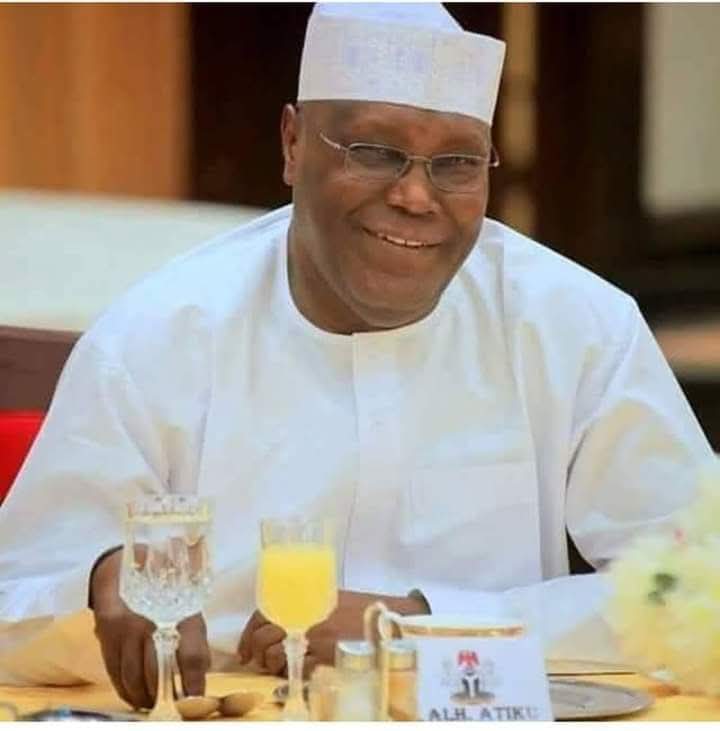
The Man
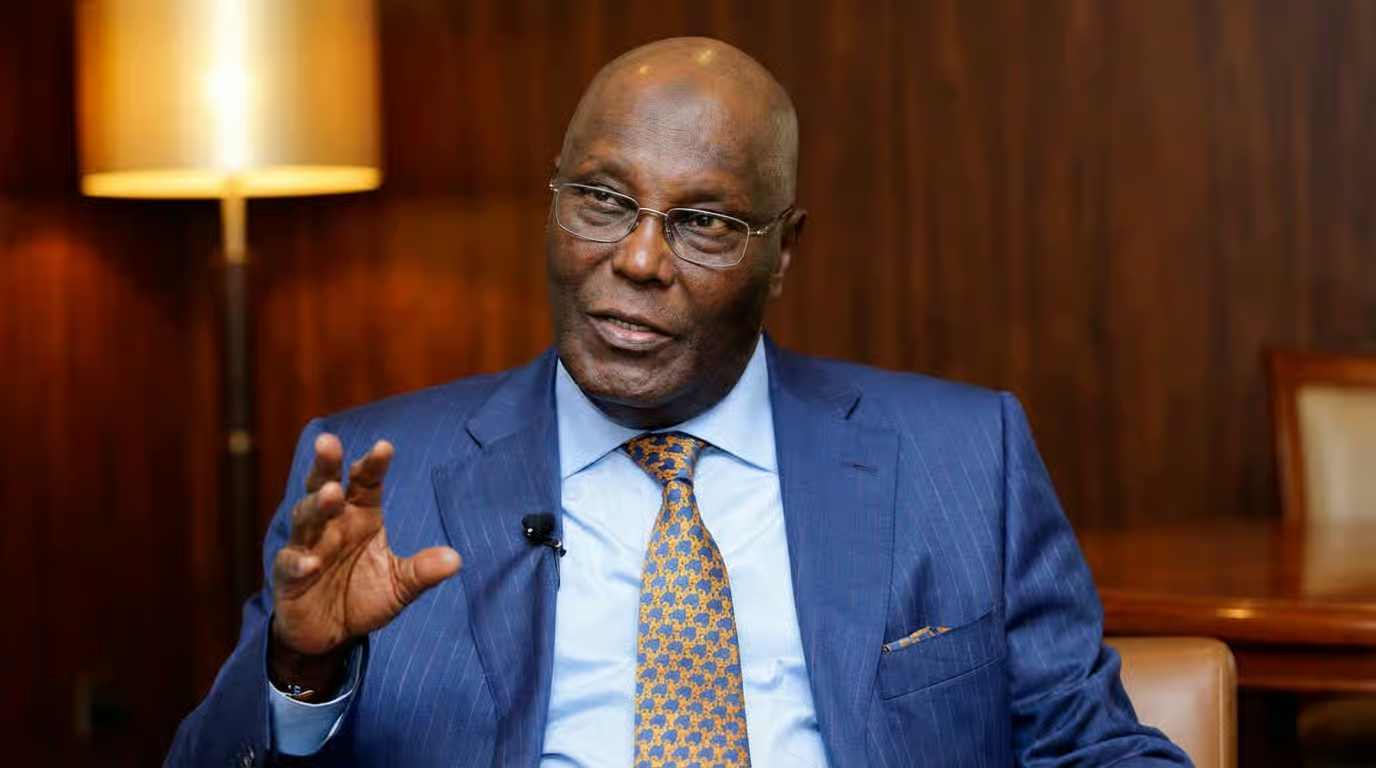
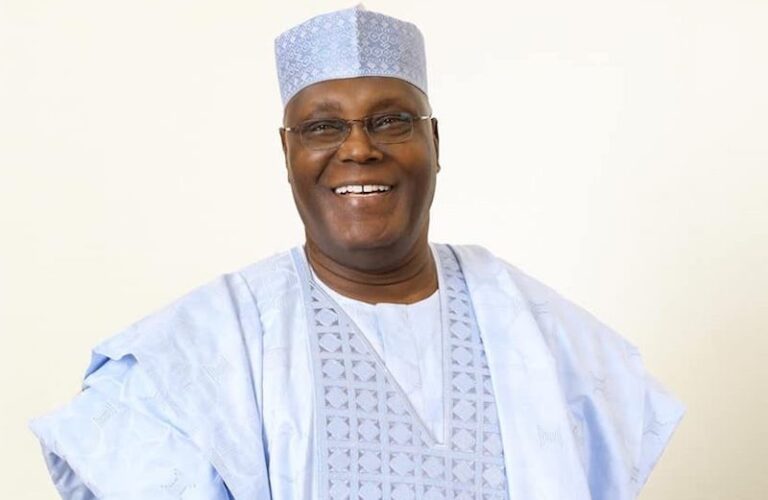
There are politicians. There are statesmen. And then, once in the long and turbulent life of a nation, there arrives a figure who is neither adequately described by the first word nor fully contained by the second. Atiku Abubakar is that figure for Nigeria.
He is the only man alive who has served as Vice President of the Federal Republic and governed with a competence that the passage of time has only validated. He is the only man in Nigerian presidential history who has contested the presidency with an unbroken consistency of purpose across multiple election cycles and emerged from each contest not diminished, not broken, not bitter, but more determined and more organised than before. Where other men retreat from repeated adversity, Atiku advances. That is not stubbornness. That is the temperament of destiny.
He is among the most consequential private sector creators of employment in Nigeria’s post-military democratic era. The Intels empire ,which at its height employed tens of thousands of Nigerians in the oil and gas logistics sector , the American University of Nigeria, and the vast commercial architecture he built across decades are not the biography of a man who merely speaks about economic development. They are the biography of a man who has practised it, funded it, and delivered it at scale. When Atiku speaks about rescuing Nigeria’s economy, he is not reading from a briefing note. He is reading from a life.
He is the most geographically networked presidential candidate in Nigerian history. Across every demographic, every region, every cultural and religious dividing line that lesser politicians have used to fracture rather than unite, Atiku has relationships. Real relationships. Earned relationships. Relationships that have survived decades, defections, defeats, and the full corrosive force of Nigerian political warfare.
He is, without equivocation and without apology, the most prepared, the most persistent, and the most credentialed man ever to seek the Nigerian presidency. And in the ruins of what Tinubu’s administration has made of Nigeria, preparation and credibility are not luxuries. They are emergency requirements.
The Chances
To speak of Atiku’s 2027 chances is not to engage in hope. It is to engage in honest political analysis. And that analysis, conducted without sentiment and without prejudice, produces one conclusion: Atiku Abubakar is the overwhelming favourite to become the next President of the Federal Republic of Nigeria.
The incumbent, Bola Tinubu, goes into 2027 carrying the heaviest political liability any sitting Nigerian president has carried into a re-election campaign in the democratic era. His economic record is a catastrophe that touches every Nigerian household. The naira has been devastated. The cost of food, transportation, energy, and basic survival has multiplied beyond the endurance of ordinary Nigerians. The youth — the largest and most vocal segment of the electorate — are leaving the country in what migration researchers and international observers have increasingly documented as an unprecedented wave of skilled emigration from Nigeria, the largest and most sustained in the country’s post-independence history. Those who remain are not passive. They are volcanic. And volcanoes, in electoral politics, erupt at the ballot box.
Tinubu won 2023 with a thin plurality in a fragmented three-way race. He goes into 2027 without the shelter of that fragmentation, on an economic record his own supporters struggle to defend, and against a candidate whose coalition is consolidating rather than fracturing with every passing month.
Against that backdrop, examine what Atiku commands. He commands thirty years of Northern relationships that have survived every structural stress test the critics have thrown at them. He commands a coalition of regional heavyweights — Rotimi Amaechi’s South South capital, Nasir El-Rufai’s Northwest standing, Rauf Aregbesola’s Osun base, Aminu Tambuwal’s Sokoto networks and national legislative authority, David Mark’s national convening experience, and the South East credibility of Emeka Ihedioha , all consolidated under the ADC presidential umbrella not as transactional alliances but as a convergence of men who have independently concluded that Atiku is the most viable answer to Nigeria’s current agony.
The departures of Obi and Kwankwaso to the NDC do not weaken this coalition. They clarify it. What remains is not a coalition of convenience. It is a coalition of conviction. The NDC, for all the noise surrounding its formation, is more accurately understood as a spoiler vehicle than a governing alternative. It does not have the financial architecture, the cross-regional penetration, or the thirty-year relationship capital to threaten the ADC at the level of presidential arithmetic. What it can attempt is fragmentation, the same fragmentation that delivered Tinubu a thin plurality in 2023. But 2027 is structurally different. The anti-incumbent fury is far more concentrated, far more organised, and far more purposefully directed than the protest energy of 2023 was.
Two Voting Cultures: Why This Matters for 2027
To understand the full electoral architecture of 2027, one must first understand a foundational truth about Nigerian voting behaviour that analysts too frequently collapse into a single framework: the North, the South East, and the South West do not vote by the same logic, and treating them as if they do produces a fatally distorted electoral map.
Northern presidential voting is personality driven. It is the product of personal relationships, kinship networks, religious trust, and a form of political loyalty that attaches to a man rather than a manifesto. Buhari proved it across four parties. Kwankwaso ,whose political influence in Kano is substantial and should not be casually dismissed ,proved that a strong regional godfather can command a significant bloc. But Atiku’s relationships in Kano are not Kwankwaso’s to own or transfer. They predate Kwankwaso’s political ascendancy, they run through the business community, the traditional institutions, and the religious networks that no single political godfather controls, and they were demonstrated in Atiku’s 2023 performance across APC-governed Northern states where he drew votes against every structural disadvantage. When the North votes for a man, it votes for the man it trusts most. That man, across thirty years of tested and retested political relationships, remains Atiku Abubakar.
The South East operates by an entirely different logic. South East voting is ethnicity and region driven , shaped by historical marginalisation, the Igbo question of federal belonging, and an acute sensitivity to which candidate offers the most credible promise of South East inclusion at the apex of national power. Peter Obi’s 2023 performance was not, at its core, a Peter Obi phenomenon. It was a South East solidarity phenomenon. The votes went to Obi the Igbo son, Obi the symbol of South East aspiration — not to Obi the individual. That is why, when Obi moves to the NDC, he does not automatically carry those votes with him. The question the South East is asking in 2027 is not “where is Peter Obi?” It is “which presidential arrangement best serves South East interests?”
The ADC’s answer to that question begins with Emeka Ihedioha, a former Governor of Imo State whose tenure, though truncated by a controversial Supreme Court ruling that many constitutional scholars and Igbo voices regard as a profound injustice, only deepened his standing as a man wronged by the same federal power structures the South East has long challenged. His alignment with the ADC coalition sends a signal that the Igbo question has not merely been acknowledged but enlisted with an Igbo face and Igbo moral authority that no external advocacy can replicate. If the ADC ticket further addresses the question through a South East running mate or a compelling framework of South East inclusion, the region’s electoral logic works powerfully in Atiku’s favour.
Then there is the South West, where the electoral calculus is altogether different. The Yoruba political mind is neither a prisoner of personality nor a captive of ethnic solidarity. It is, at its most admirable, a principled and governance-conscious mind shaped by centuries of organised political thought and a deep conviction that leadership must justify itself by what it delivers to the people it governs. The Yoruba measure governance. They ask the questions all democracies ought to ask: Is the common man better or worse? Is Yorubaland seen and served at the centre of power? Sentiment informs their politics, but principle disciplines it.
It would be intellectually dishonest to pretend that no segment of Yoruba political opinion holds the view that a Yoruba president must be supported through his first term as a matter of regional solidarity and historical pride. That sentiment exists, and it deserves acknowledgement. But it is being eroded daily — not by opposition propaganda, not by Atiku’s campaign, but by the lived experience of ordinary Yoruba people under the very administration that sentiment is being invoked to protect. When the price of garri and the cost of kerosene become the daily argument, ethnic solidarity struggles to survive the morning market. The Yoruba political tradition, at its most principled, has never allowed sentiment to override consequence for long.
That is why, from the recording studios of Lagos to the stages of Ibadan and Osogbo, a cultural reckoning is now visibly underway. Yoruba musicians , whose art has always served as the most honest conscience of their society , are giving voice to the anguish of a people who feel that an Omo Ilu Eko in Aso Rock has not translated into relief for the common man. Commentators and cultural voices who once celebrated that historic moment are now writing with the frank and principled disappointment of people who hold leadership to account regardless of where it comes from. When Yoruba popular culture speaks truth to power, history shows that the electorate eventually follows. The 2027 South West therefore opens a window that was firmly shut in 2023 , not as an established certainty, but as a genuine and growing political opportunity that a serious, people-centred campaign can convert into decisive electoral gains.
The Votes That Follow the Man
Obi’s exit from the ADC does not transport his 2023 voter base to the NDC. Votes are not luggage that candidates carry across platforms at will. The Labour Party voters of 2023 were animated by a hunger for economic relief and political inclusion. That protest energy in 2027 has a new and far more legitimate target: the man sitting in Aso Rock whose policies have produced the economic catastrophe those same voters are now living through. The relevant symbol of the failed order is no longer an opposition candidate. It is the incumbent. Atiku, prosecuting a campaign of economic rescue and democratic restoration, is positioned not as continuity but as the most credible instrument of the change Nigerians are now demanding with their feet and their fury.
He commands the Nigerian youth in a way that no 2023 analysis predicted. The youth who were seduced by novelty in 2023 have now experienced the consequences in their pockets, their plates, and the paralysis of their futures. Their anger will not be directed at the man they associate with competence and economic experience. It will be directed squarely at the man they hold responsible for their suffering.
He commands, through The Narrative Force, a national media architecture occupying the information space with a consistency and strategic coherence that no competing political communications operation has matched ,active across all thirty-six states and the FCT, prosecuting daily, structured, ideologically coherent media operations across every platform and in every language that Nigerian political discourse operates in.
2027: The Convergence That No Legitimate Force Can Stop
The conditions for an Atiku presidency in 2027 are more favourable than they have been at any point in his political career. The economy has destroyed the incumbent’s case for re-election. The coalition, recalibrated and resolute, is more ideologically coherent than it has ever been. The youth energy is more intensely and purposefully directed than it has ever been. And the man himself ,seasoned by every defeat, sharpened by every adversity, tempered by every storm , is more prepared, more focused, and more strategically positioned than he has ever been in his long and consequential political life.
Atiku Abubakar does not merely have a chance of winning the 2027 Nigerian presidential election. He is, on the weight of every structural, historical, demographic, economic, and political variable available to honest analysis, the most likely man to win it. Not one of the contenders. Not a strong challenger. The most likely winner.
Nigeria on January 16, 2027 will not be voting for a party. Nigeria on January 16, 2027 will not be voting for a region. Nigeria on January 16, 2027 will be voting for relief, for rescue, for the reversal of an economic calamity that has ground its people into a poverty that independence was supposed to have made impossible. And when that nation stands at the ballot box, searching for the face of competence, the architecture of experience, and the credibility of a man who has spent thirty years building the relationships and developing the capacity to lead it out, there is only one face that answers every question that moment demands.
That face belongs to Atiku Abubakar. The most qualified. The most connected. The most resilient. The most prepared. And on January 16, 2027, the most inevitable.
Aare Amerijoye DOT.B, Director General,
The Narrative Force, thenarrativeforce.org
May 23, 2026