Aare Amerijoye DOT.B
Sixty six years ago today, Nigeria was handed a flag, an anthem and a promise.
The flag still flies. The anthem is still sung. The promise now belongs to whoever turns up on 16 January 2027.
That is the whole of this article. Everything after this line is evidence.
THE MOST OBEDIENT PEOPLE ON EARTH
Political science draws a hard line between two kinds of citizen. There is “passive” participation, where a citizen obeys the laws of the state and pays his taxes so as not to offend the state. And there is “active” participation, where a citizen believes in his own ability to influence decision making, and acts on it.
By that measure, the Nigerian of 2026 is the most passive citizen on the face of the earth. Not by temperament. By exhaustion.
He paid when petrol left the pump at one price and came back at several times that price. He paid when the naira melted in his pocket. He paid school fees with borrowed money and hospital bills with prayer. He obeyed, he adjusted, he endured.
But paying is not participating. Enduring is not participating. Adjusting is not participating.
A government can live for years on the obedience of a hungry people. It cannot survive their arrival at the polling unit.
THE ORDINARY MAN IS POLITICALLY RELEVANT
Gabriel Almond and Sidney Verba, in their classic study The Civic Culture, advanced a thesis often summarised in one sentence: “the ordinary man is politically relevant.” He ought to be an involved participant in the political system.
Ideally, that is true. In practice, across Nigeria, the reverse has become the case. The ordinary man has been made irrelevant by design of circumstance, and he has begun to believe it himself.
The numbers prove it. In 2023, about 93.4 million Nigerians held voter registration. About 24.9 million voted. Turnout stood near 27 per cent, the lowest since the return of democracy in 1999.
The man declared winner was returned with 8,794,726 votes. That is fewer than 1 in every 10 registered Nigerians.
Read it again. Nine out of every ten registered citizens did not vote for this government. And for three years that government has decided the price of their fuel, their food, their fares and their future.
A presidency declared on the votes of the few is a standing invitation to the many.
THE POOR ARE NOT APATHETIC. THEY ARE PRICED OUT
The study of participation sorts its causes into a “Social Dimension” and a “Personal Dimension”. At the head of the social dimension sits “social class”.
Robert Lane, in Political Life, measured class by “objective criteria (such as income, occupation and education) plus a network of social relations, plus a person’s conception of his own place in society.”
Mark that last phrase. A person’s conception of his own place in society. Three years of hardship have not only emptied Nigerian pockets. They have shrunk Nigerian self belief. The citizen now sees his place as the queue, not the ballot.
The same studies are blunt about money. People with higher incomes are “in a better position to take active part in politics”: they vote, sponsor favourite candidates and finance their parties. The man without money is too busy surviving to be a citizen.
Every family pushed below the line is a family pushed out of the public square. A hungry man is a quiet man. A quiet people is the easiest people on earth to govern badly.
That is why this election cannot be left to those who can afford politics. It must be taken by those who can no longer afford to stay out of it.
THE STRANGER IN HIS OWN COUNTRY
Among the “socio-demographic” factors, the literature records a peculiarly Nigerian disease. A citizen goes passive because the leader does not “come from” his ethnic group, and therefore, he reasons, the leader requires no respect or obligation from him.
The cure for that disease is not a president from your village. It is a federation in which your state controls enough of its own destiny that no man in Abuja can starve it for belonging to the wrong tribe.
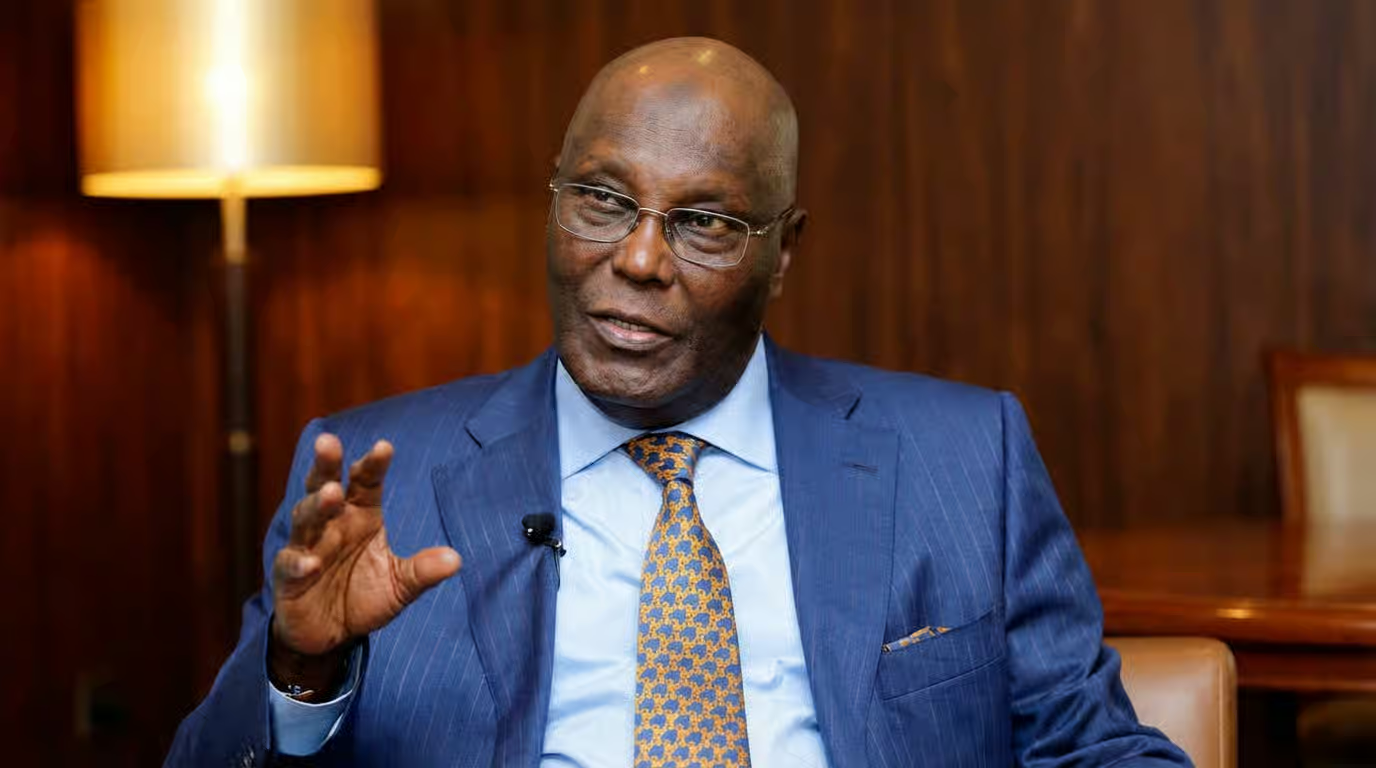
That is restructuring. Atiku Abubakar has preached it as a settled creed for years, long before it became fashionable: strong states empowered to compete and reach their full potential, a lean centre for defence, foreign affairs and money, and the constitutional route to get there.
A man who has stood down for others three times in thirty three years, each time for the stronger position and before the contest was decided, does not see Nigeria as spoils. He sees it as a partnership.
Restructuring is how a Nigerian stops feeling like a tenant in his own house.
THE WOMAN, THE FARMER AND THE YOUNG
The same scholarship noted that women’s participation rises as education spreads, moving from the old notion that “woman’s place is in the home” to an “active, interested and involved” woman in public life. The market woman who has watched her capital vanish in three years has received her education. Now let her vote with it.
It also observed that participation runs higher in “industrial, urban areas” than in rural ones. That is precisely why the rural vote has been taken for granted. The farmer in Benue who cannot reach his farm, the herder in Zamfara who has lost his herd, the cocoa grower in Ekiti watching fertiliser prices: these are not spectators. They are the majority.
And the young must hear this plainly. Some say participation peaks in “the mid forties”. Nigeria cannot wait that long. Atiku built his first house in his twenties, from enterprise and not from inheritance. The youth of this country know exactly what it is to fend for oneself. The question is whether they will do it for one day at the ballot box.
THE DINNER TABLE IS A POLLING UNIT
Here is a finding every parent should hear. Children from families which are politically active are more inclined to participate as they grow older than children from “politically indifferent families”. Where politics only causes quarrels at home, the child learns to avoid it.
So the battle for 2027 is not only in Abuja. It is at your dinner table tonight.
Tell your children why the transport fare doubled. Tell them who sets the price of fuel. Tell them that the card in the drawer is worth more than the complaint on the lips. A generation that learns politics at home will not be bought at the polling unit.
THE MARKET, THE MOTOR PARK AND THE MOSQUE
The scholars distinguish the “involuntary” association, the family, into which you are born, from the “voluntary” association, which you join by consent: the union, the trade body, the congregation.
Voluntary associations, they found, “necessarily stimulate the political awareness, sensitivity and activity of members”. Members act when they feel the group’s goals are of relevance to their “own personal betterment”.
Nigeria is thick with such bodies. The market women’s association. The okada and keke riders. The artisans’ unions. The farmers’ cooperatives. The church fellowship and the mosque society. The age grade and the alumni group.
Every one of them is a polling unit waiting to be organised. The Narrative Force has done the arithmetic: roughly 100 verified votes per polling unit across the federation, and the ADC candidate reaches 20 million. That is not a dream. It is a membership drive.
POLITICS MUST MEAN SOMETHING ON MONDAY MORNING
Under the “Personal Dimension”, the finding is the simplest of all. Citizens take part when they derive personal benefit of an economic, social or intellectual nature, and when they feel politics is “sufficiently meaningful in their daily lives”.
This is where the ADC candidate has done what no other candidate has done. He has made 16 January about Monday morning.
He has named welfare and security as his two priorities and called welfare the fundamental duty of government. He has traced the chain every Nigerian lives: fuel drives transport, transport drives food, food drives survival. And he has told Nigerians in advance, in a published working document they can examine, what he will do about it.
He brings to that task the record of a man who, as Vice President, chaired the National Economic Council and the National Council on Privatisation by force of law, in an administration under which Nigeria’s economy grew from $58 billion in 1999 to $270 billion in 2007.
A citizen who can see his own kitchen in a candidate’s plan does not need to be dragged to the polls.
THE BALLOT IS THE ONLY PROTEST THEY CANNOT TEARGAS
Active participation comes in two forms. It is “expressive” when it takes the form of protests, demonstrations and strike actions. It is “instrumental” when a citizen votes, joins and finances a party to select those who govern.
The literature adds a sober warning. Where a system “frowns at protest”, any demonstration may be branded “subversive”. Nigerians have seen that.
So let the people choose the instrumental weapon no government can lawfully forbid. Collect your card. Verify your unit. Arrive early. Vote. Stay to the count. Watch the result sheet. Under the Electoral Act 2026, electronic transmission of results is now law; let millions of eyes make sure the law is obeyed.
Political participation, the scholars argue, is “a very useful index for measuring political development”. At 66, Nigeria must measure herself honestly.
A nation of spectators cannot be rescued from the terraces. Somebody has to take the field.
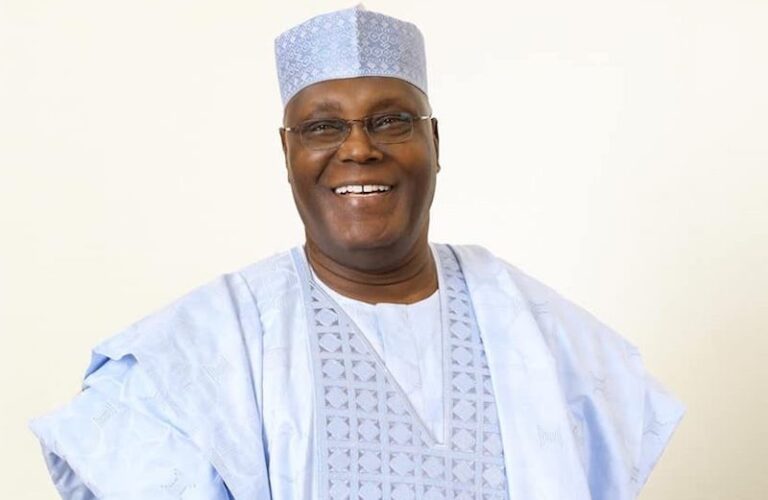
On 16 January 2027, the field is open. The candidate is Atiku Abubakar. The jersey is yours.
108 days.
#NigeriaAt66 #Atiku2027 #ADC #TakeTheField #TheNarrativeForce
Aare Amerijoye DOT.B
Director General,
The Narrative Force
thenarrativeforce.org
1 October 2026