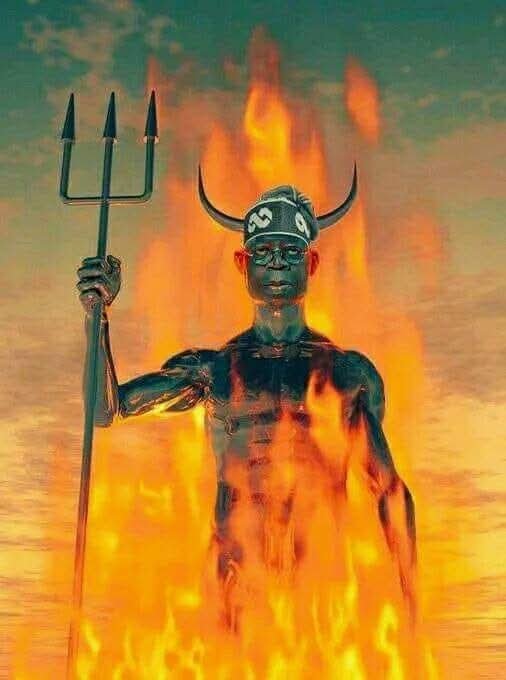
Aare Amerijoye DOT.B
In Benue, they have learned to dig graves the way other people dig foundations, wide enough for whole families. In Plateau, the cameras of the world press have photographed villagers lowering their dead into a single mass grave, dozens at a time. And somewhere in this country tonight, a mother is dividing one meal among four children and calling it dinner.
This is Nigeria under the government of Bola Ahmed Tinubu, and there is a rhythm to it that every Nigerian now knows by heart. One day, one malfeasance. No day passes without its own scandal, its own massacre, its own denial, its own fresh insult to a suffering people. It is not an accusation. It is the national calendar.
Open the newspapers of any single week since May 2023 and count. A village buried its dead on Monday. A ministry could not explain its money on Tuesday. A palace denial arrived on Wednesday. A new tax landed on Thursday. By Friday the people were told to be patient, and by the weekend the cycle had begun again. This is not governance. It is a machine that manufactures grief on one side and excuses on the other.
One day, one malfeasance. That is not a slogan. It is the diary of a nation.
A GOVERNMENT THAT CANNOT PROTECT ITS PEOPLE
Begin with the first duty of any state, the protection of life, because it is here that this government’s weakness is written in blood.
Amnesty International investigated just seven states and found that at least ten thousand two hundred and seventeen Nigerians were slaughtered by armed groups in Tinubu’s first two years in office. Benue alone buried six thousand eight hundred and ninety six of her children. Plateau buried two thousand six hundred and thirty more. Borno, the very furnace of the insurgency, was not even counted. In May 2026, Amnesty returned to declare that the rising death toll, abductions and displacement across the North show just how badly these authorities are failing.
Human Rights Watch recorded the resurgence of Boko Haram in Borno, unrelenting banditry across the North West, and a military so careless that its own airstrikes have killed the citizens it exists to defend.
And what has this government offered the bereaved? A resident of Zamfara answered that question for Amnesty International with words that should be carved above the gate of Aso Rock. The only relationship between his community and this government, he said, is the press statement issued after each attack.
A government that can protect neither the farmer in Benue, nor the schoolchild in Zamfara, nor the traveller on the Abuja to Kaduna road has failed at the only test that matters. Everything else is commentary.
A GOVERNMENT THAT CANNOT FEED ITS PEOPLE
Walk through any market in this country and the second weakness announces itself before any economist can. The trader now measures rice in cups where she once sold bags. The pharmacist watches customers read the price of medicine and quietly put it back on the shelf. The parents who once argued about which school have started deciding which child. Hunger is no longer a statistic in Nigeria. It is a member of the household.
The World Bank has merely counted what the markets already know. When this government arrived in 2023, fifty six per cent of Nigerians lived below the poverty line. By 2025 it was sixty three per cent, about one hundred and forty million human beings, the largest population of poor people this country has ever carried. This very month, the Bank’s new Country Partnership Framework disclosed that seventy nine per cent of Nigerians are now poor or one shock away from poverty, and that a full third of our people are ultra poor, unable to meet even their minimum food requirements. The Food and Agriculture Organisation counts over thirty million Nigerians in acute food insecurity.
Their defenders will shout that inflation has fallen, and by the official count it has. But the World Bank confirms that in the very year prices slowed, poverty still climbed. Prices rose more slowly while poverty rose faster. That is not recovery. That is a fire moving at a gentler pace through a house already ruined.
They removed the subsidy overnight with no shield prepared for the poor. They floated the naira with no plan for the fallout. And then, into this furnace of hardship, they threw a brand new five per cent fuel tax from January 2026, a measure Amnesty International warned would drive millions deeper into poverty. Endurance is not an economic policy. It is an abdication dressed in agbada.
A GOVERNMENT THAT CANNOT ACCOUNT FOR ITS MONEY
The third weakness is the one this government fears most, because it is now on the international record.
The International Monetary Fund’s 2026 Article IV consultation found that public spending equivalent to about two per cent of Nigeria’s gross domestic product was never captured in recent official budgets. On an economy of roughly four hundred and forty one trillion naira, that is approximately eight point eight trillion naira moving outside the appropriation framework the constitution demands. A shadow treasury beside the official one, while the poor were lectured on sacrifice.
While Nigerians were told there was no money, there was money. It simply was not in the book.
The finance ministry says every kobo was lawfully authorised. Then publish the records, line by line, and lay them before the Auditor General and the National Assembly. A denial is a press statement. An account is a document. Nigeria has received the first and is still waiting for the second.
And the shadow treasury did not fall from the sky. It grew in the same soil as everything else. A humanitarian affairs minister suspended within the government’s first year after five hundred and eighty five million naira of palliative money for the poorest Nigerians moved into a private account. The Lagos to Calabar Coastal Highway, the biggest contract of the era, handed without competitive bidding to a firm owned by the president’s long standing business associates, while livelihoods fell to its bulldozers and the cost per kilometre remains unanswered. A yacht sitting in the appropriation documents of a hungry nation until public outrage forced it out. Convoys of new official vehicles while the minimum wage was negotiated in instalments.
One day, one malfeasance. The record writes itself.
A GOVERNMENT THAT CANNOT EVEN CLAIM ITS OWN MANDATE
The fourth weakness sits at the foundation, because this government has never escaped the shadow of its own birth. The European Union Election Observation Mission documented a 2023 process marred by lack of transparency and operational failure, including the collapse of the real time results portal on which INEC had staked the nation’s trust. Domestic observers said the same. Strip away the ceremony and the plain truth remains. Nigeria is governed today on a mandate that its own election umpire could not transmit.
Nigerians drew their conclusions in 2023. In 2027 they will not merely draw conclusions. They will enforce them at every polling unit, with vigilance multiplied a thousandfold.
A LEADER WHO CANNOT ANSWER FOR HIMSELF
And above it all stands the man. The 1993 forfeiture in the United States, in which funds linked to Bola Tinubu were surrendered to the American government in civil proceedings connected to narcotics trafficking investigations, sits permanently in the court records of the Northern District of Illinois. The certificate and biography controversies have trailed him through every election he has ever contested and have never been convincingly laid to rest. A nation cannot demand integrity from its children while excusing its absence at the very top.
A GOVERNMENT THE WORLD DOES NOT BELIEVE
Ask the international community, and it answers in the dry language of institutions. Amnesty International speaks of a state failing its duty to protect life. Human Rights Watch documents abuses by government and gunmen alike. The IMF has placed trillions in unrecorded spending on the global record. The World Bank, even while crediting the boldness of reform, confirms that the gains never reached the people and that poverty has deepened on this government’s watch.
When the friendliest witnesses available to a government are this damning, the defence has no witnesses at all.
THE END OF ENDURANCE
These are not isolated failings. They are one weakness wearing six faces, a government without competence, without compassion, without accountability and without a settled mandate, held together only by power and propaganda.
So the calendar will continue. A village will bury its dead on Monday. A ministry will fail to explain its money on Tuesday. A denial will arrive on Wednesday. Unless the people themselves close the calendar.
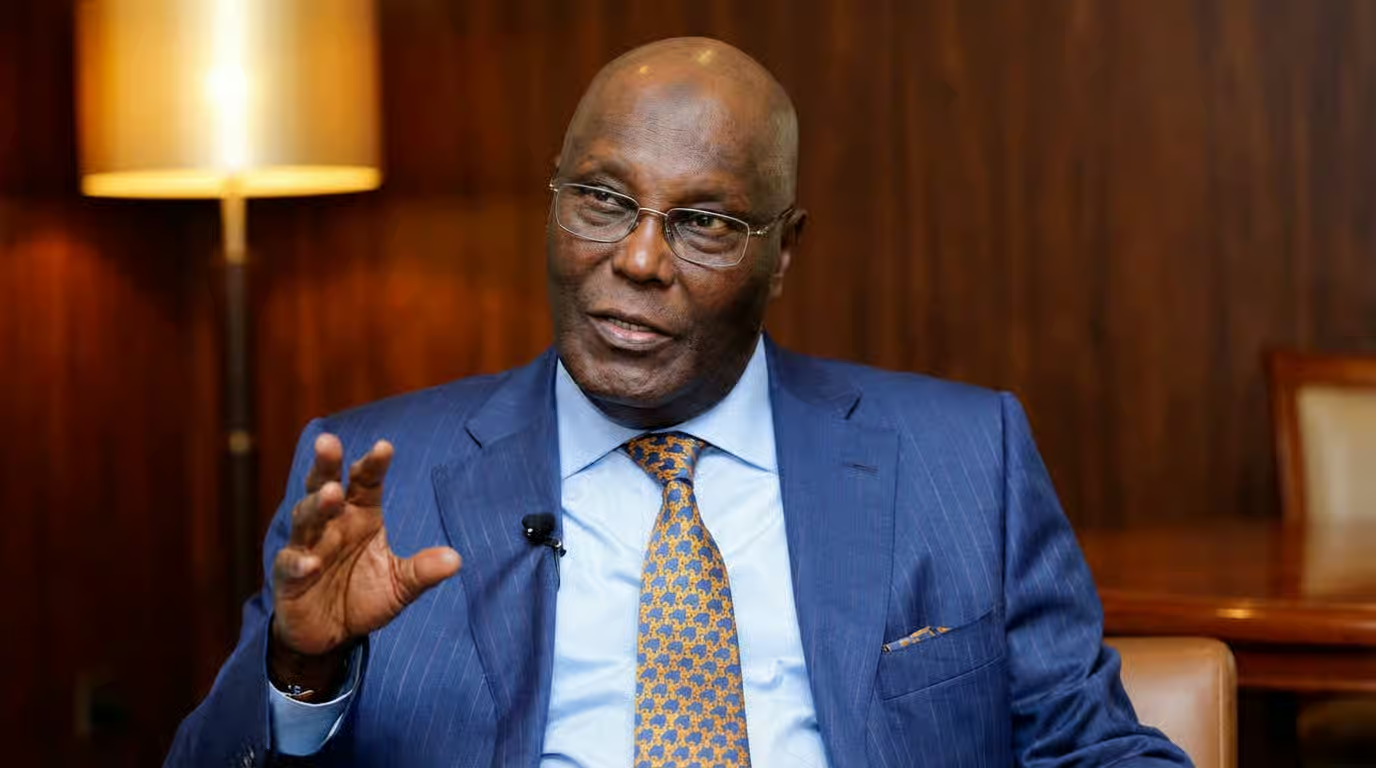
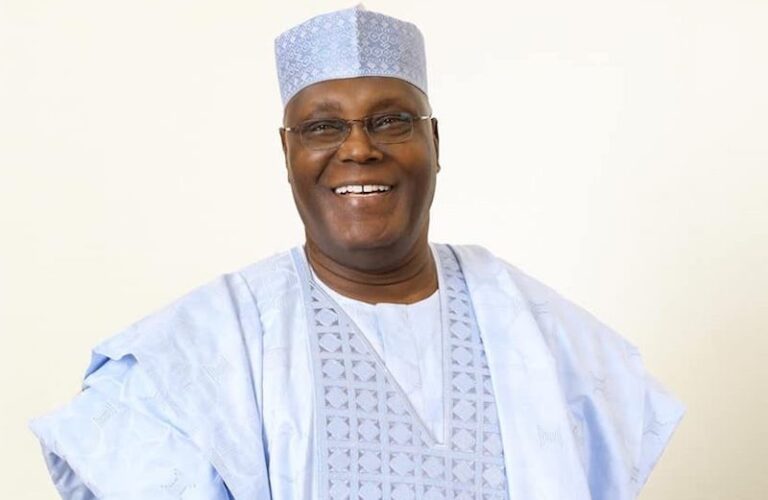
They can. The Nigerians who buried the dead, skipped the meals, paid the taxes and endured the lectures hold the final weapon, and it fits inside a ballot box. On the sixteenth of January, 2027, Nigeria has an alternative in Atiku Abubakar and the African Democratic Congress, experience against excuses, competence against condolences, a builder against a bulldozer.
One day, one malfeasance has been their record. One day, one verdict will be the reply.
The people have endured. Now the people will decide.
Aare Amerijoye DOT.B
Director General,
The Narrative Force
thenarrativeforce.org
16 July 2026