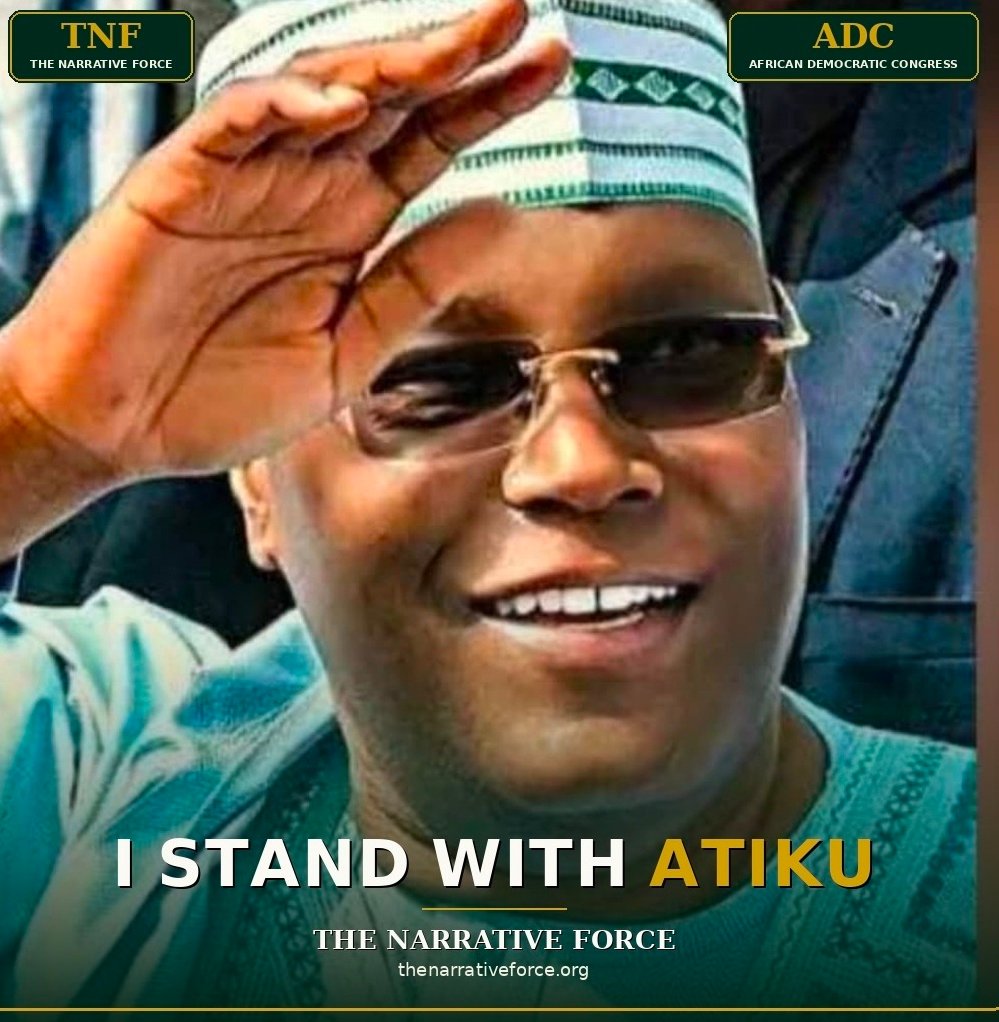
Aare Amerijoye DOT.B
Every nation, at its hour of greatest hunger, asks one question of the men who seek to lead it. Not what do you promise, for promises are cheap in Nigeria and cheaper still in an election year. The question is older and harder. What did life do to you, and what did you do back?
For one man on the ballot of the sixteenth of January two thousand and twenty seven, the answer begins in the dust of Jada, in old Adamawa, nearly seventy years ago.
THE BOY FROM JADA
Picture a Fulani boy in the Jada of the nineteen fifties, the only surviving child of his parents. His father, Garba Abubakar, a trader and herdsman of the old order, so feared the white man’s classroom that the colonial authorities once detained him for keeping his son out of school. The boy’s education began, quite literally, as an act of defiance.
Then, while he was still barely into his teens, fate dealt him the heaviest blow a child can receive. He lost his father. In a single season the family lost its provider, its shield and its standing, and a boy who should have been shielded by childhood was pushed into manhood overnight.
Most children broken on that wheel stay broken. This one refused.
Life orphaned him early. It could not orphan his ambition.
He fed himself. He clothed himself. He did the menial jobs that proud men later pretend never to have done. Raised by a devoted mother, he clawed through school on grit and scholarship, joined the Nigeria Customs Service in nineteen sixty nine, and served two disciplined decades. And while his contemporaries waited for government to make them, he quietly made himself. Farming. He built his first house while still in his twenties, at an age when many of today’s loudest politicians had built nothing but excuses.
Not allocated. Not inherited. Not looted. Built.
THE SCRUTINY THAT MADE HIM STRONGER
Now let us confront what his opponents will whisper, because a serious article does not run from the counterargument. It walks towards it.
They will say he has been accused. Of course he has. Show me a man who has stood in the arena of Nigerian politics for three decades, who has challenged sitting presidents and powerful cabals, and I will show you a man buried under accusations. That is the tax the ambitious pay in this country. But here is the fact that outlives every headline. In all those decades, under hostile governments with every instrument of the state at their disposal, no court in Nigeria or anywhere else has ever convicted Atiku Abubakar of any crime.
They will call him a serial contestant, as though persistence were a vice. Tell that to the market woman who rebuilds her stall after every demolition. Tell it to Abraham Lincoln, who lost election after election before saving his nation. In a country that surrenders too easily, a man who refuses to quit is not a punchline. He is a prototype.
Accusation is not conviction. Persistence is not desperation. Endurance is the oldest form of proof.
TO THE YOUNG NIGERIAN READING THIS
You were promised renewed hope and handed renewed hunger. You queue for fuel and buy at skyrocket prices in a country soaked in oil. You earn in a naira that melts in your palm. You are told to be patient by men who have never missed a meal.
Understand, then, what the boy from Jada offers you. Not pity. Kinship. He was you. Fatherless at eleven. Broke at fifteen. Working with his hands at eighteen. Nobody’s godson. Nobody’s inheritance.
And mark this well, because it is the dividing line of this election. In nineteen ninety three, the government of the United States of America seized four hundred and sixty thousand dollars from bank accounts held by Bola Ahmed Tinubu, money that American investigators traced to the proceeds of heroin trafficking in Chicago. He did not contest it at trial. He surrendered the money and walked away. That is not a rumour. That is not opposition propaganda. It is a judgment of a United States District Court, sitting in the public record for any Nigerian with a phone to read.
So place the two beginnings side by side. One man’s seed money was surrendered to American prosecutors. The other man’s seed money was a customs officer’s savings, turned into farms, houses and businesses that have survived every audit and every hostile government for fifty years. One fortune fled scrutiny. The other invited it and outlived it.
Everything Atiku Abubakar owns began the way your dream begins, with nothing but hunger and refusal. And unlike those who merely sympathise with the young, he has spent decades investing in them. The university he founded in Yola has trained a generation. His businesses have paid the first salaries of thousands of Nigerians. Ask across Adamawa and beyond how many careers, scholarships and first chances carry his fingerprints.
A man does not suddenly develop character at eighty. He reveals at eighty the character he forged at eleven.
THE RECORD AND THE PLAN
Sentiment alone does not feed a nation, so consider the evidence. When he served as Vice President and drove the economic team of that era, Nigeria’s economy expanded from fifty eight billion dollars in nineteen ninety nine to two hundred and seventy billion dollars by two thousand and seven. The crushing foreign debt was negotiated away. Telecoms were liberalised and the phone in your hand today is a child of those reforms. Pensions were rescued from looters and placed under law.
That is not nostalgia. That is a preview. The same conviction runs through everything he has proposed since. Power devolved from a suffocating centre so states can grow at their own pace. A private sector set free to employ, because government has never created prosperity anywhere on earth, only enabled it. Education treated as the new oil. Security rebuilt from the community up. These are not January promises. They are positions he has argued publicly, consistently and in writing for over two decades, when it won him enemies rather than applause.
A man who built his own house at twenty six can be trusted to rebuild a broken one at eighty.
THE BALLOT QUESTION
So when the sixteenth of January two thousand and twenty seven arrives, Nigerians will not merely choose between logos and slogans. They will answer that oldest question. What did life do to you, and what did you do back?
One candidate’s answer was written in the dust of Jada, in the ledgers of honest businesses, in the transcripts of a university, in the payslips of thousands, and in an economy that more than quadrupled under his team’s stewardship. The other candidate’s answer sits in the records of a Chicago courtroom.
Life orphaned him and he answered by becoming a father to thousands. Hunger tested him and lost. Power tested him and lost. Persecution tested him and lost.
Now history offers him one final test, and offers Nigeria one final chance. Two beginnings stand before the nation. Choose the one you want your children’s story to resemble.
The orphan endured. The builder delivered. Let the nation now decide.
Aare Amerijoye DOT.B
Director General,
The Narrative Force
thenarrativeforce.org
13 July 2026