Aare Amerijoye DOT.B
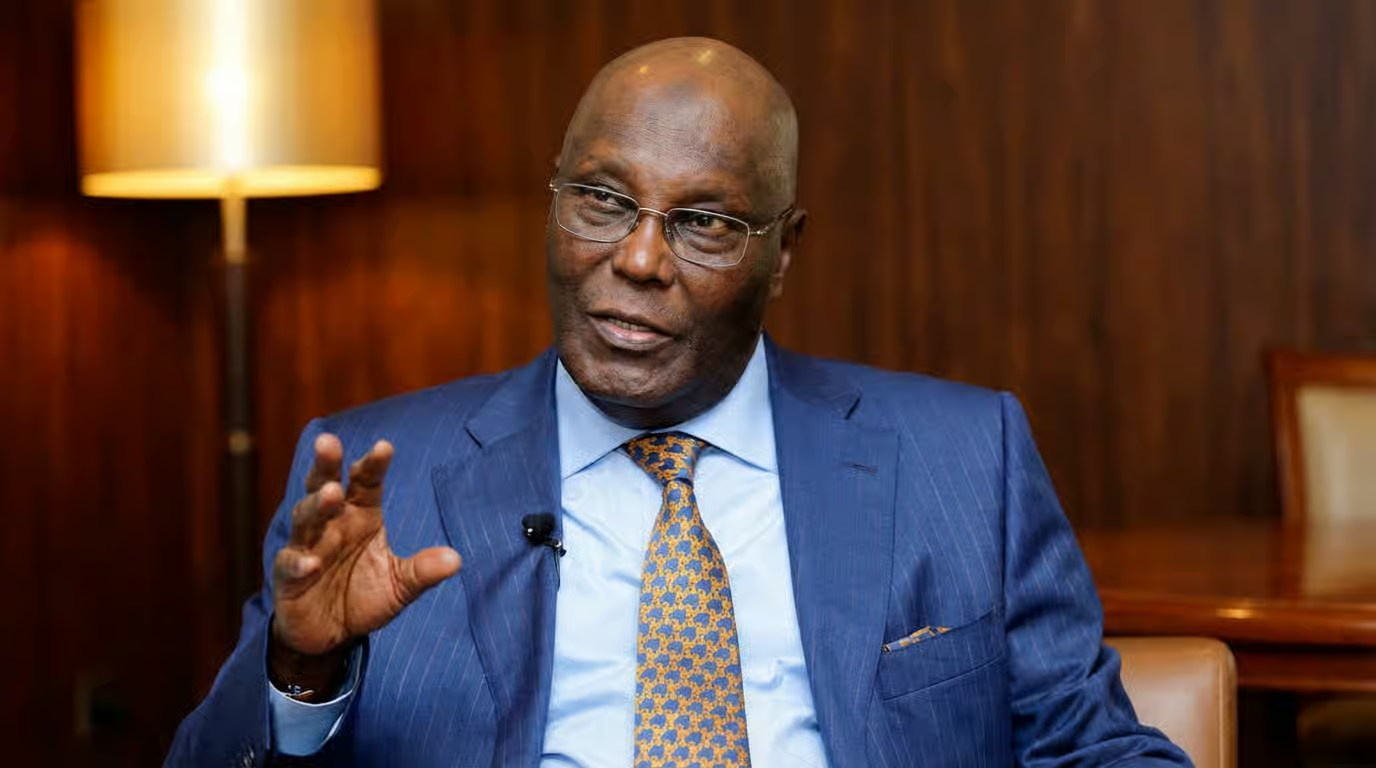
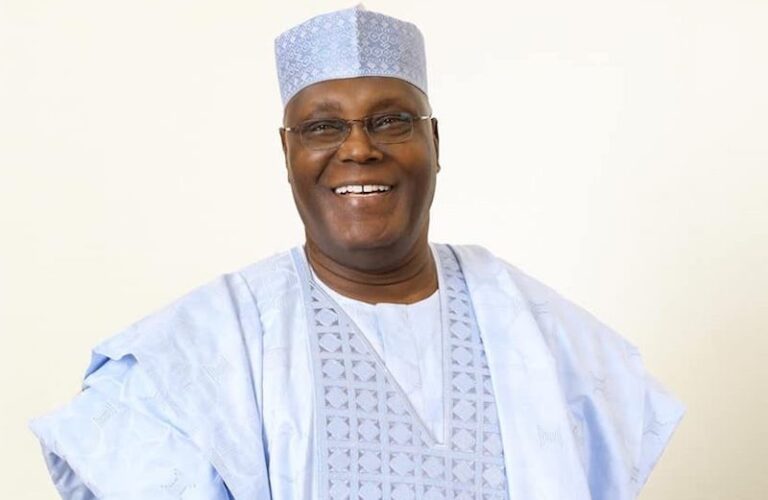
Two men have risen to answer Atiku Abubakar. Abdulaziz Abdulaziz, Senior Special Assistant to the President on Media and Publicity, and Usman Buhari Ali of the Leadership and Transparency Network in Nigeria, both insist that Nigerians deserve to see the numbers behind Atiku’s promise on petrol subsidy. On that narrow point they are correct. Numbers matter. Yet neither man is willing to turn the same demand on the government he is defending, and that single silence unravels both essays.
The men who ask Atiku where his figures are cannot tell Nigerians where 15.8 trillion naira has gone.
THEY ARE FIGHTING A POLICY ATIKU HAS NOT PROPOSED
Both writers argue as though Atiku intends to resurrect the old import subsidy, that unmetered and unaudited regime through which cartels billed the treasury for fuel that was never delivered. That is not the proposal on the table. The model his campaign has now published, the Atiku Economic Recovery Plan set out by his Senior Special Assistant Phrank Shaibu, would replace the old import subsidy with a targeted, capped and independently audited production subsidy paid to domestic refineries. So when Abdulaziz and Ali demand to know whether the subsidy would be universal, who would audit it, and how fraud would be prevented, they are asking questions the model already answers. They are refuting a policy Atiku never tabled.
WHERE, THEN, IS THE MONEY?
This is the question both men take great care to avoid. The Finance Minister, Taiwo Oyedele, has himself put the figure generated by subsidy removal and the naira reforms at 15.8 trillion naira between June 2023 and December 2025. In the same breath he admitted something remarkable: there was never any credit to the Federation Account bearing the words subsidy savings. So Atiku’s question is not mischief. It is the most reasonable question in Nigeria today. If 15.8 trillion naira was mobilised, and the poor are poorer, the schools are unbuilt and the hospitals are unstaffed, where is the money? Abdulaziz and Ali demand Atiku’s arithmetic while refusing to publish their own.
THE NUMBER ABDULAZIZ QUOTES DESTROYS HIS OWN CASE
Abdulaziz anchors his essay on the NMDPRA figure of 47.4 million litres a day. He should read that number again. Before removal, the country was billed for roughly 66 million litres a day. Nearly 18 million litres vanished the moment the price was freed. No factory closed. No car was seized. That gap was never fuel. It was smuggling and paper, phantom litres on which cartels drew trillions. The lesson is the opposite of the one Abdulaziz preaches. A subsidy paid on real, metered, locally refined litres cannot cost what the old racket cost, because the fraud that inflated the old bill is precisely what a production subsidy to Nigerian refineries strips away.
ATIKU DID NOT OPPOSE REFORM. HE OPPOSED RECKLESSNESS
Ali leans heavily on the charge of inconsistency. It does not hold. Atiku has never opposed subsidy reform. He opposes the manner of it. In his own words, when he was Vice President his administration adopted a phased strategy and completed phases one and two of subsidy reform before its tenure ended, until the government that followed in 2007 abandoned the work. As far back as 2024, long before this campaign, he argued for gradual removal in the manner of Malaysia and Indonesia, with proper consultation of stakeholders, not an overnight shock. That is not a man who changed his mind five months to an election. That is a man whose position has held for a generation. And it is worth recalling what that generation produced: the economy he helped steer grew from 58 billion dollars in 1999 to 270 billion dollars in 2007.
THE PARTY THAT SHUT DOWN NIGERIA TO SAVE THE SUBSIDY
Here is the history Abdulaziz and Ali would rather Nigerians forget. In January 2012, when President Goodluck Jonathan removed the subsidy, it was the party now in power that took to the streets to stop him. Bola Tinubu, then leader of the Action Congress of Nigeria, branded it the Jonathan tax and accused the President of breaking his social contract with the people. Muhammadu Buhari, Babatunde Fashola, Nasir El-Rufai and Adams Oshiomhole all lent their weight to the Occupy Nigeria protests that forced Jonathan to retreat. And in that same 2012 article, Tinubu did not argue against removal in principle. He argued for phasing, insisting that social programmes be placed on a parallel track and that the subsidy be lifted only in stages.
Eleven years later he did the exact opposite: an overnight declaration, no committees, no consultation, no cushion for the poor. One of their own, Kayode Fayemi, has since admitted that the 2012 protests were, in his own word, mere politics. That is the whole story in a sentence. The APC understood phased and humane reform perfectly well when it sat in opposition. It discovered shock therapy only when the pain would fall on other people.
They knew the humane way to remove subsidy in 2012. They chose the cruel way in 2023, because the cruelty would not touch them.
ON THE CHARACTER ASSAULT
Half of Ali’s essay has nothing to do with petrol at all. It is given over to privatisation, to NITEL, to NICON Hilton and to a 2010 United States Senate report. Ali is careful to hedge every line, this is not an allegation, this is not a conviction, and that caution is itself the confession. He knows these are old and contested matters, aired and re-aired for two decades, that ended in no court and no verdict against Atiku. The very report he leans on was recycled online in 2026 as a fresh probe and debunked as misleading by AFP Fact Check. None of it moves the price of petrol by one naira. If Ali truly believes accountability must be equal, let him apply it where it is live and where the money is public: to the 15.8 trillion naira the government he defends cannot account for today, not to the ledgers of an administration that left office in 2007.
And let this be said plainly. The courts of the Federal Republic are open, and they sit every day. If Tinubu, his aides or his supporters truly hold a case of corruption against Atiku Abubakar, let them do the honourable and lawful thing: prove it, and establish it against him before a judge, not in a newspaper column. A charge that cannot survive a courtroom has no business being paraded as a verdict. Recycled innuendo has never built a school, never filled a pot, and never lowered the price of a single litre of petrol. It will not sway the votes of the poor masses, who are done being moved by the noise of the powerful.
THE PEOPLE ARE THE UNIT OF DEVELOPMENT
The late Chief Obafemi Awolowo taught us, again and again, that the true unit of development is the human being. A government is to be judged not by the size of its allocations or the confidence of its spokesmen, but by what has become of the ordinary man and woman. Measured by that standard, this administration fails. Under it the real unit of development has quietly become the members of the government themselves, the small circle for whom these years have been kind. The masses were told to sacrifice, and they sacrificed. Yet the relief was reserved for a few.
Look closely and the picture is even starker. Even within the ruling party itself, ordinary members are today bedevilled by the same suffering and misery as the wider Nigerian masses, while a handful at the top prosper. That is the surest proof of all. A party whose own rank and file bleed alongside the people it governs is popular in the villa and in the government house, not in the market and not in the village. It is popular among the politicians, and not even all of them.
THE ONLY QUESTION THAT MATTERS
Strip away the insinuation and one honest question remains. Nigerians are in pain. The World Bank projects that the number of Nigerians living in poverty will reach about 139 million. Petrol has multiplied in price, and food inflation has followed it into every home. The real argument is not whether the removal hurt. It plainly did. The argument is what a responsible government owes the people who are bleeding: transparent and targeted protection, and an honest account of every naira, or a defensive spokesman telling the poor to endure while he cannot say where the savings went.
You do not defeat poverty by empowering cartels, and no one is asking anyone to. You defeat it by paying an audited subsidy to the refineries that now stand on Nigerian soil, by protecting the vulnerable while you reform, and by accounting for public money in public. We cannot solve one crisis by deepening another. Atiku is offering a plan. Abdulaziz and Ali are offering a distraction. The suffering masses know the difference, even when the politicians pretend they cannot.
Aare Amerijoye DOT.B
Director General,
The Narrative Force
thenarrativeforce.org
21 August 2026