An Open Reply to Mr Sunday Dare, Special Adviser to the President on Media and Public Communication
Aare Amerijoye DOT.B
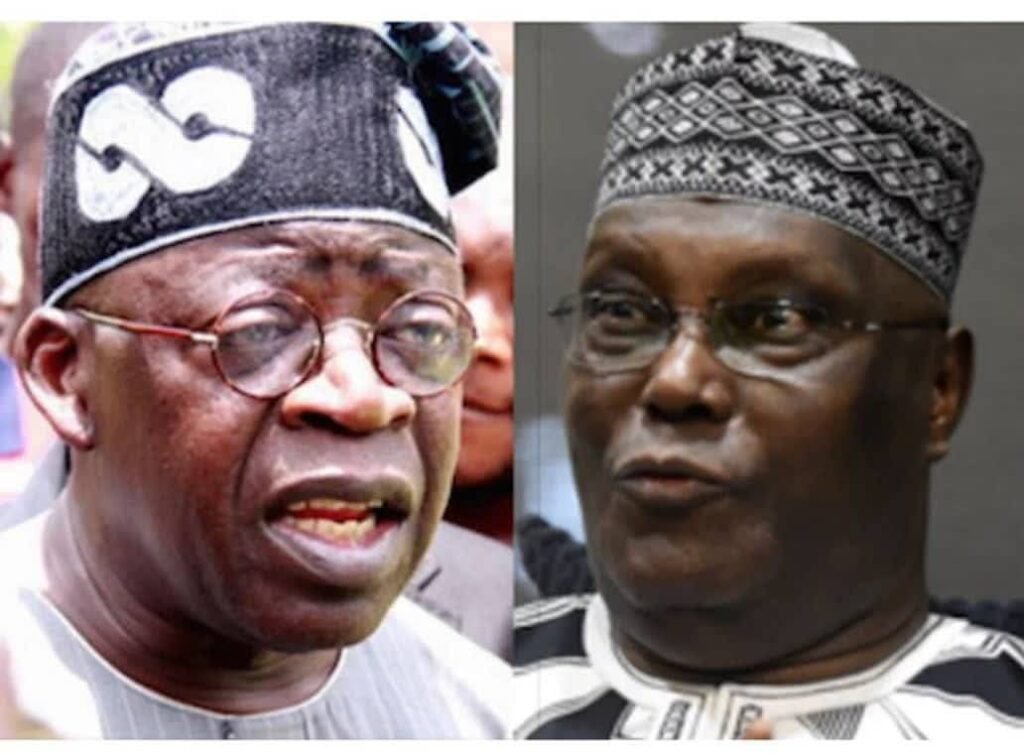
The Presidency’s statement of 28 August 2026 on Nigeria’s borders and the ADC presidential candidate, Atiku Abubakar, is remarkable for one reason above all others. It cites a report that convicts the administration it was written to defend, and it offers as proof of an open border policy a crossing that this administration itself closed.
Mr Dare quotes the Global Terrorism Index 2026 with confidence. He quotes it accurately. He simply stops reading at the page that suits him.
Let us continue from where he stopped.
WHAT THE PRESIDENCY QUOTED
The statement tells Nigerians that approximately 41 per cent of terrorist attacks occur within 50 kilometres of an international border, and about 64 per cent occur within 100 kilometres. This is correct. It is drawn from the Global Terrorism Index 2026, published by the Institute for Economics and Peace.
It is offered as proof that Nigeria’s borders must remain under restriction.
WHAT THE PRESIDENCY DID NOT QUOTE
The same Global Terrorism Index 2026 records that Nigeria registered the largest increase in terrorism fatalities in 2025, rising by 46 per cent.
The same report records that terrorist attacks in Nigeria rose from 120 in 2024 to 171 in 2025.
The same report records that fatalities rose from 513 to 750 over the same period.
The same report moves Nigeria from sixth position to fourth on the global index.
Mr Dare had the document open. He selected the paragraph about borders in general and omitted the paragraph about Nigeria in particular. That is not analysis. That is curation.
Nigerians are entitled to ask why the Presidency’s Special Adviser on Media and Public Communication would cite a report on terrorism without mentioning what that report says about the country he serves.
THE BORDERS, NAMED
The statement asserts that Nigeria’s land borders are already open and that the Federal Government has not reversed that position. Since the Presidency declines to name the crossings, let us name them.
Nigeria’s land borders were closed in August 2019 under the Buhari administration. Since then, eight border posts have been formally reopened, all of them by that same administration.
By presidential directive of 16 December 2020, four crossings were reopened: Seme in Lagos State, Illela in Sokoto State, Maigatari in Jigawa State and Mfum in Cross River State.
By Nigeria Customs Service circular of 22 April 2022, signed by Deputy Comptroller-General E I Edorhe, four further crossings were reopened: Idiroko in Ogun State, Jibiya in Katsina State, Kamba in Kebbi State and Ikom in Cross River State.
That is the entire list. Eight posts. The Centre for Democracy and Development’s fact-checking unit examined this precise question in 2023 and found that only eight borders had been approved for reopening, while others remain closed.
The remainder are still shut. In Ogun State alone, the Customs Area Controller confirmed publicly in August 2025 that Imeko, Ohumbe, Ijofin and Ijoun remain closed. That is four sealed crossings in a single state, along one stretch of one frontier.
The Cameroon frontier, running from Cross River through Taraba, Adamawa and Borno, has no reopened post along it save Mfum and Ikom at its southern end. The Chad frontier has none. The Niger frontier of 1,608 kilometres, running through Sokoto, Kebbi, Katsina, Jigawa, Yobe and Borno, has Illela, Maigatari, Jibiya and Kamba. Four manned posts across sixteen hundred kilometres.
Then the March 2024 action, which the Presidency places at the centre of its case. That was the lifting of ECOWAS sanctions against Niger Republic imposed after the July 2023 coup in Niamey, executed in compliance with a decision of the ECOWAS Authority of Heads of State and Government taken at its extraordinary summit of 24 February 2024. It restored a border that this administration had itself closed in August 2023 as ECOWAS chairman. It was regional compliance, not border liberalisation, and it opened no post that was not already on the 2020 and 2022 lists.
KAMBA, AND THE SENTENCE THAT COLLAPSES
The Presidency’s strongest sentence is this one: the Federal Government announced the reopening of most of the country’s land borders on 14 March 2024, and it has not reversed that position.
Consider Kamba.
Kamba border post in Dandi Local Government Area of Kebbi State was reopened on 22 April 2022 by circular of the Nigeria Customs Service.
Kamba was subsequently closed again. The Nigeria Customs Service and the national press record the reason plainly: rising insecurity in the frontier communities.
Kamba was then reopened a second time, on Monday 9 February 2026, together with the Tsamiya corridor in Bagudo Local Government Area, following diplomatic engagement with the Republic of Benin.
That is a reversal. It occurred after March 2024. It occurred under this President. And it is the very corridor the Presidency’s own statement offers, two paragraphs later, as evidence of its openness, with its attendant economic and diplomatic gains.
Mr Dare has cited as proof of continuity the clearest documented instance of reversal. He cannot have it in both directions. Either the position was never reversed, in which case there was nothing to reopen in February 2026, or Kamba was closed and reopened, in which case the sentence does not survive contact with the record.
There is a further detail worth recording. The Comptroller-General of Customs, Dr Bashir Adewale Adeniyi, announced the Tsamiya reopening on 7 February 2026 at a stakeholders’ meeting in Kebbi with exporters, transporters and onion traders. He told them the government was not unconcerned about what was happening, and acknowledged the hardship caused by the long restrictions on cross-border movement.
The President of the National Onion Producers, Processors and Marketers Association, Alhaji Isa Aliyu, explained the cost in terms the Presidency’s statement never reaches. Onion is highly perishable. Every hour of delay is a loss. Closure, he said, pushes trade to illegal routes, weakens regulation and reduces government revenue.
That is a Nigerian trader, in a room with the Comptroller-General, stating the ADC candidate’s argument on the government’s own platform. Another stakeholder at that meeting, Alhaji Abubakar Bello, urged the Federal Government to reopen more land borders.
The Presidency now describes that same argument, when Atiku Abubakar makes it, as a slogan for the politically gullible.
THE LOGIC OF BORDER PROXIMITY
The Presidency’s argument, stripped of its diplomatic phrasing, runs as follows: terrorism concentrates near borders, therefore border restrictions restrain terrorism.
This does not follow.
The Global Terrorism Index finding describes where attacks occur. It does not describe which border policy produces the fewest of them. The 41 and 64 per cent figures are global aggregates spanning countries with open borders, closed borders, militarised borders and unmanaged borders alike. The Sahel tri-border area, the Lake Chad Basin, the Afghanistan-Pakistan borderlands and the Colombia-Venezuela frontier all appear within that statistic under entirely different border regimes.
What the statistic establishes is that borderlands are vulnerable where state presence is weak and coordination is poor. The Presidency, to its credit, states this correctly. Borderlands are vulnerable, in its own words, where difficult terrain, limited state presence and weak coordination create opportunities for terrorist organisations to operate.
Limited state presence. Weak coordination. Those are governance failures, not commerce failures.
Closing a border does not create state presence. It withdraws it. It removes the customs post, the immigration officer, the recorded transaction and the taxable trader. It leaves the footpath exactly where it was, now unwatched. Four manned posts across sixteen hundred kilometres of Niger frontier is not border security. It is the absence of the state along the other one thousand six hundred.
Alhaji Isa Aliyu made this precise point to the Comptroller-General in February. Closure pushes trade to illegal routes and weakens regulation. The smuggler does not require an open border. The legitimate trader does.
NIGERIA’S RECORD UNDER THE POLICY BEING DEFENDED
Border restrictions have been in force in Nigeria continuously since August 2019. That is seven years. It is more than sufficient time to assess whether a policy delivers its stated objective.
The stated objective is security.
The measured outcome, per the Global Terrorism Index 2026, is a 46 per cent rise in terrorism fatalities in 2025 and a rise in recorded attacks from 120 to 171 in the same year.
The Institute for Economics and Peace records 3,600 terrorist incidents and 9,380 fatalities in north west Nigeria alone between 2023 and November 2025.
The Human Rights Watch World Report 2026 finds that insecurity remained prevalent across Nigeria in 2025, underscoring, in its words, the authorities’ failure to protect communities or ensure accountability. It documents the resurgence of the JAS faction of Boko Haram in Borno, sustained abductions in the North West, and civilian deaths caused by military airstrikes.
In March 2026, three suspected suicide bombings in Maiduguri killed at least 27 people and injured 146, ending what had been a year of relative calm in that city.
And in the same period, in Kebbi State, the Kamba and Tsamiya corridors were closed because of insecurity in the frontier communities. The government’s own reason for closing them is the evidence that the closures were not working.
These are the years of the restriction policy. They are not its prelude.
In fairness, three explanations are available for this record.
The first is that border restrictions are insufficient on their own and require governance capacity the state has not supplied.
The second is that border policy is not the decisive variable, and that intelligence, military capability, local governance and regional cooperation matter considerably more.
The third is that matters would have been worse still without the restrictions.
The third explanation is possible. It is also unevidenced. The Presidency has offered no counterfactual data, no interdiction figures, no seizure statistics, no measure of prevented transit. It asks Nigerians to accept on faith that a policy which coincided with the largest increase in terrorism fatalities recorded in 2025 was nonetheless holding back a greater catastrophe.
A government confident in its record would publish the numbers. This one publishes adjectives.
THE INHERITANCE ARGUMENT, ANSWERED IN ADVANCE
It will be said that the President inherited this policy. That is true. The August 2019 closure belongs to the Buhari administration, as do all eight reopenings.
That is itself the point. Every land border post reopened since 2019 was reopened by the previous administration. This administration’s contribution to the list is the restoration of two Kebbi corridors that were open in 2022 and shut on its own watch.
A policy inherited in year one is a policy adopted by year four. The 2025 figures are not an inheritance. They are a report card.
THE METHOD IS THE ARGUMENT
There is a pattern here that runs wider than borders.
Atiku Abubakar has never opposed the reform of Nigeria’s fuel pricing. He is, and has long been, a deregulation advocate. What he has consistently insisted upon is the method, and the people who must be carried through it.
The Obasanjo administration, in which he served as Vice President, pursued deregulation through the Petroleum Products Pricing Regulatory Agency framework. Petrol was adjusted upward in roughly seven measured steps across eight years, from about 20 naira to about 75 naira. Each step was preceded by consultation with organised labour, marketers, transporters and the states. Each step was absorbed before the next was contemplated. That is what a phased transition looks like when the people affected are brought to the table before the decision is announced.
In January 2012, when President Goodluck Jonathan moved to complete the removal at a stroke, the country protested. His government listened and adjusted the price within a fortnight. Whatever else may be said of that episode, a government that responds to its citizens is behaving as a government should.
On 29 May 2023, the present President removed the subsidy in a single sentence at an inauguration. There was no consultation. There was no sequencing. There was no cushion for the transport sector, the informal economy or the poorest households. There has been no adjustment since.
WHY ATIKU HAS PLEDGED RESTORATION
On 20 August 2026, Atiku Abubakar announced that he would restore the petrol subsidy if elected on 16 January 2027, and that those responsible for the missing subsidy funds must account for them and return what was taken.
The Presidency’s supporters have called this a reversal. It is nothing of the kind, and it is worth meeting the charge directly rather than stepping around it.
They will point to December 2022 and the pledge to end the subsidy within a hundred days. What was to be ended was named plainly at the time: the import subsidy regime, the racket of phantom vessels and unverifiable litres that enriched a cartel of middlemen for two decades while delivering nothing to the Nigerian people. He has argued against that arrangement since 1999, in interviews, in policy documents and in office. He argues against it today. Nothing in his present position defends it, and no part of what he proposes brings it back.
The direction has never moved. End the racket. Put the support where it produces something. Never make the poorest Nigerians carry the adjustment alone. That thread runs through every statement he has made on this subject across three decades of public life.
What the present administration did on 29 May 2023 was not that. It removed the payment and left the structure beneath it untouched. The cartel it was meant to dismantle simply moved into the importation of the finished product. The refineries that were meant to make the payment unnecessary were not built. The households that were meant to be cushioned were not cushioned. The savings that were meant to be visible have not been shown. Nothing was reformed. A line item was deleted and the burden was transferred downward.
Three years on, the evidence is in every household. Transport fares that once took a fraction of a worker’s wage now take the wage. Food inflation has hollowed out the family table. Traders have closed. Farmers cannot move produce to market. Children have left school because the fare to reach it exceeds what the household earns in a day. Patients cannot travel to hospitals. This is not an abstraction in a policy paper. It is the daily condition of the Nigerian people.
Set against that, the promised savings. The Federal Government and its own tax reform committee have put the figure at some 15.8 trillion naira between June 2023 and December 2025. Nigerians have not been shown where it went. There is no published account, no audited trail, no schedule of what it purchased on their behalf. A sum of that magnitude, taken from the poorest households in the country, is owed an explanation line by line.
And Nigerians are not blind to how the burden was distributed. The state found it necessary to remove the cushion from under the poorest household in Sokoto. It has not found it necessary to remove anything at all from itself. That asymmetry, more than any figure, is what the country resents.
A candidate who watched all of that and said nothing, as though nothing had happened to the people in whose name the reform was undertaken, would not be fit for the office. Atiku Abubakar watched it, empathised with those bearing it, and went to the foundation of the problem rather than lecturing the suffering about market discipline.
That is what the restoration means, and it should be stated precisely, because precision is what the Presidency’s statement lacks.
What returns is not the old import subsidy. Under the Atiku Economic Recovery Plan, support moves from importation to production, and stays there. It is targeted rather than universal, capped rather than open-ended, budgeted openly in the appropriation rather than buried in a shortfall, and independently audited. It backs verifiable barrels refined in Nigeria rather than unverifiable claims filed against the treasury. The stolen funds are recovered and returned to the public purse.
This is the settled architecture, not a holding measure. Support production and the pump price falls because Nigeria refines its own fuel, employs its own people and stops paying foreign traders for the privilege. That is not a payment waiting to be withdrawn. It is a domestic refining industry with the state behind it, which is what every serious oil-producing nation maintains and what Nigeria has never been permitted to build.
Support importation, by contrast, and the country enriches middlemen and imports the same crisis afresh each quarter. That was the racket. It is not coming back under any government Atiku Abubakar leads.
The difference between the two men is therefore a difference of direction. This administration’s change of position moved against the people who had trusted it, abruptly and without consultation, and the savings remain unaccounted for. Atiku Abubakar’s position moves toward them, with the mechanism named, the funds traceable and the beneficiaries identified.
One is a government that stopped listening. The other is a candidate who listened.
The same distinction governs the border question, and the Kebbi episode illustrates it exactly. The Comptroller-General sat with onion traders, exporters and transporters in February 2026 and heard what the closures had cost them. That consultation should have preceded the closure. It came years afterwards, as an explanation for a reopening.
Consultation before the decision is governance. Consultation after the damage is public relations.
WHAT THE ADC CANDIDATE ACTUALLY SAID ON BORDERS
The Presidency demands to know which controls the former Vice President intends to remove, and what safeguards his administration would deploy.
It is a fair question. It has been answered, and the answer is a matter of public record.
Atiku Abubakar’s position is that Nigeria’s remaining closed and restricted land borders should be reopened to legitimate commerce under managed control, and that reopening should be paired with the infrastructure and governance capacity that makes control real. Specifically:
That closures and restrictions have destroyed legitimate trans-border trade, shut down businesses and deepened unemployment among young people in border communities, particularly in the North. The onion traders of Kebbi have testified to the same effect before the Comptroller-General of Customs.
That southern and eastern port infrastructure, at Calabar, Port Harcourt and Uyo, should be developed to break the Lagos bottleneck. He has cited from his own experience as a manufacturer in Adamawa the case of a container taking up to two months to move from Lagos to Yola over degraded roads, against roughly 24 hours through functioning southern ports.
That border management should rest on immigration control, customs administration, intelligence sharing, surveillance, technology and coordinated security operations, with security agencies continuing to interdict arms, narcotics and contraband.
That last formulation will be familiar to Mr Dare. It appears almost word for word in his own statement as the definition of responsible border governance.
The Presidency has stated the correct principle. Atiku Abubakar has been operating it since 1999, when Nigeria’s northern frontier was policed by manned customs and immigration posts rather than surrendered to the smugglers’ tracks that run beside them today. The Presidency states the principle. The record shows who has practised it.
THE FALSE CHOICE
The statement asserts, correctly, that an open border is not an uncontrolled border.
Nobody has argued otherwise. Certainly not Atiku Abubakar, whose stated position expressly contemplates security agencies continuing to curb the smuggling of arms, drugs and contraband.
The Presidency has constructed an opponent who wants Nigeria’s frontiers thrown open to the Sahel, and then defeated him. It is an easy victory over a man who does not exist.
The real question is narrower and harder. Is the current restriction regime the most effective available means of securing Nigeria’s borders and its economy?
On security, the 2025 figures answer no.
On the economy, the onion traders of Kebbi have already answered, in the presence of the Comptroller-General of Customs.
WHAT THE ALTERNATIVE LOOKS LIKE
This is not speculative. Nigeria has run the other experiment.
Between 1999 and 2007, under Olusegun Obasanjo and Atiku Abubakar, Nigeria’s borders were manned rather than sealed. The frontier carried customs posts, immigration officers, recorded transactions and taxable traders. Deregulation was pursued in measured stages with stakeholders consulted at each stage. Over that period Nigeria’s Gross Domestic Product grew from about 58 billion dollars in 1999 to about 270 billion dollars in 2007.
Border commerce functioned. Northern traders traded. The state was present at its own boundary.
That administration faced security challenges, as every Nigerian administration has faced and will face. The relevant point is not that it was free of threat. It is that it met threat by putting the state at the frontier rather than by withdrawing the state from it.
That is the record the ADC candidate proposes to build upon: reopening under management, support directed to production, and every affected community consulted before the decision rather than informed after it.
Mr Dare ends his statement by asking what new and credible contribution the former Vice President intends to make that is not already contained in the reform trajectory of the present administration.
The answer is available in his own citation, and in his own showpiece.
He might begin with a border policy that does not coincide with the largest increase in terrorism fatalities recorded in 2025.
He might continue by opening a ninth border post, this administration having so far reopened none that Muhammadu Buhari had not already opened in 2022.
He might reach Imeko, Ohumbe, Ijofin and Ijoun in Ogun State, and the sealed length of the Cameroon and Chad frontiers, none of which appear anywhere in his statement.
He might build functioning ports in the South and the South East, so that a Nigerian trader’s container does not spend two months on the road to Yola.
He might publish the 15.8 trillion naira, line by line, and tell Nigerians what their suffering bought.
And he might adopt the practice, now unfamiliar in Abuja, of consulting Nigerians before a policy is imposed upon them, rather than years afterwards when the onions have already rotted at the crossing.
A government exists to carry the burdens of its people, not to transfer its own onto them. Nigerians are not asking for slogans. They are asking to be heard before the decision, and to be shown the money afterwards.
The outcomes of the present policy have now been published, in the very document the Presidency chose to quote.
Mr Dare should read to the end of the report. Nigerians already have.
Aare Amerijoye DOT.B
Director General
The Narrative Force
thenarrativeforce.org
28 August 2026