Aare Amerijoye DOT.B.
The notion that competent leadership remains irrelevant to national prosperity represents perhaps the most brilliantly absurd proposition ever entertained by serious minds. Yet Nigeria’s current trajectory offers a masterclass in how a nation blessed with abundance can achieve spectacular destitution through the simple expedient of selecting those magnificently unqualified to steward its resources. The country’s descent from “Africa’s Giant” to the world’s poverty headquarters unfolds with the inexorable logic of a Greek tragedy—predictable, devastating, and entirely preventable.
As Plato observed in The Republic, “The penalty good men pay for indifference to public affairs is to be ruled by evil men.” Nigeria’s 240 million citizens now pay compound interest on this philosophical debt. The current administration has transformed what should be the nation’s greatest asset—its demographic dividend—into a liability of staggering proportions. According to the National Bureau of Statistics’ 2023 report, unemployment has climbed to 33.3%, while the World Poverty Clock documented Nigeria’s position as home to the world’s largest number of extremely poor people, with an estimated 70 million citizens living below $1.90 per day. A population that could fuel unprecedented economic expansion instead fuels unemployment queues, bandit camps, and migration statistics. This is governance as performance art, where every policy decision seems calculated to achieve the opposite of its stated intention.
The entrepreneurial acumen that built successful enterprises from modest beginnings operates according to principles mysteriously absent from Nigeria’s current economic management. Where business demands accountability, the present dispensation offers opacity. Where markets require efficiency, governance delivers spectacular waste. Where growth necessitates investment, policy produces capital flight. The contrast between private sector dynamism and public sector paralysis has never been more harmoniously discordant. Aristotle’s wisdom that “the whole is greater than the sum of its parts” finds its negation in Nigeria’s economic reality, where immense natural wealth, human capital, and strategic positioning somehow combine to produce collective impoverishment.
The alchemy is impressive in its consistency: transform oil revenues into fuel queues, convert agricultural potential into food imports, and transubstantiate a youth bulge into unemployment crisis. As the adage warns, “A fish rots from the head down”—and Nigeria’s economic decay follows this biological imperative with textbook precision. The advocates of continuity offer a proposition of deafening silence: that a course which has navigated the ship of state onto the rocks should be maintained until the vessel completely disintegrates. When poverty rates exceed 40% nationally and the naira has collapsed from approximately ₦197 to the dollar in 2015 to over ₦1,500 in 2024—a devaluation exceeding 660%—the assertion that current policies simply require more time achieves a level of detachment from empirical reality that borders on the philosophical.
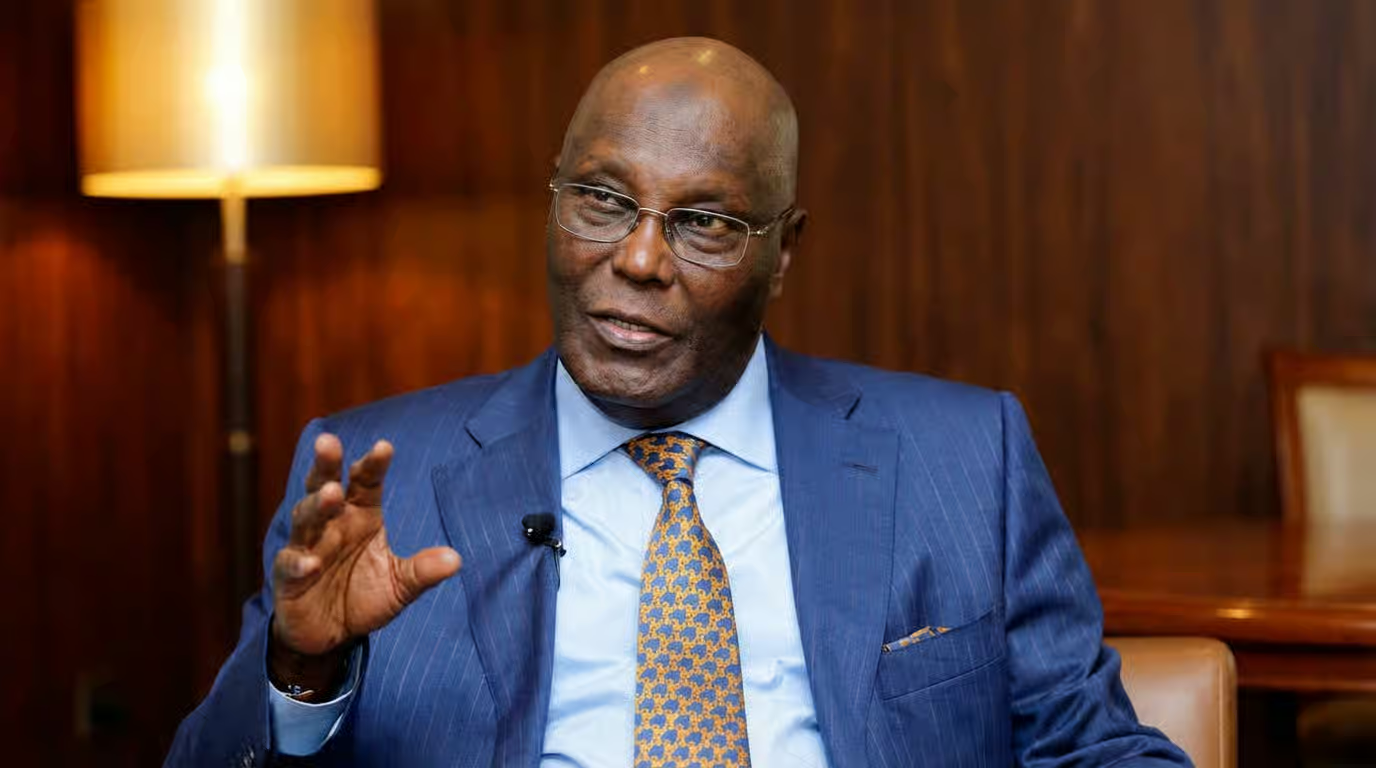
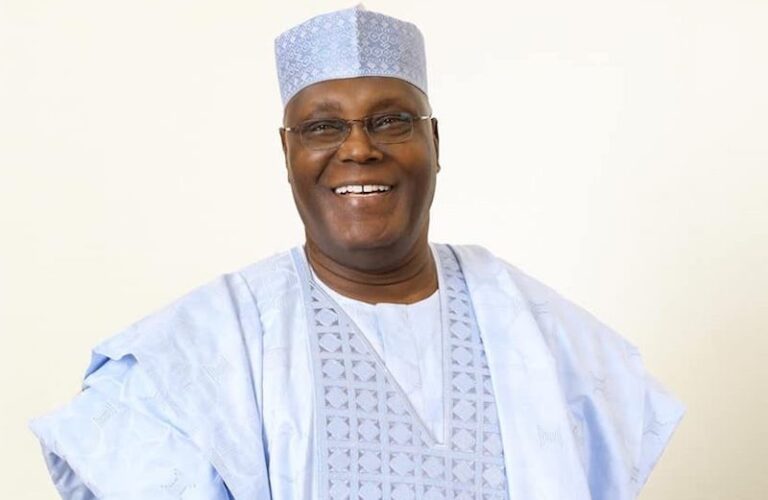
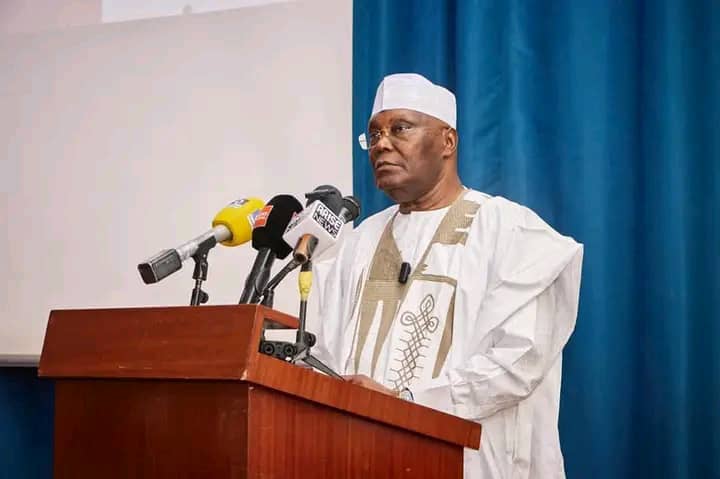
Yet criticism alone offers no roadmap forward, and fairness demands acknowledgment that global headwinds—oil price volatility, pandemic disruptions, and worldwide inflation—have complicated governance for leaders everywhere. The question becomes not whether challenges exist, but whether leadership possesses the capacity to navigate them. The case for alternative leadership rests not on empty promises but on demonstrable achievement during Nigeria’s last sustained period of economic progress. Former Vice President Atiku Abubakar’s record from 1999 to 2007 offers a study in contrasts to the current malaise. Nigeria achieved its highest sustained economic growth in modern history—averaging 7.5% annually according to World Bank data—through deliberate policy choices rather than fortuitous circumstances.
As Chairman of the National Economic Council, he championed the Economic Reform Program that led to $18 billion in Paris Club debt relief negotiated in 2005, freeing resources for development rather than debt servicing. He drove telecommunications sector liberalization that transformed Nigeria from fewer than 500,000 telephone lines in 1999 to over 100 million mobile subscribers by 2007, creating thousands of jobs and establishing a sector that now contributes over 14% to GDP according to the Nigerian Communications Commission. Beyond government, his business acumen built an empire from a ₦30,000 loan in the 1980s, establishing Adama Beverages, NICOTES, and Abti Holdings—enterprises spanning logistics, agriculture, manufacturing, and education that employ thousands and demonstrate that wealth creation need not depend on government contracts or oil connections.
John Stuart Mill’s assertion that “bad men need nothing more to compass their ends than that good men should look on and do nothing” finds contemporary expression in Nigeria’s acquiescence to managed decline. The normalization of insecurity, the acceptance of infrastructure collapse, the resignation to educational deterioration—these represent not merely policy failures but psychological capitulations. Yet the transformation of Nigeria’s demographic advantage into demographic disaster reflects choices, not destiny. Where East Asian nations converted youthful populations into economic miracles through strategic investment in education, skills development, and job creation, Nigeria has perfected the art of demographic waste.
The contrast is instructive: Vietnam, with a population of 98 million, attracted $20.4 billion in foreign direct investment in 2023 according to the country’s Ministry of Planning and Investment, while Nigeria, with 240 million people and vastly superior natural resources, attracted just $5.85 billion per the National Bureau of Statistics. This disparity reflects not natural endowment but policy environment—investors avoid Nigeria not because opportunities are absent but because the business environment makes success improbable. The difference between corporate governance and political management illuminates this predicament precisely. Corporate governance demands transparency, performance metrics, and consequences for failure. Businesses that consistently lose money close or change management. Governments that consistently fail simply continue, as the living death of accountability demonstrates.
An entrepreneurial approach would demand different questions: Why does road construction cost three times more in Nigeria than in comparable African nations? Why do government projects take twice as long as private sector equivalents? These questions have answers found in procurement reforms, competitive bidding, performance-based contracts, and consequence management—practical tools employed successfully in Nigeria’s private sector and in well-governed nations globally. As Machiavelli observed, “Where the willingness is great, the difficulties cannot be great.” Nigeria’s current difficulties are indeed monumental, but they pale against the conspicuous absence of willingness to implement the structural reforms, institutional strengthening, and strategic investments that development demands.
The country suffers not from a lack of solutions—these have been articulated by economists, documented in World Bank and IMF reports, and demonstrated in comparable economies—but from a deficit of political will to implement them. The thunderous quiet with which Nigeria’s economic crisis has unfolded speaks to the peculiar genius of incompetence: the ability to achieve disaster through systematic neglect rather than dramatic catastrophe. Thomas Jefferson’s warning that “eternal vigilance is the price of liberty” applies equally to prosperity. Nigeria’s citizens have learned, at considerable cost, that economic development demands more than resource endowment or demographic scale. It requires leadership that understands wealth creation as something beyond resource extraction, that grasps competitiveness as essential to survival, that recognizes human capital development as investment rather than expenditure.
The Africa Democratic Congress now offers Nigerians an alternative vision embodied in leadership forged through business success rather than political longevity. The party’s platform emphasizes fiscal federalism allowing states greater revenue retention and development autonomy, infrastructure revolution through public-private partnerships that mobilize private capital while reducing fiscal burden, agricultural transformation converting subsistence farming to commercial enterprise through mechanization and market linkages, manufacturing renaissance via special economic zones and reliable power supply, digital economy expansion building on Nigeria’s $14 billion tech sector, and education reform aligning skills training with market needs. This represents not merely a change in personnel but a fundamental shift in governing philosophy—from management of scarcity to creation of abundance, from distribution of existing wealth to generation of new prosperity, from political calculation to economic logic.
As the ancient proverb counsels, “The best time to plant a tree was twenty years ago; the second best time is now.” Nigeria cannot recover the decades lost to mismanagement, but it can refuse to compound those losses with further years of the same. The choice before the electorate in 2027 is not between competing visions of Nigeria’s future but between vision and its absence, between competence and its counterfeit, between leadership that builds and administration that merely presides over decline. The entrepreneurial mindset that transforms challenges into opportunities, that sees in population not burden but market potential, that converts resources into prosperity rather than patronage—this represents Nigeria’s path from poverty headquarters to economic renaissance.
The question is not whether such transformation is possible; comparable nations have achieved it within single generations. South Korea emerged from civil war devastation to become the world’s tenth-largest economy. Singapore transformed from third-world port to first-world city-state in thirty years. Poland transitioned from communist economy to European Union member in fifteen years. What Nigeria has lacked is leadership capable of mobilizing its advantages toward national development rather than elite enrichment. In the final analysis, as Shakespeare observed, “The fault, dear Brutus, is not in our stars, but in ourselves.” Nigeria’s economic catastrophe results not from divine disfavor or historical inevitability but from choices made and unmade, from leadership selected and endured, from potential recognized or squandered.
The reversal of this trajectory requires nothing more mysterious than the application of proven principles by competent hands. The time for such reversal approaches. The Africa Democratic Congress, under the leadership of Atiku Abubakar, presents Nigerians with a choice grounded not in rhetoric but in record, not in promises but in performance, not in potential but in proven capability. Whether Nigeria seizes this opportunity or allows it to pass will determine not just who leads but whether the concept of leadership itself retains any meaning in Nigerian governance. Nigerians who wish to participate in this transformation can engage with the ADC’s platform at the grassroots level, support policy dialogues in their communities, and most critically, exercise their franchise in 2027 with the wisdom that comes from hard-earned experience. The stakes could not be higher. The choice could not be clearer.
Aare Amerijoye DOT.B.
Director General, The Narrative Force