PART 2 OF 50: A FARMING NATION THAT CANNOT FEED ITSELF
Aare Amerijoye DOT.B

Nigeria now buys more food from the world than it sells to it.
Read that sentence again, slowly. A country of fertile land, two rainy seasons in the South, rivers that flood the plains of the North with life and tens of millions of farmers is spending its scarce dollars to bring in what it once grew in surplus.
These are not the figures of a critic. In the first half of 2025, Nigeria’s agricultural trade stood at a surplus of 740 billion naira. In the first half of 2026, it had collapsed into a deficit of 56 billion naira. That is a swing of 796 billion naira in a single year. Agricultural exports fell by a third over the same period.
A farming nation has become a buying nation. And every naira that leaves to buy food abroad is a naira that did not reach a farmer in Kebbi, a processor in Benue or a trader in Ondo.
A nation that cannot feed itself is not free. It is merely waiting for its next bill.
THE PRICE YOU PAY AT THE TABLE
You do not need the trade figures to know it. You feel it at the market.
In Ilorin, a woman stands at the rice seller’s table and asks the price of a mudu, then asks again, as though the second answer might be kinder. In Onitsha, a man who once bought beans by the bag now buys them by the cup and carries them home in a nylon. In Maiduguri, a widow stretches flour with water so her children can say they have eaten. In Makurdi, in the very food basket of the nation, a yam farmer cannot afford the yams he grew, because getting them to market costs more than they sell for.
In Sokoto, a mother who once cooked one pot for the whole compound now cooks for her own children and turns her face from the neighbours. In Ibadan, a student skips lunch three days a week and calls it discipline. In Port Harcourt, a fisherman’s wife sells the best of the catch and feeds her family the heads.
These are not separate stories. They are one story told in many languages. Every one of them is paying for the same failure.
THE FARMER’S SEASON
To understand why food costs what it costs, walk one season with a farmer.
He begins the year with a debt, because seed and fertiliser now cost more than last year’s harvest earned him. He goes to his farm with one eye on the soil and the other on the bush, because men with guns have made the countryside a battlefield. Some seasons he does not go at all, and the land his father tilled lies fallow.
If he does plant, and the rains are kind, his trouble has only begun. The lorry that must carry his harvest burns diesel at a price that has turned every journey into a gamble. There is no factory near his village to turn his tomatoes into paste or his cassava into flour, so what he cannot sell quickly spoils.
By the time his produce reaches the market, its price carries the weight of his debt, his fear, his diesel and his waste. You pay for all of it at the table. And he, the man who grew it, earns little more than he spent.
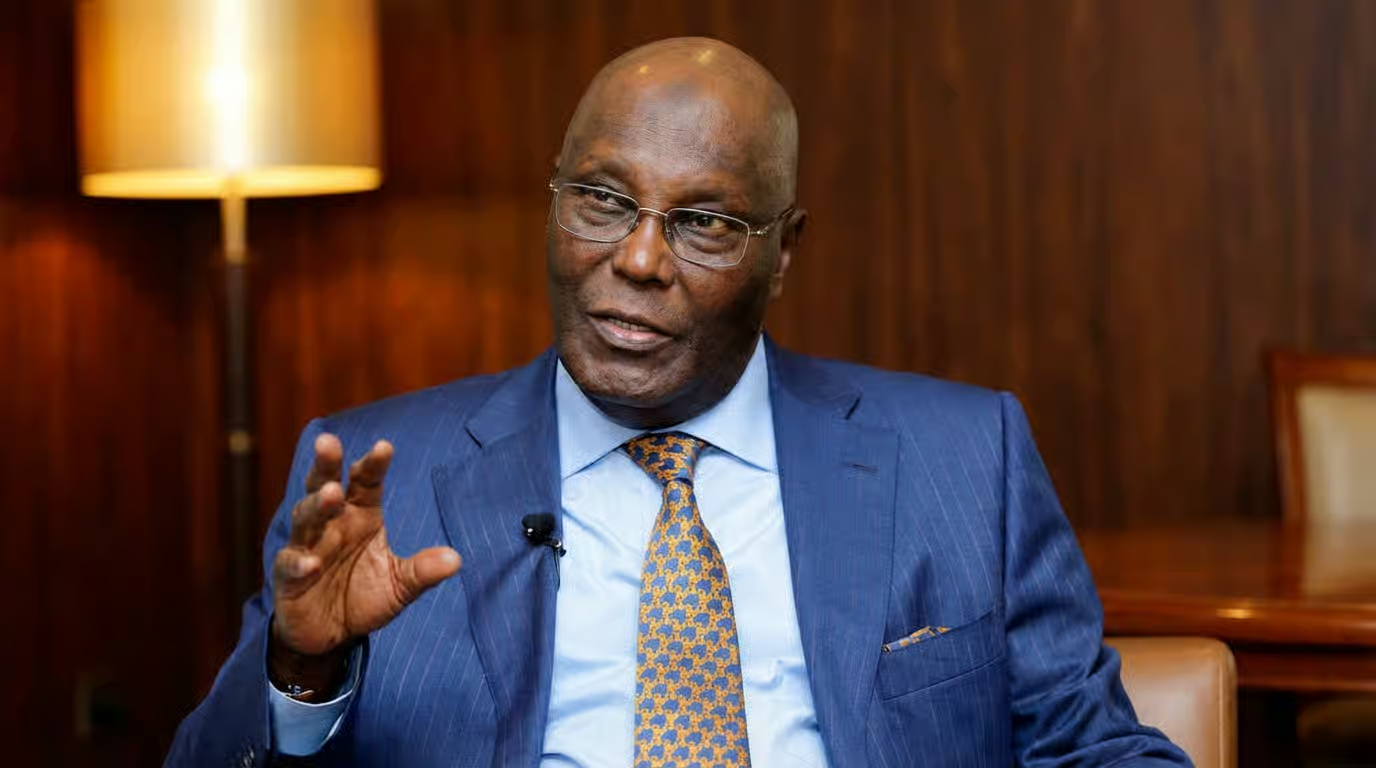
As Atiku put it: “We grow the crop. Someone else does more of the processing.”
That single sentence explains why a country so rich in land is so poor in food.
GROW IT HERE. PROCESS IT HERE.
Atiku’s answer is not a slogan stitched on to a campaign. It is a chain, and on 7 October 2026 he named every link: policies that make farming safer, make moving produce cheaper, make running processing plants easier and make finished Nigerian products more profitable abroad.
Make farming safe. A farmer who can reach his land in peace will plant it, and a nation whose farmers plant is a nation that eats. That is why security stands first in Atiku’s plan: intelligence-led operations, a better-equipped and better-paid security force, and a deadline he has set himself, to end the killing within one year. Food security begins with farm security.
Make moving produce cheap. Under the Atiku Economic Recovery Plan 2027, he has committed to a transparent production subsidy on petroleum products refined in Nigeria, including from modular refineries. It will be capped, budgeted and independently audited, and imported fuel will not qualify. When diesel falls, the lorry fare falls. When the lorry fare falls, the price on the market table follows it down.
Make processing pay. Cocoa beans and cashew nuts leave Nigeria in their shells, and other nations keep the profit and the jobs. Atiku has committed to making processing plants easier to run and finished Nigerian goods more profitable abroad, so that the factory comes to the farm, the tomato becomes paste before it can rot, and the young man in the village works in a processing plant instead of drifting to the city or the bush.
Back the people who do the work. His pledge is plain: “We will back farmers and processors with the same determination.”
And his creed fits in one breath: “Grow it here. Process it here. Refine it here. Create the jobs here. Make life affordable here.”
Grow it here. Process it here. Make life affordable here.
WHY THIS ANSWER IS DIFFERENT
Every government in living memory has promised to “diversify the economy”. Most of them launched a programme, cut a ribbon and moved on. Atiku’s plan is different because it attacks the problem at every link at once.
A farmer given cheap fertiliser but no security will still not reach his farm. A farmer given security but no affordable diesel will still watch his harvest rot on the road. A farmer given both but no processing plant will still sell raw at a giveaway price. Fix one link and the chain still breaks. Fix all of them together and the chain holds.
That is the difference between a slogan and a plan. A slogan names the destination. A plan maps the road, mends the bridges and fuels the lorry.
A CONVICTION, NOT A CAMPAIGN
Atiku did not discover the farm in an election year. For years his policy documents have named agriculture, alongside manufacturing and small businesses, as the engine to replace Nigeria’s dependence on crude oil, and have called for exporting finished goods rather than raw produce. What was a direction then is now a working plan, with security, fuel and processing joined into a single strategy.
He is a farmer himself. He knows the price of fertiliser and diesel is not a line in a budget speech. It is the difference between a harvest that feeds a family and one that ruins it.
WHAT CHANGES IN YOUR KITCHEN
Here is what the plan means when it reaches your pot.
When farms are safe, more food is planted. When diesel is cheaper, more food is moved at lower cost. When processing sits beside the farm, less food is wasted. When finished goods are exported, more dollars come home and fewer leave to buy what we can grow.
More food arriving, less food lost and lower cost at every step means a lower price at the market. That is not a miracle. It is arithmetic, and it is arithmetic Atiku has written into his plan.
THE CHOICE ON YOUR PLATE
One road leads to more imported food, more dollars spent abroad, more farmers abandoning their fields and smaller portions at home. The other leads to safe farms, cheaper movement, factories beside the fields and full pots in every kitchen.
You will not find that choice in the market. You will find it on the ballot.
On 16 January 2027, the woman in Ilorin will not ask the price twice. She will vote once, and she will vote for the man who has a plan for the farm, the road and the factory.
Vote Atiku. Vote Amaechi. Vote ADC.
Next: Part 3, Transport fares and the price of fuel.
#Atiku2027 #AtikuAmaechi2027 #AtikusAnswers #VoteADC
Aare Amerijoye DOT.B
Director General,
The Narrative Force
thenarrativeforce.org
19 October 2026