You closed the borders with Cameroon, Chad, Niger and Benin. You destroyed the livelihood of thousands of northern traders. Then you turn around and ask why the streets are angry.
Aare Amerijoye DOT.B
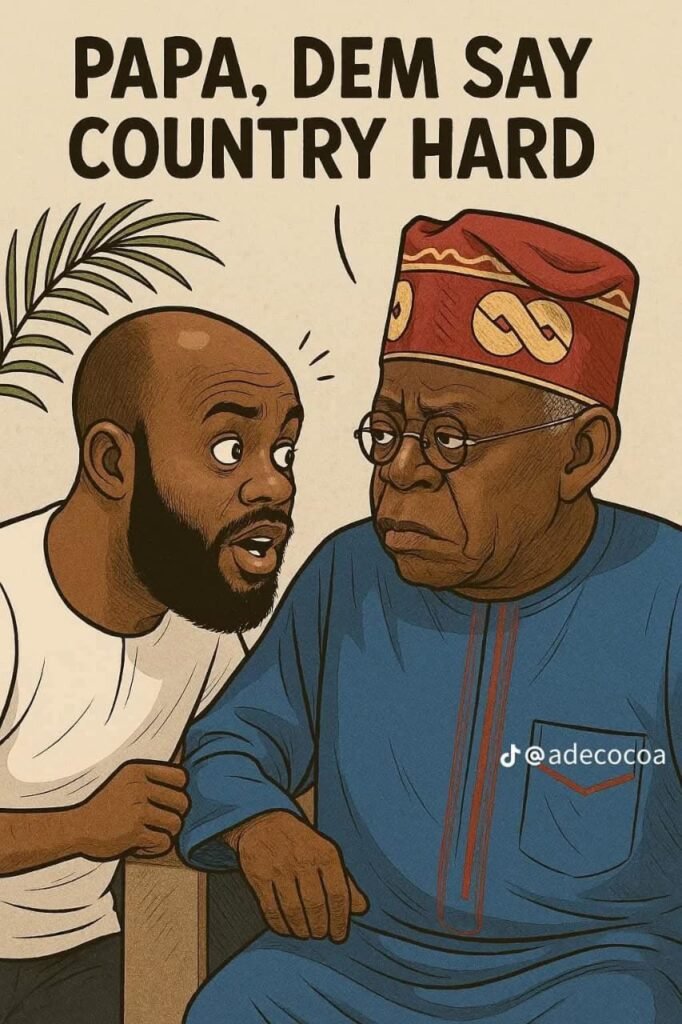
There are policies that fail quietly. There are policies that fail in the open, are seen to have failed, are documented to have failed, and are kept anyway because the men who made them cannot bear to be seen correcting themselves. Nigeria’s land border policy belongs to the second class.
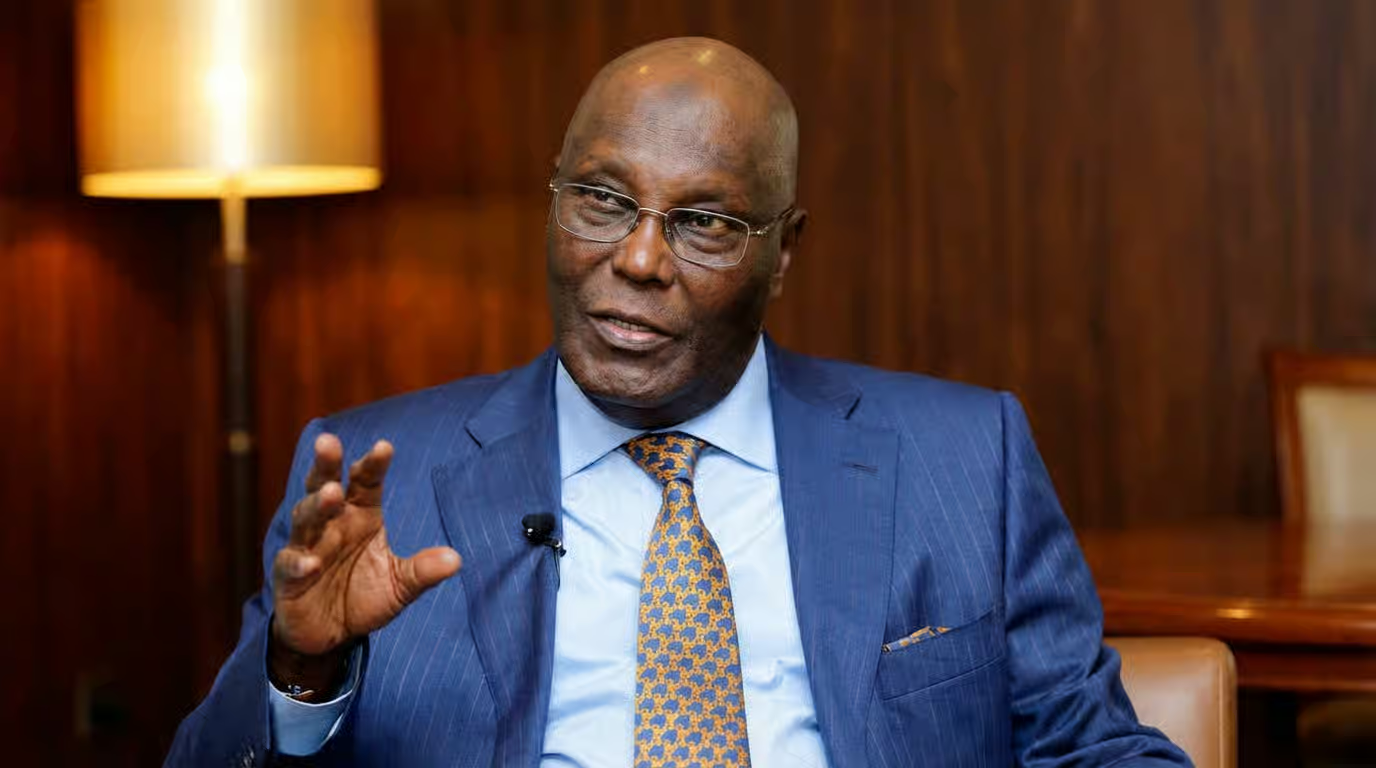
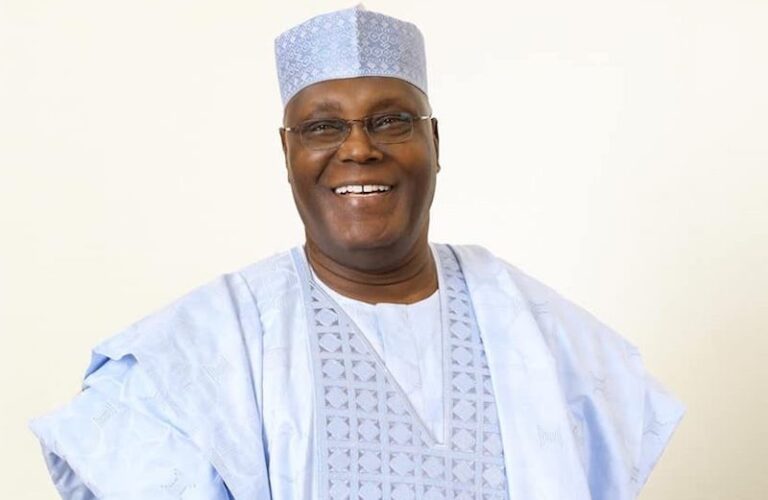
Speaking to the BBC, Atiku Abubakar, presidential candidate of the African Democratic Congress, went to the heart of an injury that the political class has spent 7 years pretending it did not inflict. He named the four neighbours. He named the victims. He named the anger. Then he named the remedy in two plain sentences.
I will reopen those borders. I will develop Calabar, Uyo and Port Harcourt ports so a container does not take two months to leave Lagos for Yola. Simple.
WHAT WAS ACTUALLY DESTROYED
In August 2019 the APC government shut Nigeria’s land borders with Benin, Cameroon, Chad and Niger. Goods were stopped. The stated objective was to halt smuggling, particularly of rice. The policy was defended as economic patriotism.
Understand what that decision touched. The northern states border Cameroon, Chad, Niger and Benin along thousands of kilometres of frontier that predates the colonial pen that drew it. Across that frontier the Hausa of Nigeria trade with the Hausa of Niger. Families straddle the line. Markets straddle the line. Transborder trade in that region is not contraband. It is the oldest legitimate commerce in the Sahel, and it was carrying young men who had no other ladder.
Atiku put the loss in the only terms that matter to the people who bore it. Young men and women who had built trading capital of 10 million and 20 million naira, who were themselves employing 2 and 3 others, went bankrupt. The employer became unemployed. The apprentice went home. A whole tier of small northern enterprise was wiped out by an administrative signature in Abuja, and no compensation, retraining or transition fund was ever offered to any of them.
Independent assessment has been unsparing. The Institute for Security Studies found the closure did not achieve its purpose. Scholarly work on the Benin corridor documented the devastation of informal traders who were overwhelmingly indigenes of the border communities. More recent analysis published this month restates the verdict: the closure failed to stop smuggling, while inflicting inflation, hardship and damage to Nigeria’s standing in the region. Nigeria ratified the African Continental Free Trade Agreement with its own land borders shut. We signed a continental free trade treaty and locked our gates against the continent.
It should be said plainly, for the record and for the audit: the current administration has reopened the Tsamiya corridor into Benin Republic through Kebbi State and the Kamba corridor into Niger Republic, in February 2026. That is 2 corridors, 7 years late, after an entire trading generation had already been ruined. It is not a policy. It is an admission arriving too late to matter, and it leaves the wider architecture of closure and restriction standing.
THE SECOND LOCK: A COUNTRY WITH ONE DOOR
The border was the first lock. The port is the second.
Nigeria has a coastline of roughly 850 kilometres and functioning deep water capacity concentrated in one city. Almost everything the country imports enters through Lagos. From Lagos it must then be dragged by road across the entire federation. A container consigned to Yola can sit in the Lagos system, then crawl the length of Nigeria, and take 2 months to arrive.
Price that delay. It is not an inconvenience. It is a tax. Demurrage, haulage, diesel, insurance, spoilage, security along the corridor and the sheer cost of capital sitting idle in a stack for 8 weeks are all loaded onto the final shelf price in Yola, in Maiduguri, in Sokoto, in Jos. The northerner pays a Lagos premium on goods he never asked to route through Lagos. Then the same government that engineered the bottleneck expresses surprise at food inflation, which stood at 17.52 per cent in June 2026 while headline inflation ran at 15.91 per cent.
Meanwhile Calabar, Uyo and Port Harcourt sit underused. The eastern ports have been starved of dredging, of modern handling equipment, of rail linkage and of the political will to make them competitive against the Lagos monopoly. This is not an accident of geography. It is a choice, renewed every budget cycle, and it impoverishes the South South and the South East as surely as it impoverishes the North.
Atiku’s answer joins the 2 halves of the injury. Reopen the northern frontier so the trader can trade. Develop the eastern ports so the container has more than one door into the country. One measure restores livelihood. The other collapses the cost of everything the citizen buys. Together they are a single economic argument about circulation, and circulation is what a poor country needs more than any slogan.
WHY THIS MAN, AND WHY THIS ARGUMENT
This is not improvisation. It is the settled economic instinct of the man who, as Vice President, presided over an economy that grew from 58 billion dollars in 1999 to 270 billion dollars in 2007, and who has argued for open trade, competitive federating units and a lean, enabling centre for the whole of his public life.
Ask what qualifies a candidate and Atiku gives 3 answers without hesitation: experience, competence, patriotism. His words to the BBC were direct. Things are not going right; he has the experience, he has the competence, he has the patriotism, so why would he not make all of it available to the service of his country.
The border and the port are exactly where those 3 things are tested. Reopening a frontier requires the diplomatic standing to manage Cameroon, Chad, Niger and Benin, several of them in the middle of their own regional crises. Developing Calabar, Uyo and Port Harcourt requires the administrative capacity to procure, dredge, tender, and resist the Lagos interests that profit from the chokehold. Doing both at once requires a President who understands that Nigeria’s real economy moves on trucks and in containers, not in press statements.
THEN THEY ASK WHY THE STREETS ARE ANGRY
That is the line that should be pinned above every desk in Aso Rock.
You closed the border. The trader lost the shop. The apprentice lost the wage. The family lost the meal. The young man who was employing 3 people is now looking for work himself, and the goods that used to cross the frontier in a morning now cross an ocean, enter through Lagos and reach him 2 months later at 3 times the price.
Then you stand before that man and wonder aloud why he is angry.
He is angry because he was made poor by policy, not by misfortune. He is angry because nobody in authority has ever apologised to him, costed his loss, or asked his opinion. And on 16 January 2027 he will be holding a ballot, and the ballot is the only instrument by which the injured can answer the men who injured them.
Atiku’s promise to him is not complicated, and that is its strength. Open the gate. Build the ports. Let the man trade.
Simple.
Ìgbà díẹ̀ ló kù. Lokaci kaɗan ne ya rage. Obere oge ka ọ fọdụrụ.
142 days to 16 January 2027.
AtikuAmaechi2027 #ADC2027 #OpenTheBorders #TheNarrativeForce
Aare Amerijoye DOT.B
Director General
The Narrative Force
thenarrativeforce.org
28 August 2026