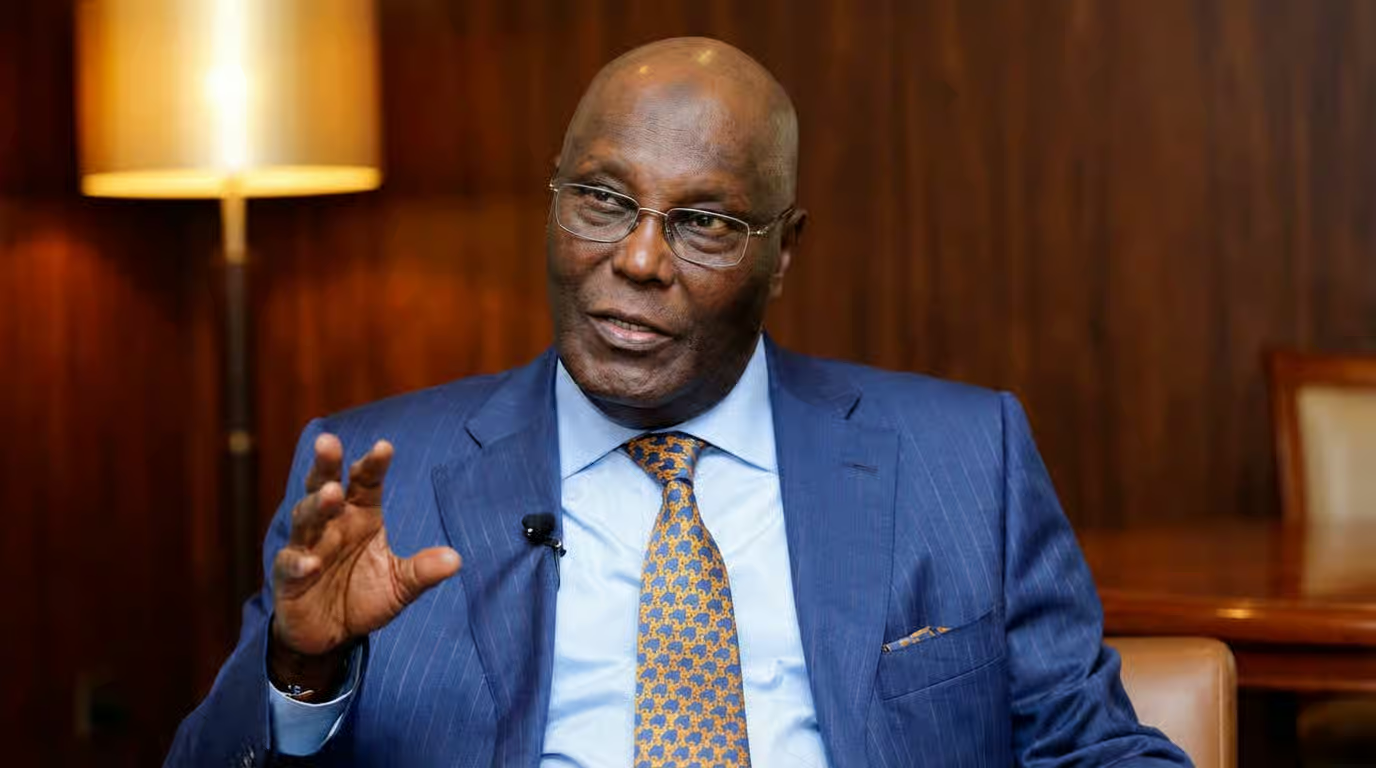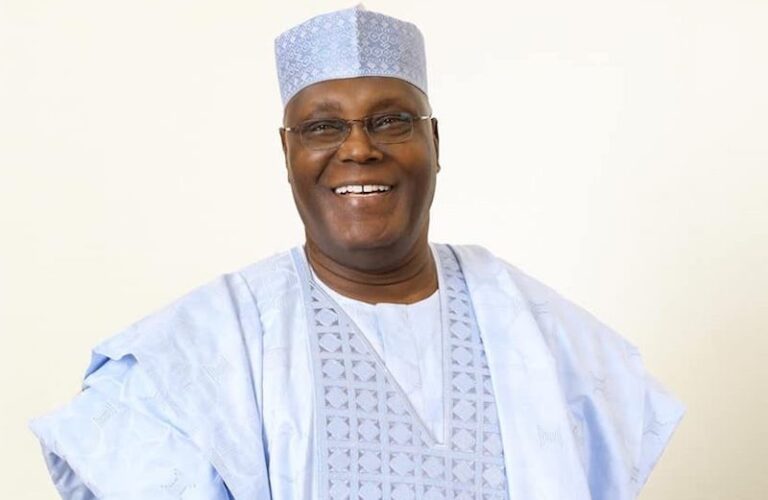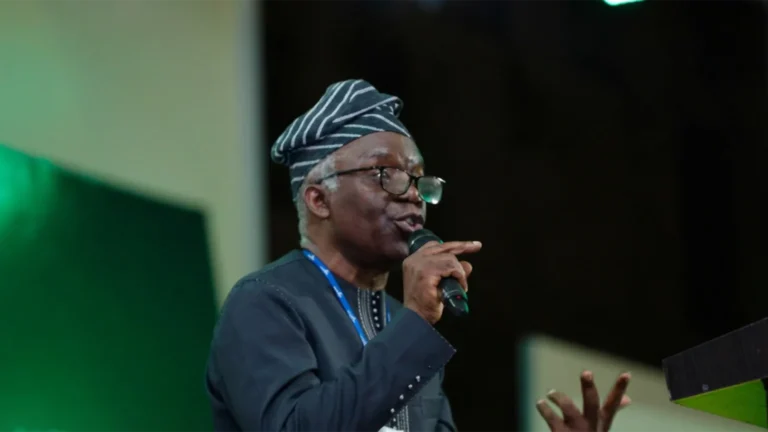
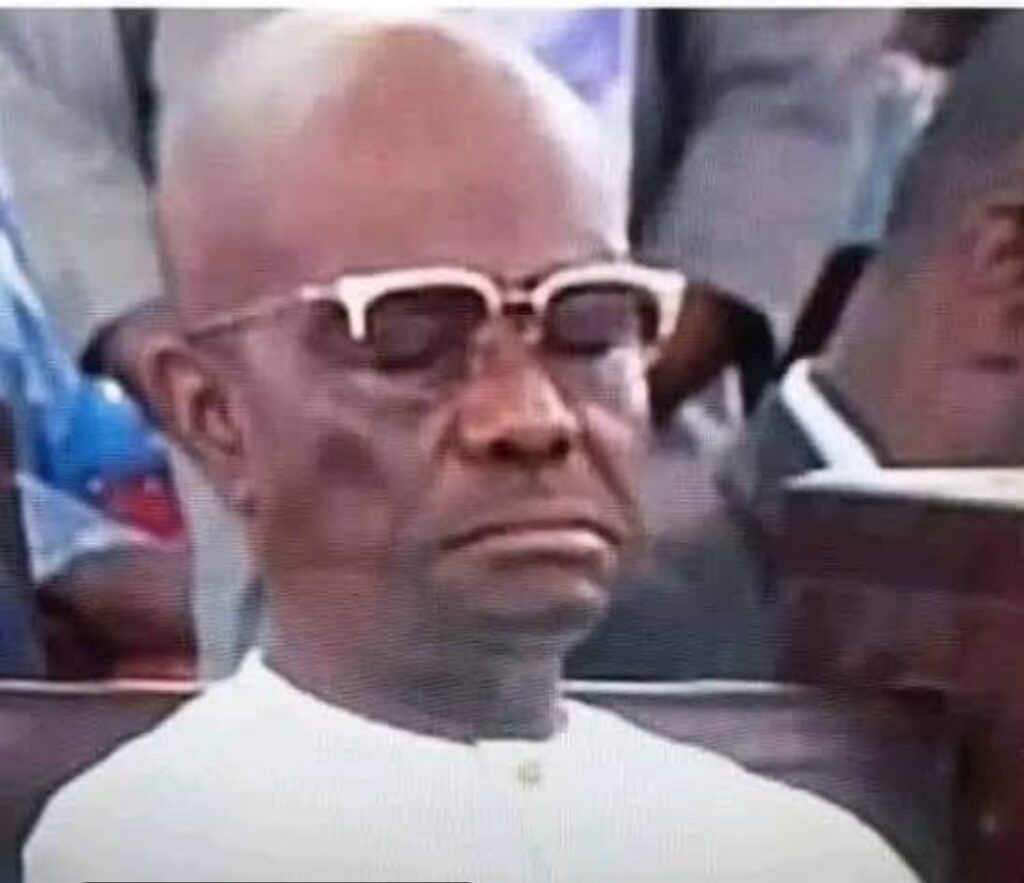
When Nyesom Wike describes Atiku Abubakar as a “confused, voodoo economist” over his position on fuel subsidy, the statement may sound politically entertaining, but it does not answer the economic questions Nigerians are asking. In fact, when a complex national policy debate is reduced to name calling, it often raises a more important question: is there a stronger argument behind the insult, or has the insult become the argument?
The subsidy debate deserves much more intellectual seriousness than that. Fuel subsidy is not merely a political slogan. It is an economic policy with consequences for government revenue, household income, transportation, food prices, agriculture, manufacturing and the survival of small businesses. Millions of Nigerians experience the consequences of fuel pricing every single day, which is why the discussion should be driven by facts and evidence rather than political taunts.
Let us establish one thing clearly: criticising the old subsidy regime does not necessarily mean that every conceivable form of government intervention in fuel pricing must forever be rejected. There is a fundamental difference between opposing a subsidy system because of corruption, inefficiency, leakages and fiscal abuse, and supporting a carefully designed intervention intended to protect citizens from an extraordinary economic shock.
That distinction is important because economic policy is not a religious doctrine. Governments revise policies when circumstances change. Economists revise forecasts when assumptions change. Businesses change strategies when markets change. Even governments that champion free markets routinely intervene when national emergencies or extraordinary market conditions threaten economic stability. Therefore, changing or refining an economic position is not automatically evidence of confusion.
The real question is whether the proposed policy is better, affordable, transparent and sustainable.
If Atiku’s position is economically wrong, then the strongest response is not “voodoo economist.” The strongest response is to produce the figures that demonstrate why it is wrong. Show Nigerians the projected cost. Explain the fiscal implications. Identify the risks. Demonstrate the likely impact on inflation, foreign exchange, government revenue and investment. Then present a superior alternative.
That would be a devastating rebuttal.
An insult, by contrast, proves only that the speaker is angry or politically opposed to the person being criticised. It does not establish the correctness of the speaker’s own economic position.
And this is where the subsidy debate becomes particularly important.
Petrol is not an ordinary commodity in Nigeria. Its price affects almost every other price in the economy. When transportation becomes more expensive, food distribution becomes more expensive. When logistics costs rise, businesses increase prices. When production costs rise, manufacturers face greater pressure. When workers spend more on transportation, their disposable income falls.
So when Nigerians ask questions about fuel subsidy, they are not merely asking about petrol. They are asking about the entire cost structure of the Nigerian economy.
This is why those defending subsidy removal must answer a very simple question: what exactly have Nigerians received in return for the enormous economic pain associated with the reform?
If the argument is that subsidy removal has freed substantial public resources, Nigerians deserve to know precisely how those resources have been deployed. How much has been saved? Where has the money gone? What measurable improvements have occurred in transportation, healthcare, education, infrastructure and social protection? How much relief has reached the ordinary citizen?
Those are not opposition questions.
They are accountability questions.
At the same time, anyone proposing a return to subsidy or any form of fuel price intervention must answer equally difficult questions. How will it be financed? How will corruption and leakage be prevented? What safeguards will stop smugglers and politically connected beneficiaries from capturing the system? Is the intervention temporary or permanent? What happens when global oil prices change? How will government prevent another unsustainable fiscal burden?
A serious alternative must answer those questions.
That is precisely why reducing the debate to “Atiku once criticised subsidy, therefore he cannot now support intervention” is intellectually inadequate. Economic policies should be judged according to their design and present circumstances, not merely according to political quotations from the past.
Imagine applying that standard to every government. If a government once promised never to change a policy, would it be forbidden from changing course when the policy fails? If an economist once opposed an intervention but later supported a modified version after new evidence emerged, would that automatically make the economist a fraud?
Of course not.
What matters is whether the new position is logically defensible and supported by evidence.
There is therefore a legitimate question Wike can ask Atiku: What exactly is the economic mechanism behind your proposal, and why will it work better? That is a fair question. Nigerians should hear the answer.
But Atiku can equally ask those defending the current approach: Where are the measurable gains from the sacrifices Nigerians have been asked to make? That is also a fair question.
This is how mature democracies conduct economic debates.
Unfortunately, Nigeria’s political discourse often reverses the order. Politicians attack personalities first and policies second. Supporters circulate insults instead of figures. Opponents respond with counter insults. Before long, the substantive issue disappears beneath partisan noise.
But Nigerians cannot eat political slogans.
They cannot pay transport fares with campaign rhetoric.
They cannot buy food with ideological labels.
They cannot run businesses with political insults.
What Nigerians need is an economic framework that reduces hardship while protecting the long term financial stability of the country.
And that requires difficult conversations about domestic refining, competition, energy security, public transportation, targeted social protection, government expenditure, corruption, productivity and the efficient deployment of public resources.
It also requires intellectual honesty from every political camp.
Those who defend subsidy removal should be prepared to admit where the policy has produced unintended consequences and explain how those consequences will be corrected.
Those proposing intervention should equally be prepared to explain how they will prevent the mistakes of the past from returning.
Nobody should receive a free pass simply because of political affiliation.
That is why the phrase “voodoo economist” should not end the conversation. If anything, it should begin a more rigorous one.
If Atiku is wrong, prove him wrong.
If his economic proposal is unaffordable, show the figures.
If his intervention would worsen inflation, demonstrate the mechanism.
If subsidy removal is producing sustainable benefits, show Nigerians the measurable results.
And if another policy can deliver better outcomes at a lower social and fiscal cost, put the proposal on the table and let Nigerians examine it.
That is how serious economic arguments are won.
Not through insults.
Not through political intimidation.
Not through selective quotations.
Through evidence.
Through numbers.
Through implementation.
And above all, through results.
Wike is entitled to disagree with Atiku. Atiku is entitled to defend his position. The government is entitled to defend its reforms. But Nigerians are entitled to interrogate all of them.
The real issue is therefore not whether Atiku can be labelled a “voodoo economist.” The real issue is whether the economic policies being pursued or proposed can actually make life better for the Nigerian people while keeping the country’s finances sustainable.
That is the debate that matters.
So let the political theatre end and let the economics begin. Let Atiku defend his proposal with numbers. Let Wike defend his position with evidence. Let economists interrogate both sides. Let journalists examine the claims. Let Nigerians compare the alternatives.
Because when millions of Nigerians are struggling with transportation costs, food prices, business expenses and declining purchasing power, “voodoo economist” is not an economic argument.
Evidence is. Numbers are. Policy is. Results are.
And in the final analysis, the Nigerian people deserve to judge economic policies by what they deliver to their lives, not by the insults politicians attach to those proposing them.
Akin Samuel KAYODE.
Member, The Narrative Force.
@all