Aare Amerijoye DOT.B
There is a particular cruelty in watching a nation beg for what it once had. Nigeria, in the year 2026, is not merely struggling. It is being slowly dismantled, asset by asset, dignity by dignity, dream by dream, while a government in Abuja performs the theatre of governance with the confidence of men who know that the hungry cannot afford the price of protest.
The naira, which traded at roughly 460 to the dollar when Bola Ahmed Tinubu took office in May 2023, has since collapsed past 1,600. Not depreciated. Collapsed. The difference is important. Depreciation is economics. Collapse is policy failure wearing the mask of fate.
Fuel queues returned. Electricity tariffs multiplied. Petrol prices tripled. And through it all, the Presidential Villa issued statements, held summits, inaugurated committees, and flew the President to medical consultations in foreign hospitals that Nigerian workers cannot afford even in their most optimistic fantasies.
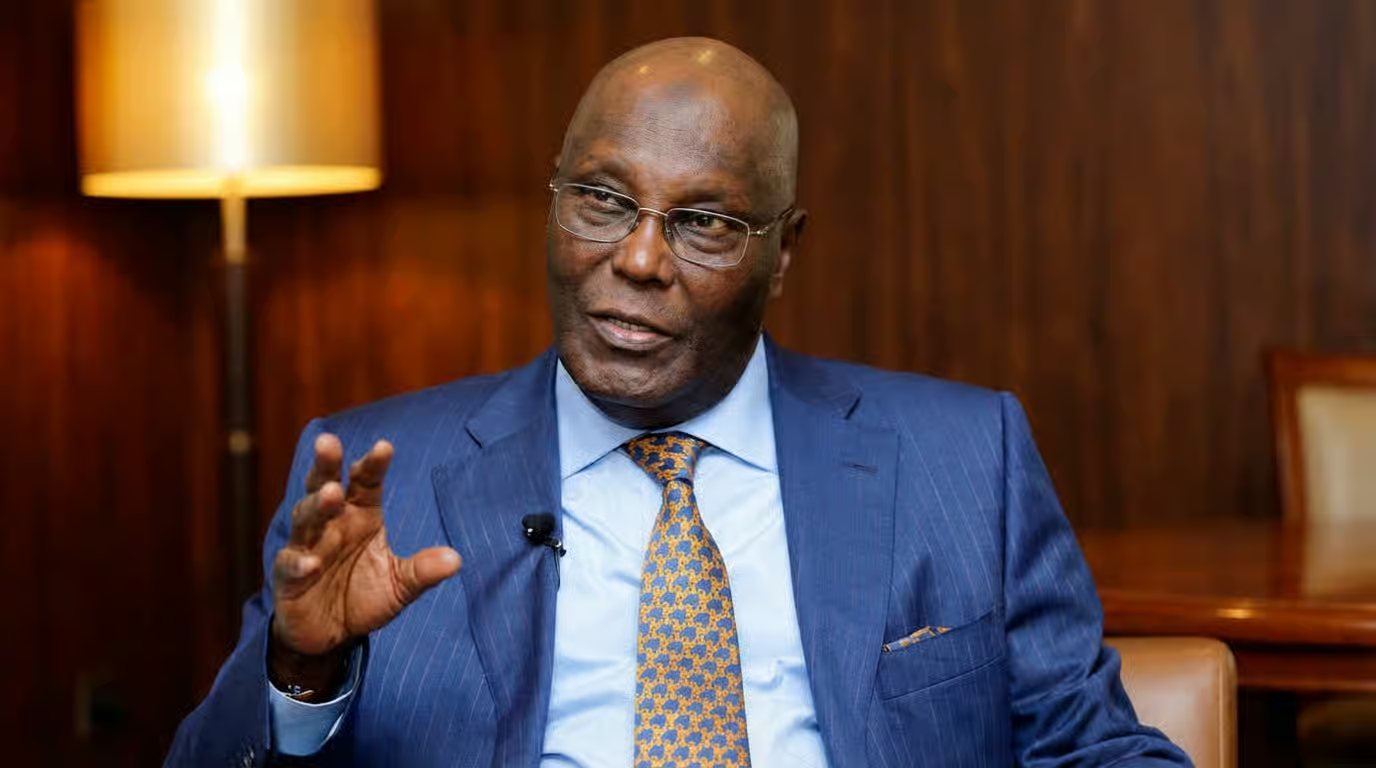
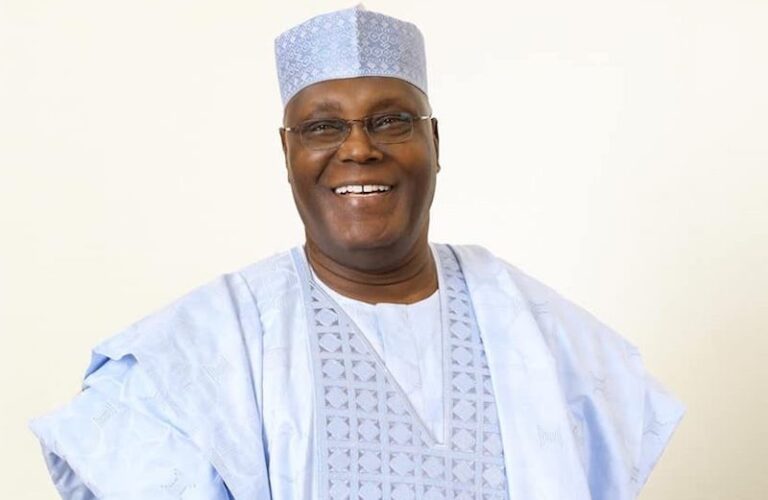
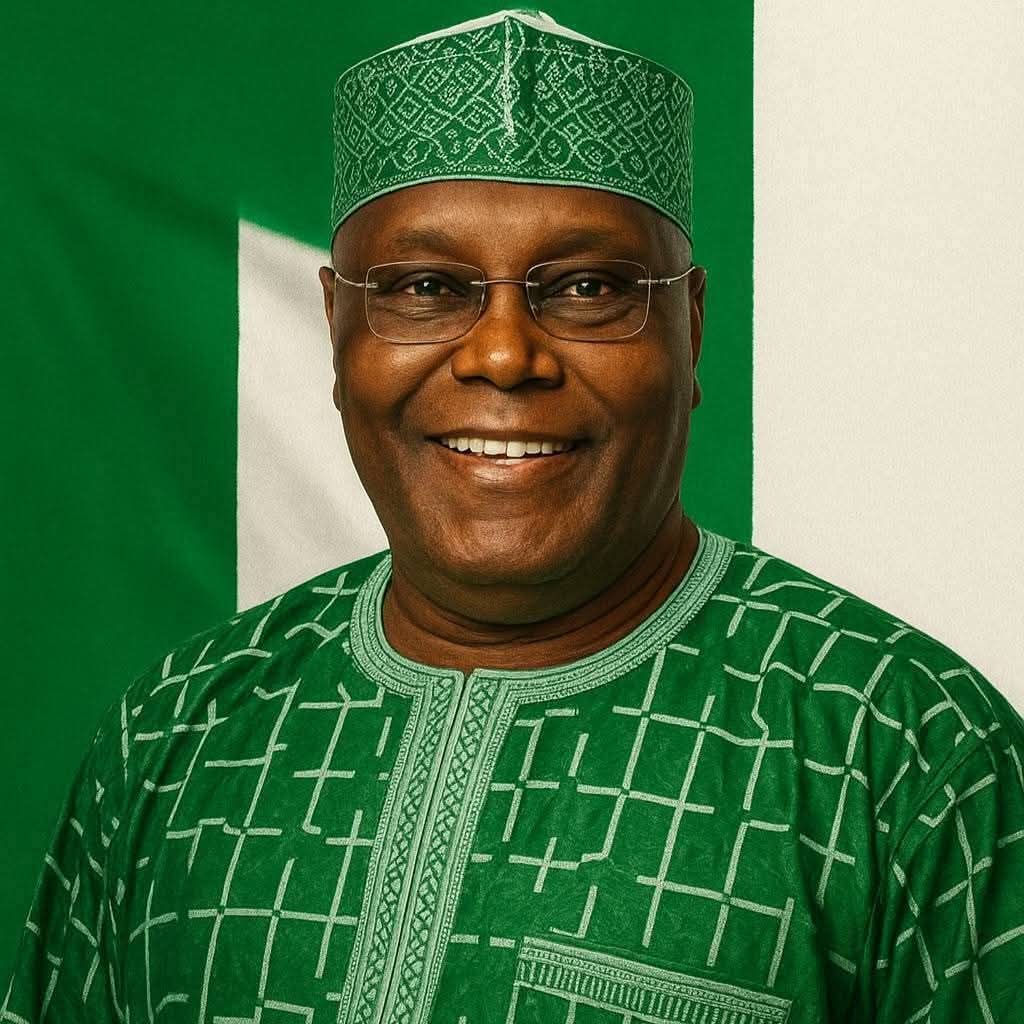
This is the Nigeria that Atiku Abubakar is asking to govern. The question serious people must answer is not whether Nigeria needs change. The question is whether Atiku is the correct instrument of that change. The answer, examined without sentiment and argued without apology, is an unambiguous yes.
The Record That Silences Dismissal
Between 1999 and 2007, Atiku Abubakar served as Vice President of the Federal Republic of Nigeria. During that period, Nigeria’s GDP grew from approximately 58 billion dollars to 270 billion dollars. The peak annual growth rate reached 15.3 per cent. Foreign reserves climbed past 43 billion dollars. The Paris Club debt of approximately 30 billion dollars was liquidated in full. These are not campaign claims. They are entries in the official economic ledger of a nation.
Compare that to the Tinubu administration’s ledger. Debt servicing now consumes over 96 per cent of federal revenue in certain budget quarters. The World Bank has repositioned Nigeria among the countries with the highest number of people living in extreme poverty on the planet. Graduate unemployment has reached a scale that is not a statistic but a social emergency.
Those who dismiss Atiku’s record do so selectively. They speak of everything except the numbers. Because the numbers do not cooperate with their narrative. A man who oversaw the most dramatic economic transformation in Nigeria’s post-independence history is not a gamble. He is a reference point.
The Architecture of Vision
What separates Atiku from the current occupant of Aso Rock is not merely competence, though the competence gap is staggering. It is the possession of a governing philosophy grounded in economic liberalism, institutional respect, and the radical belief that Nigeria’s private sector, properly unleashed, can generate the prosperity that government bureaucracy never could.
Atiku has consistently advocated the restructuring of Nigeria’s federal architecture, arguing for the devolution of fiscal powers that would end the scandal of Abuja collecting derivation revenue while oil communities in Bayelsa, Delta, and Rivers States remain without pipe-borne water, functional hospitals, or paved roads. He has argued that the Niger Delta’s resource wealth must translate into Niger Delta infrastructure. He has proposed education reforms connecting the university curriculum to the labour market, ending the annual production of graduates whom the economy cannot absorb. A politician willing to dismantle the machinery that feeds politicians is a politician worth examining very seriously indeed.
Why The Comparison Is Not Even Close
On one side stands a candidate whose economic stewardship produced a GDP quadrupling, whose foreign reserve management erased a debt burden that had strangled Nigeria for decades, and whose governance philosophy is published, debatable, and grounded in evidence.
On the other side stands an administration that cannot defend its exchange rate, cannot explain its debt trajectory, cannot account for fuel subsidy removal proceeds, and cannot produce a president healthy enough to govern without repeated foreign medical interventions that cost the public purse what a state university’s annual budget does not reach.
When the choice is between a documented record of national economic transformation and a documented record of national economic collapse, the rational calculation does not require extended meditation. It requires only honesty.
The Moral Arithmetic
There is a narcotics forfeiture judgment sitting in a Chicago federal court bearing Tinubu’s name. There is a certificate of qualification bearing a graduation date from a university that has publicly disputed the claim. There is a presidential travel expenditure that Nigerian investigative journalists have documented at figures that would make a finance minister weep. None of this has been credibly refuted. All of it has simply been ignored, because a government with a compliant legislature and a compromised anti-corruption apparatus can afford to ignore what it cannot disprove.
Atiku’s record has been investigated by the EFCC, by the United States Senate, by hostile Nigerian media, and by three successive administrations with every political incentive to destroy him. He has emerged from every one of those investigations still standing, still campaigning, still building. That is not luck. That is the record of a man whose worst enemies, with every institutional resource at their disposal, could not break him with evidence because the evidence did not support the destruction they sought.
The Coalition That Cannot Be Ignored
The 2023 presidential election produced a combined opposition vote exceeding 14.5 million against Tinubu’s approximately 8.8 million. That arithmetic did not disappear. It reorganised and migrated. It is now converging, under the African Democratic Congress platform, around the most experienced opposition presidential candidate Nigeria has produced in a generation. Peter Obi is in. Rabiu Kwankwaso registered with the ADC on 30 March 2026. Rotimi Amaechi is positioning. The coalition Atiku’s candidacy is attracting is not a coalition of the desperate. It is a coalition of the serious.
The Verdict of History
The youth of Nigeria are not permanently disillusioned. They are strategically patient. They are seeing a candidate who funded private universities when public institutions were collapsing, who employed tens of thousands through his business empire when government was shedding workers, and who represents the rare convergence of private sector achievement and public sector governance experience that Nigeria has never deployed at full presidential capacity.
Nations that survive their worst periods do not do so by accident. They survive because, at the critical moment, they find the clarity to choose competence over performance, record over rhetoric, and substance over spectacle.
Nigeria has paid, in poverty and in blood and in the quiet emigration of its best minds to London, Houston, Toronto, and Dubai, for the privilege of being governed by the untested and the dishonest. In 2027, the country must choose a man who has governed before and has the numbers to prove it. A man tested in the furnace of Nigerian opposition politics for over two decades and who has not broken.
The country must choose Atiku Abubakar. Not because he is perfect. But because the choice is not between the ideal and the acceptable. It is between governance and its prolonged, painful, costly absence.
Nigeria has waited long enough.
Aare Amerijoye DOT.B,
Director General,
The Narrative Force,
thenarrativeforce.org
15 April 2026