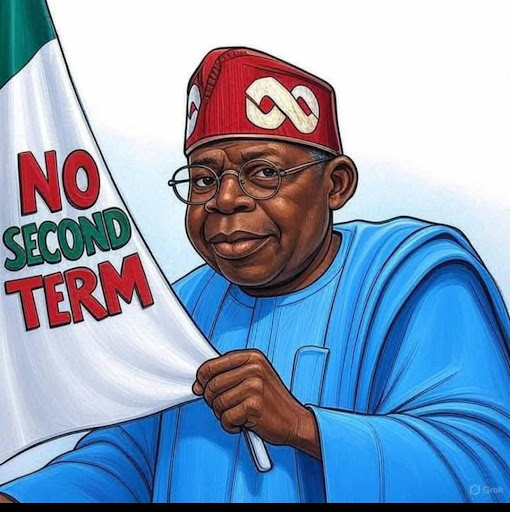
There are moments in a nation’s life when laughter ceases to be amusement and becomes indictment. Nigeria has reached such a moment. What is unfolding under the All Progressives Congress is not governance in its classical sense, but theatre without discipline, spectacle without substance, and motion without direction. It is, in the most unforgiving philosophical sense, a comedy whose jokes are paid for with human suffering. What was once marketed as “renewed hope” has mutated into renewed hardship, normalised scarcity, and institutionalised pain.
W. E. B. Du Bois once warned that “the cost of liberty is less than the price of repression.” Nigeria today is paying that higher price. Not with chains or decrees, but with hunger, confusion, and the silent erosion of dignity. Du Bois understood what Tinubu’s government appears incapable of grasping, that leadership is not measured by activity, but by moral clarity and social consequence. In societies where power loses its ethical compass, policy becomes a weapon and economics becomes a tool of quiet domination.
From Buhari’s lethargic fumbling to Tinubu’s frenetic improvisation, the APC era reads like a badly rehearsed farce. One act collapses into another. Promises trip over themselves. Announcements arrive before thought, and decisions precede comprehension. Tinubu did not inherit a broken stage; he inherited a fragile audience, yet chose to govern as though the people were expendable extras in his production. The cumulative effect is exhaustion, civic fatigue, and a growing awareness that confusion itself has become a governing strategy.
Entering office as a self-styled master strategist, Tinubu has instead perfected the politics of approximation. Almost fixing the economy. Almost stabilising the naira. Almost attracting investment. Almost governing. Each “almost” has become policy. Each delay has been baptised as courage. Each failure rebranded as sacrifice. This culture of “nearly” has consequences, because citizens cannot eat intentions, cannot commute on announcements, and cannot survive on speeches.
Where coherent reform was required, what emerged instead was extraction. In place of thoughtful economic restructuring came a blizzard of taxes, levies, tariffs, and fiscal ambushes that transformed survival itself into a taxable offence. Nigerians were not consulted; they were charged. Fuel costs bled into transport fares. Transport fares into food prices. Food prices into hunger. Electricity tariffs rose in a country where power supply remains erratic. Customs duties multiplied while local industries suffocated. The ordinary citizen became the easiest revenue source for a government too timid to confront waste and corruption at the top. Even the informal sector, once a refuge of resilience, has been dragged into the tax net without protection or support.
Here lies the cruelty at the heart of Tinubu’s economics. The state expanded its appetite while shrinking its conscience. Taxation ceased to be a social contract and became punishment. A punishment imposed without public value, without infrastructure relief, without social cushioning, without empathy. What kind of leadership widens the tax net while the economic floor collapses beneath the people? What kind of government audits the poor daily while shielding privilege behind policy jargon? In this arrangement, pain is democratised, but relief is elitist.
Socrates would have asked a devastatingly simple question, what is the purpose of the state? To organise collective welfare, or to professionalise suffering? Tinubu’s Nigeria answers without shame. New levies arrive weekly, digital taxes, consumption taxes, excise duties, while wages stagnate, jobs evaporate, and inflation gallops unchecked. Hunger has become the most consistent government auditor. It keeps perfect records, counts every failure, and spares no household.
Grace Paley once observed, in her quiet but lethal prose, that politicians love to speak endlessly about the future while refusing responsibility for the present. Tinubu’s presidency lives inside that sentence. Nigerians are drowning in the present while being lectured about tomorrow. Hope has been deferred so often that it has begun to rot into resentment.
Alongside economic suffocation came deepening insecurity. Farmers abandoned their fields. Food scarcity worsened. Small traders were punished by exchange-rate volatility they neither caused nor understood. The naira became a moving target, and explanations always arrived after the damage had been done. Each intervention contradicted the last, reinforcing a governing habit, act first, explain later, apologise never. Insecurity and inflation now reinforce each other in a vicious loop that policy seems unable, or unwilling, to break.
The removal of fuel subsidy was announced with theatrical bravado but executed with administrative recklessness. No transport buffers. No food stabilisation. No wage recalibration. Just pain, rapidly distributed and aggressively normalised. This was not reform bravery; it was shock therapy without diagnosis. A government serious about reform would have built cushions before pulling floors away.
The consequences are no longer abstract. Parents now calculate which child eats. Graduates ride motorcycles for survival. Small businesses close under tax pressure while politically connected monopolies flourish untouched. Tinubu’s Nigeria has perfected a perverse redistribution system, upward mobility for the elite, downward pressure for everyone else. Poverty is no longer incidental; it is systemic.
Du Bois warned that systems collapse not because they lack intelligence, but because they lack justice. Grace Paley warned that when leaders speak endlessly of necessity, it is usually the powerless who are sacrificed on its altar. Tinubu’s administration embodies both warnings with chilling precision. What we are witnessing is not a policy accident, but a moral failure unfolding in slow motion.
This is not reform fatigue. It is moral exhaustion. A nation governed like a balance sheet but lived like a graveyard of aspirations. When government wages economic war, the poor always become the frontline casualties.
Comedy may be Tinubu’s strength. Governance is his failure. And a hungry nation cannot eat performances.
Aare Amerijoye DOT.B
Director-General,
The Narrative Force