Nigeria today is a country where poverty is no longer an accident but a policy outcome, where hunger has been normalised, where endurance is preached to the poor as governance, and where indifference now wears the garment of authority. Markets groan, wages evaporate, households suffocate, and the state responds with silence disguised as strategy.
Yet history teaches us that no government spreads hardship unchecked unless citizens surrender resistance. Poverty imposed from above can be confronted only by conscience rising from below, by law standing against arbitrariness, and by voices that refuse to bow to intimidation. It is in such seasons of engineered suffering that societies rediscover the value of men whose lives have become barricades against injustice.
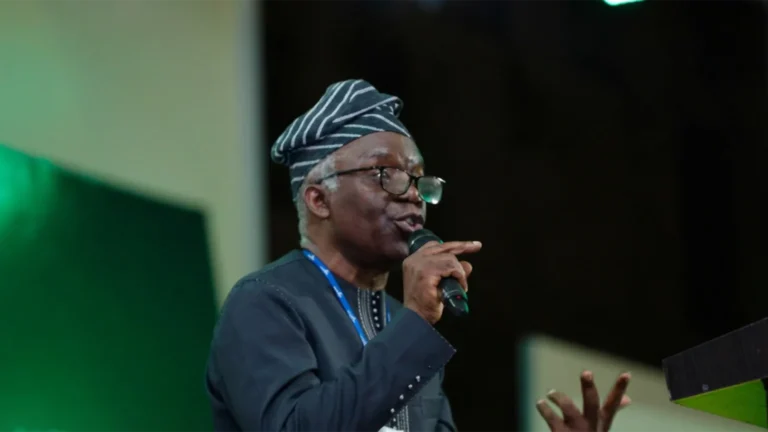
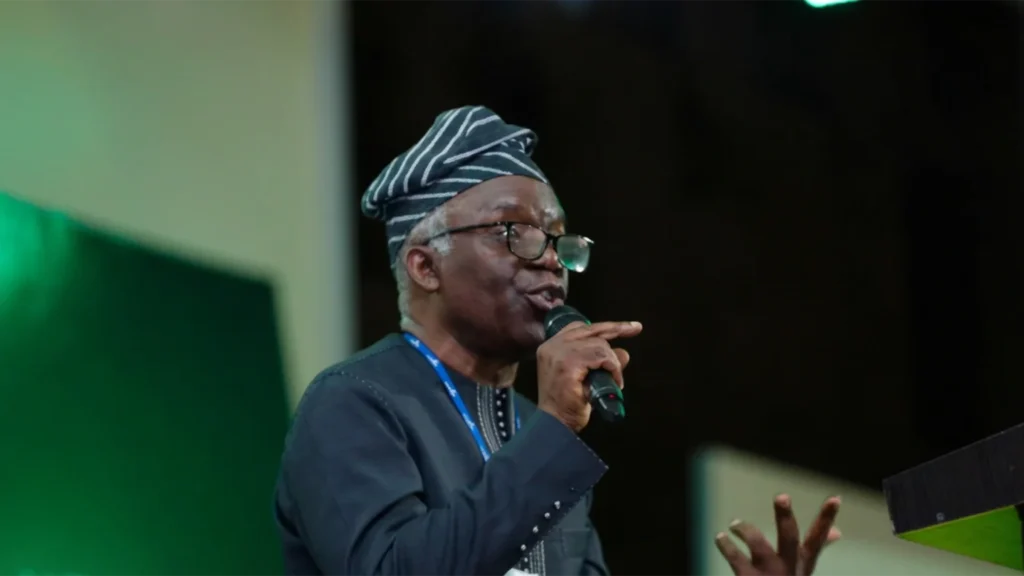
There are moments in a nation’s life when memory itself becomes a form of resistance. When remembering who stood firm yesterday becomes a quiet indictment of those who wobble today. Nigeria is living in such a moment, and it is precisely in times like this that the enduring relevance of Femi Falana becomes impossible to ignore.
Time has passed. Regimes have changed. Slogans have been rebranded, recycled, and weaponised. Yet Falana has remained stubbornly consistent, not because consistency is fashionable, but because conscience leaves him no alternative.
Having worked with him in earlier struggles, I can state without sentimentality that what Nigerians witness today is not a new Falana, nor an opportunistic one. It is continuity in its purest form. His present interventions are not reactions to the mood of the moment. They are the extension of a lifetime spent insisting that power must bow to law, and that the state must never be allowed to become a predator against its own people.
Long before activism became performative and dissent turned into a social media accessory, standing up to authority carried real consequences. It meant arrests without headlines, court battles without applause, intimidation without sympathy, and isolation without reward. Those were the years that shaped Falana’s moral architecture. Years that taught him that the law is not neutral when injustice is loud, and that silence, when power abuses itself, is not prudence but surrender.
This is why his voice still unsettles the corridors of power.
In a season where governance increasingly mistakes coercion for competence, endurance for policy, and silence for loyalty, Falana’s insistence on constitutional restraint sounds almost radical. Not because it is extreme, but because the environment has grown allergic to accountability. When dissent is treated as inconvenience and hardship is explained away with rhetoric, his interventions function as a mirror the state would rather avoid.
What makes this consistency more arresting is the contrast it exposes. Many who once marched, shouted, and protested have since negotiated their convictions into irrelevance. Some discovered caution. Others discovered comfort. A few discovered power and promptly forgot the people. Falana discovered none of these distractions. He chose the harder discipline of remaining intellectually inconvenient and morally predictable.
That predictability is his greatest threat to arbitrary authority.
Working with him years ago revealed something fundamental. Falana does not oppose governments for sport, nor does he defend citizens for popularity. He intervenes because history has taught him that unchecked power always escalates, that impunity always multiplies, and that when institutions fail, it is the duty of conscience to speak louder. His activism is not emotional. It is forensic. Not noisy. It is relentless. Not seasonal. It is structural.
Today, as economic pressure tightens around ordinary Nigerians, as civic patience is sermonised to the hungry, and as legality is sometimes stretched to justify excess, voices like Falana’s become more than relevant. They become essential. They remind us that democracy is not sustained by obedience, but by lawful challenge. Not by fear, but by accountability. Not by propaganda, but by principle.
History has an unforgiving way of sorting men. It forgets those who dined comfortably with injustice and remembers those who stood awkwardly against it. Power may reward silence in the short term, but time honours resistance with permanence.
Some men age into quiet retirement.
Others mature into institutions.
Femi Falana has become one. Not merely an institution, but a towering moral citadel, a relentless sentinel of the Constitution, a living archive of resistance, and one of the most formidable legal consciences this country has ever produced. His courage is not loud but lethal to injustice. His integrity is not advertised but absolute. His relevance is not negotiated but earned through decades of fearless engagement with power on behalf of the powerless.
As this government continues to spread poverty with policies that ignore human consequences and governance that grows indifferent to the cries of the masses, resistance must remain lawful, organised, vocal, and principled. It must be anchored in constitutionalism, strengthened by civic courage, and sustained by men and women who refuse to normalise suffering. The antidote to institutionalised hardship is not despair, but disciplined resistance. Not violence, but vigilance. Not silence, but lawful confrontation.
In times like these, the greatest tribute to figures like Femi Falana is not praise alone, but the collective refusal to surrender the republic to indifference.
Aare Amerijoye DOT.B
Director General,
The Narrative Force